
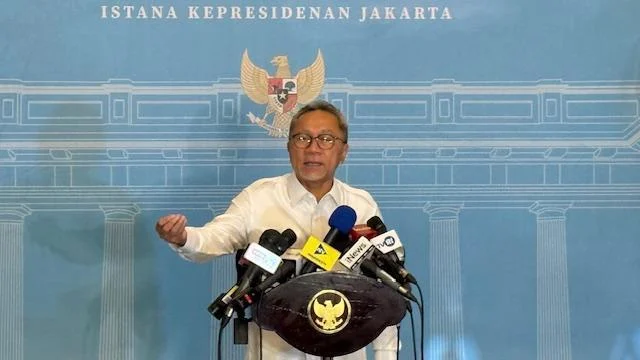
President Prabowo Subianto convened a critical limited cabinet meeting (ratas) at the Presidential Palace in Jakarta on Thursday, July 23, 2026, bringing together key coordinating ministries, technical ministries, and state legal apparatus. The intensive 3.5-hour session, as disclosed by Coordinating Minister for Food Zulkifli Hasan (Zulhas), delved into a dual agenda of profound national importance: bolstering domestic economic resilience through enhanced cooperative operations and fortifying energy security amidst escalating geopolitical tensions in the Middle East. This strategic gathering underscores the administration’s commitment to proactive governance, addressing both internal structural improvements and external vulnerabilities to safeguard Indonesia’s stability and growth.
Empowering Rural Economies: The Merah Putih Cooperative Initiative
A cornerstone of the President’s domestic agenda discussed during the ratas was the comprehensive support for the operations of the Koperasi Desa/Kelurahan Merah Putih (KDMP) and Koperasi Nelayan Merah Putih (KNMP). President Prabowo explicitly mandated full backing for these cooperatives from all relevant ministries, government agencies, and even the Indonesian Armed Forces (TNI) and National Police (Polri). This directive signals a significant governmental push to leverage the cooperative model as a fundamental pillar for economic development at the grassroots level, particularly in rural and coastal communities.
The ‘Merah Putih’ cooperative concept, while not entirely new to Indonesia’s economic landscape, appears to be receiving renewed and intensified focus under the current administration. Historically, cooperatives have played a vital, albeit often challenging, role in the Indonesian economy, aiming to empower small-scale farmers, fishermen, and micro, small, and medium enterprises (MSMEs) by pooling resources, reducing transaction costs, and enhancing bargaining power. However, issues such as management capacity, access to capital, market integration, and governance have frequently hindered their optimal performance. The President’s direct intervention and broad mandate for support indicate a determination to overcome these systemic hurdles.
According to Minister Zulhas, the requested support encompasses two critical functions for KDMP: acting as a government infrastructure and serving as an off-taker. As government infrastructure, KDMP will be tasked with the crucial role of distributing subsidized goods and various forms of government assistance directly to communities. This mechanism is envisioned to streamline the delivery of essential commodities, reduce logistical inefficiencies, combat price volatility at the consumer level, and minimize opportunities for maldistribution or illicit market practices. By utilizing KDMP networks, the government aims for a more equitable and efficient reach, ensuring that subsidies and aid genuinely benefit the intended recipients in remote villages and urban neighborhoods. This strategy aligns with broader national efforts to improve food security and social welfare, particularly for vulnerable populations.
Simultaneously, KDMP and KNMP will function as off-takers, providing a guaranteed market for agricultural and fisheries products from local farmers and fishermen. This function is transformative for producers, who often struggle with market access, price fluctuations, and exploitation by middlemen. By having a reliable off-taker, farmers and fishermen can focus on production with greater certainty of sales and fairer prices, thereby increasing their income stability and incentivizing higher productivity. This direct linkage aims to shorten the supply chain, reduce post-harvest losses, and ensure a more stable supply of goods for the domestic market, ultimately contributing to national food self-sufficiency goals.
Strengthening the Cooperative Ecosystem: A Multi-Stakeholder Approach
The presidential mandate for ‘full support’ necessitates a multi-pronged, inter-ministerial approach. The Ministry of Cooperatives and Small and Medium Enterprises will likely play a central role in providing technical assistance, capacity building, and regulatory frameworks for KDMP and KNMP. The Ministry of Agriculture and the Ministry of Marine Affairs and Fisheries will be crucial in linking producers to the cooperatives, offering extension services, and ensuring quality control. The Ministry of Trade would contribute by integrating cooperative products into broader national markets and potentially export channels.
The involvement of the TNI and Polri, while seemingly unconventional for economic initiatives, underscores the administration’s resolve to ensure security, logistical support, and potentially even oversight against any attempts at corruption or disruption of the cooperative networks. In remote or challenging terrains, their logistical capabilities could prove invaluable for distribution. This integrated approach, bringing together economic, social, and security apparatuses, reflects a comprehensive national strategy to embed the cooperative movement deeply within the fabric of Indonesia’s development agenda.
Resolving Financial Bottlenecks: The Agrinas Pangan Nusantara Settlement
Beyond cooperative operations, the limited cabinet meeting also addressed an immediate financial concern impacting the food supply chain: the outstanding payments from PT Agrinas Pangan Nusantara to the Himpunan Bank Milik Negara (Himbara) due in September. Minister Zulhas confirmed that the Ministry of Finance (Kemenkeu) would settle these significant liabilities, emphasizing the government’s commitment to maintaining financial stability within critical economic sectors.
PT Agrinas Pangan Nusantara, a state-owned enterprise, plays a pivotal role in Indonesia’s food ecosystem, often involved in food procurement, storage, and distribution, particularly for strategic commodities. Its financial health and ability to fulfill its obligations are crucial for the smooth functioning of the national food supply chain. Himbara, the association of state-owned banks (which typically include giants like Bank Mandiri, BRI, BNI, and BTN), provides substantial financing to strategic national projects and state-owned enterprises. Delays in payments to Himbara can ripple through the financial system, potentially impacting the liquidity and lending capacity of these banks, which are themselves pillars of the national economy.
To expedite the payment process, the government plans to accelerate the verification and validation of all KDMP-related invoices by the Badan Pengawasan Keuangan dan Pembangunan (BPKP), the Financial and Development Supervisory Agency, in August. BPKP’s role is critical in ensuring transparency, accountability, and the legitimacy of financial transactions involving state funds. Their thorough verification process ensures that payments are made for legitimate services and goods, preventing potential misuse of public funds. Once BPKP completes its validation, the Ministry of Finance will proceed with the transfer of funds to Himbara, ensuring that Agrinas Pangan Nusantara’s obligations are met before the September deadline.
This timely intervention by the Ministry of Finance is designed to avert potential disruptions in the food supply chain that could arise from financial instability at Agrinas Pangan Nusantara. It also signals the government’s commitment to supporting its state-owned entities and maintaining confidence within the financial sector. The swift resolution of such financial bottlenecks is essential for ensuring the continued flow of credit and investment into vital sectors like food security, which directly impacts the daily lives of millions of Indonesians.
Navigating Geopolitical Headwinds: Energy Security Amidst Middle East Conflict
The discussions at the ratas extended beyond domestic economic concerns to encompass pressing global geopolitical challenges, specifically the anticipated impacts of the ongoing conflict in the Middle East. Coordinating Minister for Infrastructure and Regional Development Agus Harimurti Yudhoyono (AHY) highlighted the necessity for Indonesia to develop robust mitigative strategies to cushion the potential repercussions of the conflict on global oil supplies and, consequently, domestic energy prices.
The Middle East, a region perpetually prone to geopolitical instability, remains the world’s primary source of crude oil. Any significant escalation or prolonged conflict there invariably triggers volatility in global oil markets, leading to price spikes and supply chain disruptions. As a net oil importer, Indonesia is particularly vulnerable to these external shocks. While Indonesia was once a member of OPEC, its declining oil production and increasing domestic consumption have shifted its status, making it highly susceptible to international oil price fluctuations. These fluctuations directly impact the cost of fuel subsidies, the national budget, and the purchasing power of its citizens.
In response to this looming threat, the government is intensifying its efforts towards energy diversification, with a particular focus on accelerating the adoption of 50% vegetable oil-blended fuel, known as B50. This initiative represents a significant step up from the existing biodiesel mandates (B20, B30, and B35), which have been progressively implemented over the past decade. Indonesia, as the world’s largest producer of palm oil, possesses a unique advantage in leveraging this abundant domestic resource for biofuel production.
The B50 Mandate: A Dual Strategy for Energy and Economic Independence
The push for B50 is driven by a dual strategic imperative: enhancing energy security and bolstering the domestic palm oil industry. By significantly increasing the blend of palm oil-based biodiesel in its fuel mix, Indonesia aims to reduce its reliance on imported crude oil, thereby mitigating the impact of global price volatility and strengthening its energy independence. This move also provides a stable and substantial domestic market for palm oil, offering price support to palm oil farmers and reducing the country’s vulnerability to international commodity price fluctuations and anti-palm oil campaigns.
However, AHY’s statement also underscored a crucial concern: ensuring that the accelerated adoption of B50 does not adversely impact the national food sector. This highlights a delicate balancing act. Palm oil is not only a primary feedstock for biodiesel but also a crucial ingredient in numerous food products, from cooking oil to processed foods. An excessive diversion of palm oil for energy purposes without corresponding increases in production could potentially lead to higher food prices or shortages, thereby creating a conflict between energy security and food security.
To navigate this challenge, inter-ministerial coordination will be paramount. The Ministry of Energy and Mineral Resources, the Ministry of Agriculture, the Ministry of Environment and Forestry, and the Ministry of Industry will need to work in tandem. Strategies might include:
- Sustainable Production: Promoting sustainable palm oil cultivation practices to increase yields without expanding land use into critical ecosystems.
- Research and Development: Investing in research for alternative feedstocks or more efficient processing technologies.
- Buffer Stock Management: Implementing robust policies to ensure sufficient palm oil reserves for both food and energy sectors.
- Price Mechanisms: Developing mechanisms to manage the domestic prices of palm oil and its derivatives to prevent undue impact on consumers.
The timeline for B50 implementation, while ambitious, reflects the urgency of global energy shifts and the specific geopolitical landscape. Previous biodiesel mandates have provided valuable experience, but scaling up to B50 will present new logistical, technical, and economic challenges that require careful planning and execution.
Broader Implications and the Path Forward
President Prabowo’s limited cabinet meeting on July 23, 2026, served as a pivotal platform for outlining a comprehensive strategy that interweaves domestic economic strengthening with proactive measures against external geopolitical risks. The emphasis on empowering cooperatives through the KDMP and KNMP initiatives reflects a deep understanding of Indonesia’s socio-economic fabric, aiming to build resilience from the grassroots up. By streamlining distribution of subsidies and providing stable markets for producers, these cooperatives are poised to become vital arteries of the national economy, fostering inclusive growth and improving livelihoods in rural and coastal areas.
The prompt resolution of financial obligations, such as the Agrinas Pangan Nusantara case, demonstrates the administration’s commitment to maintaining fiscal prudence and ensuring the smooth functioning of critical state-owned entities. This financial stability is a prerequisite for sustained economic development and investor confidence.
Furthermore, the proactive stance on energy security, particularly through the ambitious B50 mandate, positions Indonesia to better withstand the volatilities of the global energy market, especially in the context of persistent Middle East conflicts. This move not only bolsters national energy independence but also leverages Indonesia’s significant agricultural resources, creating a synergistic relationship between the energy and agricultural sectors. However, the cautionary note regarding potential impacts on the food sector underscores the complex policy trade-offs that require continuous monitoring and adaptive governance.
The strategic decisions emanating from this ratas signal a robust and forward-looking approach by President Prabowo’s administration. By simultaneously addressing internal structural reforms and external geopolitical vulnerabilities, Indonesia aims to fortify its economic resilience, ensure national stability, and chart a course towards sustainable and equitable development in an increasingly complex global environment. The successful implementation of these directives will require sustained inter-ministerial cooperation, effective oversight, and the active participation of communities across the archipelago, marking a critical phase in Indonesia’s journey towards greater self-reliance and prosperity.

