
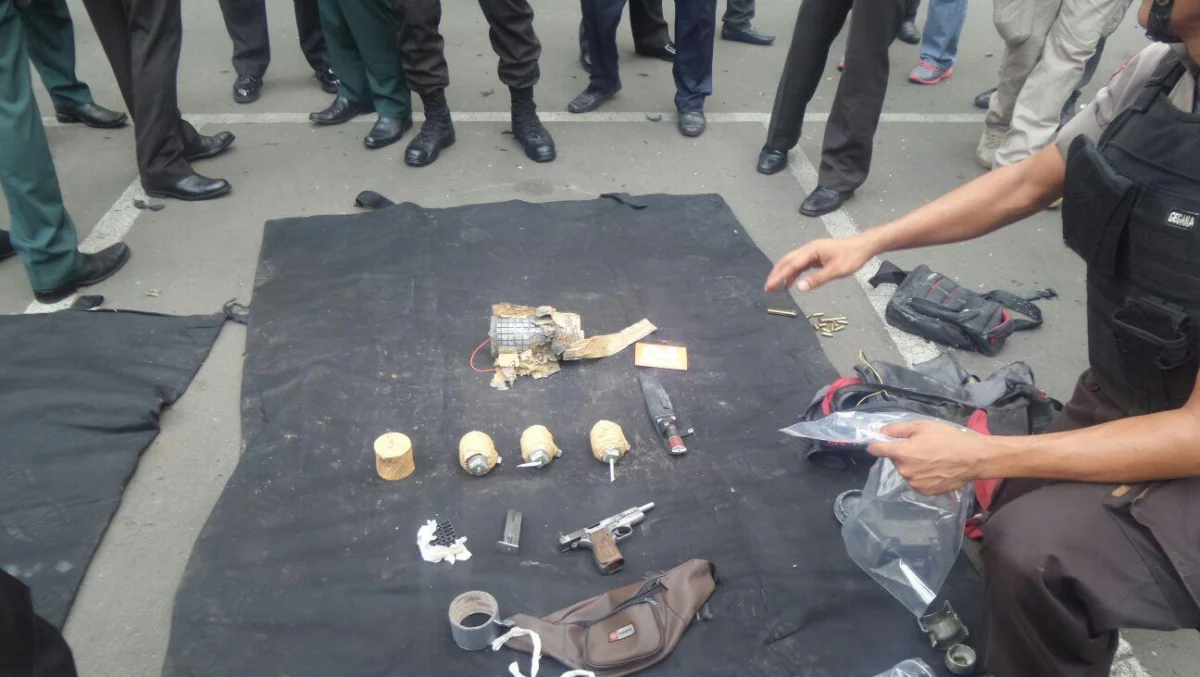
The heart of Jakarta was plunged into chaos on January 14, 2016, as a series of coordinated bomb blasts and gun attacks rocked the bustling Jalan M.H. Thamrin area, with subsequent official confirmations identifying the Islamic State of Iraq and Syria (ISIS) as the orchestrator of the brutal assault. The nation’s top security officials moved swiftly to contain the unfolding horror, with National Police Deputy Chief Commissioner General Budi Gunawan announcing from the scene that the militant group was indeed behind the terror. The attacks, which involved bombs, grenades, and FN-type firearms, targeted various strategic locations, leaving a trail of death and injury and profoundly shaking the Indonesian capital. Initial assessments confirmed the presence of active explosive devices, highlighting the sophisticated and deadly intent of the perpetrators.
A Day of Terror: Chronology of the Jakarta Attack
The morning of Thursday, January 14, 2016, began like any other in the vibrant metropolis, but shortly before 11:00 AM local time, the serenity was shattered. The meticulously planned assault commenced with a powerful explosion at a Starbucks cafe located within the Sarinah shopping complex, a prominent landmark on Jalan M.H. Thamrin. This initial blast caused immediate panic and drew the attention of nearby security personnel. Almost simultaneously, another explosion ripped through a police post strategically positioned at a busy intersection directly opposite the Sarinah complex.
Eyewitness accounts painted a grim picture of the ensuing pandemonium. Following the blasts, at least two gunmen emerged, engaging in a direct shootout with police officers at the targeted post. The attackers, later identified as part of the ISIS cell, demonstrated a chilling resolve, indiscriminately firing their weapons at both law enforcement and passing civilians. The use of FN-type firearms, known for their compact design and lethality, allowed the assailants to inflict maximum damage in the crowded urban environment. As security forces rapidly converged on the scene, more explosions were reported, indicating a multi-pronged attack designed to overwhelm and terrorize. One of the attackers was reportedly seen taking a hostage briefly before being neutralized.
The rapid response from Indonesia’s elite counter-terrorism unit, Densus 88, along with uniformed police and military personnel, was critical in preventing a more catastrophic outcome. Within hours, security forces had cornered the remaining attackers. A tense standoff unfolded near the Djakarta Theater building, where some of the perpetrators had retreated. The decisive actions of law enforcement, involving tactical maneuvers and direct engagement, led to the neutralization of all active assailants. By approximately 3:00 PM local time, National Police Chief General Badrodin Haiti declared the situation under control, though the aftermath of the violence left a deep scar on the city and its people. The swift resolution, however, was lauded globally as a testament to Indonesia’s preparedness and capability in responding to terrorist threats.
Confirming the ISIS Link and Modus Operandi
The immediate aftermath of the attacks saw a flurry of investigative activity. Deputy Chief of Police Komjen Budi Gunawan, speaking from the scene, was among the first to confirm the ISIS connection, stating, "It is true (ISIS)." This swift attribution was crucial in understanding the nature of the threat and mobilizing the necessary counter-terrorism resources. The confirmation was further bolstered by ISIS’s Amaq News Agency, which later claimed responsibility for the attack, stating that "fighters of the Islamic State carried out an armed attack this morning targeting foreign nationals and the security forces protecting them in the Indonesian capital, Jakarta."
The modus operandi of the Jakarta attackers bore striking similarities to other ISIS-inspired or directed attacks observed globally, particularly in Europe. The use of a combination of suicide bombings, improvised explosive devices (IEDs), and small arms fire in a public, high-profile location is a hallmark of ISIS tactics designed to maximize casualties, create widespread fear, and demonstrate the group’s reach. The discovery of active bombs and grenades at the scene indicated a planned escalation or a secondary wave of attacks that were successfully thwarted by the swift police response. The targeting of a police post and foreign-affiliated establishments like Starbucks also aligns with ISIS’s ideological agenda of striking symbols of state authority and Western influence. The perpetrators were later identified as members of a local cell linked to Bahrun Naim, an Indonesian militant fighting with ISIS in Syria, who was believed to have orchestrated the attack remotely.
Casualties and Victims: A Nation in Mourning
The attacks resulted in a tragic loss of life and numerous injuries. While initial reports from the scene were fluid, the confirmed final casualty count stood at eight fatalities, including four attackers and four civilians. Among the civilians killed were three Indonesian nationals and one Canadian citizen, Tahar Amer Ouali. Additionally, over twenty individuals, including police officers and civilians, sustained various injuries, ranging from shrapnel wounds to gunshot wounds. The victims represented the diverse fabric of Jakarta, from ordinary citizens going about their daily lives to dedicated law enforcement officers. The death of the Canadian national underscored the international dimension of the terrorist threat and garnered global attention.
The police officers at the targeted post, who bravely engaged the attackers, were among those injured and killed, highlighting the immense courage and sacrifice of Indonesia’s security forces. The attacks also affected foreign nationals, with one Dutch citizen among the injured, reinforcing the notion that foreign interests were indeed targets, as stated by Komjen Budi Gunawan, who mentioned "foreign objects/interests" as intended targets. The government and civil society quickly rallied to support the victims and their families, providing medical assistance, psychological counseling, and financial aid. The incident sparked an outpouring of grief and solidarity across the archipelago, with prayers and messages of support flooding social media platforms.
Government and Security Response: Unwavering Resolve
In the immediate aftermath, the Indonesian government demonstrated a firm and coordinated response. President Joko Widodo, cutting short a visit to West Java, rushed back to Jakarta and visited the scene of the attack. In a televised address, he condemned the acts of terror, stating, "Our nation and our people should not be afraid, we will not be defeated by these acts of terror." He emphasized the government’s resolve to hunt down the perpetrators and bring them to justice, vowing that "the state, the nation, and the people must not be afraid, must not be defeated by acts of terror like this."
Security measures across Jakarta and other major cities were immediately heightened. Thousands of additional police and military personnel were deployed to secure critical infrastructure, government buildings, foreign embassies, and public spaces. Roadblocks were set up, and checkpoints were reinforced. The national police’s Densus 88 counter-terrorism unit launched an extensive investigation, leading to numerous arrests in the days and weeks following the attack. These operations targeted individuals suspected of involvement in the Thamrin attack, as well as broader networks linked to ISIS and other extremist groups. Weapons caches, bomb-making materials, and radical propaganda were seized in raids across Java and other islands.
The government also launched a public awareness campaign, urging citizens to remain vigilant and report any suspicious activities or individuals. This call for community engagement, coupled with intensified intelligence gathering, was crucial in bolstering national security. The authorities emphasized that while the immediate threat was neutralized, the underlying challenge of radicalization and terrorism remained.
Background Context: Indonesia’s Enduring Struggle Against Terrorism
Indonesia has a long and complex history with Islamist extremism, predating the rise of ISIS. The country experienced some of the deadliest terrorist attacks in Southeast Asian history, most notably the 2002 Bali bombings, which killed 202 people, including many foreign tourists. These attacks were primarily carried out by Jemaah Islamiyah (JI), a regional affiliate of Al-Qaeda, which aimed to establish an Islamic caliphate in Southeast Asia. Following the Bali bombings, Indonesia significantly enhanced its counter-terrorism capabilities, establishing Densus 88 and implementing robust anti-terror laws. These efforts largely succeeded in dismantling JI’s core leadership and preventing large-scale attacks for over a decade.
However, the emergence of ISIS in 2014 presented a new and evolving threat. Thousands of Indonesians were drawn to ISIS’s extremist ideology, with hundreds traveling to Syria and Iraq to fight alongside the group. These foreign fighters, upon their potential return, posed a significant security risk, bringing battlefield experience and radicalized ideologies. Bahrun Naim, the alleged mastermind of the Thamrin attack, was one such individual who had traveled to Syria and used online platforms to incite and coordinate attacks back home. The ISIS threat was characterized by its decentralized nature, its effective use of social media for propaganda and recruitment, and its encouragement of "lone wolf" or small-cell attacks. The Thamrin attack was seen as ISIS’s first major strike in Indonesia, signaling a shift from traditional JI-style attacks to a more globally aligned, ISIS-inspired approach.
International and Domestic Reactions: Solidarity and Resilience
The Jakarta attack drew widespread international condemnation and expressions of solidarity. Leaders from around the world, including the United States, Australia, the United Kingdom, and the United Nations, offered their condolences to the victims and pledged support for Indonesia’s fight against terrorism. The incident highlighted the global nature of the ISIS threat and underscored the need for international cooperation in counter-terrorism efforts. Foreign embassies in Jakarta issued travel advisories and tightened security protocols, while reassuring their citizens of their commitment to safety.
Domestically, the reaction was a powerful display of resilience and unity. The hashtag #KamiTidakTakut (We Are Not Afraid) quickly went viral on social media, becoming a rallying cry for Indonesians to reject fear and stand together against extremism. Citizens gathered at the attack site, laying flowers and leaving messages of defiance. The public’s response demonstrated a strong rejection of the terrorists’ agenda to sow discord and fear. Religious leaders from various faiths condemned the attacks, emphasizing that terrorism has no place in Islam or any religion and that Indonesia’s pluralistic society would not be fractured by such violence. This collective defiance was a powerful counter-narrative to the terrorists’ aims.
Broader Impact and Implications: A Long-Term Challenge
The Jakarta Thamrin attack had profound and lasting implications for Indonesia. Economically, while the immediate impact on tourism and investment was manageable due to the swift containment and robust government response, the incident served as a stark reminder of the security risks that could deter foreign visitors and investors. The government and tourism industry worked tirelessly to reassure the international community of Indonesia’s safety and stability.
Security policy underwent further review and enhancement. The attacks spurred calls for strengthening anti-terrorism laws, particularly concerning the ability to prosecute foreign fighters and individuals involved in propaganda and recruitment. The debate over the balance between national security and civil liberties intensified, but the consensus remained that a proactive and robust counter-terrorism framework was essential. The attack also reinforced the importance of intelligence sharing and collaboration with international partners to track and disrupt transnational terrorist networks.
Socially, the incident tested Indonesia’s long-cherished values of Pancasila, the state ideology promoting unity in diversity, and religious tolerance. However, the overwhelming public response of unity and defiance demonstrated the resilience of Indonesian society against divisive extremist ideologies. The government intensified its deradicalization programs, focusing on education, rehabilitation of convicted terrorists, and counter-narrative campaigns to combat extremist propaganda, particularly online.
On a regional level, the Jakarta attack underscored the growing threat of ISIS in Southeast Asia. It prompted greater cooperation among ASEAN member states on intelligence sharing, border security, and counter-terrorism strategies. The fear of returning foreign fighters and the establishment of ISIS cells in other regional countries became a shared concern, leading to enhanced multilateral efforts to address the common threat.
In conclusion, the Jakarta Thamrin terror attack of January 14, 2016, was a dark day for Indonesia, an act of brutal violence orchestrated by ISIS that claimed innocent lives and sought to instill fear. However, it also became a testament to the nation’s unwavering resolve, the bravery of its security forces, and the enduring spirit of its people. The swift containment, the outpouring of national solidarity, and the ongoing commitment to counter-terrorism efforts demonstrated that while the threat of extremism remains a persistent challenge, Indonesia stands united and unafraid in its determination to combat terror and safeguard its future.

