
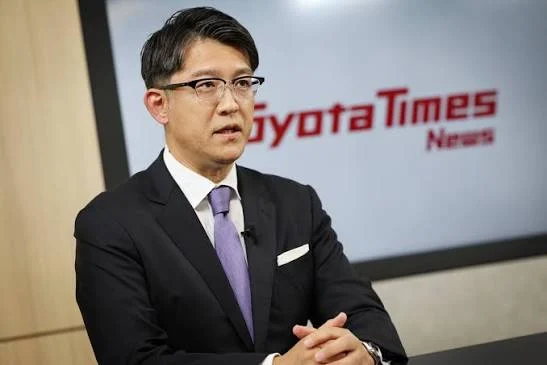
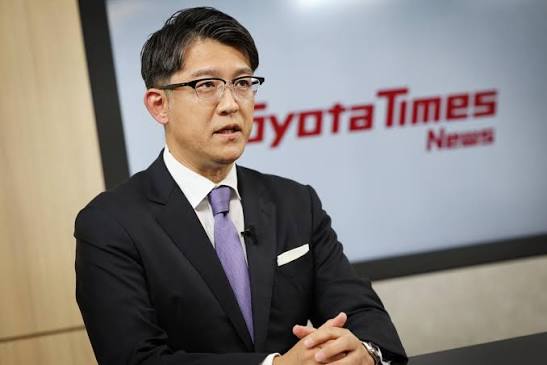
Koji Sato, the influential former CEO of Toyota and current head of the Japan Automobile Manufacturers Association (JAMA), has issued a compelling call for unprecedented standardization and deeper collaboration among Japanese automakers. His urgent plea comes as the industry faces an escalating existential threat from the rapidly expanding and technologically advanced Chinese automotive sector, particularly in the realm of electric vehicles (EVs) and software-defined cars. Sato emphasized in an interview with Automotive News that "the most important theme facing the Japanese auto industry is improving its ‘international competitiveness’," a clear reference to the formidable challenge posed by China’s meteoric rise.
The Shifting Global Automotive Landscape
For decades, Japanese automakers have stood as paragons of efficiency, quality, and innovation, dominating global markets with brands like Toyota, Honda, Nissan, and Mazda. Their meticulously engineered vehicles and lean manufacturing principles set industry benchmarks. However, the global automotive landscape is undergoing its most profound transformation in a century, driven by electrification, autonomous driving, and advanced software integration. This paradigm shift has created an opening for new players, and none have seized this opportunity with more vigor and success than Chinese manufacturers.
The urgency of Sato’s message is underscored by recent market shifts. In May, Chinese automakers collectively outsold Japanese brands in Europe for the first time, a symbolic and significant milestone reported by CarExpert.co.nz. This achievement is not an isolated incident but rather indicative of a broader trend. Chinese brands have made substantial inroads across Asia and various emerging markets worldwide, challenging the long-established hegemony of Japanese, European, and American manufacturers. While punitive tariffs have largely restricted their entry into the crucial U.S. market, the world’s second-largest automotive market, their expansion elsewhere is undeniable and accelerating.
Koji Sato’s Vision for Survival and Efficiency
Sato, a figure whose recent transition from leading the world’s largest automaker to spearheading its national industry association speaks volumes about the gravity of the situation, firmly believes that the Japanese automotive industry "will not survive" unless it fundamentally rethinks its operational strategies. He advocates for "strategically creating ‘areas of cooperation’ to increase efficiency" in the production of unseen components and materials. This efficiency gain, he argues, would free up critical resources and capital, allowing Japanese companies to significantly increase investment in cutting-edge new technologies, where they currently perceive a lag.
The technologies Sato specifically highlighted as needing greater investment include advanced driver-assistance systems (ADAS), rapid-charging battery technologies, sophisticated software interfaces, and a wider array of advanced powertrain options, particularly in the electric and hybrid vehicle segments. These are precisely the areas where Chinese competitors, often backed by robust government support and an agile, digitally native approach, have made rapid advancements.
Standardization as a Cornerstone of Future Competitiveness
The initial and perhaps most critical step in Sato’s proposed transformation is the standardization of core components. He cited wiring harnesses as a prime example, revealing that Japanese suppliers currently produce an astounding 70,000 variants of these complex electrical systems. Such extreme fragmentation, Sato-san explained, severely hinders automation, drives up costs, and complicates the supply chain. By standardizing essential components like wiring harnesses, types of steel, and resin specifications, Sato estimates a potential tenfold increase in productivity. Beyond cost and efficiency, standardization also promises to simplify recycling processes, aligning with global sustainability goals and the emerging circular economy.
However, implementing such widespread standardization across a fiercely competitive industry is no small feat. Sato acknowledged that establishing these common specifications could take "one or two years." Even after standards are set, their practical application by automakers will only occur with the launch of subsequent generations of vehicles, implying a medium-term rather than immediate impact. This timeline highlights the strategic, long-game approach required to fundamentally reorient the industry.
Broader Horizons for Collaboration
Beyond component standardization, JAMA, under Sato’s leadership, is exploring several other critical areas for inter-company cooperation. These include:
- Logistics: Streamlining supply chains and distribution networks to reduce costs and environmental impact. Given Japan’s island geography and intricate manufacturing base, optimized logistics could yield significant benefits.
- Raw Material Access: Collaborating to secure stable and ethical access to crucial raw materials, especially those vital for EV battery production such as lithium, cobalt, and nickel. Collective bargaining power and shared investment in mining or processing could mitigate supply risks and price volatility.
- Circular Economy Commercialization: Jointly developing and commercializing technologies and business models for recycling and reusing automotive components and materials. This not only supports sustainability but also creates new economic opportunities and reduces reliance on virgin resources.
- Talent Recruitment and Development: Pooling resources to attract and train a new generation of engineers and software developers skilled in EV technology, AI, and autonomous systems. This addresses a potential skill gap as the industry pivots away from traditional internal combustion engine expertise.
- Infrastructure for Autonomous Vehicles: Collaborating on the development and restructuring of Japan’s national infrastructure to support the widespread deployment of autonomous vehicles, including smart road systems and communication networks.
- Simplification of Automotive Taxation: Advocating for reforms in Japan’s complex automotive tax structure, which can hinder innovation and consumer adoption of new technologies. A simplified, more consistent tax regime could stimulate domestic demand and investment.
Industry Endorsement and Inferred Support
The push for standardization, while spearheaded by Sato and JAMA, has garnered significant support from other prominent figures within the industry. Ivan Espinosa, CEO of Nissan, publicly endorsed the initiative, emphasizing the "huge opportunity for Japanese automotive players to start sharing commodities, at least having common specifications for certain things." Espinosa envisions a future where "we will have something like a JAMA standard that fits all our requirements, where we certify a few suppliers, and then we use them freely." This sentiment likely resonates across other Japanese manufacturers who face similar pressures and recognize the need for collective action. While not explicitly quoted in the original article, it is logically inferable that other major players like Honda, Mazda, and Suzuki would acknowledge the necessity of such cooperative efforts to maintain global competitiveness against the backdrop of rapid technological evolution and aggressive market strategies from Chinese rivals.
Industry analysts generally view Sato’s proposals as a pragmatic and necessary step. They point to the fragmented nature of the Japanese supply chain, where individual companies often maintain unique specifications for components that could easily be standardized. This historical tendency, while fostering distinct brand identities, has become an impediment in an era demanding speed, scale, and cost efficiency, especially for components that are "unseen" by the consumer.
Koji Sato’s Evolving Role and Toyota’s Guiding Hand
Koji Sato’s career trajectory underscores the strategic importance of this initiative. He served as CEO of Toyota for three impactful years before being succeeded by Kenta Kon, the automotive giant’s Chief Financial Officer, earlier this year. Despite relinquishing the top executive position at Toyota, Sato remains on its board of directors and was appointed as the industry’s first "head of industry section." This newly created role is explicitly tasked with "advancing cross-industry collaboration to enhance the competitiveness of Japanese industry."
Sato articulated his new role to Automotive News as a bridge between "the industry and Toyota," asserting that Toyota is pursuing a growth path not merely for its own benefit, but for the entire Japanese automotive sector. He humbly stated, "Rather than saying Toyota is somehow ‘special,’ it’s more accurate to say that JAMA has always been led by the company best suited to tackle the industry’s biggest challenges at a given point in time." This statement highlights Toyota’s enduring leadership role and its commitment to the collective strength of Japanese manufacturing.
The Landscape of Existing Alliances and Future Prospects
The concept of collaboration is not entirely novel within the Japanese automotive industry, though its scale and strategic intent are now being redefined. Toyota, for instance, in addition to wholly owning Daihatsu and Lexus, holds minority stakes in Subaru, Mazda, and Suzuki. These relationships have historically led to various collaborations on specific models and technologies, demonstrating a precedent for shared development. Examples include the Toyota 86/Subaru BRZ sports car and shared hybrid technologies.
Similarly, Nissan maintains a significant 27 percent stake in Mitsubishi, a partnership that has seen shared platforms and technologies. More recently, reports have emerged about a potential landmark cooperation agreement between Nissan and Honda, two traditional rivals. This proposed collaboration would encompass shared components, software development, and potentially even joint vehicle platforms, signaling a significant shift towards pragmatic cooperation over fierce independence. The Renault-Nissan-Mitsubishi Alliance, while having seen some recalibration with Renault reducing its direct control over Nissan, continues to foster case-by-case partnerships, as evidenced by shared platforms for vehicles like the Nissan Micra and Renault 5 E-Tech, or the Dacia/Renault Duster and Nissan Tekton. These existing frameworks provide a foundation upon which Sato’s broader standardization and collaboration initiatives can build.
Strategic Implications and Long-Term Outlook
The implications of Sato’s vision are far-reaching. If successful, standardized components could lead to:
- Reduced Development Costs: Automakers would no longer need to design and test bespoke versions of common parts, significantly cutting R&D expenditure.
- Faster Time-to-Market: Simplified supply chains and common parts could accelerate vehicle development cycles, allowing Japanese firms to respond more quickly to market trends and technological advancements.
- Enhanced Innovation: By freeing up resources from commodity components, companies can reallocate investment towards truly differentiating technologies like advanced AI, solid-state batteries, and next-generation mobility solutions.
- Stronger Supply Chains: A unified approach to sourcing and specifications could give Japanese suppliers greater economies of scale and resilience, benefiting the entire ecosystem.
- Improved Global Competitiveness: A more unified and efficient industry could better withstand price pressures and innovate faster, particularly against aggressive challengers from China.
However, challenges remain. Overcoming deeply ingrained corporate cultures of independence and proprietary development will require sustained leadership and trust. Ensuring intellectual property rights are protected within collaborative frameworks will also be critical. The transition period, during which new standards are adopted and integrated into vehicle development, will require careful management to avoid disruptions.
Ultimately, Koji Sato’s call represents a pivotal moment for the Japanese automotive industry. It acknowledges the undeniable shift in global power dynamics and proposes a proactive, collaborative strategy to safeguard its future. By pooling resources, standardizing the unseen, and focusing collective ingenuity on the next generation of automotive technology, Japan aims not just to survive, but to thrive in an increasingly competitive and rapidly evolving global marketplace. The coming years will reveal whether this historic industry can unite to redefine its legendary efficiency and innovation for the electric, software-defined era.

