
TIRANA, ALBANIA – The streets of Albania’s capital, Tirana, erupted into violent confrontations on July 23, 2026, as thousands of anti-government protesters clashed with riot police in front of the parliament building. The demonstrations, which have been ongoing for weeks, escalated significantly, fueled by widespread allegations of corruption surrounding various development projects, most notably a controversial luxury resort linked to former U.S. President Donald Trump’s son-in-law, Jared Kushner. Protesters, expressing profound discontent with the government, are now vociferously demanding the immediate resignation of Prime Minister Edi Rama.
The day’s events unfolded with palpable tension. Early in the morning, thousands of citizens began to converge on the central boulevards leading to the parliament, defying heavy police presence. Security forces had erected multiple layers of barricades around the parliamentary complex, aiming to prevent the surging crowds from approaching the legislative building where sessions were scheduled to commence. However, the sheer volume and determination of the demonstrators quickly tested these defenses. Chants of "Rama Go!" and accusations of systemic corruption reverberated through the city center, setting a confrontational tone for the day.
The Genesis of Discontent: The Kushner-Linked Resort
The current wave of unrest traces its roots back several weeks, initially sparked by public outrage over a proposed luxury resort development. This ambitious project, planned for an environmentally sensitive stretch of Albania’s pristine Adriatic coastline, quickly became a lightning rod for criticism due to its perceived lack of transparency and the involvement of Affinity Partners, an investment firm founded by Jared Kushner. The proposed development, which envisions high-end hotels and villas, has drawn fire from environmental groups, local communities, and opposition parties alike. Critics argue that the project poses a significant threat to the region’s delicate ecosystem, including coastal wetlands and marine biodiversity, which are crucial for both local livelihoods and Albania’s burgeoning tourism sector. Furthermore, the land deals and regulatory approvals for such large-scale projects have frequently been opaque, leading to accusations of favoritism and backroom dealings.
The involvement of a figure with international prominence like Jared Kushner added another layer of complexity and scrutiny. For many Albanians, the project symbolized a broader concern about how foreign investments, particularly those with powerful connections, might bypass environmental protections and local regulations, potentially at the expense of national interests and sustainable development. The government’s defense of the project, touting its potential for economic growth and job creation, failed to quell the growing public apprehension, which instead intensified into a broader anti-corruption movement.
Escalation and Broadening Demands
What began as a specific protest against a single development quickly metastasized into a wider expression of public frustration with what many perceive as entrenched corruption within the Albanian state. Over the past month, the demonstrations have steadily grown in size and intensity, incorporating grievances related to numerous other infrastructure and property development projects along the coast and in areas adjacent to protected natural reserves. Allegations of illicit land acquisitions, rigged public tenders, and the enrichment of politically connected individuals have become central themes.
The protests evolved from focusing on environmental and transparency concerns to a direct challenge to the legitimacy of Prime Minister Edi Rama’s administration. The demand for his resignation, initially a fringe call, has now become the rallying cry for thousands, signifying a profound loss of public trust in the government’s ability or willingness to combat corruption effectively. The shift highlights a deeper societal frustration with governance, where citizens feel their voices are unheard and their resources are being mismanaged or siphoned off through corrupt practices.
Allegations of Deep-Rooted Corruption
Albania has long struggled with issues of corruption, a persistent challenge that has hindered its democratic development and its aspirations for integration into the European Union. Transparency International’s Corruption Perception Index consistently ranks Albania poorly, indicating a widespread perception of corruption across various sectors. Protesters and opposition figures point to a pattern of alleged irregularities in public procurement, concessions, and urban planning. The accusations extend beyond property development to encompass public services, with citizens frequently lamenting the deteriorating quality of healthcare, education, and public infrastructure, which they attribute to systemic corruption and a lack of accountability.
For many Albanians, the current government’s perceived failure to adequately address these issues, coupled with its vigorous defense of contentious projects, has solidified the belief that corruption has become deeply institutionalized. The lack of independent oversight, coupled with a judiciary often seen as susceptible to political influence, exacerbates public distrust and fuels the demand for radical political change. The slogan "Rama Go!" encapsulates not just a desire for a change in leadership, but a yearning for a fundamental shift towards more transparent and accountable governance.
Government’s Stance and Political Landscape
Prime Minister Edi Rama, who has led Albania since 2013, finds himself at a critical juncture in his political career. His Socialist Party has dominated Albanian politics for over a decade, overseeing periods of economic growth and infrastructure development. However, his administration has been consistently plagued by accusations of corruption and authoritarian tendencies. In response to the latest wave of protests, the government has vehemently denied all allegations of wrongdoing. Officials maintain that the development projects are legitimate, adhere to all legal frameworks, and are essential for driving economic progress, attracting foreign investment, and creating much-needed jobs for the Albanian populace.
In official statements, government spokespersons have often dismissed the protests as politically motivated, orchestrated by opposition parties seeking to destabilize the country. They argue that critics are exaggerating environmental concerns and fabricating corruption claims to undermine the government’s development agenda. Despite these denials, the sustained and increasingly aggressive nature of the protests presents a significant political challenge to Rama, testing the resilience of his long-standing grip on power and potentially impacting his party’s future electoral prospects. The government’s firm stance, however, has only served to deepen the divide between the ruling elite and a frustrated segment of the population.
Clash Dynamics: A Day of Confrontation
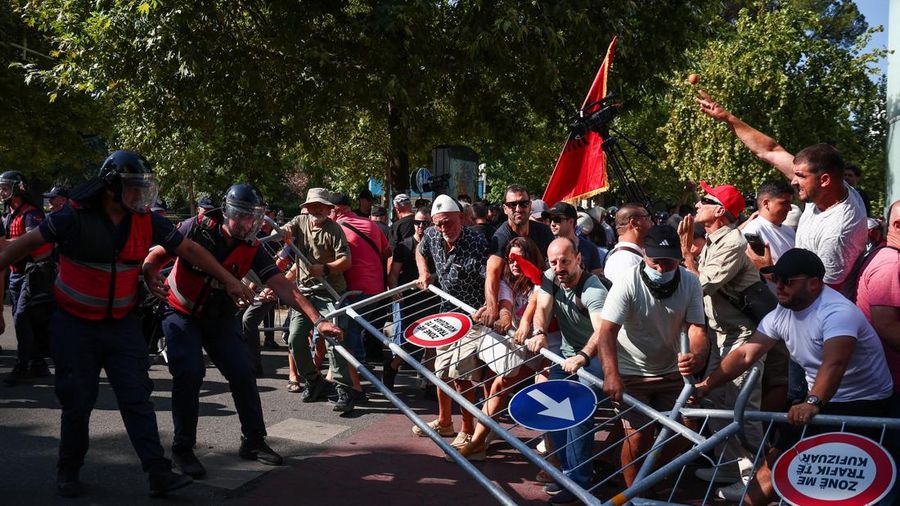
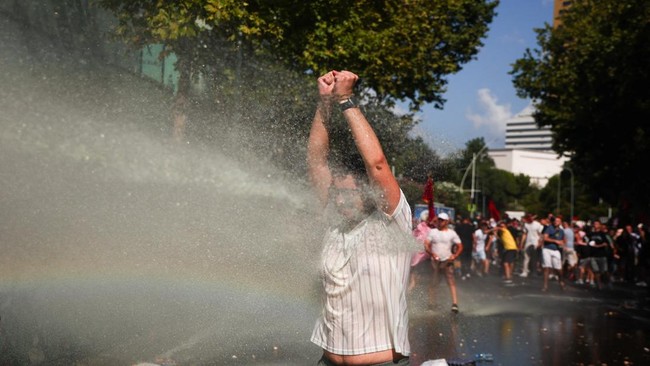
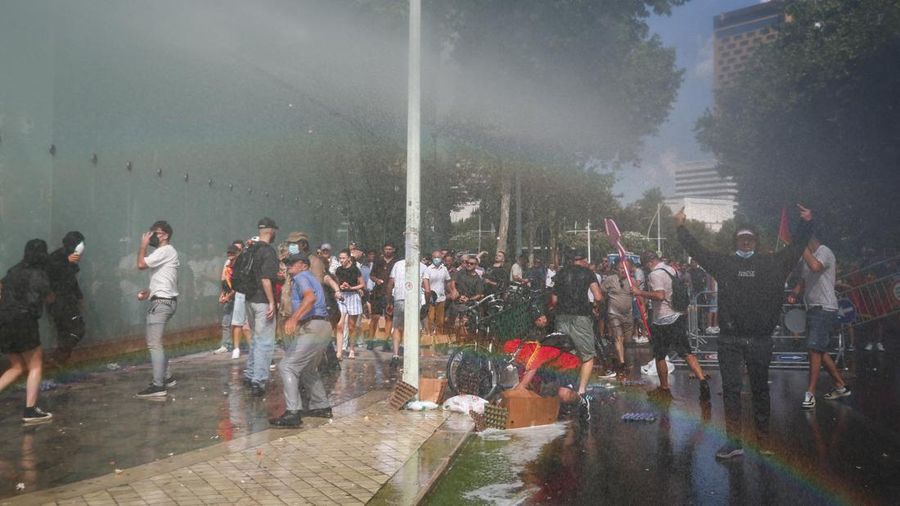
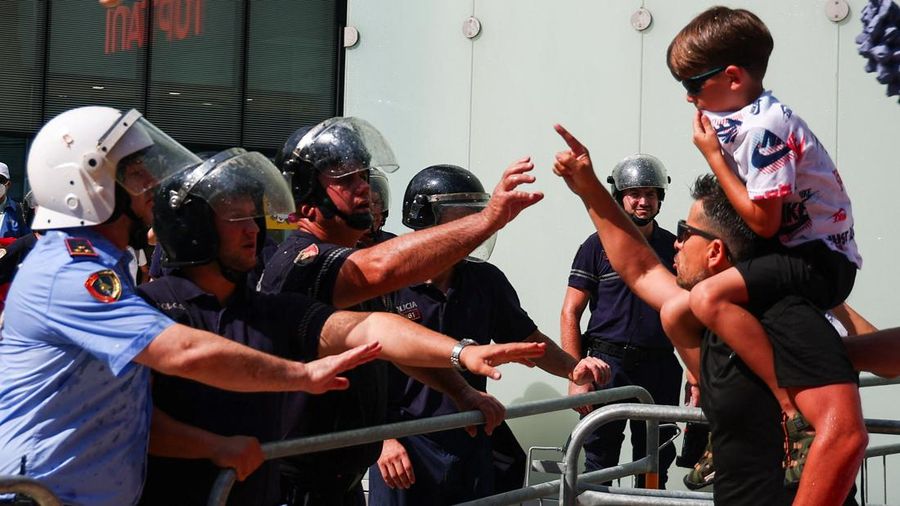
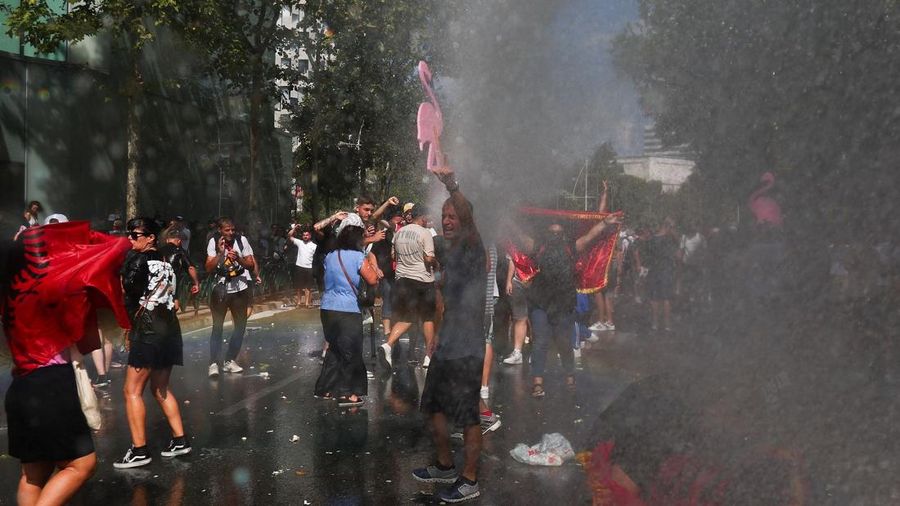
On July 23, 2026, the confrontation between state authority and public anger reached a peak. As thousands of protesters attempted to breach the barricades surrounding the parliament, riot police, clad in full protective gear, responded forcefully. Water cannons were deployed repeatedly, sending powerful jets of water into the dense crowds, attempting to disperse them. Simultaneously, tear gas canisters were fired, creating plumes of stinging smoke that blanketed the area, causing widespread discomfort and disarray among the demonstrators.
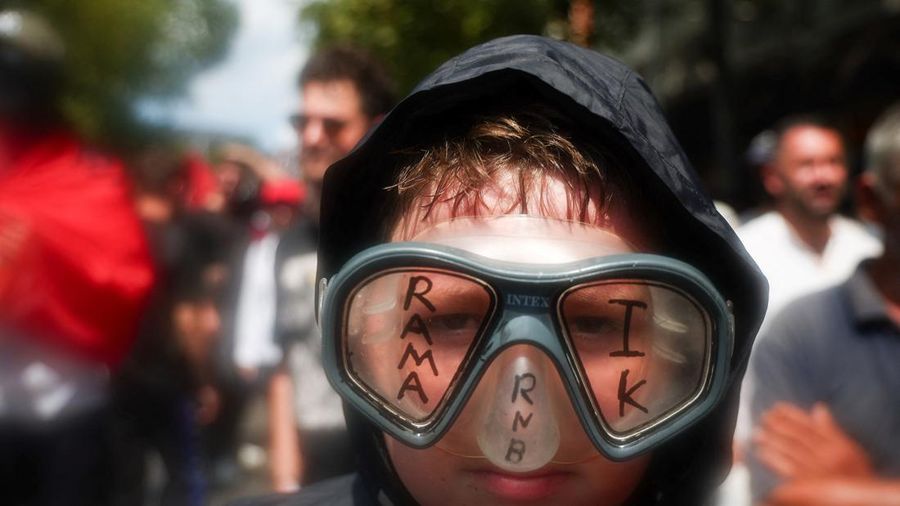
The scene was chaotic. Protesters, some wearing diving masks with "Rama Go!" slogans scrawled on them, demonstrated fierce resistance. They pushed against police lines, attempting to dismantle the metal barricades, and retaliated by throwing various objects, including eggs, at the officers. Images captured by photojournalists depicted scenes of intense struggle: individuals reacting in pain from water cannon blasts, others engaging in direct physical confrontations with officers, and the general pandemonium of a large crowd facing off against state security. Despite the forceful intervention, the protesters largely refused to yield, highlighting the depth of their grievances and their determination to make their voices heard. The clashes continued for several hours, marking one of the most significant confrontations in Tirana in recent years.
Broader Implications for Albania
The ongoing unrest carries profound implications for Albania, both domestically and on the international stage.
EU Accession Hopes: Albania is a candidate country for European Union membership, a process that places significant emphasis on the rule of law, good governance, and the fight against corruption. The persistent allegations of corruption and the violent suppression of protests could severely jeopardize Tirana’s progress in accession negotiations. EU officials and member states are likely to scrutinize these events closely, potentially delaying further steps towards integration if concerns about democratic standards and judicial independence are not adequately addressed. The European Commission has repeatedly stressed the importance of tackling organized crime and corruption as key benchmarks for Albania’s path to membership.
Economic Impact: While the government champions large-scale development projects as economic boons, the protests, coupled with allegations of corruption, could deter legitimate foreign investors seeking stable and transparent markets. The controversy surrounding projects linked to international figures like Jared Kushner could also damage Albania’s reputation as a reliable business destination, raising questions about legal certainty and fairness in competition. Furthermore, unsustainable development in environmentally sensitive areas threatens long-term tourism potential and ecological stability, impacting future economic resilience.
Political Future and Stability: The sustained pressure from the streets poses a serious threat to Prime Minister Rama’s political longevity. A continued erosion of public trust and ongoing civil unrest could lead to increased political instability, potentially forcing early elections or prompting a significant reshuffle within the ruling party. The opposition, energized by the public’s discontent, will likely intensify its efforts to capitalize on the current climate, further polarizing the political landscape. The crisis also highlights the fragility of democratic institutions if public grievances are not addressed through constructive dialogue and reforms.
Freedom of Expression and Human Rights: The heavy-handed response by police, involving water cannons and tear gas against largely peaceful (though at times confrontational) demonstrators, raises concerns about the state of freedom of assembly and expression in Albania. International human rights organizations will be monitoring the situation closely, potentially issuing condemnations or calls for investigations into excessive force. Respect for fundamental freedoms is another critical component of Albania’s EU integration process.
International Scrutiny: Given the involvement of a company linked to a prominent American political family member, the situation in Albania is drawing increased international attention. This could lead to calls for greater transparency in international investment deals and scrutiny of how such projects are approved and implemented, particularly in developing nations with nascent democratic institutions.
Looking Ahead
The clashes in Tirana on July 23, 2026, mark a significant escalation in Albania’s ongoing political and social crisis. The government faces the formidable task of restoring public trust and addressing the deep-seated grievances related to corruption and governance. For the protesters, the challenge lies in maintaining momentum and channeling their collective anger into a cohesive movement for meaningful reform. The coming weeks will be crucial in determining whether dialogue can prevail over confrontation, and whether Albania can navigate this turbulent period towards a future of greater transparency, accountability, and sustainable development. The eyes of both the region and the international community will remain fixed on Tirana as this critical political drama continues to unfold.

