
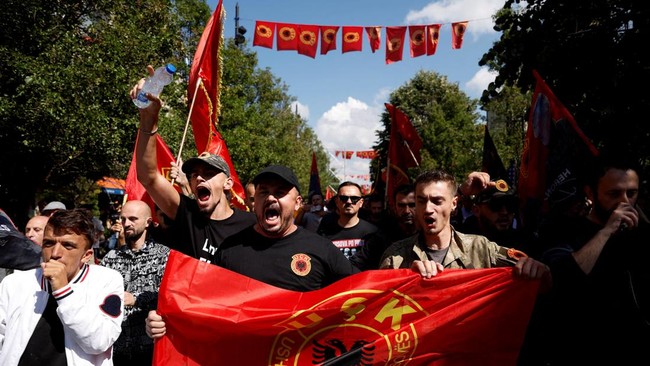
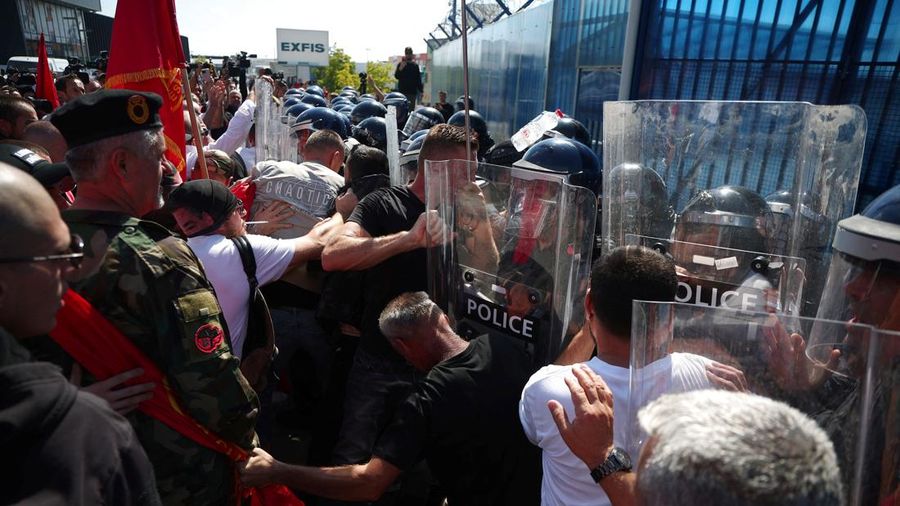
Prishtina, Kosovo — Tensions boiled over in the capital of Kosovo on Wednesday, September 16, 2026, as hundreds of furious supporters took to the streets following a landmark war crimes verdict delivered thousands of miles away in The Hague. Hashim Thaçi, the charismatic former President of Kosovo and a revered commander of the wartime Kosovo Liberation Army (KLA), was sentenced to 25 years in prison after being found guilty of multiple charges including murder, torture, and illegal detention. The ruling, handed down by the Kosovo Specialist Chambers (KSC), sent shockwaves across the Balkan nation, immediately triggering violent clashes with anti-riot police outside the headquarters of the European Union Rule of Law Mission (EULEX) in Prishtina.
The demonstration, marked by the burning of smoke flares, shoving matches, and the deployment of water cannons by heavily armed law enforcement units, underscores the deep-seated polarization that continues to plague the region. For many ethnic Albanians in Kosovo, Thaçi remains a national hero who spearheaded the fight for liberation against Serbian oppression during the late 1990s. Conversely, the KSC and its international backers view the verdicts as a critical milestone for international justice and accountability. As the dust settles from Wednesday’s unrest, the international community watches anxiously to see whether this legal resolution will pave the way for lasting reconciliation or ignite a dangerous resurgence of ethnic hostility in the volatile Western Balkans.
The Verdict at The Hague: Charges and Conviction
The judgment delivered by the Kosovo Specialist Chambers on September 16 marked the culmination of one of the most high-profile trials in modern European legal history. Hashim Thaçi, alongside several other former senior commanders of the KLA, stood trial under internationalized jurisdiction seated in The Hague, Netherlands, specifically designed to handle sensitive cases stemming from the 1998–1999 Kosovo conflict while shielding witnesses from local intimidation.
According to the presiding judges, prosecutors successfully proved beyond a reasonable doubt that Thaçi bore command responsibility for widespread and systematic abuses committed against perceived political opponents, ethnic Serbs, Roma, and other minorities. The catalog of crimes included unlawful deprivation of liberty, cruel treatment, torture, and murder perpetrated in detention facilities operated by the KLA during and immediately after the armed conflict.
When the verdict was read, Thaçi stood motionless, maintaining the stoic composure he has largely exhibited throughout the grueling judicial process. Throughout the proceedings, the former president vehemently denied all charges, casting himself and his fellow KLA veterans as freedom fighters defending their homeland against ethnic cleansing by the regime of former Serbian leader Slobodan Milošević. Legal defense teams have already signaled their intent to appeal the 25-year sentence, arguing that the court failed to properly weigh wartime realities and political motivations behind the prosecution.
Chronology of a Conflict: From Guerrilla Warfare to Independence
To fully comprehend the explosive reaction to Thaçi’s sentencing, one must examine the turbulent historical timeline that shaped modern Kosovo:
- 1989–1997: The autonomy of Kosovo within the former Yugoslavia is stripped away by Slobodan Milošević, leading to systemic discrimination against the ethnic Albanian majority, the peaceful resistance movement led by Ibrahim Rugova, and the eventual radicalization of those favoring armed struggle.
- 1998–1999: The Kosovo War erupts between the separatist KLA and Serbian security forces. The conflict results in the displacement of nearly one million ethnic Albanians and thousands of casualties, ending only after a 78-day NATO bombing campaign against Serbian military targets.
- June 1999: Serbian forces withdraw from Kosovo, and the United Nations establishes an interim administration (UNMIK), while the KLA is officially disbanded and demilitarized.
- February 17, 2008: Kosovo declares independence from Serbia, with Hashim Thaçi serving as Prime Minister at the time. The declaration is recognized by the United States and major European Union powers, though it is fiercely rejected by Serbia and its allies, including Russia.
- 2011–2020: Thaçi transitions through various high-level political roles, eventually becoming President of Kosovo in 2016. He plays a central, albeit controversial, role in EU-facilitated dialogue aimed at normalizing relations with Serbia.
- November 2020: Thaçi resigns from the presidency immediately after a pre-trial judge at the Kosovo Specialist Chambers confirms an indictment for war crimes and crimes against humanity. He voluntarily surrenders and is transferred to the detention facility in The Hague.
- September 16, 2026: The Kosovo Specialist Chambers delivers its first-instance verdict, sentencing Thaçi to 25 years in prison and igniting violent protests in Prishtina.
Street-Level Chaos: Protests and Security Response
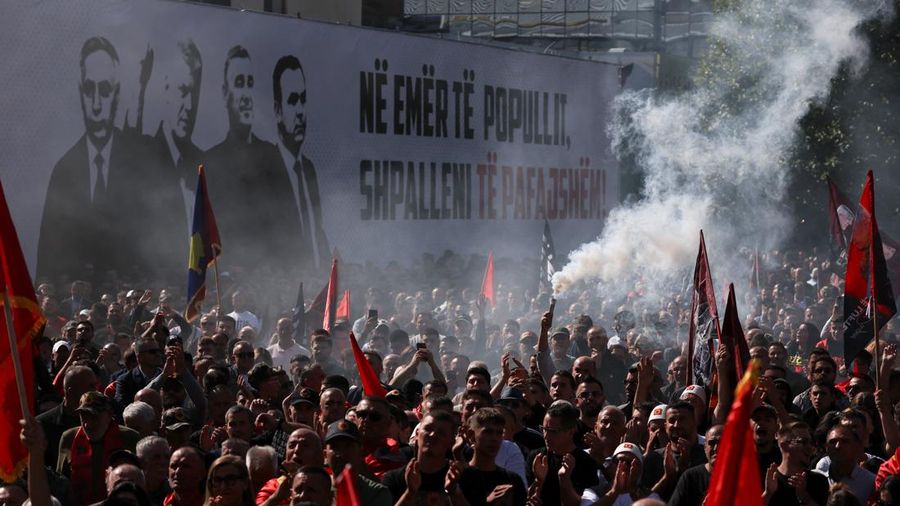
The immediate aftermath of the verdict transformed downtown Prishtina into an active zone of civil unrest. Within hours of the announcement from the Netherlands, crowds began gathering spontaneously outside prominent institutional buildings, expressing outrage over what they perceived as a politically motivated attack on Kosovo’s liberation history.
Protesters chanted pro-KLA slogans, waved national flags, and ignited red smoke flares that cast an ominous haze over the city center. As the numbers swelled, a faction of the demonstrators pushed past initial security perimeters and converged on the headquarters of EULEX, hurling objects and attempting to breach police lines.
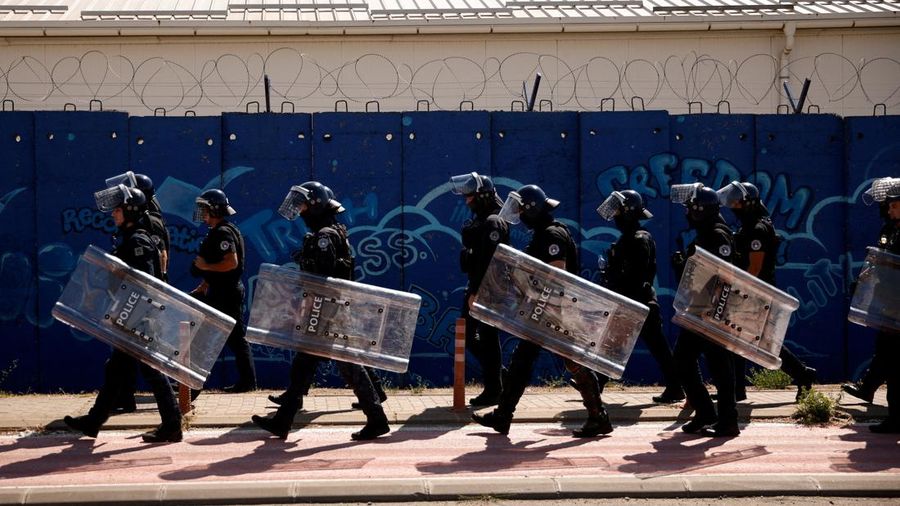
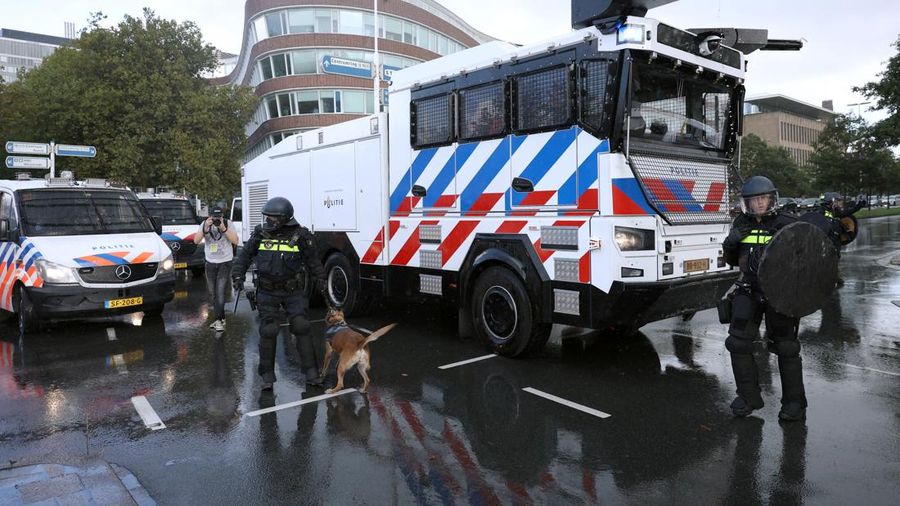
The response from Kosovo law enforcement was swift and heavy-handed. Elite anti-riot police units, clad in full tactical gear and reinforced with armored vehicles and water cannons, were deployed across strategic junctions in the capital. Scuffles broke out as officers engaged in pushing matches and used non-lethal crowd-control measures to disperse the aggressive crowds. Several minor injuries were reported among both protesters and police personnel, though authorities managed to restore a tenuous order by late evening.
Hero or War Criminal? The Deep Societal Divide
The dichotomy surrounding Hashim Thaçi’s legacy highlights a profound chasm in historical memory between Kosovo and the international community, as well as between ethnic Albanians and Serbs.
In the eyes of the majority ethnic Albanian population in Kosovo, the KLA is venerated as the sacred instrument that delivered freedom from brutal Serbian subjugation. Figures like Thaçi are credited with mobilizing international sympathy and military intervention that ultimately saved a population from annihilation. Consequently, any judicial proceeding targeting former KLA leadership is frequently interpreted locally as an assault on the legitimacy of Kosovo’s fight for independence itself. Critics of the KSC argue that the court operates with a selective bias, focusing predominantly on alleged crimes committed by Albanian guerrillas while failing to deliver comprehensive justice for the tens of thousands of ethnic Albanian victims of Serbian state violence.
Conversely, international jurists, human rights organizations, and victims’ advocates emphasize that the rule of law must remain impartial and absolute, regardless of a defendant’s political stature or wartime contributions. Proponents of the tribunal argue that individual accountability for war crimes is indispensable for establishing historical truth, ensuring closure for families of all ethnic backgrounds, and cementing democratic norms in a fragile post-conflict society. The court’s findings underscore that even those who lead liberation movements are not immune from international humanitarian law.
Geopolitical Implications and Future Outlook
The conviction and subsequent sentencing of Hashim Thaçi carry profound geopolitical repercussions for the Western Balkans, a region where ethnic tensions remain perpetually near the surface.
First, the ruling risks deepening internal political instability within Kosovo. Thaçi’s political party and his network of loyalists still wield significant influence, and the perception of a biased or overly harsh international tribunal could weaken public trust in democratic institutions and foreign-backed legal frameworks. The government in Prishtina faces a delicate balancing act: it must condemn violence and uphold public safety while acknowledging the deep emotional resonance the KLA holds for much of its citizenry.
Second, the verdict impacts the stalled normalization dialogue between Kosovo and Serbia. Relations between the two neighbors have remained frosty, punctuated by periodic border crises and disputes over minority rights, particularly regarding the status of ethnic Serbs in northern Kosovo. While Belgrade may view the conviction of a top KLA commander as a validation of historical grievances, nationalist politicians on both sides are likely to exploit the emotional fallout for domestic political leverage, complicating any prospects for a comprehensive peace agreement in the near term.
Ultimately, September 16, 2026, will be recorded as a watershed moment for the Western Balkans. Whether the heavy prison sentence handed down in The Hague serves as a definitive closing chapter on the demons of the 1990s or merely opens a new arena of civil friction will depend heavily on the restraint of political leaders, the resilience of civil society, and the steadfast commitment of international partners to foster justice, security, and reconciliation in the heart of Europe.

