
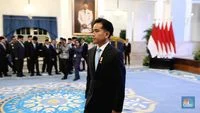
The prospect of governance without a second-in-command has long presented constitutional tests for nations worldwide. Following reports regarding high-level political transitions in Indonesia, governance analysts and constitutional scholars have turned their attention to how major democracies navigate the unexpected absence of a vice president. While executive vacancies typically trigger immediate succession protocols, history demonstrates that numerous countries—including the United States, Brazil, the Philippines, and Indonesia itself—have experienced extended periods operating solely under the leadership of a head of state without an appointed or elected deputy.
These vacancies arise from various circumstances, most commonly when a vice president ascends to the presidency following the death, resignation, or impeachment of a leader, or when the deputy resigns due to irreconcilable policy differences. How long these offices remain vacant depends strictly on individual national charters, legislative frameworks, and prevailing political landscapes.
Historical Precedents Across the Globe
The phenomenon of a vacant vice presidency is far from unprecedented. Across different continents and centuries, legal frameworks have frequently left an executive void when the primary line of succession is activated.
United States: Pre-Amendment Precedents
In the United States, the absence of a vice president was historically common when a president died in office. Four major administrations operated significant portions of their terms without a vice president: John Tyler (1841–1845), Millard Fillmore (1850–1853), Andrew Johnson (1865–1869), and Chester A. Arthur (1881–1885). In each instance, the sitting vice president ascended to the presidency, but constitutional mechanisms at the time did not permit the mid-term appointment of a new deputy.
According to United States Senate archives, these offices remained empty until the next scheduled presidential election. It was not until the ratification of the Twenty-Fifth
Amendment in 1967 that a clear mechanism was established, allowing a sitting president to nominate a vice president subject to confirmation by a majority vote of both houses of Congress.
Latin American Constitutional Crises: Brazil, Argentina, and Bolivia
Latin American political history features multiple instances of vice presidential vacancies, often tied to intense political volatility and executive impeachment or resignation.
In Brazil, leaders such as Floriano Peixoto (1891), Café Filho (1954), José Sarney (1985), Itamar Franco (1992), and Michel Temer (2016) all assumed the presidency following the resignation, death, or impeachment of their predecessors. In each case, the resulting vacancy in the vice presidency persisted for the remainder of the presidential term without a backfill.
Argentina experienced a notable vacancy when Vice President Carlos Álvarez resigned on October 6, 2000, amid escalating internal friction within the administration of President Fernando de la Rúa. Rather than appointing a replacement, the administration left the position vacant until the government collapsed in December 2001, leaving the nation without a vice president for over a year.
Similarly, Bolivia faced executive restructuring in October 2003 when Vice President Carlos Mesa assumed the presidency following the resignation of Gonzalo Sánchez de Lozada amid fierce civil unrest. The vice presidency remained vacant throughout Mesa’s tenure until January 2006, highlighting how extended structural voids often accompany deep socioeconomic crises.
The Asian Context: The Philippines and Indonesia
In Southeast Asia, historical transitions have likewise tested the resilience of institutional frameworks during unexpected departures from the office of the vice president.
In the Philippines, Carlos P. Garcia assumed the presidency in March 1957 following the tragic death of President Ramon Magsaysay in a plane crash. Garcia’s elevation left the vice presidential seat vacant for several months until the national elections in November 1957, when Garcia secured a full presidential mandate and Diosdado Macapagal was elected vice president.
Indonesia holds one of the most prolonged records of a vacant vice presidency in modern political history. On December 1, 1956, Vice President Mohammad Hatta formally stepped down from his post due to mounting philosophical and political divergences with President Sukarno. Following Hatta’s departure, the office of the vice president remained entirely vacant for more than 16 years, spanning the final tumultuous years of the Old Order under Sukarno and the early consolidation of the New Order under President Suharto, until Sri Sultan Hamengkubuwono IX was appointed in 1973.
Constitutional Frameworks and Modern Succession Mechanics
The existence of a vacancy does not inherently signal institutional failure; rather, it underscores the rigidity or flexibility of a nation’s constitutional design. Historically, many nations drafted foundational laws that omitted provisions for filling mid-term vice-presidential vacancies, prioritizing stability at the very top of the executive branch while leaving the secondary office dormant.
In contemporary Indonesia, the rules governing such vacancies are explicitly defined. Under Article 8, Paragraph (2) of the 1945 Constitution (UUD 1945), should the office of the vice president become vacant due to death, resignation, removal, or inability to perform duties, the People’s Consultative Assembly (MPR) must convene to elect a new vice president from two candidates nominated by the president within a strict timeframe of no later than 60 days. This amendment was introduced to prevent the protracted vacancies seen in the nation’s early history and to ensure continuity and balance in the executive branch.
Broader Implications and Political Analysis
Political analysts note that the absence of a vice president carries both symbolic and practical implications for governance. Practically, a vice president often acts as a crucial bridge between the executive branch and the legislature, managing political coalitions, steering policy initiatives, and absorbing a significant portion of diplomatic and ceremonial duties.
When this office remains vacant, the administrative burden concentrates entirely on the head of state, potentially slowing legislative processing and increasing vulnerability during periods of national crisis. Furthermore, in nations with fragile political coalitions, the presence of a recognized successor serves as a stabilizing anchor for investors, international allies, and domestic markets.
As modern democracies continue to refine their legal and constitutional frameworks, the historical precedents of executive vacancies serve as critical case studies. They illustrate the vital importance of clear, unambiguous succession laws that balance swift executive action with democratic accountability, ensuring that the machinery of state can function effectively even when the highest offices undergo unexpected transformation.

