
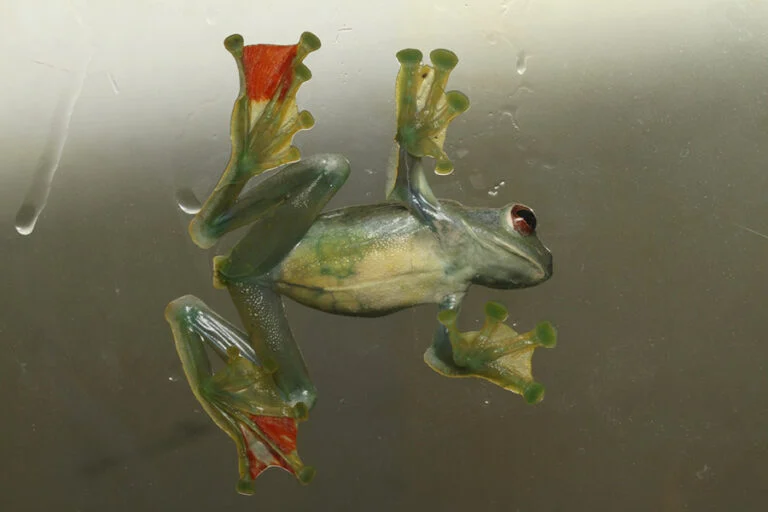
The discovery of a new species of tree frog, scientifically named Zhangixalus faritsalhadii, in the lush, mountainous landscape of Mount Slamet, Banyumas, Central Java, marks a significant milestone in Indonesian herpetology. Published in the 2024 edition of the Raffles Bulletin of Zoology, the identification of this amphibian highlights the rich, yet often overlooked, biodiversity hidden within the volcanic ecosystems of Java. Thriving at an elevation of approximately 773 meters above sea level, the frog occupies a specialized niche within the montane forest, characterized by small, stagnant water pools that serve as vital breeding grounds.
This discovery is not merely a cataloging of a new organism; it is the culmination of years of persistent fieldwork, rigorous genetic analysis, and the legacy of a dedicated researcher. The species, which possesses a distinct aesthetic—defined by a vibrant greenish body, a constellation of cream and black spots, and striking red foot webbing—serves as a biological testament to the complex evolutionary history of the Sundaland region.
A Chronology of Discovery: From Observation to Identification
The journey to identifying Zhangixalus faritsalhadii began long before its formal description. In 2017, members of the herpetofauna observation team from Jenderal Soedirman University (Unsoed) captured photographs of a curious frog during a routine survey. At the time, the specimen remained an enigma, categorized simply as Rhacophorus sp.
The narrative gained momentum in 2020, when the late Farits Alhadi, a promising young herpetologist, initiated a focused exploration of the area. His efforts to document the species were instrumental. In 2021, when the comprehensive book Amfibi Pulau Jawa (Amphibians of Java) was published, the frog was featured, though it still lacked a formal scientific designation. It was only through the subsequent collaboration of experts and further field surveys conducted in February 2020 and July 2022 that the scientific community could confirm the frog as a distinct species.
The research team performed in-depth morphological and molecular analyses. Comparisons were drawn against its closest morphological relatives: Zhangixalus achantharrhena from Sumatra, Z. prominanus from Sumatra and the Malay Peninsula, and Z. dulitensis from Borneo. The molecular data, specifically the analysis of the 16S rRNA gene, revealed a genetic divergence of over 3.1 percent compared to these relatives, providing the definitive evidence required to classify it as a new species.
Morphological Distinctions and Taxonomic Significance
While Z. faritsalhadii bears a striking resemblance to Z. prominanus, the researchers identified specific phenotypic markers that set them apart. The newly discovered species exhibits smaller, more refined spots across its dorsal surface and possesses a notably blunter snout compared to the sharper, more elongated profile of Z. prominanus.
The presence of a species from the "green tree frog with red webbed feet" group on the island of Java is of profound interest to evolutionary biologists. Historically, the distribution of this group was thought to be centered in Sumatra, Borneo, and the Malay Peninsula. The discovery on Mount Slamet suggests a more complex biogeographical history for the region, potentially indicating that these populations were once more interconnected or that Java served as a distinct evolutionary theater for these amphibians.
With the addition of Z. faritsalhadii, the official count of recorded amphibian species in Java has risen to 47. This growth in the inventory of Javanese biodiversity underscores the importance of continuing taxonomic research in the archipelago, where many species may still be awaiting discovery in fragmented or high-altitude forest patches.
The Legacy of Farits Alhadi
The naming of the species as faritsalhadii is a poignant tribute to the late herpetologist Farits Alhadi. His contribution to the study of Javanese amphibians was cut short by his untimely passing, but his legacy persists through this discovery. By immortalizing his name in the binomial nomenclature of the species, the scientific community recognizes his role in bridging the gap between preliminary field observations and formal biological validation. It serves as a reminder of the human element behind scientific progress—the tireless hours spent in humid, rugged terrains to document the natural world.

Ecological Challenges and Conservation Imperatives
Despite the excitement surrounding the discovery, experts express cautious optimism. The ecological profile of Z. faritsalhadii remains largely a mystery. Fundamental data points—such as the species’ specific diet, its vocalization patterns, the characteristics of its tadpoles, and the full extent of its geographical range—are currently unknown.
Dr. Amir Hamidy, a researcher from the National Research and Innovation Agency (BRIN) who was involved in the study, has highlighted several pressing concerns regarding the future of this species. The most immediate threat is the potential for illegal collection. The frog’s vibrant appearance makes it a target for the exotic pet trade, where unique and newly discovered species often command high prices.
Beyond the threat of poaching, the species faces environmental pressures that are pervasive throughout Java. The habitat where the specimens were found—a patch of Rasamala forest—is not currently designated as a protected area. It is situated in proximity to public recreational zones, including campsites, which increases the risk of human-induced habitat degradation.
"The conservation of this species requires an integrated approach," notes the research team. "We are looking at a species that exists in a delicate balance. The encroachment of agricultural land, the rise of ambient temperatures due to climate change, and the threat of pathogenic fungi are all variables that could destabilize this newly discovered population."
Addressing the Broader Implications for Indonesian Biodiversity
The discovery of Z. faritsalhadii acts as a microcosm for the broader state of conservation in Indonesia. Java, being the most densely populated island in the archipelago, faces immense pressure from land-use change. Forests are increasingly fragmented, and the connectivity between high-altitude refugia is being compromised by infrastructure development and agricultural expansion.
The case of Z. faritsalhadii provides a clear justification for the expansion of protected forest areas on the slopes of Mount Slamet and other Javanese peaks. Planning for the conservation of this species cannot be done in isolation; it must involve local communities, provincial governments, and environmental agencies.
For the scientific community, the focus now shifts toward a more comprehensive survey. Understanding the population density and the specific habitat requirements of the frog is essential to formulating a management plan. If the species is found to have a highly restricted range—a common trait for montane-endemic amphibians—the need for immediate protection of its specific micro-habitat becomes even more urgent.
A Call for Continued Scientific Vigilance
The story of the Zhangixalus faritsalhadii is one of hope and warning. It proves that there is still much to learn about the natural world, even in areas that have been subject to human activity for centuries. However, it also serves as a stark reminder that species can be lost before they are even identified if their habitats are not safeguarded.
As the scientific paper on this discovery circulates, it is expected to trigger a renewed interest in the herpetofauna of Mount Slamet. For researchers, the challenge is to move quickly from description to conservation, ensuring that the legacy of Farits Alhadi is not just a name in a journal, but a living, thriving population in the forests of Central Java. The future of this tree frog rests on the ability of stakeholders to prioritize biodiversity in the face of developmental pressures, proving that economic progress and environmental stewardship can, and must, coexist.
The inclusion of this species in the records of Indonesian wildlife is a vital step forward, but it is only the beginning. The coming years will be critical in determining whether Z. faritsalhadii becomes a success story in Indonesian conservation or another cautionary tale of a species discovered on the brink of endangerment. By investing in further research and implementing stringent habitat protections, the scientific community and the government have a rare opportunity to protect a unique piece of the nation’s natural heritage before it is irreparably altered.

