
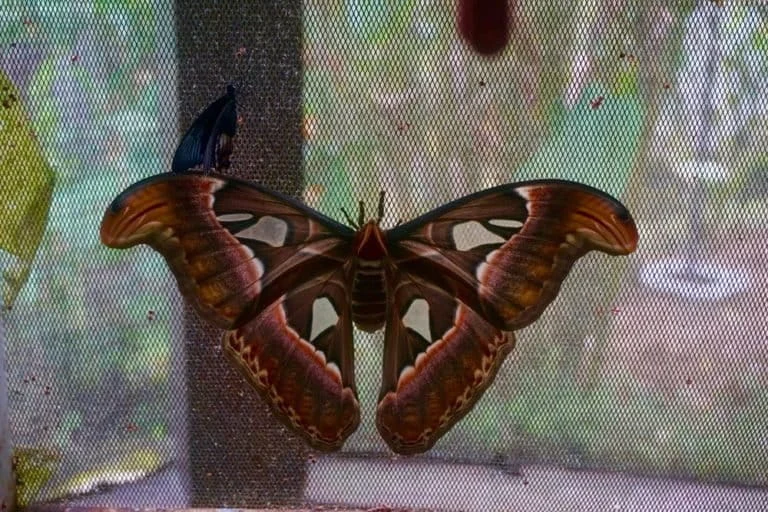
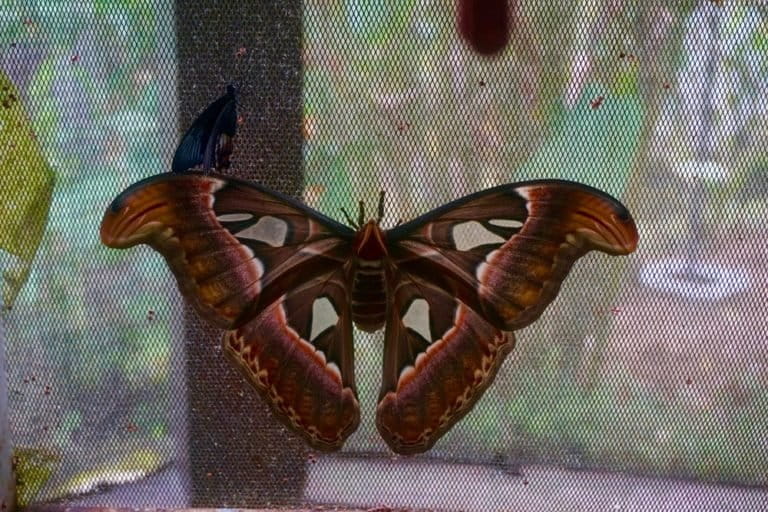
Deep within the lush, verdant landscapes of Tabanan, Bali, a creature of mythic proportions commands the attention of naturalists and casual observers alike. Known locally in Bali as the "kupu-kupu barong"—a reference to the legendary Barong, a protective spirit in Balinese mythology—this insect is a marvel of evolutionary design. With wingspans that can stretch upwards of 25 to 30 centimeters in some specimens, it stands as one of the largest lepidopterans on the planet. However, despite the common moniker of "butterfly," the Attacus atlas, or Atlas moth, is in fact a giant silk moth, a member of the Saturniidae family, which is primarily nocturnal and possesses a biology distinct from its diurnal cousins.
The presence of the Atlas moth at the Bali Butterfly Park serves as a living laboratory for entomologists and a gateway for public education regarding the delicate balance of tropical ecosystems. While their physical appearance—characterized by intricate patterns of rich, warm browns, delicate beige hues, and translucent "windows" on their wings—is the primary draw for tourism, the true significance of the species lies in the arduous and brief journey they undergo to reach adulthood.
The Chronology of Transformation: A Life Defined by Metamorphosis
The life cycle of the Attacus atlas is a testament to the biological efficiency required of such a massive organism. The journey begins with a minuscule, unassuming egg, often deposited on the underside of host plant leaves. According to experts at the Bali Butterfly Park, including guide Luh Putu Sri Wahyuni, the incubation period for these eggs is approximately one week.
Once hatched, the insect enters its most resource-intensive phase: the larval stage. Over the course of four weeks, the caterpillar consumes vast quantities of foliage, growing rapidly to support the immense energy requirements of its eventual pupation. This stage is critical, as the health and size of the future moth are directly correlated to the nutritional quality of the leaves consumed during these weeks.
Following the larval stage, the insect enters the pupal phase, spinning a tough, silken cocoon often attached to the leaves or branches of its host plant. This period of quiet, internal restructuring lasts for approximately five weeks. During this time, the insect is at its most vulnerable to predation and environmental shifts.
The final emergence is a fleeting climax. Once the adult moth breaks free from the cocoon, its primary mission is to find a mate and ensure the next generation. As adults, Atlas moths lack functional mouthparts; they do not eat. Consequently, their lives as winged adults are extraordinarily short, typically lasting less than a week. This compressed existence highlights the necessity of human intervention in protected environments: if the environment is not perfectly optimized for this short window, the entire reproductive cycle is jeopardized.
Environmental Stewardship and the Challenges of Captive Breeding
The management of Attacus atlas within a controlled environment like the Bali Butterfly Park is an exercise in precision. Because the moths spend the vast majority of their lives in non-winged states, the park’s curators must prioritize the stability of the entire ecosystem rather than just the aesthetic appeal of the adult moths.
"The success of our breeding program depends on the integrity of every stage of the life cycle," notes the park’s management. To mitigate the risks of high mortality rates, the staff has implemented a system of segregated habitats. The breeding area is kept distinct from the public-facing sections of the park to ensure a quiet, low-stress environment. These zones are carefully managed to minimize pollution and provide a diverse array of host plants, which are essential for the survival of the larvae.
Furthermore, environmental parameters—specifically humidity and temperature—are strictly monitored. The delicate nature of the cocoon, which must remain intact to ensure the moth’s wings can expand properly upon emergence, requires that physical handling be kept to an absolute minimum. The management of space is also a critical factor; the size of the flight enclosures must be sufficient to allow the massive moths to expand their wings fully without damage, yet compact enough to allow for regular monitoring by the staff.
Ecological Implications and the Role of Local Biodiversity
The Attacus atlas is not endemic to Bali; it boasts a wide distribution across tropical and subtropical regions of Southeast Asia. Known as the "kupu-kupu gajah" (elephant butterfly) in Java and "rama-rama" in Sundanese, the species is a vital component of the forest canopy.
The decline of such species in the wild is often linked to the disappearance of their natural habitats and the overuse of pesticides. In many agricultural regions, the caterpillar stage of the moth is often misidentified as a pest because it feeds on foliage. When local communities or farmers eliminate these caterpillars, they inadvertently disrupt the population of one of the world’s most impressive pollinators and indicators of forest health.
"Recognizing the connection between the ‘pesky’ caterpillar and the ‘beautiful’ moth is essential for conservation," researchers suggest. By protecting the host plants, local communities can help maintain the biodiversity of regions like the Batukaru mountain range and the Karangasem regency, where these moths are most frequently spotted. The educational initiatives at the Bali Butterfly Park are designed to bridge this gap in perception, teaching visitors that the protection of a species cannot be limited to the phase of its life where it is considered aesthetically pleasing.
Analysis: Beyond the Visual Spectacle
The cultural and biological significance of the Attacus atlas provides a clear case study in the challenges of wildlife tourism. While the beauty of the moth drives significant foot traffic to the park, the underlying reality is a cautionary tale of fragility.
Data from the Bali Butterfly Park indicates that the "beautiful" stage—the adult moth—is merely a brief byproduct of a months-long biological investment. This imbalance creates an inherent difficulty for management: how does one balance the desire for public education and tourism revenue with the physiological requirements of a creature that is fundamentally ill-equipped for human interaction?
The implications are clear: sustainability in wildlife management requires a shift in focus from the "specimen" to the "habitat." If the plants and the environmental conditions—such as the air quality in the mountain regions of Bali—are not preserved, no amount of captive breeding will save the species. The Atlas moth serves as a barometer; its size and visible metamorphosis make it an accessible subject for the public to learn about broader ecological principles.
Toward a Sustainable Future
As the climate changes and urbanization continues to encroach upon the natural habitats of the Indonesian archipelago, the survival of the Attacus atlas depends on local engagement. The initiatives taken in Tabanan demonstrate that successful conservation is rooted in the meticulous care of micro-habitats.
The strategy employed by the Bali Butterfly Park—emphasizing the importance of the egg, the caterpillar, and the cocoon—is a model for other biodiversity projects. By valuing the "hidden" stages of life, conservationists can foster a deeper respect for the natural world. Protecting the Atlas moth means protecting the forest, the native host plants, and the quiet spaces where these giants undergo their transformation.
Ultimately, the story of the Attacus atlas is a reminder that the most profound wonders of nature often exist in the margins, away from the spotlight, requiring only our protection and a stable environment to thrive. Whether one encounters them in the dense canopy of Mount Batukaru or within the controlled enclosures of a research facility, these moths remain an enduring symbol of the complexity and beauty of the natural world, demanding that we look closer at the life cycles that sustain our planet.

