
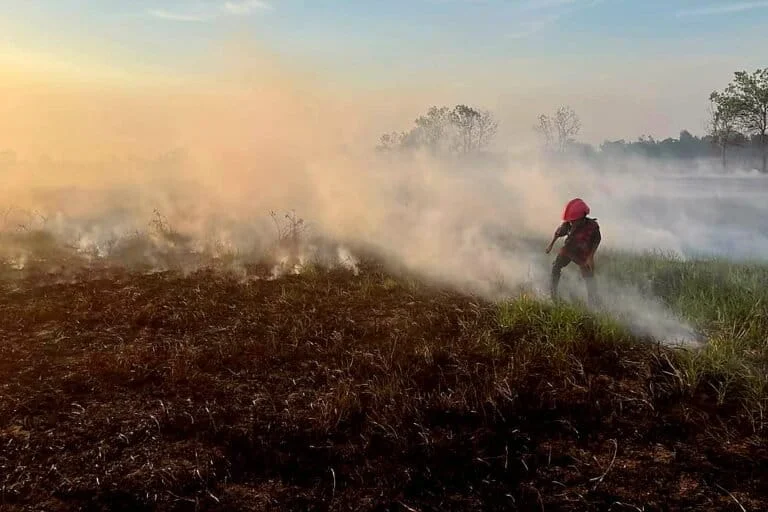
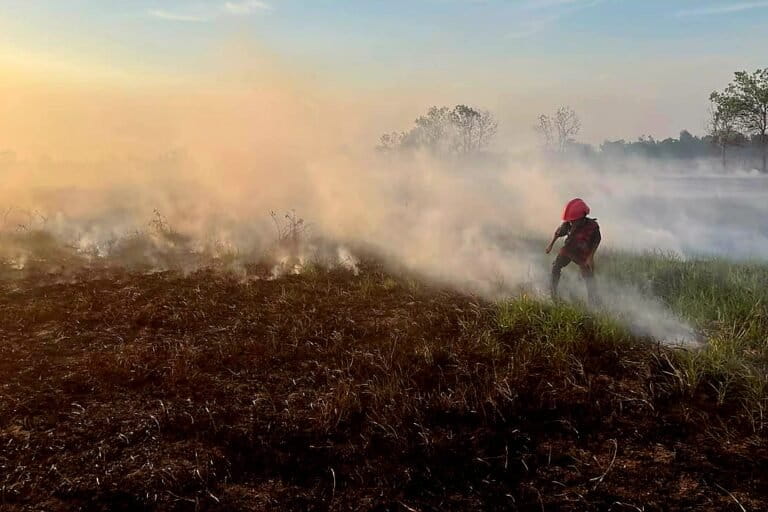
The recurrence of forest and land fires (karhutla) in Indonesia has reached a critical juncture, with the devastation expanding into new regions, including Papua, which has emerged as a high-risk zone for severe fire activity. Data from MapBiomas indicates that between January and September 2026 alone, the total area scorched by flames reached 1,103,132 hectares. This staggering figure serves as a stark indictment of the government’s current strategy, which continues to rely on reactive measures rather than proactive, science-based intervention. Despite years of repeated ecological catastrophes, the country’s disaster management framework appears increasingly inadequate in the face of human-induced environmental volatility.
A Pattern of Reactive Governance
Rizaldi Boer, head of the International Research Center for Climate Change at IPB University, argues that the Indonesian government remains trapped in a cycle of crisis management. According to Boer, officials typically mobilize only after the situation has reached a state of emergency, ignoring early warnings that are often available months in advance.
The threats posed by extreme weather phenomena, such as the "Godzilla" El-Niño and the positive Indian Ocean Dipole (IOD), are documented well before the peak of the dry season. "Six months before the fires escalate, we already have the analytical capacity to predict the danger zones," Boer noted. IPB has developed a spatial-based Fire Risk System (FRS) that can forecast risks down to the village level. Launched in 2019, the system integrates bio-physical characteristics, peatland hydrology, land-use planning, and socio-economic variables. While accessible to the Directorate General of Law Enforcement (Gakkum) at the Ministry of Environment and Forestry, its utilization remains suboptimal due to entrenched institutional and budgetary hurdles.
The Institutional Bottleneck
The fundamental flaw in Indonesia’s response lies in the "Ready-to-Use Fund" (Dana Siap Pakai) mechanism. Financial resources for disaster mitigation are often only unlocked once a formal state of emergency or disaster status is declared by local authorities. This delay creates a "wait-and-see" culture where proactive prevention is starved of funding, and resources only arrive when the landscape is already engulfed in flames.
This fragmentation is further exacerbated by the sheer number of agencies involved. Under Presidential Instruction No. 3/2020 and Government Regulation No. 87/2020, over 16 government institutions are tasked with managing forest and land fires. However, these agencies often operate in silos. For instance, the Ministry of Public Works and Housing faces legal limitations in constructing water infrastructure on forest land, which falls under the purview of the Ministry of Environment and Forestry. Meanwhile, the Manggala Agni firefighting brigade often finds itself unable to intervene in "Other Use Areas" (APL) until a formal disaster decree is signed.
A Chronology of Environmental Neglect
The pattern of fires is not a new phenomenon. Historical data shows that major outbreaks have struck the nation with alarming regularity in 2015, 2019, 2023, and now 2026. Experts suggest that 80% to 90% of these fires are anthropogenic, driven by human activity.
Following the massive 2019 fires, researchers at the University of Indonesia developed advanced modeling tools to identify priority locations for prevention. These models combined physical variables—such as peat depth and land cover—with socio-economic factors like population density and proximity to agricultural infrastructure. While this data was presented to policymakers to develop Standard Operating Procedures (SOPs) tailored to specific regions, the implementation of these directives has been inconsistent at best. The lack of accountability ensures that even the most sophisticated predictive models remain largely academic exercises rather than operational blueprints.
The Human and Ecological Cost
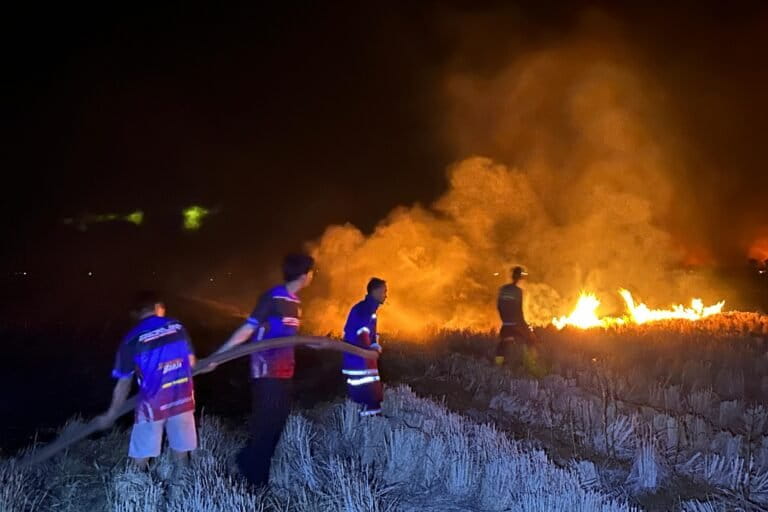
The socioeconomic impact of these fires extends far beyond the charred earth. Public health is severely compromised as toxic haze blankets populated areas, forcing schools to close and overwhelming local clinics. Sulistyowati Irianto, a Professor of Law, Society, and Development at the University of Indonesia, contends that the state is failing its constitutional mandate under Article 33 of the 1945 Constitution, which dictates the sustainable management of natural resources for the prosperity of the people.
Moreover, the narrative surrounding the causes of these fires has often unfairly targeted indigenous communities and small-scale farmers. Anthropologist Sofyan Ansori notes that traditional farming practices, including controlled land clearing, are often scapegoated by the state. "When the environment is degraded by industrial-scale activities, the burden of conservation is shifted onto local communities, effectively banning their traditional livelihoods without providing viable economic alternatives," Ansori explained. This policy of stigmatization, he argues, is a colonial-era legacy that continues to ignore the underlying drivers of deforestation—primarily the expansion of large-scale concessions.
The Challenge of Ecological Restoration
Even when the fires are extinguished, the damage to ecosystems, particularly peatlands, is profound and long-lasting. Endah Sulistyawati, a Professor of Forest Ecology at the Bandung Institute of Technology (ITB), emphasizes that peatland recovery is significantly more difficult than that of mineral soils.
"When a landscape burns repeatedly, the natural succession process is reset, stripping the ecosystem of its capacity and opportunity to recover," Sulistyawati said. Peatlands that have been drained through canal construction are prone to desiccation, turning once-moist organic soil into highly flammable material. Restoring these areas requires "rewetting" through canal blocking—a process that demands massive institutional commitment and long-term financial backing. Without such interventions, a fire-stricken peatland can remain a source of carbon emissions and a high-risk fire zone for decades.

Implications for Policy Reform
The current trajectory suggests that unless there is a radical overhaul of the disaster management structure, Indonesia will remain trapped in this cycle of environmental destruction. The following reforms are identified by experts as essential:
- De-fragmentation of Authority: Consolidating the mandate for forest fire management under a single, high-level authority to eliminate the current inter-agency friction.
- Budgetary Realignment: Transitioning from "disaster response" funding to "disaster prevention" funding, allowing for the early release of resources based on predictive modeling before fires begin.
- Integrated Recovery Action Plans: Developing legally binding, cross-sectoral rehabilitation plans that involve all relevant ministries, rather than relying on a single body like the Peatland and Mangrove Restoration Agency (BRGM) to handle the fallout of national-scale disasters.
- Community Inclusion: Moving away from the criminalization of traditional farming practices and instead integrating local knowledge into fire management strategies.
Looking Toward the Future
The 2026 fire season serves as a grim reminder that science is not being matched by political will. While the country possesses the intellectual capacity to map, predict, and manage fire risks, the lack of a cohesive, proactive policy framework renders these advancements ineffective.
The cost of inaction is measured in more than just hectares of burnt forest; it is measured in lost biodiversity, the release of massive quantities of carbon, and the long-term erosion of public trust in the state’s ability to protect its citizens and natural heritage. As the climate continues to change, the "new normal" of extreme drought and fire necessitates a fundamental shift in how Indonesia views its relationship with the land—from a resource to be exploited to a fragile system that requires urgent, consistent, and science-driven protection. Without such a shift, the smoke will continue to rise, and the cycle of destruction will persist, further dimming the prospects for a sustainable future.

