
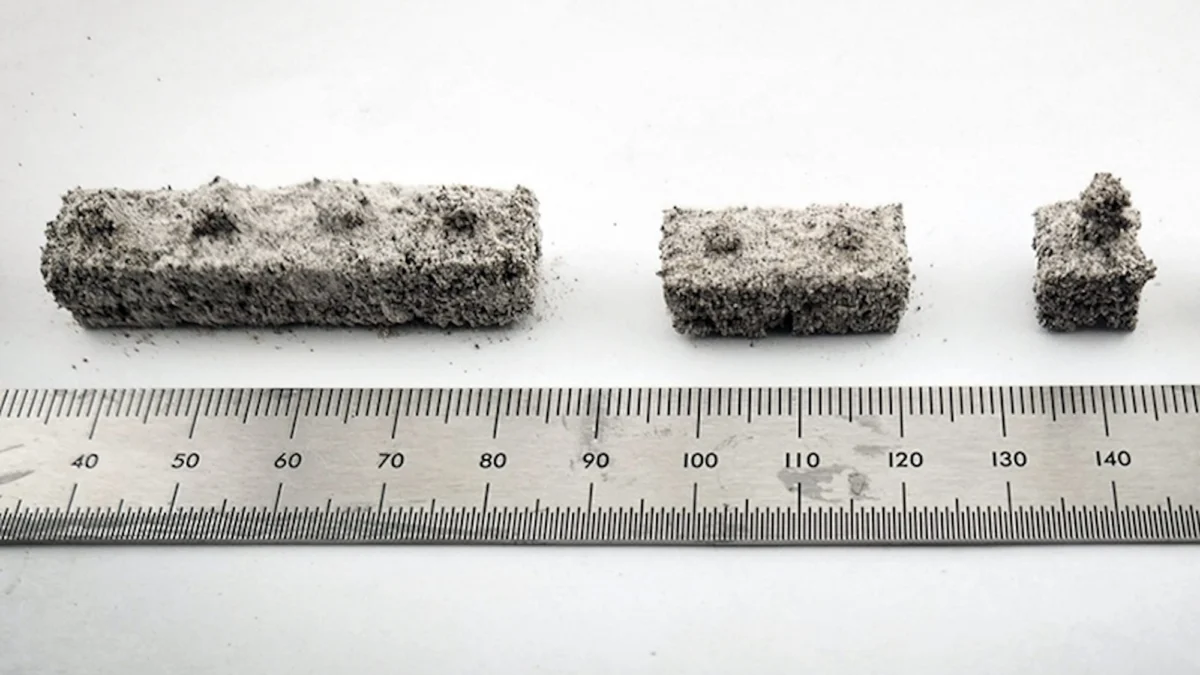
The establishment of a permanent, sustainable human presence on the lunar surface represents one of the most formidable logistical challenges in the history of space exploration. As NASA and its international partners push toward the Artemis era and the eventual construction of the Lunar Gateway and surface habitats, the primary constraint remains the "tyranny of the rocket equation." Every kilogram of mass launched from Earth carries a prohibitive cost in fuel and hardware. To mitigate this, engineers are increasingly turning their attention toward In-Situ Resource Utilization (ISRU)—the practice of harvesting and processing local materials to sustain life and infrastructure. A groundbreaking development from the University of Arkansas has introduced a novel method for creating structural components using only lunar regolith, potentially revolutionizing how we build in space.
The Challenge of Lunar Construction
Lunar regolith is a fine, abrasive, and chemically inert material—a byproduct of billions of years of micrometeorite bombardment and solar radiation. Unlike terrestrial soil, which contains organic matter and moisture capable of acting as natural binders, regolith is composed entirely of pulverized rock and volcanic glass. Because of its lack of cohesion, traditional construction methods are largely ineffective on the Moon without the introduction of imported binders, such as polymers or concrete-grade cements.
Transporting these binding agents from Earth is economically and logistically inefficient. A typical lunar mission requires shielding against galactic cosmic rays, extreme temperature fluctuations, and high-velocity micrometeorites. While scientists have previously experimented with sulfur-based concretes and sintering processes, these methods often necessitate heavy processing equipment or chemical additives that add complexity to mission planning. The new research, conducted by University of Arkansas mechanical engineer Wan Shou and student researcher Cole McCallum, bypasses these requirements by leveraging laser powder bed fusion to transform raw dust into interlocking, load-bearing bricks.
Chronology of the Breakthrough
The investigation into binderless regolith manufacturing began as a quest for self-sustaining habitat solutions. The timeline of this research reflects a growing shift in aerospace engineering toward autonomy:
- 1969–1972: The Apollo era provides the first extensive samples of lunar regolith, establishing a baseline for the physical and chemical composition of the Moon’s surface.
- 2010s: NASA and various academic institutions begin formalizing ISRU research, focusing on the potential for 3D printing structures using regolith simulants.
- 2023–2024: McCallum and Shou begin their collaboration at the University of Arkansas, moving away from conventional additive manufacturing techniques that require external binding agents.
- 2025: The team successfully prints interlocking, "Lego-esque" bricks using LHS-1 (Lunar Highlands Regolith Simulant), demonstrating that thermal sintering can create structural integrity without chemical additives.
- 2026: The findings are officially published in the peer-reviewed journal NPJ Advanced Manufacturing, marking a significant milestone in the viability of on-site lunar fabrication.
Technical Methodology: Laser Powder Bed Fusion
The core innovation of the Arkansas team’s process is the application of laser powder bed fusion (LPBF). This technique involves spreading a thin, uniform layer of regolith simulant across a build plate. A high-energy laser is then directed at specific coordinates on the powder bed, heating the regolith to its melting point. As the material reaches a molten state and subsequently cools, the microscopic particles fuse together into a dense, solid form.
The build plate is then lowered by a fraction of a millimeter, and a new layer of regolith is applied. This cycle repeats, building the object layer by layer in a three-dimensional vertical progression. By precisely controlling the laser’s power, speed, and focal point, the researchers were able to create two distinct interlocking geometries: a cross-shaped brick and an H-shaped block. These designs mimic the interlocking functionality of plastic building blocks, allowing for the assembly of larger structures without the need for mortar or specialized mechanical fasteners.
Supporting Data and Material Constraints
The regolith used in the study, LHS-1, was specifically engineered to replicate the mineralogy and particle size distribution of the lunar highlands. While the results are encouraging, the researchers acknowledge that the process is still in its infancy. The resulting blocks are inherently porous, which creates a disparity in structural performance compared to dense, Earth-manufactured building materials.
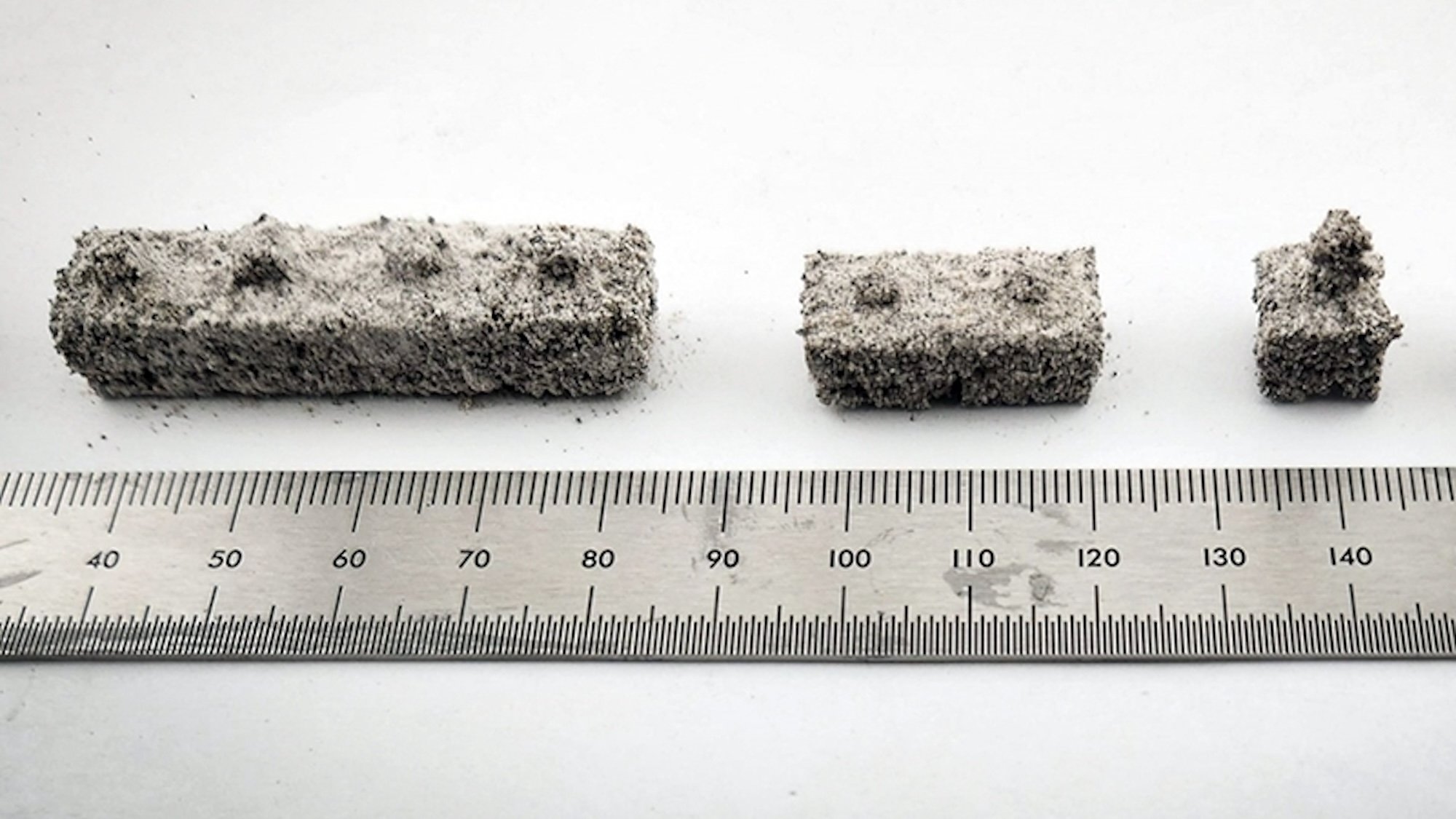
Current data suggests that while the blocks are capable of supporting their own weight and forming basic geometric configurations, their load-bearing capacity is currently insufficient for supporting heavy habitats or pressurized environments. The porosity of the blocks, while a hurdle for structural load, might offer unexpected benefits in other areas, such as thermal insulation or radiation shielding, provided the bricks are stacked in high-density configurations. Furthermore, the vacuum environment of the Moon presents a unique variable; in the absence of an atmosphere, the cooling rates during the sintering process will differ from terrestrial conditions, likely requiring adjustments to laser parameters to prevent thermal cracking.
Official Responses and Scientific Context
The research has garnered significant attention from the aerospace community, as it provides a proof-of-concept for a "zero-import" construction strategy. In a university statement, Cole McCallum emphasized the autonomous nature of the discovery, noting, "There’s nothing else it’s binding to. The regolith powder is binding to itself." This "self-binding" property is the holy grail of lunar manufacturing, as it reduces the payload requirements for lunar landers to nothing more than the 3D printing hardware itself.
Industry experts who have reviewed the NPJ Advanced Manufacturing publication suggest that while the bricks are not yet ready for immediate deployment in a lunar base, they represent the first step toward a more sustainable architecture. By demonstrating that the Moon’s own "dirt" can serve as a construction material, the team has provided a blueprint for future robotic systems that could autonomously build protective shells for habitats before human crews even arrive.
Broader Implications for Space Exploration
The implications of this research extend far beyond the construction of a single lunar base. If regolith can be reliably sintered into structural units, the potential for expanding lunar infrastructure—including landing pads, blast walls, and radiation shielding—becomes significantly more feasible.
Landing pads are a critical concern for lunar missions. The exhaust plumes from landing rockets kick up vast amounts of lunar dust, which is jagged and highly abrasive. This dust can damage sensitive equipment, solar arrays, and the external suits of astronauts. Creating stabilized, sintered landing pads using local regolith could protect critical infrastructure and increase the safety of recurring lunar landings.
Furthermore, this technology could eventually be adapted for Mars missions. While Martian regolith differs in chemical composition from lunar dust, the fundamental principles of laser sintering remain applicable. As the industry looks toward the 2030s and the prospect of multi-planetary exploration, the ability to "print" a home out of the very ground on which a spacecraft lands will be the cornerstone of a permanent human presence in the solar system.
The research at the University of Arkansas serves as a vital bridge between theoretical ISRU concepts and practical, actionable engineering. As the team continues to refine the sintering parameters and test the mechanical limits of their regolith bricks, they are helping to ensure that the next generation of lunar pioneers will have the tools necessary to build a sustainable, resilient, and enduring presence on the Moon. While the journey from small-scale bricks to habitable structures remains complex, the path forward is clearer than ever: the key to living on the Moon lies within the dust itself.

