
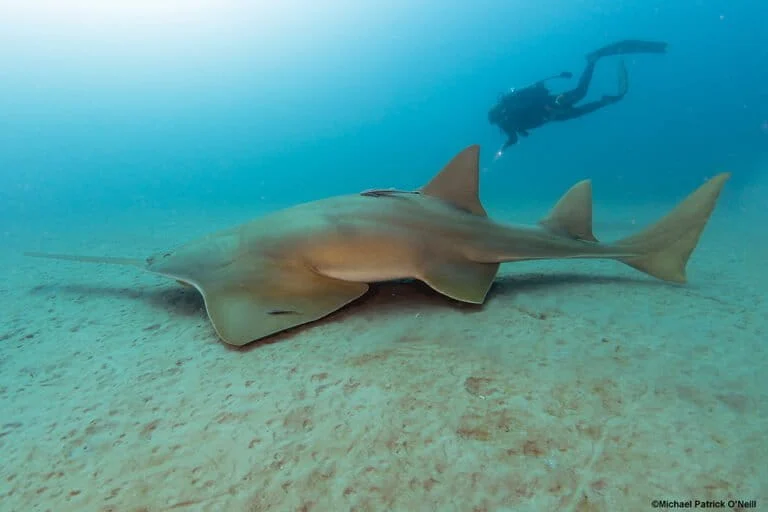
The biological mechanisms governing the survival of the smalltooth sawfish (Pristis pectinata) have long fascinated marine biologists, but a recent breakthrough has unveiled a startling reproductive adaptation: the ability to produce offspring without male fertilization. This phenomenon, known as facultative parthenogenesis, was once thought to be an evolutionary curiosity restricted to captive animals or specific reptile species. However, groundbreaking genetic research published in the journal Current Biology has confirmed that this "virgin birth" strategy occurs naturally among wild populations of this critically endangered elasmobranch.
Understanding Facultative Parthenogenesis in Vertebrates
Parthenogenesis, derived from the Greek words "parthenos" (virgin) and "genesis" (creation), is a form of asexual reproduction in which embryos develop from unfertilized eggs. In the context of "facultative" parthenogenesis, species that typically rely on sexual reproduction switch to asexual reproduction under specific environmental or demographic pressures.
Historically, this trait has been documented in various vertebrates, including certain snakes, birds, and the Komodo dragon. However, the discovery of this mechanism in the smalltooth sawfish—a large, migratory marine predator—challenges previous assumptions about the necessity of mate encounters for population maintenance. Genetic analysis of 190 wild-caught and released individuals in Florida revealed that several juveniles were the product of parthenogenesis, including a sibling group of five. These findings represent the first empirical evidence of this phenomenon occurring in a wild population of marine fish.
The Methodology of Genetic Discovery
The investigation was spearheaded by a team of experts, including Andrew T. Fields, a prominent fish geneticist from Stony Brook University. The research design was meticulous, focusing on the genetic markers of sawfish populations that have seen significant declines due to habitat loss and overfishing. By comparing the DNA of nearly 200 individuals, the researchers were able to map kinship and detect homozygosity—a genetic signature indicating that an individual inherited its entire genome from its mother, with no paternal contribution.
The identification of five siblings sharing this unique genetic profile provided the "smoking gun" for the study. It confirmed that these individuals were not merely anomalous, but part of a documented occurrence within the natural ecosystem. This study underscores the power of modern genomic surveillance in conservation biology, allowing scientists to uncover cryptic life-history traits that were previously invisible to traditional observation methods.
Evolutionary Pressures and Population Decline
The prevailing scientific consensus suggests that facultative parthenogenesis is an evolutionary "last resort." Researchers hypothesize that this adaptation is triggered when a population reaches such low densities that females struggle to encounter compatible mates. By bypassing the need for a male, the female can continue to pass on her genetic lineage, potentially staving off local extinction.
However, this survival strategy carries a significant biological cost. Parthenogenesis drastically reduces genetic diversity. Sexual reproduction is the engine of evolution, as it shuffles genetic material to provide offspring with the resilience needed to survive changing environments and emerging diseases. Asexual reproduction produces offspring that are essentially clones of the mother. Over time, the accumulation of deleterious mutations and the loss of adaptive flexibility could render a population more vulnerable to extinction, even if the short-term survival rate is high. Despite these risks, the discovery of year-old individuals born via parthenogenesis confirms that these offspring are viable and capable of surviving in the complex, predator-rich environment of the ocean.
The Global Crisis of the Sawfish
While the discovery of parthenogenesis is a triumph of biological research, it is not a panacea for the broader crisis facing the sawfish family. Of the five species of sawfish globally, four are found in Indonesian waters, and all are currently classified as critically endangered by the IUCN. The rapid contraction of their range is a sobering indicator of their status: once documented in 90 countries, they have now disappeared from at least 46, including many parts of their historical range in the Indo-Pacific.

The primary driver of this decline is anthropogenic pressure. The sawfish’s defining feature—a long, tooth-lined rostrum (snout)—is its greatest evolutionary asset for hunting, but its most significant liability in the face of industrial fishing. The rostrum is notoriously prone to entanglement in gillnets and trawls. Furthermore, the sawfish remains a target for the illegal wildlife trade, with rostrums and fins fetching high prices on the black market, despite international protections that forbid their harvest or trade.
Tracking Migrations: The Australian Effort
The urgency of conservation is reflected in recent tracking initiatives. In October 2023, a collaborative effort in Australia utilized acoustic tagging technology to monitor the migration patterns of over 40 sawfish. By tagging the individuals and releasing them, researchers were able to track their movement from the western coast of Cape York toward the waters of Croker Island—a journey of approximately 1,000 kilometers.
This data is crucial for spatial management. By identifying migratory corridors and critical habitats, conservationists can advocate for the establishment of Marine Protected Areas (MPAs) that are effectively enforced. The involvement of local fishing communities in these tagging programs has been instrumental, shifting the narrative from exploitation to stewardship.
Implications for Conservation Policy
Nicholas Dulvy, a leading marine ecologist from Simon Fraser University, emphasizes that while the confirmation of parthenogenesis provides a fascinating insight into the resilience of elasmobranchs, it does not alleviate the need for stringent protection. "The ability to reproduce without a mate is a remarkable survival hack, but it is not a substitute for a healthy, genetically diverse population," Dulvy noted.
The policy implications are clear: current protection measures must be expanded. In nations like Indonesia, where the species remains highly threatened, enforcement of existing bans on the trade of sawfish parts must be prioritized. The reliance on parthenogenesis is a sign of a population in distress, not a signal of recovery. Without significant intervention to mitigate bycatch in commercial fisheries and to protect critical nursery habitats, the unique evolutionary trajectory of the sawfish may still end in extinction.
The Road Ahead
The scientific community now faces the challenge of determining how widespread parthenogenesis is across other endangered shark and ray species. If this mechanism is more common than previously thought, it may necessitate a complete re-evaluation of population viability models used by conservation agencies.
Furthermore, the survival of the species rests on the ability of international governing bodies to address the "hidden" mortality caused by illegal, unreported, and unregulated (IUU) fishing. The sawfish is an apex predator that plays a vital role in maintaining the health of coastal and estuarine ecosystems. Its loss would trigger a cascading effect, altering the composition of marine communities that are already under stress from climate change and pollution.
In summary, the revelation that the smalltooth sawfish can reproduce independently of males is a testament to the extraordinary lengths to which life will go to persist. However, the scientific community remains cautious. This biological "backup plan" is a reflection of a species pushed to the brink, not an indicator of thriving health. The path forward requires a transition from mere observation to active, large-scale conservation. The future of these prehistoric-looking creatures, which have survived for millions of years, now depends entirely on the capacity of human societies to integrate scientific evidence into robust, enforceable policy. As researchers continue to analyze the genetic health of these populations, the global community must recognize that technology and biological adaptation can only do so much; the ultimate responsibility for preventing the extinction of the sawfish lies with the policies and practices that govern our oceans today.

