
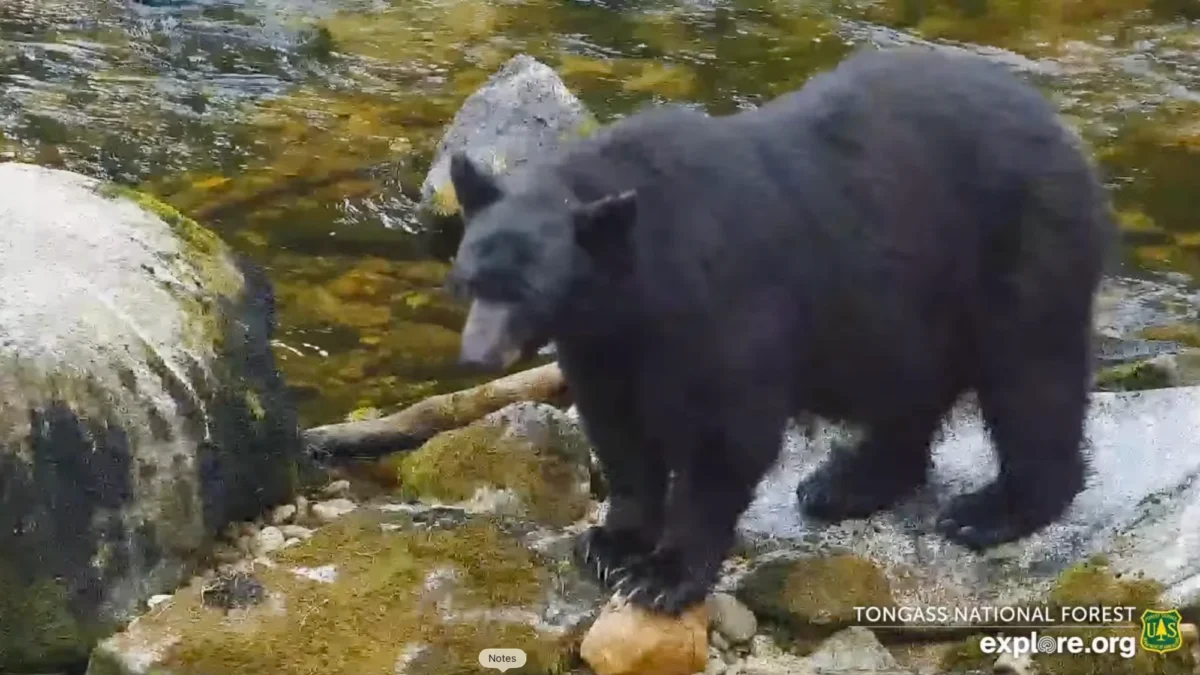
In the vast, rugged expanse of Alaska’s Tongass National Forest, the annual seasonal cycle has reached its conclusion, marked by the crowning of a new, unofficial monarch of the wild. Volverine, a female black bear (Ursus americanus) distinguished by a unique V-shaped chest patch, has been formally recognized by the U.S. Forest Service with the 2026 Big and Beautiful Award. This recognition serves as a testament to her successful foraging efforts throughout the summer and early autumn at the Anan Wildlife Observatory, where she established herself as one of the most dominant and physically robust individuals among the 39 bears monitored by wildlife officials this year.
The designation of Volverine as the most prominent bear of the season is not merely a matter of aesthetic observation; it reflects a biological success story that is vital to the health of the local ecosystem. As winter descends upon southeastern Alaska, the physical condition of these animals becomes the primary determinant of their survival and reproductive potential for the coming year.
The Biology of Weight and Survival
To understand the significance of Volverine’s size, one must look at the physiological requirements of the species. Black bears typically weigh between 90 and 500 pounds, depending heavily on their age, sex, and the caloric density of their environment. Brown bears (Ursus arctos), which share the same territory at Anan Creek, are significantly larger, often reaching 600 to 900 pounds. Despite being a black bear, Volverine has reached the upper limits of her species’ weight spectrum, earning her a reputation for having a distinctively round physique that rangers colloquially describe as potato-shaped.
This accumulation of adipose tissue is an evolutionary imperative. Bears engage in a process known as hyperphagia—a period of intense eating—in the months leading up to hibernation. The calories stored during this time are converted into fat reserves that must sustain the bear through months of dormancy, during which they do not eat, drink, or defecate. For a female bear like Volverine, this weight is also intrinsically linked to reproductive success through a process called delayed implantation.
The Reproductive Significance of Delayed Implantation
The U.S. Forest Service rangers stationed at the Tongass National Forest have highlighted that Volverine’s substantial weight gain is a positive indicator for the local bear population. Bears exhibit a fascinating reproductive strategy known as embryonic diapause, or delayed implantation. During the spring mating season, a female may successfully conceive, but the resulting blastocyst does not immediately implant in the uterine wall.
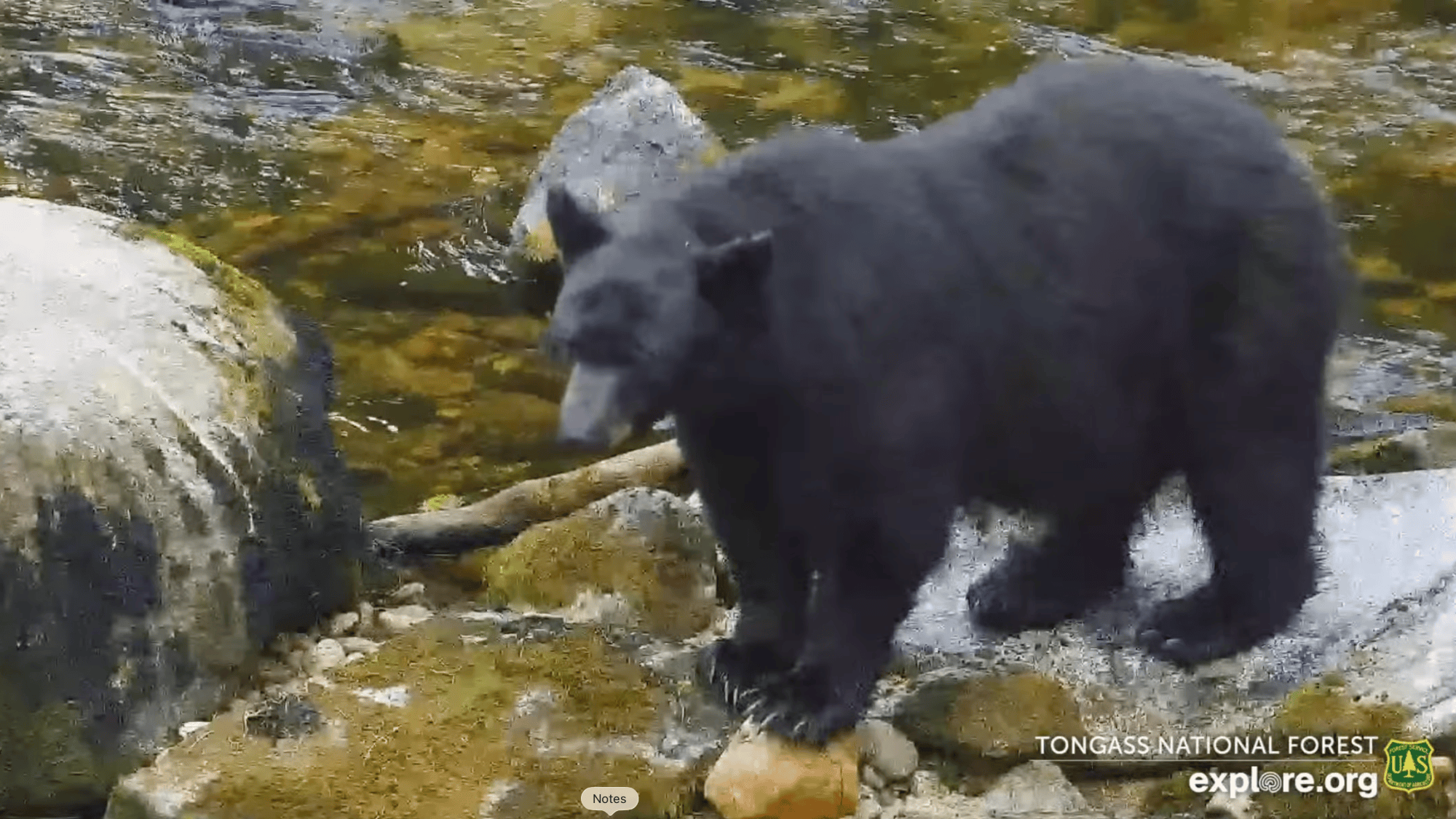
Instead, the embryo remains in a state of suspended development. Only if the female consumes enough calories to reach a sufficient body fat percentage by the late autumn will the embryo implant and proceed toward a successful gestation. If a female bear is too thin, her body will naturally terminate the pregnancy to ensure the mother’s own survival. Consequently, when rangers observe a female bear exhibiting significant girth, they interpret it as a hopeful sign that the population may see a healthy crop of cubs in the spring. Volverine’s success in fishing at the salmon-rich Anan Creek suggests that she is physiologically prepared to support a litter, reinforcing her status as a critical matriarch for the region.
The Anan Creek Ecosystem: A Wildlife Hotspot
The Anan Wildlife Observatory is situated within the Tongass National Forest, which stands as the largest national forest in the United States, spanning most of southeastern Alaska and encompassing the capital city of Juneau. The observatory is world-renowned not only for its proximity to natural landmarks like the Mendenhall Glacier but specifically for its high concentration of wildlife.
Anan Creek is home to one of the most prolific runs of pink salmon in the region. This annual migration creates a hyper-abundant food source that attracts both black and brown bears, leading to a unique social dynamic. Because the area provides such a dense concentration of protein, it serves as a classroom for younger bears to learn the intricate skills of fishing, a behavior they observe from their mothers. The Forest Service monitors 39 specific bears in this vicinity, comprising 31 black bears and eight brown bears. Each of these animals is tracked, documented, and often filmed via the live-streaming cameras provided by explore.org, allowing researchers and the public to monitor their health and behavior in real-time.
Chronology of the 2026 Season
The 2026 season at Anan Creek followed a predictable yet high-stakes timeline. The early summer months were characterized by the initial arrival of bears as the snowpack melted and the salmon runs began to pulse through the creek. By mid-summer, the observatory saw peak activity, with bears frequently engaging in dominance displays to secure the best fishing spots near the waterfalls.
Throughout August and September, the focus shifted from social interaction to intense caloric intake. During this period, Volverine was frequently captured on camera by both rangers and wildlife enthusiasts. Her tendency to remain stationary on prominent rocks, often appearing to pose for onlookers, allowed for detailed documentation of her physical progress. As October approached, the bears began to exhibit the characteristic lethargy associated with the transition toward denning. The final assessment of the bears, leading to the selection of the Big and Beautiful Award recipient, occurred as the majority of the population retreated into the mountains to find or excavate winter dens.
Implications for Conservation and Public Engagement
The public interest surrounding bears like Volverine serves a dual purpose. On one level, it fosters a deeper public appreciation for the complexities of Alaskan wildlife. By branding individual animals with names and awards, organizations like the U.S. Forest Service can translate complex ecological data into a narrative that the general public can follow and understand. This "humanization" of the bears encourages greater support for the conservation of the Tongass National Forest and the protection of the salmon runs that are the lifeblood of these apex predators.

However, from a management perspective, the documentation of these bears is a serious scientific endeavor. The Forest Service’s ability to track 39 distinct individuals over several months provides a longitudinal view of how climate variations, salmon population fluctuations, and human tourism impact bear behavior. As global temperatures continue to influence glacier melt and seasonal salmon spawning patterns, the data gathered from the Anan Wildlife Observatory becomes an essential metric for environmental policy in the Pacific Northwest.
Scientific Analysis of Bear Behavior
While the "Big and Beautiful" award is lighthearted in nature, it is grounded in the reality that bear health is a proxy for ecosystem health. The presence of such a high density of bears—nearly 40 individuals in one location—indicates that the Anan Creek salmon run is effectively managed and remains a robust food source.
Experts note that Volverine’s behavior, particularly her dominant presence at the fishing hole, is a testament to the stability of the local population. Her ability to secure enough salmon to reach such a significant weight suggests she has mastered the technical aspects of fishing in high-flow water, a skill that is not innate but learned. Her survival through the winter and her potential emergence in 2027 with cubs would represent a successful continuation of the species’ life cycle in a changing environment.
As the cameras at the Anan Wildlife Observatory go dormant for the winter, the focus of the conservation community shifts toward monitoring the success of the denning season. For Volverine, the coming months are the final test of the year’s efforts. Her survival, and the potential for a new generation of bears, will be the ultimate measurement of her success. For the observers at the U.S. Forest Service, the 2026 season has been a year of record-setting activity, providing a wealth of information that will inform the management of the Tongass National Forest for years to come. The story of Volverine is not just a seasonal highlight; it is a vital chapter in the ongoing narrative of survival in one of the last true wilderness areas on the planet.

