

The Ministry of Energy and Mineral Resources (ESDM) has launched a comprehensive investigation into numerous palm oil plantations across Indonesia that are allegedly conducting unauthorized mining operations within their concession boundaries. This regulatory crackdown comes amid mounting concerns regarding foreign corporate entities exploiting agricultural permits to extract natural resources illegally, thereby circumventing state royalties, environmental regulations, and proper land-use zoning laws. Bahlil Lahadalia, the Coordinating Minister for Downstreaming and Energy Transition while simultaneously holding the portfolio of Minister of Energy and Mineral Resources, revealed that a specialized internal task force alongside the ministry’s Law Enforcement (Gakkum) division has been mobilized to audit these suspicious operations.
The unfolding scandal touches upon the core of Indonesia’s natural resource governance, highlighting systemic vulnerabilities in cross-sectoral licensing and regulatory oversight. As the Indonesian government aggressively pursues economic downstreaming to maximize domestic value addition, illicit extraction practices—particularly those allegedly orchestrated by foreign entities—represent a significant threat to national sovereignty, state revenue collection, and sustainable environmental stewardship. The Ministry of ESDM has signaled that it will take aggressive punitive measures against any corporation found operating outside the legal boundaries of its designated permits.
Background Context and Regulatory Framework
To comprehend the severity of the ongoing investigation by the Ministry of ESDM, one must analyze Indonesia’s stringent licensing framework governing land-based industries. Under Indonesian law, commercial enterprises must operate strictly within the legal confines of their issued permits, known as Business Licenses (Izin Usaha). A company granted an Izin Usaha Perkebunan (IUP) for palm oil cultivation holds legal rights exclusively for agricultural activities, land clearing for palm trees, harvesting, and subsequent processing of fresh fruit bunches.
Engaging in mineral extraction, open-pit mining, or related earth-moving activities to harvest valuable minerals, coal, or ores under an agricultural guise constitutes a severe violation of the Indonesian Mining Law and spatial planning regulations. These dual-purpose illegal operations typically bypass mandatory environmental impact assessments (AMDAL), avoid strict land reclamation bonds, and evade the payment of non-tax state revenues (PNBP) such as royalties and production fees owed to the central government.
Furthermore, the involvement of foreign corporations complicates the geopolitical and legal landscape. Foreign direct investment (FDI) in Indonesia is heavily regulated by the Investment Coordinating Board (BKPM)—an institution Bahlil Lahadalia previously led as Minister of Investment. His deep institutional familiarity with corporate registries, foreign capital allocation, and licensing compliance places him in a unique position to identify discrepancies between declared corporate intent and actual on-the-ground industrial activities. Foreign entities found culpable of regulatory arbitrage face not only the revocation of their operational permits but also potential asset confiscation, deportation of implicated foreign nationals, and criminal prosecution for illegal mining and environmental destruction.
Chronology and Recent Developments
The intensification of scrutiny over dual-purpose land use did not materialize overnight; it represents the culmination of months of intelligence gathering, satellite surveillance, and inter-agency coordination. The chronology of the current enforcement sweep highlights a methodical approach by the central government:
- Early 2026: Environmental NGOs and local monitoring groups submit preliminary field reports to the Ministry of ESDM, highlighting suspicious heavy machinery movements, unpermitted road construction, and mineral stockpiling within officially designated palm oil estates across Sumatra and Kalimantan.
- Mid-2026: The Ministry of ESDM cross-references spatial data from the Ministry of Forestry and spatial planning maps, revealing a statistical anomaly where heavy industrial fuel consumption and soil disruption in specific plantation blocks do not align with standard agricultural practices.
- September 2026: Minister Bahlil Lahadalia establishes a joint task force comprising the Directorate General of Mineral and Coal, the Ministry’s Law Enforcement (Gakkum) team, and external investigators to review suspicious concessions.
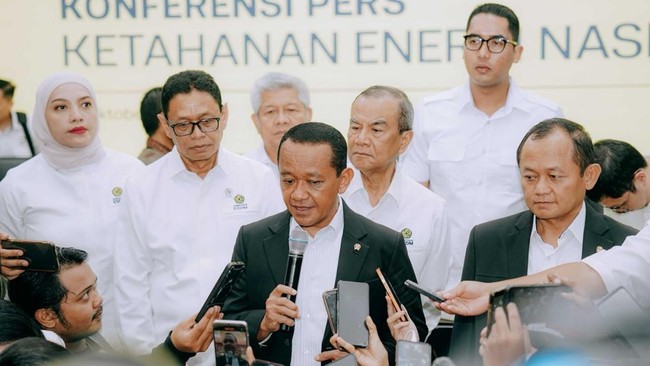
- October 26, 2026: During a high-profile press conference focusing on national energy security in Jakarta, Minister Bahlil publicly confirms the ongoing investigations, explicitly targeting foreign-backed enterprises that have strayed from their core agricultural mandates into illicit mining operations.
During the press briefing, Minister Bahlil underscored the absolute rigidity of the state’s licensing parameters. Drawing from his extensive background as Minister of Investment, he reiterated that administrative boundaries cannot be arbitrarily crossed by corporate actors seeking secondary revenue streams at the expense of the state.
"We have also held a meeting with the Law Enforcement team and the internal team at the Ministry of ESDM to conduct monitoring and inspections of plantations that are also engaging in mining operations, which are suspected to be carried out by several foreign companies," Bahlil stated during the October 26 announcement. "And remember, as the former Minister of Investment, if a license is issued solely for a palm oil business, they are strictly prohibited from carrying out any other business or generating other revenue streams outside of that scope."
Supporting Data and Economic Implications
The convergence of palm oil cultivation and illegal mining—colloquially referred to in regulatory circles as overlapping concessions—poses severe macroeconomic and ecological threats to Indonesia. Industry data indicates that Indonesia remains the world’s leading producer of palm oil, with millions of hectares under cultivation across Sumatra, Kalimantan, Sulawesi, and Papua. However, overlapping land claims have historically plagued the sector, involving forestry, agriculture, and mining.
According to preliminary estimates from natural resource watchdogs, illegal mining activities embedded within agricultural estates account for billions of rupiah in lost state revenues annually. These illicit operations typically involve the unauthorized extraction of minerals such as coal, silica sand, gold, and nickel, depending on the geographical location of the plantation. Because these extraction activities occur covertly beneath the canopy of sprawling oil palm estates or along remote concession borders, they frequently evade the oversight of regional tax authorities and provincial mining inspectorates.
The economic implications are multifaceted:
- Revenue Leakage: The Indonesian state is deprived of crucial royalties, corporate income taxes, and export levies that would otherwise be channeled into national development and infrastructure projects.
- Market Distortions: Companies engaging in illicit mining alongside agricultural production maintain an unfair cost advantage over law-abiding mining firms that pay mandatory concession fees, environmental bonds, and compliance costs.
- Environmental Degradation: Unregulated mining within agricultural zones often leads to severe water contamination, soil erosion, toxic chemical runoff (such as mercury or acid mine drainage), and accelerated deforestation, which undermines Indonesia’s international climate commitments and carbon reduction targets.
- Reputational Risk for FDI: While the vast majority of foreign investors operate transparently, the involvement of specific foreign-backed entities in illegal resource extraction threatens to cast a shadow over legitimate foreign investments in Indonesia’s downstreaming sectors.
Official Responses and Inter-Agency Coordination
The Ministry of ESDM is not acting in isolation. To ensure a thorough and airtight legal case against the implicated corporations, the ministry is coordinating closely with the Indonesian National Police (Polri), the Attorney General’s Office, and the Ministry of Environment and Forestry (KLHK). The Gakkum team has been granted expanded authority to subpoena corporate directors, seize heavy machinery found operating outside permitted zones, and freeze corporate bank accounts linked to illicit mineral sales.
"I have already received a report from the Gakkum team that several companies are currently under deep review, and they show a strong potential of carrying out activities outside the permits issued by the government," Bahlil affirmed.
Legal experts and industry analysts have welcomed the aggressive stance adopted by the Ministry of ESDM, noting that previous enforcement efforts often suffered from bureaucratic friction and a lack of cross-ministerial data sharing. By leveraging modern geospatial technologies, satellite imagery, and transparent corporate registries, the current administration is attempting to close regulatory loopholes that have allowed rogue enterprises to exploit natural resources with relative impunity.
Furthermore, business associations, including the Indonesian Palm Oil Association (GAPKI) and the Indonesian Mining Association (APBI), have been urged to remind their members of the absolute necessity of regulatory compliance. Representatives from agricultural sectors have historically distanced themselves from rogue actors who misuse agricultural land titles, emphasizing that the actions of a few non-compliant foreign-backed entities should not tarnish the reputation of the broader, legally compliant plantation industry.
Broader Impact and Future Outlook
The decisive actions taken by Minister Bahlil Lahadalia and the Ministry of ESDM signal a broader policy shift within the Indonesian government toward tighter resource nationalism, rigorous regulatory enforcement, and uncompromising oversight of foreign investments. As Indonesia positions itself as a global hub for industrial downstreaming—ranging from electric vehicle battery supply chains to processed agricultural commodities—the enforcement of spatial zoning and licensing integrity is paramount.
Looking ahead, the Ministry of ESDM’s investigation is expected to result in administrative sanctions, revocation of operational licenses, and potential criminal indictments for corporate executives and beneficial owners found guilty of orchestrating unauthorized mining activities. The outcome of this high-stakes probe will serve as a critical litmus test for Indonesia’s enforcement capabilities, demonstrating to domestic stakeholders and international investors alike that the nation’s natural wealth cannot be exploited outside the strict rule of law. Through sustained monitoring, inter-agency collaboration, and resolute political will, the government aims to ensure that every hectare of land and every ton of extracted resource contributes transparently and equitably to national prosperity.

