
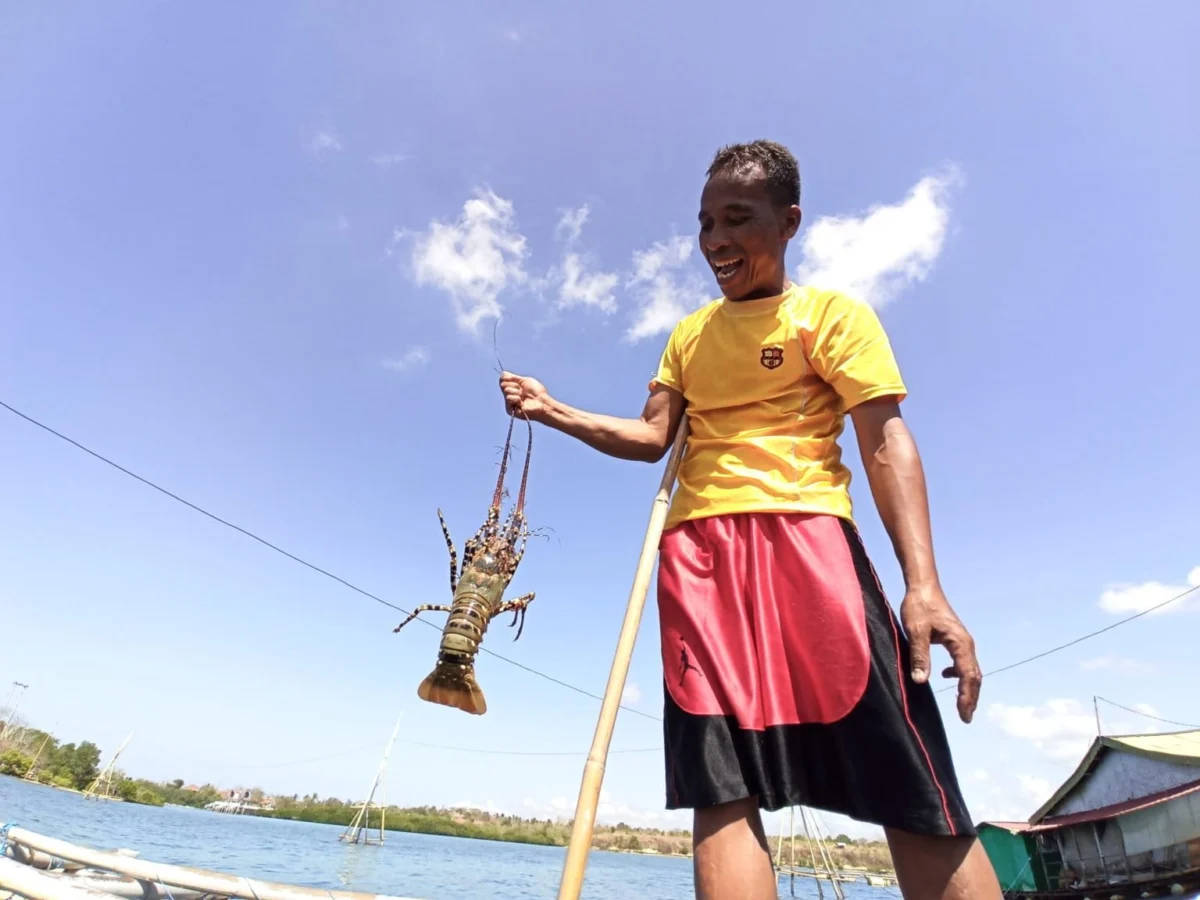
The Indonesian government has officially inaugurated the Task Force for the Eradication of Illegal Clear Lobster Seed Export, known as Satgas P2BBL, on Monday, October 12, 2026, in Jakarta. This strategic move aims to dismantle the sophisticated, high-stakes smuggling rings that have historically diverted millions of clear lobster seeds (Benih Bening Lobster or BBL) away from domestic economic channels, funneling them primarily toward markets in Vietnam. The establishment of this body, formalized under Presidential Regulation Number 69 of 2026, represents a critical shift in how the nation manages its marine wealth, moving from reactive enforcement to a more integrated, cross-ministerial approach involving the Coordinating Ministry for Political and Security Affairs and the Coordinating Ministry for Food.
The Anatomy of a Persistent Crisis
For years, the illegal trade of lobster seeds has been a thorn in the side of the Indonesian maritime economy. While the government officially reports that Indonesia holds a staggering potential of approximately 465.8 million lobster seeds annually, this biological wealth has rarely translated into national prosperity. The core of the problem, as experts point out, is an imbalance in the global value chain.
Irzal Effendi, a prominent aquaculture expert from the Department of Aquatic Science and Technology at IPB University, identifies three systemic failures that sustain the illicit trade. First, the relentless demand from Vietnam, which serves as a regional hub for lobster cultivation, creates a suction effect that draws seeds out of Indonesian waters. Second, Indonesia’s own domestic aquaculture industry remains underdeveloped, lacking the infrastructure and technical maturity to compete. Finally, there is a fundamental knowledge gap regarding the migration patterns, spawning grounds, and true biological capacity of the lobster population in Indonesian waters.
The economic discrepancy is stark. A single lobster seed, when sold illegally by a local harvester, might fetch a relatively low price in the domestic shadow market—often cited at approximately Rp8,500. However, once that same seed is smuggled into Vietnam and matured, its value skyrockets to as much as Rp100,000. This massive profit margin incentivizes smuggling networks to operate with high levels of sophistication, often bypassing legal export channels entirely.
Chronology and Regulatory Shifts
The path to the current crackdown has been marked by a series of legislative adjustments and administrative pivots. Throughout 2026, the Ministry of Marine Affairs and Fisheries (KKP) implemented a series of policies intended to regulate the lobster trade. The introduction of Minister of Marine Affairs and Fisheries Regulation Number 5 of 2026 was designed to tighten the oversight of lobster harvesting and export.
However, this regulation also created unintended friction. By strictly controlling the "pendederan" or nursery stage of lobster farming, the policy inadvertently created a climate of uncertainty for local fishermen and small-scale collectors. As the newly formed Satgas P2BBL began its operations in October, reports surfaced that the heightened enforcement measures were causing a bottleneck in the supply chain. Collectors, fearing prosecution, began to shy away from the market, leading to instability in both prices and the availability of seeds for authorized research and legitimate farming initiatives.
Data-Driven Economic Implications
The scale of the economic loss is significant. Zulkifli Hasan, the Coordinating Minister for Food, has estimated that Indonesia loses approximately Rp40 trillion annually due to the current inefficient management and illegal export of lobster seeds. This figure serves as a sobering reminder of the potential revenue that could be captured if the nation transitioned from an exporter of raw biological material to a producer of value-added seafood products.
The argument for shifting focus toward "fisheries-based aquaculture" is gaining traction. This model advocates for keeping the lobster seeds within Indonesia to be reared until they reach a weight of 10 to 30 grams. At this size, the lobsters are still highly sought after by the international market, particularly in Vietnam, but the value captured by the Indonesian economy would be exponentially higher than selling the raw, fragile seeds.
Irzal Effendi suggests that the current regulatory requirement for nursery sizes—which ranges from 5 to 50 grams or mandates a minimum of 50 grams—is too rigid. He proposes a revision to standardize the nursery threshold at 30 grams, which would strike a balance between encouraging domestic industry growth and maintaining market attractiveness.

The Human and Ecological Factor
Beyond the economics, there is a biological complexity that policymakers must consider. Many argue that the abundance of lobster seeds along the Indonesian coastline does not necessarily imply a localized, infinite supply. Larvae are known to travel vast distances through ocean currents before settling as "puerulus" or clear seeds in coastal nurseries. Therefore, a high number of seeds in one region does not automatically mean that the local breeding population is healthy.
This reality necessitates a science-based approach to fishing quotas. If the government relies solely on a "zero-tolerance" policy for the export of seeds without simultaneously fostering a robust domestic infrastructure, it risks disenfranchising the very coastal communities that depend on the sea for their livelihoods.
Official Stance and Future Outlook
Sakti Wahyu Trenggono, the Minister of Marine Affairs and Fisheries, emphasized during the kick-off of the task force that the goal is not merely to punish, but to build a competitive national industry. "The task force is an effort to realize a governance structure for lobster management in Indonesia that is competitive and improves the welfare of local fishermen," Trenggono stated.
Coordinating Minister for Political and Security Affairs, Dudung Abdurachman, added a security perspective to the mandate. He noted that the smuggling of BBL is not just a commodity crime but a direct drain on national economic sovereignty. He stressed that the task force’s success would not be measured by the number of arrests at the borders, but by the ability to identify and dismantle the masterminds—the syndicates that coordinate the collection, transport, and international distribution of the illegal seeds.
Challenges to Success
Despite the strong political will, the success of the Satgas P2BBL faces several hurdles:

- Infrastructure Deficit: Vietnam’s aquaculture success is built on a foundation of advanced logistics, reliable feed supplies, and a mature network of industry players. Indonesia currently lacks this comprehensive ecosystem, which cannot be built overnight.
- Regulatory Consistency: The abrupt shifts in policy often create "chilling effects" in the private sector. For the industry to thrive, investors need clear, long-term legal certainty.
- Market Competition: Indonesia is attempting to enter a market where neighboring countries have already established deep-rooted dominance. To compete, Indonesia must not only stop the illegal flow of seeds but also invest heavily in the human capital and technology required to raise lobsters at scale.
The Path Forward
The establishment of the Satgas P2BBL is a clear signal that the Indonesian government is no longer content with the status quo. By acknowledging that the problem is rooted in the lack of a domestic value-add strategy, the government is taking a more holistic view of the lobster industry.
However, the transition from an extraction-based economy to a production-based one is fraught with difficulty. The challenge for the task force will be to move beyond enforcement and into the realm of development. If the government can facilitate the growth of local nurseries, standardize the size of lobster exports to favor processed products over raw seeds, and provide the necessary support to the local fishing communities, the multi-trillion rupiah potential could finally be realized.
As the task force begins its investigations into the smuggling networks, the international community and domestic stakeholders will be watching closely. Whether this initiative becomes a turning point for Indonesia’s aquaculture sector or remains a temporary measure to suppress a persistent trade, will depend on the government’s ability to balance security, economic policy, and the ecological reality of the lobster’s life cycle. For now, the focus remains on the "triple threat": curbing illegal exports, nurturing a local industry that adds value, and ensuring that the harvest is sustainable for generations of fishermen to come.

