
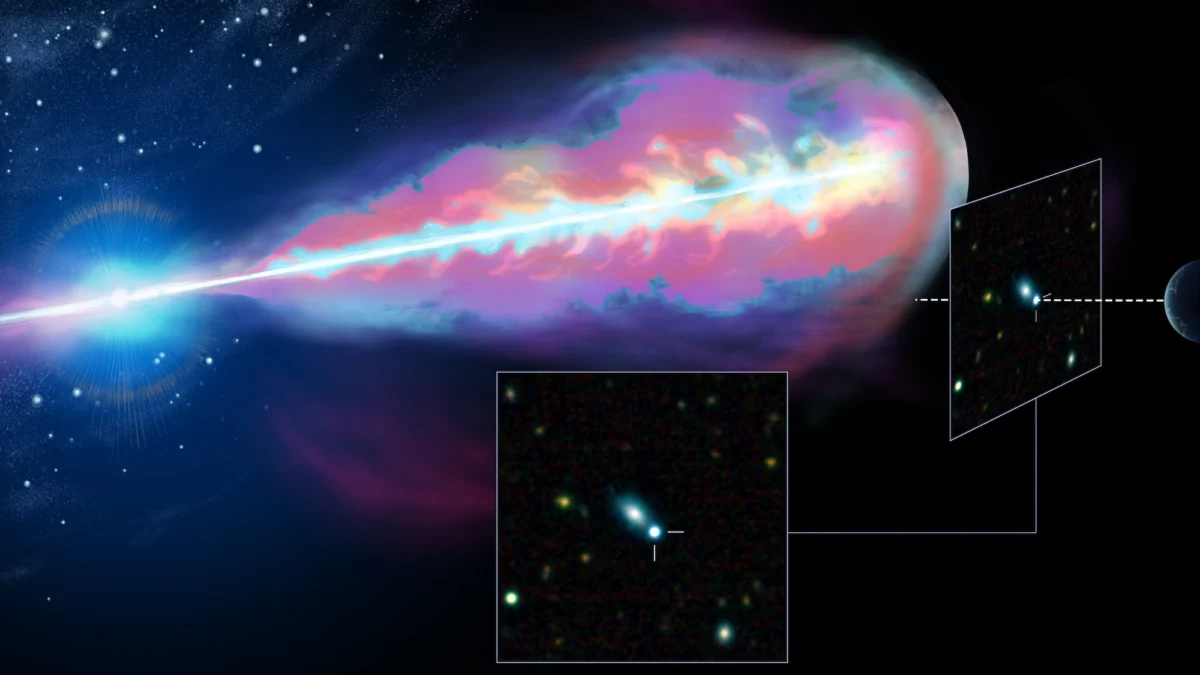
The recent discovery of GRB 260310A has provided astrophysicists with a rare, transformative look at the mechanics of stellar death. While initial observations of the gamma-ray burst suggested a relatively weak event, subsequent analysis revealed one of the most energetic cosmic displays observed in the last two decades. By analyzing the burst from an off-axis perspective, researchers have uncovered evidence of a highly structured, jet-driven explosion that effectively released the energy equivalent of one billion years of solar output through a beam as narrow as a pencil.
The Anatomy of a Cosmic Explosion
Gamma-ray bursts (GRBs) represent the most powerful explosions in the universe since the Big Bang. They are typically triggered by the catastrophic collapse of massive stars or the merger of binary compact objects, such as neutron stars. During this process, the dying object ejects collimated jets of plasma traveling at relativistic speeds—velocities approaching that of light. When these jets slam into the surrounding interstellar medium, they create shockwaves that emit radiation across the electromagnetic spectrum, known as an afterglow.
GRB 260310A, detected on March 10, 2026, by NASA’s Fermi Gamma-ray Space Telescope, initially appeared to be a mundane, low-energy event. However, the international scientific community soon realized that the event was an anomaly. As detailed in a study published in The Astrophysical Journal Letters, the burst exhibited a behavior that defied standard modeling for short-duration events. While the primary flash of gamma radiation was brief and seemingly unremarkable, the subsequent optical and X-ray afterglow grew in intensity to the point where it briefly outshone the entire host galaxy.
Chronology of the Event
The observation campaign for GRB 260310A unfolded in several distinct phases, each providing new data that forced researchers to refine their understanding of the event:
- March 10, 2026: NASA’s Fermi Telescope records the initial burst. Due to its short duration and perceived low luminosity, it is categorized as a standard, albeit weak, GRB.
- March 11–12, 2026: Within hours of the initial detection, ground-based observatories note an unexpected surge in the afterglow’s brightness. Researchers initially suspected instrument error or interference from other X-ray sources.
- Late March 2026: After consistent monitoring by an international array of telescopes, including the Large Binocular Telescope, data confirms that the brightening is intrinsic to the GRB.
- April 2026: X-ray emissions exhibit a secondary, prolonged brightening phase that remains detectable for months, a phenomenon rarely observed in such clarity.
The Geometry of the Jet: Seeing Through the Glare
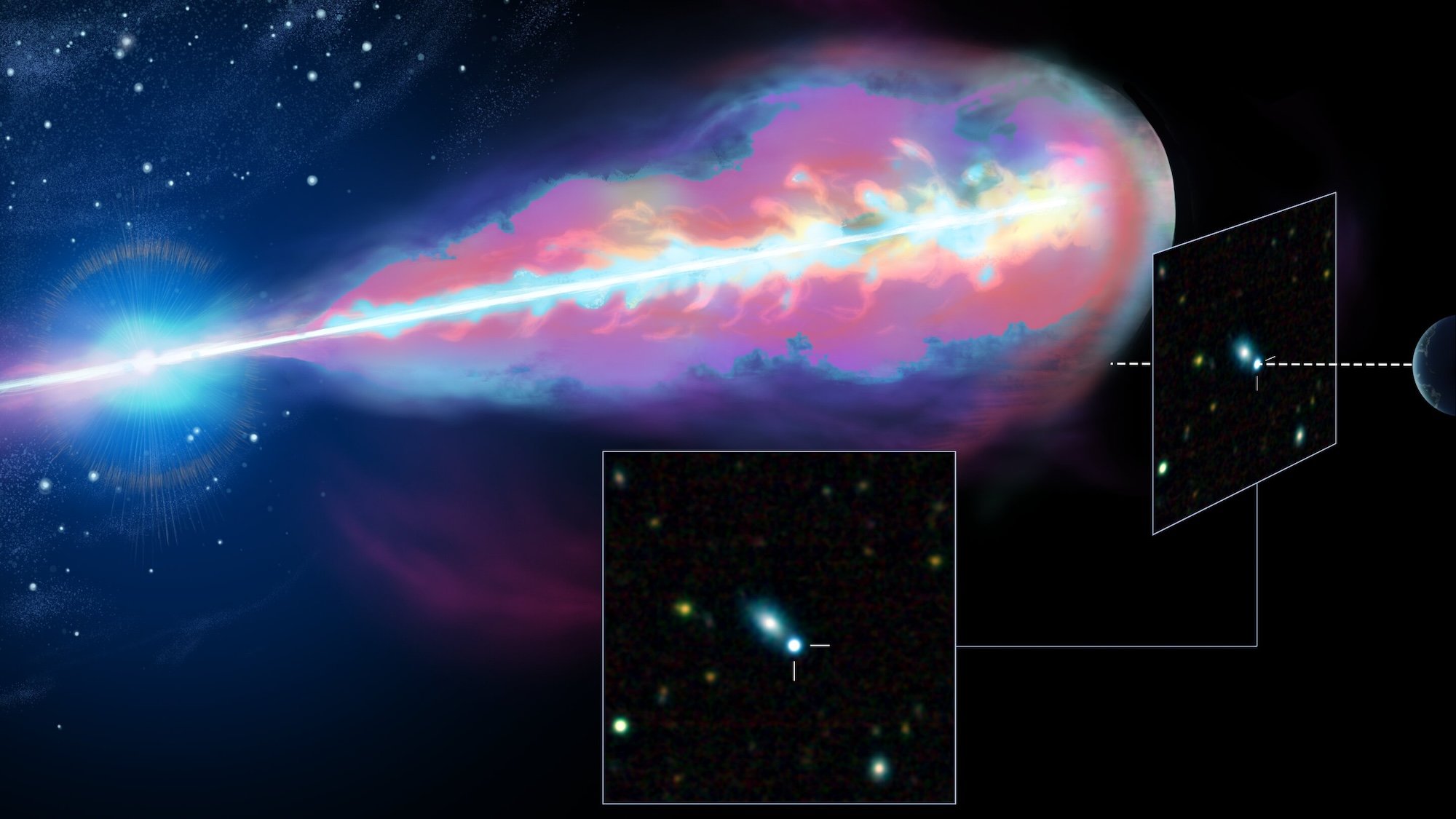
The primary challenge in studying GRBs is the "flashlight effect." Most of our current data on these phenomena is derived from bursts pointed directly at Earth. When viewed head-on, the radiation is concentrated and intense. However, GRB 260310A provided a unique opportunity: it was viewed from an oblique angle.
"We looked at it from a side angle," explained study co-author Yu-Han Yang. "As the jet slowed down, its light became visible over a wider range of angles, allowing us to probe the jet’s shape, from its outer edges toward its inner core."
This "side-on" vantage point allowed researchers to distinguish between the jet’s components. Astronomers now believe that GRB 260310A was characterized by a "structured jet" model. This model posits that the central engine of the burst produces an ultra-fast, narrow, and highly energetic core, which is encased in a broader, slower-moving outer "wing." When the explosion occurred, the initial light we detected came from these slower outer wings. As the relativistic jet slowed over the following days and weeks, the light from the highly energetic inner core finally became visible to our sensors.
Supporting Data and Statistical Significance
The statistical rarity of GRB 260310A is a primary reason for the excitement within the astrophysics community. While the prompt gamma-ray emission was relatively modest, the subsequent multi-wavelength afterglow placed the event in the top 1% of brightness for both visible light and X-ray emissions. Furthermore, its radio-frequency brightness placed it within the top 5% of all recorded GRBs.
Roberto Ricci, a radio astronomer at Italy’s National Institute of Astrophysics, noted the difficulty in reconciling these data points. "We see hundreds of GRBs every year, but the oddballs are the most informative ones," Ricci stated. "We could explain individual features of this burst, but fitting them all into the same picture proved much harder."
The reconciliation of these disparate brightness levels—dim in gamma rays but exceptionally bright in X-ray and radio—is only possible if one accepts the structured jet model. The energy released was not isotropic (emitting equally in all directions) but was instead tightly focused. The reason it appeared "weak" initially is simply that the Earth was not positioned in the path of the narrowest, most energetic core during the initial explosion.
Implications for High-Energy Astrophysics
The implications of this discovery are profound for how astronomers classify and predict the behavior of transient high-energy events. Current models of GRBs have been largely calibrated by "on-axis" observations. If a significant percentage of GRBs are structured like 260310A, it suggests that our current surveys may be drastically underestimating the number of high-energy events occurring in the distant universe.
By missing the "off-axis" events, we may be misinterpreting the total energy budget of the universe and the frequency of massive stellar deaths. This study provides a template for how to interpret future events that do not conform to standard luminosity profiles.
Furthermore, the data collected from this event reinforces the need for rapid-response observation protocols. Because the afterglow evolved significantly over just a few weeks, the ability to pivot telescopes quickly to catch the transition from the "wings" to the "core" was essential.
Future Research and Technological Frontiers
The scientific team behind the study emphasized that the analysis of GRB 260310A would not have been possible without the coordinated effort of international observatories. However, they also highlighted the limitations of current technology in capturing the earliest moments of such events.
The upcoming data from the Vera C. Rubin Observatory is expected to be a game-changer. With its unprecedented wide-field survey capabilities and high-cadence imaging, the observatory will be able to detect the initial, faint signals of these jets much earlier than current instruments. By capturing more "side-view" bursts, astronomers hope to map the diversity of jet structures in GRBs, determining whether the "core-and-wing" structure is a universal feature of stellar collapse or a rare occurrence limited to specific types of progenitor stars.
As researchers continue to synthesize the data from the months-long observation period of GRB 260310A, the event stands as a landmark case study. It reminds the scientific community that in the vastness of the cosmos, what appears to be a minor flicker may, upon closer inspection, prove to be one of the most violent and energetic phenomena in existence. The transition from mystery to understanding in this case has not only solved the puzzle of one specific burst but has also provided a new lens through which to view the explosive history of the universe.

