
Jakarta, Indonesia – A series of coordinated bomb blasts and a subsequent gunfight that rocked the heart of Jakarta on January 14, 2016, was swiftly confirmed by Indonesian authorities to be the work of the Islamic State of Iraq and Syria (ISIS) extremist group. The assault, which targeted a Starbucks coffee shop, a police post, and other locations around the bustling Sarinah shopping mall on Jalan Thamrin, resulted in the deaths of seven individuals, including four attackers, two civilians (one Indonesian and one foreign national), and one police officer. Multiple others, including another foreign national, sustained injuries during the harrowing ordeal.
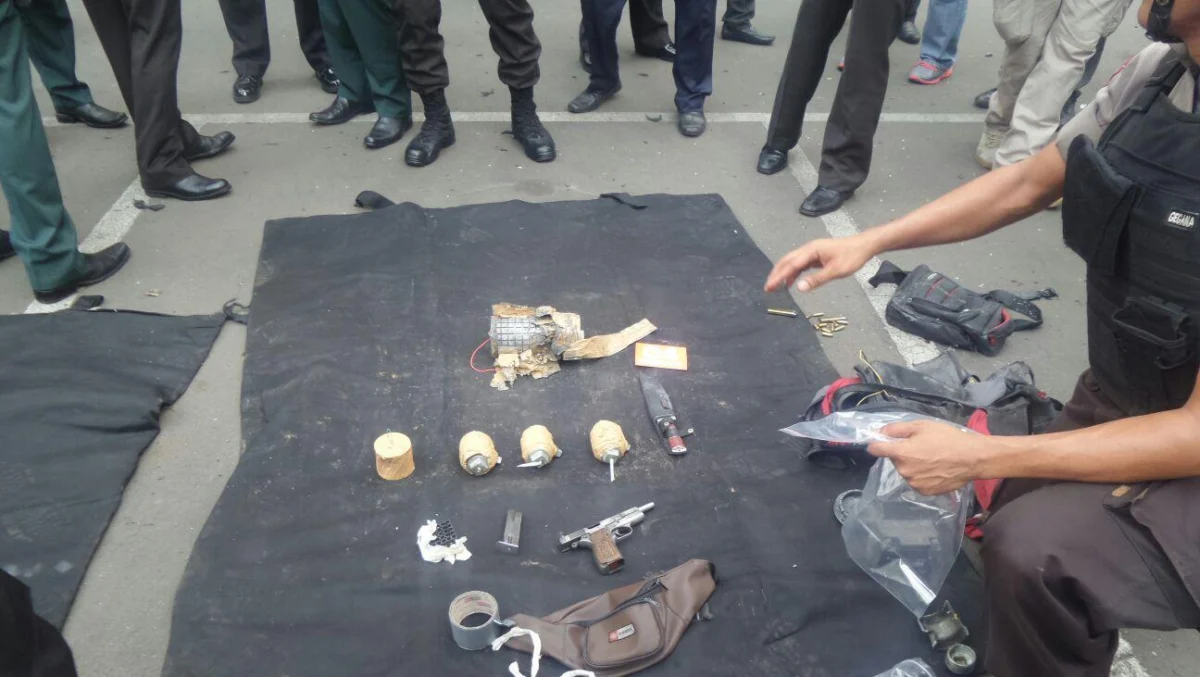
The Deputy Chief of the Indonesian National Police (Wakapolri), Commissioner General Budi Gunawan, confirmed the ISIS link at the scene of the attacks, emphasizing the sophisticated nature of the assault. "It is true, ISIS," Gunawan stated, detailing the weaponry employed by the perpetrators. "There were FN-type firearms. There were also bombs, grenades, and some bombs and grenades that were still active." Gunawan also assured the public that there were no further hostage situations or unconfirmed explosions elsewhere in Jakarta, asserting that the situation had been brought under control despite the casualties. He specifically noted that one foreign national was among the deceased victims and another among the injured.
Security forces remained on high alert in the aftermath, conducting sweeps and investigations to prevent any potential follow-up attacks. Gunawan urged citizens to report any suspicious new residents or activities in their areas to the authorities, stressing the need for continued vigilance to avoid being caught off guard. He highlighted that the targets included not only security personnel and their command posts but also government offices and "foreign objects," indicating a deliberate strategy to inflict maximum psychological and physical damage.
Chronology of a Coordinated Assault
The attack unfolded with chilling precision, beginning shortly before 11:00 AM local time on Thursday, January 14, 2016. The initial moments were marked by sudden, deafening explosions that shattered the morning calm on Jalan Thamrin, one of Jakarta’s main thoroughfares.
- 10:50 AM: The first blast occurred at a Starbucks coffee shop located within the Djakarta Theatre complex, adjacent to the Sarinah shopping mall. This was quickly followed by another explosion at a police post situated directly opposite the Starbucks, at a busy intersection. The blasts caused immediate panic, sending bystanders scattering and triggering an immediate security response.
- 10:55 AM onwards: Following the explosions, a group of armed assailants, later identified as the attackers, engaged in a direct gun battle with police officers who had rushed to the scene. Eyewitnesses described a chaotic scene with bursts of automatic gunfire echoing through the streets. The attackers, armed with firearms and grenades, appeared to target security personnel and civilians indiscriminately.
- Initial Casualties: The initial blasts and subsequent gunfire quickly claimed lives. A Canadian citizen and an Indonesian civilian were among the first confirmed fatalities. A police officer was also killed during the ensuing shootout.
- Intense Gunfight: The area around Sarinah became a battleground. Members of Indonesia’s elite counter-terrorism unit, Densus 88, along with uniformed police and military personnel, rapidly converged on the location. They engaged the remaining attackers in a fierce exchange of fire, which was widely broadcast live by local and international media, showing images of armed officers taking cover and advancing.
- Neutralization of Threats: Over the next few hours, security forces systematically neutralized the attackers. Some were reportedly killed in suicide bombings, while others were shot during confrontations with law enforcement. By approximately 2:00 PM, police confirmed that all perpetrators directly involved in the immediate attack had been either killed or apprehended. The scene was secured, though a thorough sweep for any remaining explosives or accomplices continued for several more hours.
Victims and the Human Cost
The attack left a devastating human toll. In total, seven individuals lost their lives. This included:
- Four perpetrators: Identified as the primary attackers who carried out the bombings and shootings.
- Two civilians: One Indonesian national, Sugito, a father of three, and a Canadian national, Tahar Amer Ouali, who was reportedly visiting Indonesia for business.
- One police officer: Senior Commissioner Danny Hamonangan Siregar, who died while bravely responding to the initial chaos.
Additionally, at least 24 people sustained injuries, ranging from shrapnel wounds to gunshot injuries, and the psychological trauma experienced by survivors and witnesses was profound. Among the injured was an Austrian national, who was treated for wounds.
Official Confirmation and ISIS Link
The swift attribution of the attack to ISIS by Deputy Chief Gunawan was based on preliminary intelligence and the modus operandi, which bore hallmarks of the global extremist group. Later investigations would corroborate this, pointing to Bahrun Naim, an Indonesian militant believed to be fighting for ISIS in Syria, as the mastermind behind the assault. Naim had reportedly been communicating with and directing cells within Indonesia, urging them to launch attacks against Western interests and Indonesian authorities.
The Jakarta attack marked a significant escalation, being the first major assault in Indonesia directly claimed or attributed to ISIS. It underscored the growing influence of the group’s ideology among a segment of Indonesian extremists, some of whom had traveled to Syria and Iraq to fight alongside ISIS, while others were radicalized domestically through online propaganda. This shift represented a new challenge for Indonesia’s well-regarded counter-terrorism apparatus, as the threat evolved from regionally focused groups like Jemaah Islamiyah to those inspired by a global caliphate.
Security Measures and Aftermath
In the immediate aftermath, security was drastically heightened across Jakarta and other major Indonesian cities. Police deployed additional personnel to vital installations, including embassies, government buildings, shopping malls, and tourist destinations. Roadblocks were set up, and stop-and-search operations became commonplace. The public was advised to remain vigilant and cooperate with security forces.
Forensic teams meticulously combed the crime scenes, collecting evidence to identify the perpetrators, trace their networks, and understand their planning and logistics. This led to a series of swift follow-up operations by Densus 88, resulting in numerous arrests of suspected terrorists across Indonesia in the weeks and months that followed. These operations targeted individuals believed to be part of Bahrun Naim’s network, involved in bomb-making, fundraising, or recruitment.
Background Context of Terrorism in Indonesia
Indonesia has a long and complex history with Islamist extremism. Prior to the rise of ISIS, the primary threat stemmed from groups like Jemaah Islamiyah (JI), responsible for devastating attacks such as the 2002 Bali bombings, which killed over 200 people, and the 2003 JW Marriott Hotel bombing, among others. These groups typically aimed to establish an Islamic caliphate in Southeast Asia.
Indonesia’s response to these earlier threats led to the formation of Densus 88, a highly effective counter-terrorism unit trained by the United States and Australia. Densus 88 achieved significant successes in dismantling JI’s operational capabilities, apprehending or killing many key leaders and bomb-makers.
However, the emergence of ISIS in 2014 presented a new paradigm. ISIS’s call for global jihad and its sophisticated online propaganda resonated with a new generation of extremists, some of whom felt disillusioned by the perceived failures of older, more localized groups. Bahrun Naim, a former IT technician, exemplified this new wave, leveraging social media to recruit and coordinate attacks from his base in Syria. The Jakarta attack was seen as an attempt by ISIS to demonstrate its reach and inspire its followers in Southeast Asia, aiming to create a "wilayah" or province of the caliphate in the region.
Government Response and Public Reaction
President Joko Widodo, who was on a working visit to West Java at the time of the attack, immediately cut short his trip and returned to Jakarta. In a televised statement, he condemned the "acts of terror" and asserted, "We must not be afraid, we must not be defeated by these acts of terror." He vowed that the state and its people would not be intimidated and would stand united against terrorism. His resolute stance was crucial in reassuring a shocked nation.
International condemnation was swift and widespread. The United Nations Security Council issued a statement condemning the "heinous terrorist attack" and expressed its deepest sympathy to the victims and their families. Nations worldwide, including the United States, Australia, and various European countries, offered their condolences and reiterated their support for Indonesia’s counter-terrorism efforts.
Domestically, a powerful wave of defiance swept across social media with the hashtag #KamiTidakTakut ("We Are Not Afraid"). Indonesians from all walks of life used the hashtag to express solidarity, resilience, and a refusal to succumb to fear. This collective response showcased the nation’s determination to resist extremist ideologies and maintain its diverse and tolerant values.
Broader Impact and Implications
The Jakarta attack had several significant implications:
- Regional Security: It heightened concerns across Southeast Asia about the return of foreign fighters from Syria and Iraq, and the potential for ISIS-inspired attacks in other regional capitals. Neighboring countries, including Malaysia and the Philippines, also stepped up their counter-terrorism measures and intelligence sharing.
- Economic Impact: While the immediate economic impact on Jakarta’s vibrant business district was temporary, there were initial concerns about its effect on tourism and foreign investment. However, Indonesia’s swift and effective response helped to mitigate long-term negative perceptions.
- Counter-Terrorism Strategy Evolution: The attack prompted a re-evaluation and strengthening of Indonesia’s counter-terrorism laws, which were seen by some as being too lenient or outdated for the new ISIS-inspired threat. Discussions began on allowing longer detention periods for suspects and broader surveillance powers for security agencies.
- Challenge of Radicalization: The incident highlighted the persistent challenge of radicalization, particularly online. It underscored the need for comprehensive strategies that combine law enforcement efforts with deradicalization programs, community engagement, and counter-narratives to combat extremist propaganda.
In conclusion, the January 14, 2016, Jakarta terror attack was a stark reminder of the global reach of extremist ideologies and the persistent threat they pose. While it caused tragic loss of life and instilled temporary fear, the swift and coordinated response by Indonesian authorities, coupled with the unwavering resilience of its people, demonstrated the nation’s resolve to confront and overcome the scourge of terrorism. The incident served as a critical turning point, leading to enhanced security measures, intensified counter-terrorism operations, and a renewed commitment to safeguarding Indonesia’s peace and stability against both domestic and internationally inspired extremist threats.

