• Home
Nata News
keep your memories alive
Technology

Indonesia’s Laptop Market in 2026 Navigates AI Demand Surge Amidst Volatile Global Supply Chains and Soaring Component Costs

by admin April 19, 2026
written by admin

Entering 2026, the Indonesian laptop market finds itself at a critical juncture, defined by a profound tension between surging demand for Artificial Intelligence (AI) capabilities and an increasingly volatile global supply chain. This period marks a pivotal moment for regional stakeholders, as the convergence of Microsoft’s Copilot+ ecosystem and the impending end-of-life (EOL) cycle for Windows 10 would, under normal circumstances, trigger a historic replacement boom. Instead, the market is grappling with a structural scarcity of critical components that threatens unit growth and is fundamentally reshaping brand hierarchies. Sentiment within Jakarta’s distribution centers is notably somber, reflecting an industry that has yet to fully recover from a nearly 15% post-pandemic decline and now confronts a supply-side crisis hindering any robust rebound.

The Looming Windows 10 End-of-Life and the AI Imperative

The cessation of free support for Windows 10 in October 2025 has created an urgent need for upgrades across consumer and commercial segments. Historically, such EOL events have been powerful catalysts for PC refreshes, driving millions of users to new hardware compatible with the latest operating systems. In Indonesia, a significant portion of the installed base still relies on Windows 10, making the upgrade cycle potentially massive. Simultaneously, the advent of AI PCs, exemplified by Microsoft’s Copilot+ initiative, introduces a new performance benchmark. These machines, featuring dedicated Neural Processing Units (NPUs), promise enhanced productivity, security, and innovative AI-powered features directly on the device, reducing reliance on cloud computing. This technological leap has spurred significant consumer and enterprise interest, positioning AI PCs as the next frontier in personal computing. However, the anticipated demand surge from both the EOL and AI trends is now running headlong into severe supply constraints, creating a paradox that could stifle market potential.

Early 2026 Market Dynamics: A Snapshot

Preliminary projections for early 2026 indicate a market struggling for equilibrium. While specific unit shipment data remains fluid, initial assessments suggest that the "Big Four" manufacturers – Lenovo, HP, Dell, and ASUS – are consolidating their dominant positions. Their established supply chain networks and financial clout provide a significant competitive moat, allowing them to better navigate the current instability.

  • Projected Market Share Distribution (Early 2026, Estimated):
    • Lenovo: 28%
    • HP: 24%
    • ASUS: 19%
    • Dell: 15%
    • Acer: 6%
    • Others: 8%

This distribution highlights the increasing concentration of power among Tier-1 vendors. Their ability to secure components through Fixed-Price Long-Term Supply Agreements (LTSAs) effectively shields them, to some extent, from the extreme volatility plaguing the spot retail market. Smaller regional players and white-box assemblers, lacking such leverage, face existential risks, often forced to pay premium prices for scarce components, eroding their margins and competitive edge. Even for the industry giants, however, the fundamental cost structure is under unprecedented strain, a burden that will inevitably be passed on to the end consumer.

Market Leadership in a Challenging Environment

Each of the leading brands leverages distinct strengths to maintain its market position amidst the current turbulence:

  • Lenovo: Continues to be a powerhouse in the enterprise and education sectors, known for its robust ThinkPad line and extensive service network. Its focus on corporate solutions, including Device-as-a-Service (DaaS) offerings, provides stable revenue streams.
  • HP: Maintains a strong presence across consumer, small-to-medium business (SMB), and corporate segments. Its diversified portfolio and strong brand recognition, particularly with its ProBook and EliteBook series, allow it to cater to a broad user base.
  • ASUS: Increasingly making inroads beyond its traditional gaming and consumer strongholds. The company is strategically sharpening its offerings for the finance, manufacturing, and government sectors, where specialized services, stringent security, and guaranteed product lifecycle management are crucial. This diversification is a key strategy to mitigate risks associated with consumer market volatility.
  • Dell: Remains a preferred choice for large enterprises and IT departments, offering comprehensive end-to-end solutions, high-performance workstations, and robust support services. Its emphasis on corporate contracts and custom configurations provides a steady demand pipeline.

The Price Shock: A Crisis in Memory and Processing Units

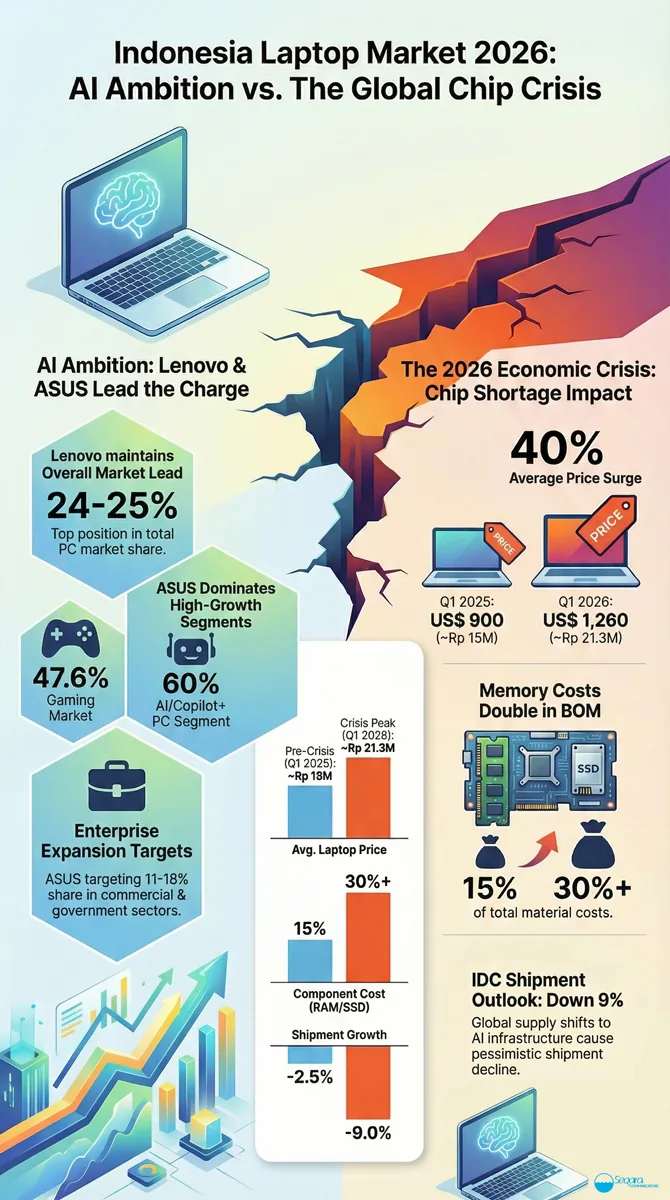
The most immediate and impactful challenge facing the market is a severe component scarcity, particularly in memory and central processing units (CPUs). What was once a relatively stable part of the bill of materials (BOM) for a notebook has now become a major cost inflator. DRAM (Dynamic Random-Access Memory) and NAND flash memory, which collectively accounted for approximately 15% of a notebook’s BOM, have seen their share more than double to over 30% within a single year.

This dramatic surge is driven by a confluence of factors: escalating demand from AI data centers, new generation smartphones, and a more conservative production outlook from major memory manufacturers like Samsung, SK Hynix, and Micron following a period of oversupply. Historically, the memory market has been cyclical, but the current upswing is exacerbated by the foundational requirements of AI PCs, which demand significantly more RAM.

Adding to this pressure, Intel, a dominant CPU supplier, has already implemented price increases, with double-digit hikes observed on certain higher-end SKUs. Other major US chipmakers are anticipated to follow suit for their mid-to-high-end platforms within the current quarter. The simultaneous escalation in both memory and CPU prices creates an unprecedented cost burden for original equipment manufacturers (OEMs). Analysts project that this dual price surge could translate into a 30-40% increase in the average retail price of laptops, a significant jump that could deter potential buyers and dampen the anticipated replacement boom.

Shifting Demand: What Buyers Prioritize Now

Despite the looming price shocks, demand has not evaporated; rather, it has undergone a significant shift in focus. Consumers and businesses are becoming more discerning, prioritizing specific attributes in their purchasing decisions.

  • AI Readiness: With the promise of Copilot+ and on-device AI capabilities, buyers are increasingly looking for laptops equipped with dedicated NPUs and sufficient RAM (16GB minimum, ideally 32GB) to handle AI workloads efficiently. This trend is particularly strong among early adopters and professionals in creative or data-intensive fields.
  • Performance for Hybrid Work: The enduring hybrid work model continues to drive demand for powerful processors, ample storage, and robust connectivity to ensure seamless multitasking and collaboration. Laptops capable of handling demanding applications and multiple video conferencing sessions without lag are highly sought after.
  • Enhanced Security Features: With the rise of cyber threats and the handling of sensitive data, especially on AI PCs, advanced security features (hardware-level encryption, biometric authentication, robust antivirus integration) are now non-negotiable for both corporate and discerning individual buyers.
  • Battery Life and Portability: For mobile professionals and students, extended battery life and lightweight designs remain crucial. The ability to work efficiently away from a power outlet is a key purchasing factor.
  • Value Proposition: As prices rise, consumers are more acutely evaluating the "value for money." This might lead to a longer replacement cycle for some, or a willingness to invest more in a device perceived as future-proof and durable.

The Corporate and Public Sector: The Next Battleground

Prospek Pasar Laptop Indonesia 2026: Menavigasi Volatilitas Rantai Pasok dan Peralihan Infrastruktur AI - Hybrid.co.id

The corporate and public sectors are emerging as critical battlegrounds for market share, offering more stable and predictable demand compared to the volatile consumer market. ASUS’s strategic pivot to strengthen its offerings in finance, manufacturing, and government segments underscores this trend. These sectors demand more than just hardware; they require comprehensive solutions encompassing services, robust security, and guaranteed product lifecycles.

Lenovo and HP, with their extensive corporate legacies, established sales channels, and sophisticated service infrastructures, remain formidable competitors in this space. Key differentiators in securing large tenders are expected to include:

  • Annual Supply Agreements: Providing stability and predictable pricing for large volume purchases.
  • Managed Services: Offering end-to-end IT management, from deployment and maintenance to security updates and helpdesk support, allowing organizations to focus on core competencies.
  • Device-as-a-Service (DaaS) Packages: A subscription-based model that bundles hardware, software, and services into a single, predictable monthly cost, appealing to organizations looking to shift from capital expenditure to operational expenditure and simplify IT asset management.
  • Customization and Scalability: The ability to provide tailored solutions that meet specific industry compliance standards and scale with organizational growth.

IDC’s Bleaker Global Outlook

The latest projections from IDC paint a somber picture for global PC shipments in 2026. Their baseline scenario anticipates a moderate decline of approximately 5%, with a worst-case scenario plummeting closer to 9%. This represents a sharp downturn from earlier, more optimistic forecasts, directly attributed to the severe memory constraints colliding with the anticipated Windows 10 refresh wave and the nascent push towards AI PCs.

IDC’s analysis highlights a crucial paradox: while underlying demand drivers are robust, the supply-side bottlenecks are effectively negating the potential for growth. Furthermore, the report predicts that the average selling price (ASP) of PCs could rise by 6-8% even as unit volumes contract. This implies that consumers and businesses will be paying more for fewer devices, a challenging economic reality that could impact overall technology adoption and refresh cycles. This global trend is expected to significantly influence the Indonesian market, which is often a reflection of broader international supply and demand dynamics.

The AI PC Paradox: Innovation Meets Reality

The very features that define an AI PC are now contributing to its cost and accessibility challenges. Microsoft’s minimum requirements for a Copilot+ PC, mandating at least 16GB of RAM, with many premium designs targeting 32GB, directly clash with the harsh reality of memory scarcity and soaring prices. These specifications, while essential for unlocking the full potential of on-device AI, significantly inflate the bill of materials.

This situation forces OEMs into difficult strategic choices:

  • Higher Manufacturer’s Suggested Retail Price (MSRP): Passing the increased component costs directly to consumers, potentially pricing AI PCs out of reach for a broader market segment.
  • Delayed Launches: Waiting for component prices to stabilize or supply to increase, risking being late to market in a rapidly evolving technological landscape.
  • Reduced Specification Flexibility: Offering fewer configuration options, potentially compromising the "AI experience" for some models or limiting consumer choice.

This paradox underscores the intricate balance between technological innovation and market accessibility, particularly in developing economies like Indonesia where price sensitivity can be a significant factor.

Indonesia 2026: Predicted Market Realities

Synthesizing these global and local dynamics, several key realities are projected to define the Indonesian laptop market in 2026:

  • Overall Unit Decline: Despite the strong demand drivers from Windows 10 EOL and AI PC interest, the severe supply constraints and resulting price increases are expected to lead to a net decline in overall unit shipments.
  • Significant Price Escalation: Consumers should brace for a substantial increase in laptop prices across all segments, with AI-capable models experiencing the most pronounced hikes due to their higher memory and NPU requirements.
  • Segmented Market Growth: While the overall market shrinks, the premium and enterprise segments focusing on AI PCs and corporate solutions may show relative resilience, driven by businesses needing to upgrade and early adopters willing to pay for cutting-edge technology.
  • Intensified Competition in Enterprise: The corporate and public sectors will become even more fiercely contested, with vendors emphasizing managed services, DaaS, and long-term contracts.
  • Resurgence of Refurbished/Second-hand Market: With new laptop prices soaring, there might be an increased demand for quality refurbished or second-hand devices, particularly for budget-conscious consumers and SMBs.
  • Delayed Mass Adoption of AI PCs: The high cost barrier will likely delay the widespread adoption of AI PCs in Indonesia, pushing the true "AI PC boom" further into the future, contingent on supply chain stabilization and price moderation.

Key Indicators to Watch Next

Market observers and industry stakeholders will be closely monitoring several critical indicators in the coming months:

  • Memory Price Trends: Movements in DRAM and NAND flash futures contracts will be a primary indicator of potential relief in component costs. Any signs of stabilization or decline could signal easing pressure on OEM margins.
  • CPU Supply and Pricing: Updates from Intel, AMD, and Qualcomm regarding their production capacities and pricing strategies for new NPU-integrated processors will be crucial.
  • Geopolitical Developments: Ongoing geopolitical tensions, particularly those affecting semiconductor manufacturing hubs and logistics routes, could further exacerbate or alleviate supply chain disruptions.
  • Consumer Spending Patterns: Economic indicators in Indonesia, including inflation rates, disposable income, and consumer confidence, will dictate purchasing power and the willingness to absorb higher laptop prices.
  • OEM Inventory Management: How effectively manufacturers manage their existing component inventory and new supply allocations will determine product availability and pricing strategies.
  • Government Policies: Any local government initiatives related to technology procurement, digital transformation, or import regulations could influence market dynamics.

Guidance for Buyers in 2026

For consumers and businesses contemplating laptop purchases in 2026, a strategic approach is advised:

  • Act Proactively: If an upgrade is genuinely needed and budget permits, consider purchasing sooner rather than later, as prices are widely expected to continue their upward trajectory.
  • Prioritize Essential Features: Differentiate between "must-have" and "nice-to-have" features. If on-device AI capabilities are not critical for your immediate needs, consider non-AI models that may offer better value.
  • Evaluate Total Cost of Ownership (TCO): For businesses, look beyond the initial purchase price. Factor in the cost of support, security, software licenses, and potential DaaS packages to understand the true long-term investment.
  • Consider Component Upgrades: For existing machines, assess if upgrading RAM or storage can extend their lifespan and meet current performance demands, potentially delaying a full replacement.
  • Research Service and Support: With increasing complexity and costs, the quality of after-sales service and warranty support from vendors becomes even more critical.
  • Explore Alternatives: Investigate refurbished options or explore alternative form factors if budget constraints are severe, though be mindful of security and performance implications.

The Indonesian notebook market in 2026 is poised as a dramatic tug-of-war between formidable brand strength and severe component scarcity. While established players like ASUS and Lenovo are strategically positioned to navigate these challenges, every vendor is contending with the same fundamental headwinds. Prices are climbing, choices are narrowing, and AI, while a compelling value proposition, simultaneously presents a significant cost and supply constraint. The market’s trajectory will hinge on how quickly supply bottlenecks can be eased—and which players are most adept at converting the first signs of relief into sustained market leadership.


April 19, 2026 0 comment
0 FacebookTwitterPinterestEmail
Sports

Anthony Sinisuka Ginting Cruises to Easy Win in BAMTC Opener, Opponent Cherishes the Experience

by admin April 19, 2026
written by admin

Dubai, UAE – Indonesian badminton star Anthony Sinisuka Ginting commenced his campaign at the Badminton Asia Mixed Team Championship (BAMTC) 2023 with a swift and dominant victory, dispatching Lebanon’s Abi Younes Christophe in the opening match of the tournament held in Dubai. While the scoreline of 21-6, 21-8 reflected a significant gulf in class, the encounter offered a poignant moment of mutual respect and admiration, highlighting the aspirational nature of the sport at its highest level.

The BAMTC 2023, a crucial event in the continental calendar, serves as a vital platform for teams to earn ranking points and secure qualification for the Sudirman Cup, the premier mixed team championship in badminton. This year’s edition, held from February 14th to 19th, features a strong contingent of Asian nations vying for supremacy, including powerhouses like China, Japan, South Korea, and Malaysia, alongside emerging talents from various regions. Indonesia, a perennial contender, aims to leverage this championship to solidify its position and build momentum for upcoming global tournaments.

Ginting, currently ranked among the world’s elite, showcased his prowess from the outset against Christophe. The match, which lasted a mere 17 minutes, saw the Indonesian shuttler control the tempo and execute his game plan with precision. Despite the lopsided score, Christophe’s reaction post-match underscored the significance of the encounter for him. The Lebanese player expressed his elation at having the opportunity to share the court with a player of Ginting’s caliber, a sentiment that speaks volumes about the inspirational impact of world-class athletes.

“I know Ginting is a world-class player. For me, being able to play against him is like a dream come true. I am happy to have met Ginting,” Christophe stated, as quoted in an official release from PP PBSI (Indonesian Badminton Association). This candid admission from the underdog highlights the aspirational nature of badminton, where even in defeat, the experience of competing against a renowned opponent can be a significant personal triumph. Such moments often fuel the dreams of aspiring players worldwide, reinforcing the sport’s ability to inspire beyond the confines of victory and defeat.

For Ginting, the match was an opportunity to fine-tune his game and adapt to the conditions in Dubai. While acknowledging the clear disparity in skill level, the Indonesian ace maintained a professional approach, emphasizing the importance of focus and respect for every opponent. His strategy revolved around adapting to the arena, including factors such as court conditions, lighting, and air currents, which are crucial for optimal performance in any tournament.

“Yes, I remained focused and did not want to underestimate the opponent. I just focused on adapting to the court and everything else. I tried various types of shots, as well as getting a feel for my strokes and understanding the direction of the wind. I utilized all aspects,” Ginting explained. This meticulous approach, even in a seemingly straightforward match, is characteristic of top athletes who understand that consistent adaptation and attention to detail are paramount to sustained success. The ability to read the environment and adjust tactics accordingly is a hallmark of a seasoned player.

The swift conclusion of the match meant that Ginting did not experience significant fatigue. He revealed his intention to engage in further training sessions post-match to maintain his physical conditioning and sharpness. This dedication to continuous improvement, even after a dominant win, reflects the rigorous training regimes that elite athletes adhere to. The BAMTC, while a team event, also serves as an individual stepping stone, allowing players to gauge their readiness and identify areas for refinement.

“I wasn’t tired at all, especially since the match was short. That’s why, after the match, I continued to train again,” Ginting commented. This proactive approach to physical preparation underscores his commitment to peak performance throughout the tournament. The BAMTC provides a platform not just for competition, but also for players to assess their physical and mental fortitude under tournament pressure.

Ginting’s emphasis on adapting to the playing environment – the wind, lighting, and atmosphere – is a critical aspect of professional badminton. These seemingly minor factors can significantly influence a player’s performance, and the ability to acclimatize quickly is a key differentiator. By consciously working through these elements, Ginting aimed to lay a solid foundation for more challenging encounters that lay ahead in the championship.

“I have to be able to adapt and make the most of this match. This is for preparation for the next match, which will definitely be tougher,” Ginting asserted. This forward-looking perspective is essential in a tournament format where progression hinges on consistently overcoming increasingly difficult opponents. The BAMTC 2023, with its mix of established powerhouses and developing nations, offers a diverse range of challenges.

Background and Significance of the Badminton Asia Mixed Team Championship

The Badminton Asia Mixed Team Championship (BAMTC) is a biennial tournament organized by Badminton Asia, the continental governing body for the sport in Asia. Established to promote mixed team competition and provide a crucial platform for Asian nations, the championship holds significant weight in the international badminton calendar. Its primary objectives include fostering camaraderie between different badminton associations in Asia, enhancing the competitive spirit, and serving as a key qualifying event for the prestigious BWF World Mixed Team Championships, commonly known as the Sudirman Cup.

The tournament structure typically involves a group stage followed by a knockout phase, culminating in a grand final. The format encourages strategic team management, as national teams must select players across all five disciplines: men’s singles, women’s singles, men’s doubles, women’s doubles, and mixed doubles. Success in the BAMTC requires a well-rounded team with depth in all categories, as the cumulative performance of the team determines its advancement.

For many nations, including Indonesia, the BAMTC is more than just a tournament; it is a critical stepping stone in their preparation for major international events. The points earned in the BAMTC contribute to national rankings, which in turn influence seeding and qualification for other major tournaments. Furthermore, the championship provides emerging players with invaluable experience in high-pressure environments, honing their skills against some of the best talent in the world.

The 2023 edition in Dubai marks a significant moment, as it is one of the first major international badminton events to be held in the Middle East, signifying the growing global reach and popularity of the sport. The choice of Dubai as host city underscores the city’s burgeoning reputation as a sporting hub, capable of staging world-class events.

Indonesia’s Campaign and Ginting’s Role

Indonesia, a nation with a rich badminton heritage and a consistent presence at the top of international rankings, views the BAMTC as a vital opportunity to assert its dominance and scout emerging talent. The Indonesian team typically comprises a blend of seasoned campaigners and promising young players, creating a dynamic and competitive internal environment.

Anthony Sinisuka Ginting, as one of Indonesia’s premier singles players, carries significant expectations. His individual prowess in men’s singles is a cornerstone of Indonesia’s strength in team events. His ability to consistently win his matches, particularly against higher-ranked opponents, is crucial for the team’s overall success. His performance in the opening match against Lebanon’s Abi Younes Christophe, while a straightforward victory, demonstrated his preparedness and focus, setting a positive tone for Indonesia’s campaign.

The Indonesian contingent, like many other participating nations, will be looking to navigate the group stages effectively and build momentum towards the knockout rounds. The team’s success will depend not only on the stellar performances of its top players like Ginting but also on the collective effort and cohesive strategy across all five disciplines.

Broader Implications and Analysis

The encounter between Anthony Sinisuka Ginting and Abi Younes Christophe, though seemingly one-sided on paper, encapsulates a fundamental aspect of sports: the pursuit of excellence and the inspiration derived from witnessing it. Christophe’s enthusiastic request for a photograph and autograph speaks to the aspirational nature of sports, where even a brief encounter with a world-class athlete can be a deeply motivating experience. This interaction serves as a powerful reminder that behind every elite athlete is a journey fueled by dreams, dedication, and the admiration of others.

For Ginting, such matches, while not posing a significant competitive threat, are crucial for refining his game and building mental resilience. The ability to maintain focus and execute his strategies effectively, even when the outcome appears predetermined, is a mark of a truly professional athlete. His emphasis on adapting to the environment – wind, lighting, and atmosphere – highlights the subtle yet critical factors that distinguish top performers. These are the details that can make or break matches against more formidable opponents.

The BAMTC 2023, by bringing together diverse teams from across Asia, contributes to the global growth of badminton. It provides a platform for players from developing badminton nations to gain exposure and experience, fostering the sport’s expansion beyond traditional powerhouses. The participation of athletes like Abi Younes Christophe, who may not be ranked among the world’s elite, is vital for the sport’s grassroots development and its appeal to a wider audience.

As the tournament progresses, the focus will inevitably shift to the more intense battles between the top-seeded nations. However, moments like the one shared between Ginting and Christophe serve as a valuable reminder of the unifying power of sport and the shared passion that drives athletes at all levels. The BAMTC 2023 in Dubai promises to be a thrilling showcase of badminton talent, with the Indonesian team, led by players like Ginting, aiming to make a significant impact on the continental stage. The journey ahead will undoubtedly be filled with strategic battles, exhilarating rallies, and the continuous pursuit of sporting excellence.

April 19, 2026 0 comment
0 FacebookTwitterPinterestEmail
Science

Breakthrough in Daylight Astronomy Macquarie University Huntsman Telescope Enables 24-Hour Monitoring of Stars and Satellites

by admin April 19, 2026
written by admin

Astronomers at Macquarie University in Australia have announced a significant technological leap in the field of observational astronomy, successfully demonstrating a technique that allows for the precise measurement of stars, satellites, and other celestial targets during broad daylight. Utilizing the innovative Huntsman Telescope, a multi-lens array originally designed for ultra-sensitive night-sky surveys, the research team has effectively bypassed the long-standing limitation that has confined optical astronomy to the hours of darkness. This development, published in the Publications of the Astronomical Society of Australia on May 20, 2024, marks a pivotal shift in how researchers monitor the rapidly crowding orbital environment of Earth and the volatile behavior of nearby stars.

The Huntsman Telescope, situated at the Siding Spring Observatory near Coonabarabran, New South Wales, represents a departure from traditional monolithic mirror designs. Instead of a single large primary mirror, the array consists of ten high-performance Canon 400mm f/2.8 L-series lenses, coupled with specialized astronomical cameras and astro-mechanical focusing equipment. By orienting these lenses to work in parallel, the system can capture high-cadence, short-exposure images that are subsequently processed to reveal objects normally drowned out by the scattering of sunlight in the Earth’s atmosphere.

The Challenge of Solar Interference in Optical Astronomy

For centuries, the primary obstacle to daylight astronomy has been Rayleigh scattering—the phenomenon where sunlight interacts with the Earth’s atmosphere, scattering shorter blue wavelengths and creating the brilliant blue sky that overwhelms the faint light of distant stars. While radio and infrared telescopes can operate during the day, optical telescopes have traditionally been rendered "blind" once the sun rises.

Sarah Caddy, a doctoral researcher at Macquarie University and the lead architect of the Huntsman Telescope’s daylight capabilities, noted that the difficulty lies in the signal-to-noise ratio. During the day, the "noise" of the sky’s brightness is millions of times stronger than the "signal" from a star or a satellite. However, the Macquarie team discovered that by using specific broadband light filters and high-speed sensor technology, they could isolate the specific wavelengths of light emitted by celestial bodies while blocking a significant portion of the solar background.

The team’s breakthrough involved months of rigorous testing using a "mini-Huntsman" pathfinder—a single-lens version of the larger array. This testing phase allowed researchers to calibrate exposure times, account for atmospheric turbulence (scintillation), and refine the tracking algorithms necessary to keep a telescope locked onto a target as the atmosphere shifts and shimmers under solar heating.

Technical Specifications and the "Fly’s Eye" Design

The Huntsman Telescope is modeled after the "Dragonfly Telephoto Array" concept, often referred to as a "fly’s eye" design. The use of multiple lenses provides several advantages over a single large mirror. Firstly, the specialized coatings on Canon’s professional-grade lenses are exceptionally effective at reducing internal reflections and "ghosting," which is critical when trying to observe faint objects near a bright source like the sun.

Each of the ten lenses is equipped with a CMOS (Complementary Metal-Oxide-Semiconductor) detector capable of capturing thousands of short-exposure frames per second. These short exposures are vital because they allow astronomers to "freeze" the atmospheric turbulence. When these thousands of images are stacked and processed, the resulting data achieves a level of precision and sensitivity that rivals much larger, more expensive installations.

The recent tests confirmed that the Huntsman could achieve "extraordinary results" during daylight hours, providing a continuous stream of data that was previously impossible to obtain from a ground-based optical site. This capability effectively doubles the operational utility of the observatory, transforming it into a 24-hour facility.

Monitoring the "Great Dimming" and Stellar Volatility

One of the primary scientific motivations for daylight astronomy is the continuous monitoring of transient stellar events. A key target for the Huntsman team is Betelgeuse, a red supergiant star located approximately 650 light-years away in the constellation of Orion.

Betelgeuse captured global headlines in late 2019 and early 2020 during the "Great Dimming," an event where the star’s luminosity dropped by more than 60%. While initial theories suggested the star was on the verge of a supernova explosion, later analysis indicated that Betelgeuse had ejected a massive cloud of surface material, which cooled into dust and temporarily obscured its light.

Because Betelgeuse is a variable star, its behavior can change rapidly. However, because of its position relative to the Sun, it often becomes "unobservable" for several months of the year for night-time telescopes. By enabling daylight observations, the Huntsman Telescope ensures that astronomers do not miss the critical early stages of a supernova or other massive mass ejection events. Continuous monitoring allows for a more complete light curve, providing deeper insights into the internal physics of aging stars.

Addressing the Crisis of Space Situational Awareness

Beyond pure astrophysics, the Huntsman’s daylight capability addresses a pressing logistical challenge in the modern space age: Space Situational Awareness (SSA). As of 2024, there are approximately 10,000 active satellites in orbit, but this number is expected to skyrocket. With the rise of "mega-constellations" like SpaceX’s Starlink and Amazon’s Project Kuiper, current projections suggest that an additional 50,000 satellites could be launched into Low Earth Orbit (LEO) within the next decade.

This congestion increases the risk of collisions, which can lead to the "Kessler Syndrome"—a theoretical scenario where a single collision creates a cloud of debris that triggers a chain reaction of further destruction, eventually rendering certain orbits unusable.

Currently, tracking these objects is a fragmented process. Radar can track them, but optical tracking provides more precise data on the orientation and condition of a satellite. Until now, optical tracking was limited to "terminator hours"—the brief periods at dawn and dusk when the ground is dark but the satellite, high above, is still illuminated by the sun.

"With tens of thousands of satellites planned for launch, there is a clear need for dedicated day-and-night telescope networks," Sarah Caddy stated. The ability to track satellites and space debris in the middle of the day provides a 24-hour safety net for orbital assets. It allows operators to refine collision-avoidance maneuvers with real-time data, regardless of the time of day.

Chronology of the Huntsman Project

The development of the Huntsman Telescope has followed a multi-year trajectory:

  • 2019-2020: Conceptualization and initial assembly of the multi-lens array at Macquarie University.
  • 2021: Installation at the Siding Spring Observatory, chosen for its dark skies and high number of clear nights.
  • 2022: Initial "First Light" observations focusing on low-surface-brightness galaxies during the night.
  • 2023: Development of the "Mini-Huntsman" pathfinder to test the feasibility of daylight filters and high-cadence imaging.
  • Early 2024: Successful demonstration of daylight tracking of Betelgeuse and LEO satellites.
  • May 20, 2024: Formal publication of the findings, detailing the effectiveness of the filter techniques and sensor precision.

Broader Implications and Future Outlook

The success of the Huntsman project suggests a new paradigm for ground-based observatories. As camera sensors and filter technologies continue to advance, the distinction between "daytime" and "nighttime" astronomy may continue to blur.

For the scientific community, this means a massive increase in the volume of data available for study. For the burgeoning commercial space industry, it means enhanced security for multi-billion-dollar satellite constellations. The Macquarie team’s work also offers a cost-effective blueprint for other nations and institutions; by using off-the-shelf high-end photography lenses rather than custom-built mirrors, the Huntsman approach lowers the barrier to entry for high-precision astronomical research.

As Sarah Caddy noted, daylight astronomy is an "exciting field" that is only just beginning to realize its potential. With the Huntsman Telescope leading the way, the sky is no longer a limit—at any hour of the day. The team now plans to expand the array and further refine their algorithms to track even smaller pieces of space debris, contributing to a safer and more transparent orbital environment for all of humanity.

April 19, 2026 0 comment
0 FacebookTwitterPinterestEmail
World News

Ali Khamenei: Indonesian Couple Names Newborn Son After Iran’s Supreme Leader in a Gesture of Admiration

by admin April 19, 2026
written by admin

A remote corner of Indonesia’s Riau province has become the unlikely focal point of international interest following the decision of a local couple, Arsa Putra and Vardatul Jannah, to name their newborn son Ali Khamenei. This distinctive choice, made in Kampar Regency, is a profound expression of the parents’ admiration for Iran’s current Supreme Leader, Sayyid Ali Hosseini Khamenei, and a demonstration of solidarity with the Iranian people. The decision, which the parents state received a form of endorsement from the Embassy of the Islamic Republic of Iran in Indonesia, underscores the complex interplay of cultural exchange, religious identity, and geopolitical awareness in Southeast Asia.

A Unique Tribute in Riau

The announcement of the unique name quickly spread beyond local circles, drawing attention to the motivations behind such a choice in a country predominantly Sunni Muslim, yet with historical and diplomatic ties to Iran. Arsa Putra explained that the naming was intended to reflect their deep respect and admiration for the Iranian leader, a figure revered by millions worldwide, particularly within the Shi’a Muslim community. Beyond personal admiration, the couple articulated a broader sense of solidarity with the Iranian populace, suggesting an awareness of Iran’s geopolitical standing and its people’s resilience. This act, while deeply personal, resonates with larger narratives of global identity and cross-cultural appreciation. The specific details regarding the newborn’s exact date of birth were not widely disseminated, but the news emerged recently, highlighting the immediate and thoughtful nature of the parents’ decision.

The Significance of the Name: Sayyid Ali Hosseini Khamenei

To fully grasp the weight of this naming decision, it is essential to understand the figure of Sayyid Ali Hosseini Khamenei. Born in Mashhad, Iran, in 1939, he has served as the second Supreme Leader of Iran since 1989, succeeding the revolutionary founder, Ayatollah Ruhollah Khomeini. As Supreme Leader, he holds the ultimate authority in Iran’s political and religious life, overseeing key governmental policies, military affairs, and judicial appointments. His leadership extends beyond national borders, influencing Shi’a communities and revolutionary movements across the globe. Khamenei’s tenure has been marked by significant domestic and international challenges, including nuclear negotiations with world powers, regional conflicts, and ongoing economic pressures. He is seen by his followers as a steadfast defender of Islamic principles, a symbol of resistance against Western hegemony, and a spiritual guide. His ideological influence is profound, shaping the discourse on Islamic governance, social justice, and international relations. For admirers like Arsa Putra and Vardatul Jannah, naming their child after such a figure is not merely an aesthetic choice but a declaration of allegiance to a particular set of values and a recognition of a leader’s enduring legacy. It represents a connection to a leader who embodies resilience and principled leadership in the face of global challenges, echoing sentiments of many who view Iran as a significant player on the world stage.

Indonesia-Iran Relations: A Historical Context

The act of naming a child after a foreign political or religious leader is often a symbolic gesture that reflects broader diplomatic or cultural ties. Indonesia, the world’s most populous Muslim-majority nation, and Iran share a long history of diplomatic relations, established in 1950. Both nations are members of the Organisation of Islamic Cooperation (OIC) and have historically championed non-aligned principles. Despite Indonesia being predominantly Sunni Muslim and Iran primarily Shi’a, religious differences have largely been navigated within a framework of mutual respect and shared interests, particularly concerning issues affecting the broader Muslim world.

Bilateral cooperation between Indonesia and Iran spans various sectors, including trade, energy, education, and culture. Trade volumes, while fluctuating, have seen efforts to increase non-oil and gas exchanges. Cultural and educational exchanges have also played a role in fostering understanding, with scholarships and academic programs facilitating interaction between the two countries’ intellectual and religious communities. For instance, Indonesian students occasionally pursue religious studies in Iran, and vice versa. These interactions, while not always highly visible to the general public, contribute to a subtle but persistent cultural imprint, where figures like the Supreme Leader might become known and respected outside Iran’s immediate cultural sphere. The presence of a small but active Shi’a community in Indonesia further contributes to this context, although the parents’ specific religious affiliation was not explicitly stated in reports.

The "Permission" from the Iranian Embassy

One intriguing detail in the parents’ account is their claim of having received "permission" from the Embassy of the Islamic Republic of Iran in Indonesia. This statement raises questions about the nature of such a "permission." In most diplomatic protocols, a foreign embassy does not typically grant formal permission for a private citizen of another country to name their child. It is more likely that the parents approached the embassy to inform them of their intention, seeking a blessing or a symbolic acknowledgment, rather than a legally binding approval.

A representative from the Iranian Embassy, if hypothetically approached for comment, would likely express appreciation for the gesture, framing it as a testament to the strong people-to-people ties and mutual respect between Indonesia and Iran. Such an endorsement, even informal, could be seen as a form of cultural diplomacy, strengthening the perception of goodwill and shared values. It transforms a private act into a moment of public relations, subtly reinforcing Iran’s soft power and cultural influence in the region. The embassy’s acknowledgment would likely emphasize the respect shown to a revered figure and the cultural bridge built by such an act, rather than any formal bureaucratic process.

Motivations: Admiration and Solidarity

The parents’ stated motivations — admiration for the Iranian leader and solidarity with the Iranian people — offer a window into their worldview. Admiration for a foreign leader can stem from various sources: media exposure, religious teachings, personal convictions, or a perception of that leader as a champion of certain causes. In the context of Ali Khamenei, this admiration often relates to his perceived steadfastness against Western pressures, his commitment to Islamic principles, and his role as a spiritual guide. For some, he embodies resistance and independence in a complex global political landscape.

The notion of "solidarity with the Iranian people" is also significant. Iran has faced decades of international sanctions and geopolitical tensions, leading to hardships for its citizens. Expressions of solidarity from abroad, particularly from a large Muslim-majority nation like Indonesia, can be a potent symbol of support, indicating that the Iranian people are not isolated. This solidarity could be rooted in a shared sense of Islamic identity, a common stance on certain international issues (such as the Palestinian cause), or a general sympathy for a nation perceived to be under external pressure. This emotional connection transcends mere political alignment, hinting at a deeper, shared human experience. The parents’ choice therefore might not be merely political but also a humanitarian statement, recognizing the struggles and resilience of a distant nation.

Broader Implications and Cultural Diplomacy

The naming of Ali Khamenei in Indonesia carries several broader implications. Firstly, it highlights the reach of cultural and religious influence in a globalized world. Information and admiration for figures like the Supreme Leader can travel across vast geographical and cultural distances, influencing personal decisions in unexpected ways. This phenomenon is a testament to the power of media, religious networks, and digital communication in shaping perceptions and fostering connections.

Secondly, it serves as a modest but noteworthy example of cultural diplomacy. While not orchestrated by governments, such organic acts of tribute can contribute to the narrative of positive bilateral relations. For Iran, it is a small victory in its efforts to project soft power and foster goodwill internationally, particularly within the Muslim world. It reinforces the idea that its leadership holds significant moral and spiritual authority for some outside its borders.

Thirdly, it may spark discussions within Indonesia about naming conventions, religious identity, and foreign policy perceptions. While Indonesia prides itself on its diversity and religious freedom, naming a child after a prominent foreign religious-political leader could elicit varied reactions, from approval within certain communities to curiosity or even concern among others. This event subtly brings to the fore the internal dynamics of religious and political identification within Indonesian society.

The Indonesian Context of Naming

Indonesian naming traditions are diverse, reflecting the country’s multi-ethnic and multi-religious fabric. Names often carry deep cultural, religious, or aspirational meanings. It is not uncommon for parents to choose names that honor revered figures, express religious piety, or signify hopes for their child’s future. For instance, names derived from Islamic, Hindu, or Javanese traditions are widespread. In some cases, names inspired by national heroes or international personalities are also adopted, though usually figures of broad positive acclaim. Naming a child after a specific, currently active foreign political-religious leader with significant geopolitical implications is relatively less common but not unprecedented. This practice underscores the personal freedom in naming children within Indonesian society, where parents have broad discretion in selecting monikers that resonate with their values and beliefs.

Official and Public Reactions

Given the personal nature of the decision, official reactions from the Indonesian government are unlikely to be forthcoming, beyond perhaps a general reaffirmation of religious freedom and good bilateral relations. The Indonesian state typically refrains from commenting on private citizens’ choices unless they contravene law or public order. However, the news could generate discussion within various public spheres:

  • Religious communities: Some Shi’a communities in Indonesia might view the naming as a proud affirmation of their identity and respect for their spiritual leader. Sunni scholars might offer more nuanced perspectives, potentially emphasizing unity or cautioning against divisive symbolism, depending on their theological leanings.
  • Social media and online forums: The story is ripe for discussion on social media, where Indonesians often engage in debates on identity, religion, and international affairs. Reactions could range from support and understanding to criticism or even humor.
  • Media: Local and national media outlets would likely cover the story as a human interest piece with an international dimension, exploring the motivations and potential implications without necessarily taking a stance.

Ultimately, the act of Arsa Putra and Vardatul Jannah naming their son Ali Khamenei transcends a simple personal choice. It is a nuanced statement that reflects admiration, solidarity, and a connection to global religious and political currents, all unfolding within the unique cultural landscape of Indonesia. It underscores how deeply personal decisions can ripple outwards, contributing to broader narratives of international relations and cultural exchange. This event stands as a testament to the enduring influence of prominent global figures and the complex tapestry of identities that shape our interconnected world.

April 19, 2026 0 comment
0 FacebookTwitterPinterestEmail
Science

How to Enable Real-Time Message Translation with Apple Intelligence on iPhone

by admin April 19, 2026
written by admin

Apple has officially integrated advanced real-time translation capabilities directly into its native Messages application, leveraging the computational power of Apple Intelligence to bridge communication gaps between users speaking different languages. This feature, which represents a significant leap from the standalone Translate app introduced in earlier versions of iOS, allows for a seamless, bidirectional exchange of translated text within a single chat thread. By utilizing on-device machine learning, the system can automatically convert incoming foreign language texts into the user’s primary language while simultaneously offering to translate outgoing messages for the recipient.

The introduction of this feature marks a pivotal moment in Apple’s broader strategy to embed artificial intelligence into the core user experience of its hardware. Unlike previous translation tools that required users to copy and paste text into a separate application, the new integration in Messages functions as a persistent layer of the interface. This shift is designed to facilitate more natural conversations, particularly for international business travelers, expatriates, and language learners who require immediate linguistic assistance without interrupting the flow of digital interaction.

The Evolution of Apple Intelligence and Translation Services

The journey toward real-time, integrated translation began several years ago, but it has reached its zenith with the rollout of Apple Intelligence. To understand the current landscape, it is necessary to look at the chronology of Apple’s linguistic software development. In 2020, with the release of iOS 14, Apple introduced the standalone Translate app, which provided a foundational tool for text and voice conversion. Over the subsequent years, Apple expanded these capabilities into Safari, allowing for full-webpage translations, and later introduced "Live Text," which enabled the translation of text found within photos and the camera’s viewfinder.

In June 2024, during the Worldwide Developers Conference (WWDC), Apple unveiled Apple Intelligence, a personal intelligence system that combines generative models with personal context. This system requires significant hardware resources, specifically the A17 Pro chip or later, and a minimum of 8GB of RAM. Consequently, the real-time translation features in Messages are currently limited to the iPhone 15 Pro, iPhone 15 Pro Max, and the entire iPhone 16 lineup, as well as M-series iPads and Macs. This hardware-software synergy ensures that complex linguistic processing occurs locally on the device, maintaining Apple’s rigorous standards for user privacy.

There’s a helpful translation tool hidden in your iPhone Messages

Technical Implementation and User Configuration

To activate real-time translation within a conversation, users must first ensure that Apple Intelligence is enabled on their compatible device. This is managed through the "Apple Intelligence & Siri" menu in the iOS Settings app. Once the system is active, the process for enabling translations within the Messages app is straightforward but must be configured on a per-contact basis, allowing users to customize their experience depending on who they are communicating with.

Within a specific message thread, the user taps the contact’s name at the top of the interface to access the conversation settings. A new toggle labeled "Automatically Translate" appears in this menu. Upon enabling this switch, the user is prompted to select the target language. Currently, the system supports 20 major languages, including English, Spanish, French, German, Mandarin Chinese, Japanese, and Korean, with more expected in future software updates.

Once configured, the Messages interface adapts to the selected language. Every message sent by the user in their native tongue will display a secondary, translated bubble immediately beneath the original text. Conversely, any message received in the foreign language will be accompanied by an English translation (or whichever language is set as the device default). This dual-display method is particularly effective for language acquisition, as it allows users to see the syntax and vocabulary of both languages simultaneously.

Supporting Data and Market Context

The move to integrate AI-driven translation into mobile messaging comes at a time when the global language services market is experiencing unprecedented growth. According to industry reports, the market for machine translation is expected to reach a valuation of over $3 billion by 2027, driven largely by the integration of neural machine translation (NMT) into consumer electronics.

Apple’s implementation is a direct response to similar features found in the Android ecosystem. Google’s "Live Translate" feature, available on Pixel devices, has long been a selling point for the search giant’s hardware. However, Apple’s approach differs by emphasizing its "Private Cloud Compute" and on-device processing. By keeping the translation data on the hardware, Apple addresses a significant concern for corporate users and privacy-conscious individuals who may be hesitant to send sensitive conversational data to a cloud server for processing.

There’s a helpful translation tool hidden in your iPhone Messages

Data from mobile usage surveys suggests that over 60% of smartphone users regularly interact with individuals who speak a different primary language. For these users, the friction of switching between apps to translate a sentence is a primary deterrent to frequent communication. By removing this friction, Apple is not just providing a utility; it is potentially increasing the total volume of international digital communication.

Expansion Across the Ecosystem: AirPods, FaceTime, and Phone Calls

The translation capabilities of Apple Intelligence extend far beyond the Messages app. For users who own compatible peripherals, such as the AirPods Pro 2 or the latest AirPods 4 with Active Noise Cancellation, the system offers "Live Translation" for spoken dialogue. By tapping a "Live" button within the Translate app, users can hear a real-time audio translation of a foreign speaker directly in their ears. This feature effectively turns the AirPods into a real-time interpreter, a tool that was once the domain of science fiction.

Furthermore, Apple has integrated these tools into its primary communication channels:

  1. FaceTime: Users can now enable Live Captions during video calls. The system transcribes the speaker’s words and translates them into the viewer’s language in real-time, displaying the text as subtitles on the screen.
  2. Phone App: During standard cellular or Wi-Fi calls, a "Live Translation" option is available via the call controls. This allows for a two-way translated conversation where the AI provides voice and text interpretations of the call as it happens.
  3. Camera and Visual Look Up: The system can now translate text on signs, menus, and documents instantly through the camera app, with the translated text overlaid on the original image using augmented reality (AR) techniques.

Privacy Implications and On-Device Security

One of the most critical aspects of Apple’s translation rollout is the commitment to on-device processing. In an era where AI models often rely on massive data centers, Apple’s Neural Engine (ANE) handles the heavy lifting of linguistic analysis locally. This ensures that the contents of a private message or a sensitive business call never leave the device.

For languages that require more complex processing, Apple utilizes its "Private Cloud Compute" (PCC). PCC is a cloud intelligence system designed specifically for private AI processing. When a task is too large for the iPhone’s local chip, the device sends only the necessary data to a server running on Apple Silicon. Critically, this data is not stored, and Apple has no technical means of accessing it, a claim that has been verified by independent third-party security researchers.

There’s a helpful translation tool hidden in your iPhone Messages

Broader Impact and Future Implications

The long-term implications of integrated AI translation are profound. In the professional world, this technology reduces the barriers to entry for small businesses looking to expand into foreign markets. A merchant in Tokyo can now communicate seamlessly with a customer in New York via iMessage without the need for a human translator or a third-party service.

In the realm of education, these tools serve as a continuous, passive learning environment. By seeing translations in real-time during casual conversations, users are exposed to colloquialisms and natural sentence structures that are often missing from formal language-learning software.

As Apple continues to refine its Apple Intelligence models, the accuracy of these translations is expected to improve. The current system already accounts for regional dialects and formal versus informal speech patterns, but future updates will likely incorporate even more nuanced cultural context. For now, the ability to turn an iPhone into a universal translator within the Messages app represents a significant milestone in the democratization of AI, moving it from a novelty to a fundamental tool for global human connection.

April 19, 2026 0 comment
0 FacebookTwitterPinterestEmail
Sports

Borussia Dortmund’s Young Sensation Youssoufa Moukoko Sidelined for Six Weeks with Ankle Injury

by admin April 19, 2026
written by admin

Borussia Dortmund is facing a significant setback with the news that their prodigious young attacker, Youssoufa Moukoko, will be out of action for approximately six weeks due to an ankle injury. The 18-year-old forward sustained the injury during Borussia Dortmund’s Bundesliga clash against Werder Bremen on Saturday, February 11, 2023, forcing him off the pitch in the 18th minute. The announcement was made by Borussia Dortmund’s Sporting Director, Sebastian Kehl, on Tuesday, February 14, 2023, delivering a blow to both the player and the club, particularly at this crucial juncture of the season.

A Promising Talent’s Setback

The injury to Moukoko is particularly disheartening given his rapid ascent and the vital role he had carved out for himself in Edin Terzic’s squad. Before the return of Sebastien Haller to the team in January 2023, Moukoko had established himself as a regular starter for the Black and Yellows. His presence in the starting eleven was a testament to his maturity and undeniable talent, often outshining more experienced players. The Cameroonian-German forward had become not only Dortmund’s youngest player but also their youngest goalscorer, showcasing a remarkable ability to perform under pressure at an incredibly tender age.

Sebastian Kehl, in his statement, expressed his disappointment, noting, "We currently estimate it to be around six weeks. This is bad news for him, especially at this current phase." This sentiment underscores the importance of Moukoko’s contributions to Dortmund’s attacking setup and the void his absence will create. The timing of the injury is especially unfortunate, coinciding with a period where Dortmund is challenging on multiple fronts, including the Bundesliga title race and the knockout stages of the UEFA Champions League.

Chronology of Events and Injury

The incident that led to Moukoko’s injury occurred during the Bundesliga match against Werder Bremen at the SIGNAL IDUNA PARK. The game, which was part of the 20th matchday of the German top flight, saw Dortmund emerge victorious with a 2-0 scoreline. However, the joy of the win was tempered by the sight of Moukoko being substituted early in the first half. He was seen limping and clearly in discomfort, prompting the coaching staff to make a precautionary substitution.

Following the match, head coach Edin Terzic had hinted at the severity of the injury, stating that he had observed Moukoko’s condition to be "not too good" after the final whistle. This immediate concern proved to be well-founded as further medical assessments confirmed an ankle injury requiring a significant recovery period. The official confirmation from Sebastian Kehl on Tuesday provided the concrete timeline of six weeks, placing his return to action sometime in late March.

Supporting Data and Moukoko’s Season So Far

Youssoufa Moukoko’s 2022-2023 season had been nothing short of sensational. He had become a revelation for Borussia Dortmund, not just domestically but also on the European stage. As of his injury, Moukoko had featured in 26 appearances across all competitions for Borussia Dortmund, scoring 7 goals and providing 3 assists. His performances had attracted attention from top clubs across Europe, and he was widely regarded as one of the brightest young talents in world football.

His goalscoring exploits had made him a record-breaker. In November 2022, he became the youngest scorer in Bundesliga history, netting against Hertha BSC at the age of 17 years and 361 days. He also holds the record for being the youngest player to debut in the Bundesliga, a feat achieved in August 2021 at just 16 years and 28 days old. These statistics highlight his precocious talent and his ability to consistently perform at the highest level, even against seasoned defenders.

His impact was particularly felt in the early part of 2023. Before Sebastien Haller’s return, Moukoko was the focal point of Dortmund’s attack, leading the line with a maturity beyond his years. He was instrumental in Dortmund’s impressive winning streak.

Broader Impact and Implications for Borussia Dortmund

The absence of Youssoufa Moukoko presents a considerable challenge for Borussia Dortmund, especially with their current ambitions. The club has been in scintillating form since the winter break, securing six consecutive victories in all competitions. This remarkable run has propelled them to the top of the Bundesliga table, at least temporarily, and instilled a sense of optimism among the fanbase.

Moukoko’s versatility and dynamism have been crucial to this success. He can operate as a central striker or from wider positions, offering different attacking options. His speed, dribbling ability, and clinical finishing have often been the difference-makers in tight encounters.

With Moukoko sidelined, head coach Edin Terzic will have to rely more heavily on other attacking options. The return of Sebastien Haller, who has been battling a serious illness, provides a significant boost. Haller’s experience and physical presence are different from Moukoko’s but are vital for a team competing at the highest level. Other forwards like Donyell Malen and Karim Adeyemi will also be expected to step up and contribute more goals. The depth of the squad will be tested, and Terzic’s ability to manage his remaining attacking resources effectively will be paramount.

The immediate implication is the reduced attacking threat for Dortmund’s upcoming crucial fixtures. The club is preparing to face Chelsea in the first leg of their UEFA Champions League round of 16 tie on Wednesday, February 15, 2023. This is arguably the biggest match of their season so far, and the loss of Moukoko’s explosive potential will undoubtedly be felt. Furthermore, the Bundesliga title race is extremely tight, with multiple teams vying for supremacy. Every point is critical, and the absence of a key attacking player could have significant ramifications in the long run.

Reactions and Inferred Statements

While official statements from Moukoko himself have not been widely reported, it is reasonable to infer that the player is deeply disappointed. He has spoken in the past about his dreams and ambitions with Borussia Dortmund, and an injury at this stage of his development and the club’s season would undoubtedly be a significant blow to his morale. Young players often face the challenge of managing their physical development alongside the demands of professional football, and injuries are an unfortunate but common part of that journey.

The coaching staff and management at Borussia Dortmund have consistently shown faith in Moukoko, and their support is likely to continue during his recovery. Sebastian Kehl’s comments reflect this, emphasizing the "bad news for him" rather than just for the team. Edin Terzic, known for his strong bond with his players, will undoubtedly be focused on ensuring Moukoko receives the best possible care and rehabilitation.

The club’s supporters, who have embraced Moukoko as one of their own, will also be disappointed. His energetic performances and his connection with the fans have made him a popular figure. Social media platforms are likely to be filled with messages of support and well wishes for his speedy recovery.

Background Context: Dortmund’s Season and Young Talent Development

Borussia Dortmund has a rich history of nurturing young talent, and Youssoufa Moukoko represents the latest success story in this tradition. The club’s academy is renowned for its development programs, and they have a proven track record of integrating promising youngsters into the first team. Moukoko’s emergence is a testament to this philosophy.

The 2022-2023 season has been particularly significant for Dortmund. After a period of transition and the departure of key players, the team has shown remarkable resilience and fighting spirit. The addition of Sebastien Haller, despite his health challenges, and the continued development of other young stars like Karim Adeyemi and Giovanni Reyna have bolstered the squad.

The Bundesliga itself is a league that often provides opportunities for young players to shine. The tactical discipline and the intensity of the league demand a high level of performance, and Moukoko has met these demands with exceptional grace. His success has not only been a boon for Dortmund but also for German football, showcasing the talent pipeline within the country.

Future Outlook and the Road to Recovery

The six-week layoff means Youssoufa Moukoko will miss a significant portion of the crucial remainder of the season. His return is tentatively scheduled for late March. This period will include several vital Bundesliga fixtures and potentially the latter stages of the Champions League, should Dortmund advance past Chelsea.

The focus for Moukoko will now shift to a meticulous rehabilitation process. The club’s medical staff will work closely with him to ensure a full recovery and prevent any recurrence of the injury. This will involve physiotherapy, strength training, and gradual reintroduction to football-specific drills.

For Borussia Dortmund, the challenge is to maintain their momentum without one of their most exciting attacking threats. The team’s depth and the form of other players will be crucial. The experience of playing without Moukoko will also be a learning opportunity for the squad, forcing them to adapt and find new solutions in attack. The coming weeks will be a true test of their character and their ability to overcome adversity as they continue their pursuit of silverware. The club will be hoping that their young star can return fully fit and re-energized, ready to contribute to their ambitions in the final stretch of the season.

April 19, 2026 0 comment
0 FacebookTwitterPinterestEmail
Education

Parliamentary Commission Highlights Technical Failures in National Academic Ability Tests as Digital Infrastructure Gaps Persist Across Indonesia

by admin April 19, 2026
written by admin

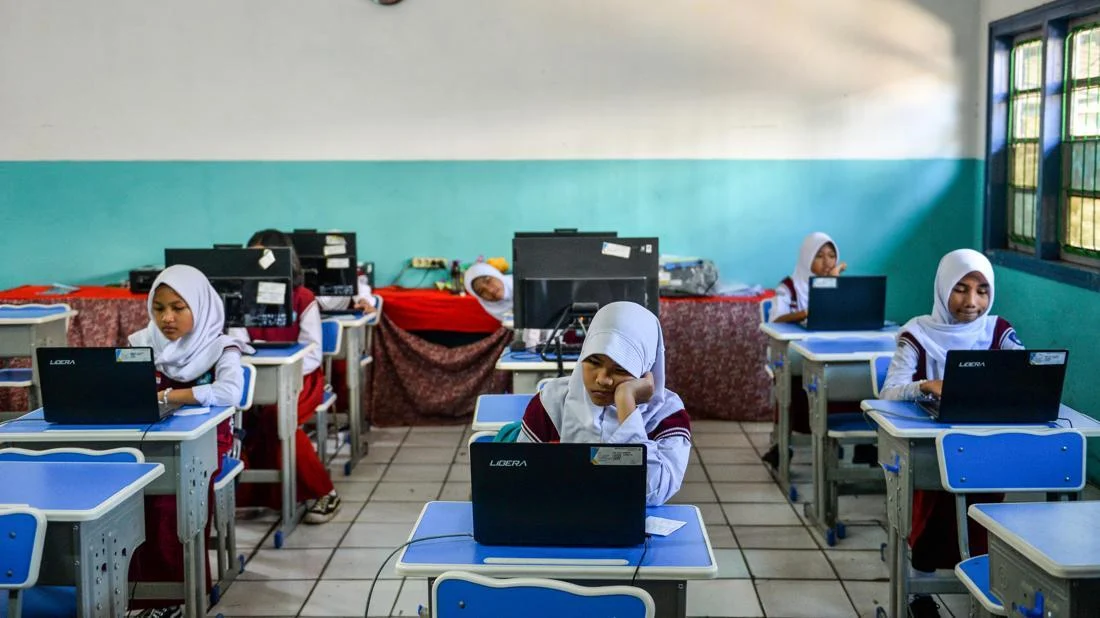
The implementation of the Academic Ability Test (Tes Kemampuan Akademik or TKA) in Bandar Lampung, Lampung, has come under intense scrutiny from the House of Representatives (DPR RI) following a series of technical disruptions that threatened the validity of student performance data. Abdul Fikri Faqih, a prominent member of Commission X—the legislative body overseeing education, sports, and tourism—publicly addressed these concerns during a specific working visit aimed at evaluating the regional execution of the national assessment program. The disruptions, ranging from hardware malfunctions to total server outages, have raised alarms regarding the fairness of the testing process and the reliability of the resulting data, which the government utilizes for long-term educational planning. According to Fikri, these technical hurdles do not merely represent a temporary inconvenience but pose a significant risk to students whose academic potential may be obscured by the failures of the digital infrastructure.

Technical Disruptions and the Risk of Inaccurate Assessment

During the evaluation session in Bandar Lampung, the legislative delegation received reports detailing how students struggled with "server down" scenarios and unresponsive computer terminals. Fikri emphasized that the impact of these failures is disproportionately felt by high-achieving students. He argued that students who possess strong academic capabilities and have prepared extensively for the TKA are often the most disadvantaged when the system fails. Instead of being able to demonstrate their mastery of the subjects, these students are forced to contend with the stress of technical instability, which frequently leads to results that do not accurately reflect their true intelligence or academic standing.

Fikri noted that when a student who is "smart" or well-prepared encounters a glitch, the psychological toll and the interruption in cognitive flow can lead to "unfavorable results." This creates a sense of injustice among the youth and their parents, as the assessment is intended to be a benchmark of their hard work. From a broader perspective, Fikri warned that if the data collected from these tests is flawed due to technical interference, the government’s ability to use these results as a foundational tool for educational planning will be compromised. The TKA is designed to serve as a diagnostic instrument for the "Rapor Pendidikan" (Education Report Card), which helps the Ministry of Basic and Secondary Education identify which regions require more resources, teacher training, or curriculum adjustments. If the "input" data is corrupted by server crashes, the "output" of the national planning strategy will inevitably be misaligned with reality.

A Recurring Pattern Across the Archipelago

The issues observed in Lampung are not isolated incidents. Fikri and other members of Commission X expressed concern that similar technical bottlenecks are likely occurring in various other provinces, particularly those outside the highly developed hubs of Java. The digital divide in Indonesia remains a formidable challenge; while urban centers often enjoy high-speed fiber-optic connectivity, many regional districts still rely on unstable satellite links or aging telecommunications towers.

The TKA, which is a cornerstone of the modern Indonesian educational evaluation system, relies heavily on a centralized digital ecosystem. However, the decentralization of infrastructure maintenance means that the readiness of local school laboratories varies wildly. Fikri urged the central government to take a more proactive stance in auditing the technical readiness of every testing site before the assessment window opens. He suggested that the Ministry must look beyond the readiness of the software and deeply examine the stability of local power grids and regional internet service providers (ISPs).

Government Response and the Offline Contingency Plan

In response to the growing criticism, the Ministry of Basic and Secondary Education (Kemendikdasmen) has attempted to reassure the public by highlighting existing contingency measures. Minister Abdul Mu’ti previously addressed these concerns during a separate visit to SMPN 2 Curug in Tangerang Regency, Banten. He clarified that the TKA system was designed with a degree of flexibility to accommodate Indonesia’s diverse geographical and technological landscape.

One of the primary solutions offered by the Ministry is the provision of an "offline mode" for the TKA. According to Mu’ti, the government understands that many regions suffer from a lack of consistent internet access. To mitigate this, the Ministry has developed a version of the test that can be pre-installed on school computers. This method allows students to take the exam without a live internet connection, with the results being synced to the central server once the connection is restored or via manual data transfer by technical staff.

"The test does not have to be strictly online," Mu’ti stated during his visit in early April. "For areas without internet networks, we have prepared questions that are already installed on each computer." This "semi-online" or "offline" approach is intended to serve as a safety net, ensuring that even the most remote schools in the archipelago can participate in the national assessment without being penalized for their location. However, critics like Fikri argue that even with these options, the transition to offline modes often involves its own set of technical hurdles, including outdated hardware that cannot support the pre-installed software requirements.

Protocol for Handling Technical Emergencies

To provide a structured response to the inevitable glitches that occur during large-scale digital testing, the Education Policy Agency under Kemendikdasmen has outlined a specific three-step protocol for schools and students. This protocol is disseminated through official social media channels, such as @litbangdikbud, to ensure that test-takers and administrators know how to react in real-time.

  1. Immediate Reporting: Students who encounter a frozen screen, a server error, or hardware failure are instructed to immediately report the issue to the school officials or the exam proctors present in the room. The proctors are trained to perform basic troubleshooting, such as restarting the application or moving the student to a backup terminal.
  2. Escalation to Regional Technical Teams: If the problem persists or involves a systemic failure that the school cannot resolve (such as a local ISP outage), the school is required to report the incident to the district or provincial technical teams. These teams are tasked with providing more advanced technical support and documenting the extent of the disruption.
  3. Central Government Intervention for Extraordinary Events: In cases where the disruption is classified as an "extraordinary event"—such as a natural disaster, a massive regional power blackout, or a national server compromise—the central government retains the authority to make executive decisions. This can include postponing the test for the affected region, rescheduling the session, or adjusting the grading criteria to account for the lost time.

The Broader Impact on Educational Quality and Planning

The stakes for the TKA are high, as it represents a shift in Indonesian education policy away from the high-stakes "National Examination" (UN) toward a more holistic "National Assessment" (AN). The TKA is intended to measure not just rote memorization, but critical thinking, literacy, and numeracy. When the delivery mechanism for such a sophisticated assessment fails, it undermines the credibility of the entire reform movement.

Data integrity is the lifeblood of modern educational policy. The Ministry uses TKA results to allocate "Bantuan Operasional Sekolah" (BOS) funds and to design targeted interventions for underperforming schools. If a school in Lampung receives a low score not because of poor teaching, but because its server crashed three times during the exam, that school might be incorrectly categorized, leading to an inefficient allocation of national resources.

Furthermore, there is the issue of "test anxiety" exacerbated by technology. Educational psychologists point out that technical failures during a high-pressure exam can trigger significant stress in adolescents, potentially leading to a long-term aversion to digital learning tools. For a country aiming to achieve the "Indonesia Emas 2045" (Golden Indonesia 2045) vision—which relies heavily on a digitally literate workforce—these early negative experiences with technology in the classroom could be counterproductive.

Analysis of Infrastructure Disparity and Future Outlook

The critique provided by Abdul Fikri Faqih serves as a reminder that the digital transformation of the Indonesian education system is a work in progress. While the Ministry’s move toward computer-based testing is a necessary step to align with global standards, the physical infrastructure of the nation is still catching up. Data from the Ministry of Communication and Information Technology suggests that while internet penetration has reached over 70% of the population, the quality and stability of that connection vary significantly between the western and eastern parts of Indonesia.

Moving forward, Commission X of the DPR is expected to push for a larger budget allocation specifically for school digital infrastructure. This includes not just the purchase of laptops and tablets, but also the installation of stable local area networks (LANs) and uninterruptible power supplies (UPS) in schools. There is also a growing call for the recruitment of dedicated IT staff for schools, as the current model often relies on teachers who must juggle their pedagogical duties with technical troubleshooting.

The situation in Bandar Lampung is a localized symptom of a national challenge. As the government continues to refine the TKA and other digital assessment tools, the focus must shift from merely "providing the test" to "ensuring the reliability of the test environment." Only then can the TKA truly serve its purpose as a fair, accurate, and transformative tool for the future of Indonesian education. The legislative oversight provided by Fikri and his colleagues ensures that these technical "glitches" are seen not as minor errors, but as critical barriers to the constitutional right of every Indonesian child to receive a high-quality, equitable education.

April 19, 2026 0 comment
0 FacebookTwitterPinterestEmail
Sports

Persib Bandung’s Title Hopes Delayed as Borneo FC and Persija Jakarta Secure Crucial Wins

by admin April 19, 2026
written by admin

The Indonesian Super League 2025/2026 title race remains wide open following a pivotal Matchday 28 that saw both Borneo FC Samarinda and Persija Jakarta emerge victorious, preventing Persib Bandung from securing the championship just yet. While Persib, currently leading the pack, prepares for their own crucial encounter, their closest rivals have capitalized on the opportunity to close the gap, setting the stage for a thrilling conclusion to the season.

A Tense Matchday 28 Reshapes the Title Landscape

Matchday 28 of the Indonesian Super League 2025/2026, played on Saturday, April 18, 2026, delivered significant results that have injected renewed intensity into the championship battle. Borneo FC Samarinda continued their impressive form by clinching a hard-fought 2-1 away victory against PSM Makassar. This crucial win propelled them to within striking distance of the summit.

Simultaneously, Persija Jakarta, another perennial contender, managed a slender but vital 1-0 triumph over PSBS Biak. This result further tightened the standings, demonstrating the unwavering determination of the chasing pack.

For Persib Bandung, the league leaders, these outcomes mean their coronation as champions is on hold. Their own fixture against host Dewa United was scheduled for Sunday, April 19, 2026, a match they needed to win to cement their position. The pressure is now on for "Maung Bandung" to deliver a performance worthy of champions, as any slip-up could see their lead evaporate.

Analyzing the Current Standings and Title Projections

As of the conclusion of Saturday’s fixtures, Persib Bandung holds a precarious one-point lead over second-placed Borneo FC. Persija Jakarta occupies third place, six points adrift of the leaders. This narrow margin at the top highlights the fiercely competitive nature of the Super League this season and underscores the significance of every single point gained or lost in the remaining fixtures.

The implications of these results are substantial. Should Persib falter in their upcoming matches, Borneo FC is in a prime position to ascend to the top of the league table. Persija, while facing a slightly larger deficit, remains a formidable force and will undoubtedly continue to exert pressure from behind, hoping for missteps from both Persib and Borneo FC.

Coach Hodak Emphasizes Process Over Immediate Glory

Persib Bandung’s head coach, Bojan Hodak, acknowledged the challenging situation and the increased pressure stemming from his rivals’ victories. Speaking about the implications of the results, Hodak stated, "It’s good motivation. But the trophy will not be decided tomorrow (Sunday, April 19)."

Hodak stressed the importance of maintaining focus on the immediate task at hand, rather than being consumed by the championship implications. "If we draw, win, or lose, there are still six games remaining. Everything will be decided in the final week, so we are just thinking game by game," he added, emphasizing a pragmatic approach to the remaining schedule.

This mindset is crucial for Persib as they navigate the final stretch of the season. The experience of leading the league for an extended period means they are accustomed to the spotlight, but the close proximity of their rivals necessitates a continued high level of performance and mental fortitude.

The Road to the Potential Scenarios and a Fixture to Watch

The current standings suggest that if all three top teams continue their winning trajectories, the championship could remain undecided until the very final matchday, Matchday 32. This extended chase adds an extra layer of drama and anticipation to the latter stages of the Super League season.

Perhaps the most compelling scenario involves a potential title decider in the penultimate round. Intriguingly, in Matchday 32, scheduled for May 10, 2026, Persib Bandung is slated to face Persija Jakarta in what is shaping up to be a monumental clash in the capital city. This fixture, depending on the preceding results, could very well determine the fate of the Super League 2025/2026 title, pitting two of Indonesia’s most storied clubs against each other in a high-stakes encounter.

Historical Context of the Indonesian Super League Title Race

The Indonesian Super League, known for its passionate fan bases and competitive spirit, has a rich history of title races that have gone down to the wire. This season’s narrative of a tight three-way battle is not unprecedented, but the specific dynamics at play, with Borneo FC’s sustained challenge and Persija’s late surge, add a unique flavor to the 2025/2026 campaign.

Borneo FC has steadily built its reputation as a formidable contender in recent seasons, investing in talent and developing a strong team ethos. Their current position is a testament to their consistent performance and strategic planning.

Persija Jakarta, one of the most historically significant clubs in Indonesian football, boasts a massive following and a legacy of success. Their ability to remain in contention despite initial challenges speaks volumes about their resilience and the quality of their squad.

Persib Bandung, with its immense fanbase and a history of championship triumphs, carries the weight of expectation. Their journey to the top of the table this season has been a blend of tactical acumen and individual brilliance, but the ultimate test lies in maintaining that form until the final whistle.

Key Statistics and Performance Metrics

To further understand the competitive landscape, examining key performance indicators from the season thus far provides valuable insights:

  • Goals Scored: Analyzing the attacking prowess of the top teams can reveal their offensive strategies. For instance, a team with a higher goals-for tally might indicate a more aggressive approach, while a lower tally could suggest a more defensive or counter-attacking style.
  • Goals Conceded: The defensive solidity of each team is equally important. A low goals-conceded record often points to a well-organized defense and an effective goalkeeper, crucial for maintaining leads and securing victories.
  • Home and Away Form: Understanding how each team performs across different venues can highlight potential vulnerabilities. A team with a strong home record but a weaker away performance might be susceptible to pressure in hostile environments.
  • Head-to-Head Records: The results of matches between the top contenders can often be decisive. A team that consistently performs well against its direct rivals has a significant psychological and statistical advantage.

While specific data for the 2025/2026 season up to Matchday 28 is not fully detailed in the initial report, a comprehensive analysis would delve into these metrics to provide a deeper understanding of each team’s strengths and weaknesses. For example, if Persib has a superior goal difference, it suggests they have not only won matches but have done so convincingly. Conversely, if Borneo FC has a remarkable away record, their victory over PSM Makassar would be seen as a continuation of a strong trend.

The Psychological Battle and Fan Expectations

The psychological aspect of a title race cannot be overstated. For Persib Bandung, the pressure to maintain their lead and avoid squandering a significant advantage will be immense. The expectation from their fervent fanbase, known as "Bobotoh," is immense, and any perceived faltering will be met with intense scrutiny.

Conversely, for Borneo FC and Persija Jakarta, the role of the underdog, or at least the chasing pack, can sometimes be an advantage. It allows them to play with less pressure, focusing on winning their own games and hoping for favorable outcomes elsewhere. The momentum gained from consecutive wins can also be a powerful psychological driver, fueling confidence and belief.

Looking Ahead: The Final Six Matches

The final six matches of the Super League 2025/2026 season will be a period of intense drama and strategic maneuvering. Each team will be meticulously analyzing their remaining fixtures, identifying potential banana skins and crucial encounters.

  • Persib Bandung’s Path: Beyond their match against Dewa United, Persib will need to navigate a series of challenging fixtures, each carrying significant weight. Their ability to maintain focus and execute their game plan under pressure will be tested.
  • Borneo FC’s Momentum: With their recent win, Borneo FC will be looking to carry this momentum forward. Their remaining schedule will be crucial in determining whether they can sustain their challenge for the top spot.
  • Persija Jakarta’s Late Charge: Persija’s victory keeps their title aspirations alive. They will need to continue their winning streak and hope for a favorable turn of events in the matches involving Persib and Borneo FC.

The potential title-deciding clash between Persib and Persija on May 10th is now a focal point for many observers. This match, steeped in rivalry and the potential for ultimate glory, promises to be a captivating spectacle, regardless of the league standings leading up to it. The outcome of this fixture, and indeed the entire remaining schedule, will undoubtedly etch another memorable chapter into the history of Indonesian football. The race for the Super League 2025/2026 title is far from over, and the coming weeks are set to deliver an unforgettable conclusion.

April 19, 2026 0 comment
0 FacebookTwitterPinterestEmail
Economy

Video: PGE 2026, Incar Produksi 5.255 GWh & Pendapatan USD 455 Juta

by admin April 19, 2026
written by admin

Jakarta, CNBC Indonesia – PT Pertamina Geothermal Energy Tbk (PGEO), a prominent player in Indonesia’s renewable energy sector, has outlined an ambitious capital expenditure (CAPEX) target of USD 209 million for 2026. This significant investment is strategically allocated, with USD 158 million earmarked for the development of strategic projects aimed at fostering growth and innovation, while approximately USD 51 million will be dedicated to ensuring the reliability and sustained efficiency of existing operations. This financial commitment underpins PGEO’s broader strategy to expand its footprint in geothermal energy generation and diversify into high-value green derivative products, positioning the company at the forefront of Indonesia’s energy transition.

Yurizki Rio, Finance Director of Pertamina Geothermal Energy, emphasized that these strategic development initiatives for geothermal projects and their derivatives are designed not only to serve as new revenue streams but also to invigorate investment interest across the broader geothermal sector. This holistic approach seeks to leverage Indonesia’s immense geothermal potential, translating it into tangible economic and environmental benefits. The company’s vision extends beyond conventional power generation, embracing a future where geothermal resources underpin a diversified green economy.

PGEO’s strategic focus for derivative geothermal projects centers on three key areas: Green Hydrogen, Green Ammonia, and the establishment of Green Centers. These initiatives represent a significant pivot towards value-added products, moving beyond electricity generation to tap into emerging global markets for sustainable fuels and industrial inputs. By 2026, PGEO is also targeting a substantial 3.15% growth in electricity output, projected to increase from 5,085 Gigawatt-hours (GWh) to 5,255 GWh. This expansion in generation capacity is expected to translate into robust financial performance, with targeted revenues between USD 445 million and USD 455 million, and an EBITDA (Earnings Before Interest, Taxes, Depreciation, and Amortization) forecast of USD 340 million to USD 350 million. This anticipated growth is primarily driven by the increasing demand from PT Perusahaan Listrik Negara (PLN), Indonesia’s state-owned electricity utility, which serves as a crucial off-taker for PGEO’s generated power. The details of these ambitious targets and strategies were discussed in an exclusive dialogue between Syarifah Rahma and Yurizki Rio on CNBC Indonesia’s Squawk Box, broadcast on Thursday, April 16, 2026.

Indonesia’s Geothermal Promise: A Strategic Context

Indonesia, strategically located on the "Ring of Fire," boasts the world’s largest geothermal potential, estimated at approximately 29 Gigawatts (GW). Despite this vast resource, only a fraction, roughly 2.3 GW, has been utilized for power generation to date. This presents an enormous untapped opportunity for the nation to decarbonize its energy mix and achieve its ambitious climate targets. The government has consistently championed geothermal energy as a cornerstone of its renewable energy agenda, aiming to increase its share in the national energy mix and reduce reliance on fossil fuels. This commitment is articulated in national energy policies, including the National Energy Policy (KEN) and the Electricity Supply Business Plan (RUPTL) of PLN, which outline significant increases in renewable energy capacity, with geothermal playing a pivotal role.

PGEO, as a subsidiary of the state-owned energy giant PT Pertamina (Persero), is uniquely positioned to spearhead this transition. Its extensive operational experience, coupled with the financial backing and strategic alignment with national objectives, provides a strong foundation for its aggressive expansion plans. The company’s initial public offering (IPO) in early 2023 was a landmark event, signaling investor confidence in Indonesia’s geothermal future and providing PGEO with crucial capital to fund its growth trajectory. This public listing not only diversified PGEO’s funding sources but also enhanced transparency and governance, aligning it with global best practices for sustainable energy companies.

Strategic Projects: Driving Diversification and Value Creation

The USD 158 million allocated for strategic projects highlights PGEO’s commitment to innovation and diversification. The focus on Green Hydrogen, Green Ammonia, and Green Centers represents a forward-thinking approach to leveraging geothermal resources beyond conventional electricity generation.

Green Hydrogen: Produced through the electrolysis of water using renewable electricity, green hydrogen is gaining global recognition as a crucial energy carrier and a decarbonization solution for hard-to-abate sectors such as heavy industry, transportation, and chemical production. Geothermal energy, with its continuous and stable base-load power, is an ideal source for producing green hydrogen, offering a competitive advantage over intermittent renewables like solar and wind. PGEO’s foray into green hydrogen positions Indonesia to become a significant player in the burgeoning global hydrogen economy, potentially serving both domestic industrial demand and export markets.

Green Ammonia: As a derivative of green hydrogen, green ammonia is produced by combining green hydrogen with nitrogen from the air. It serves multiple purposes: a clean fuel for shipping and power generation, a crucial component in fertilizers, and a viable medium for transporting hydrogen over long distances. The development of green ammonia production facilities powered by geothermal energy would significantly reduce the carbon footprint of industrial processes and agricultural practices, contributing to a more sustainable economy. Indonesia, with its vast agricultural sector, stands to benefit immensely from domestically produced green ammonia.

Green Centers: The concept of Green Centers implies integrated hubs where geothermal energy is used to power various sustainable activities, potentially including research and development facilities, manufacturing of green products, and even eco-tourism initiatives. These centers could serve as incubators for new green technologies, foster local economic development, and showcase Indonesia’s commitment to a circular economy. They could also attract further foreign investment in green technologies and create skilled jobs in the renewable energy sector.

Financial Targets and Market Dynamics

PGEO’s ambitious financial targets for 2026 – 3.15% electricity output growth to 5,255 GWh, revenues of USD 445-455 million, and EBITDA of USD 340-350 million – are underpinned by a robust market demand scenario. The increasing electricity demand from PLN is a critical driver. As Indonesia’s economy grows and urbanization continues, the demand for reliable and affordable electricity escalates. PLN, in line with national energy policies, is under immense pressure to integrate more renewable energy sources into its grid, reducing its reliance on coal and other fossil fuels. PGEO, with its expanding geothermal capacity, directly supports PLN’s objectives, ensuring a stable and clean power supply.

The allocation of USD 51 million for operational reliability is equally crucial. Geothermal power plants, while having high upfront costs, offer low operational costs and high capacity factors once established. Investing in maintenance, technology upgrades, and efficiency improvements ensures the long-term viability and consistent performance of PGEO’s assets, minimizing downtime and maximizing output. This balanced CAPEX strategy—investing in both growth and operational excellence—reflects sound financial management and a commitment to sustainable value creation.

Broader Impact and Implications

PGEO’s strategic direction has profound implications for Indonesia’s energy landscape, economic development, and global climate commitments.

Accelerating Energy Transition: By expanding geothermal capacity and diversifying into green derivatives, PGEO is directly contributing to Indonesia’s goal of achieving Net Zero Emissions by 2060 or sooner. Geothermal energy provides a critical base-load renewable power source that can complement intermittent renewables like solar and wind, ensuring grid stability and reliability during the transition away from fossil fuels. This move aligns with the global push towards cleaner energy systems and positions Indonesia as a leader in geothermal development.

Economic Development and Investment: The significant CAPEX plan and the development of new green industries are expected to stimulate economic activity. Construction of new power plants and derivative facilities will create jobs, both directly and indirectly, across various sectors. The emergence of green hydrogen and green ammonia production could also attract substantial foreign direct investment into Indonesia, particularly from countries and companies seeking to secure supplies of clean fuels and industrial inputs. This could transform local economies in regions where geothermal resources are abundant, fostering technological transfer and skill development.

Environmental Benefits: The most evident implication is the reduction in greenhouse gas emissions. Replacing fossil fuel-based electricity generation with geothermal power, and producing green hydrogen and ammonia, will significantly lower Indonesia’s carbon footprint. This contributes directly to global efforts to combat climate change and improves local air quality. Moreover, the responsible development of geothermal resources can also lead to more sustainable land use and water management practices in the regions where projects are located.

Regional Leadership: Indonesia has the potential to become a regional hub for geothermal technology and expertise. PGEO’s advancements can serve as a model for other countries in the Ring of Fire region and beyond, fostering international collaboration and knowledge sharing in renewable energy development. This could enhance Indonesia’s diplomatic standing and influence in global energy forums.

Challenges and Future Outlook

While the opportunities are immense, challenges remain. Geothermal development is capital-intensive and often involves significant upfront exploration risks. Drilling for geothermal resources can be unpredictable, and the initial costs of establishing a power plant are high. Furthermore, securing off-take agreements with PLN at commercially viable tariffs and navigating complex regulatory frameworks can sometimes pose hurdles. However, the Indonesian government has been increasingly proactive in addressing these challenges, offering incentives, streamlining permitting processes, and providing clearer regulatory guidance to attract more investment into the sector.

Looking beyond 2026, PGEO’s long-term vision likely involves continuous innovation, further expansion into new geothermal fields, and deeper integration into the global green economy supply chains. The success of its green hydrogen and green ammonia initiatives could pave the way for other green industrial developments, creating a virtuous cycle of sustainable growth. The dialogue with Yurizki Rio on CNBC Indonesia underscores a strategic, well-articulated plan designed to capitalize on Indonesia’s natural endowments and contribute significantly to a sustainable global future. As the world accelerates its transition to clean energy, PGEO’s strategic investments and diversification efforts position it as a critical enabler of Indonesia’s green transformation.

April 19, 2026 0 comment
0 FacebookTwitterPinterestEmail
Technology

Perayaan Tahun Baru di Jakarta dan Sekitarnya akan Diwarnai Hujan Ringan

by admin April 19, 2026
written by admin

Jakarta, Indonesia – As Indonesia prepared to usher in the new year from 2015 to 2016, the Meteorology, Climatology, and Geophysics Agency (BMKG) released a comprehensive weather forecast, painting a varied picture across the archipelago. While many regions were anticipated to experience fair to light rain conditions for New Year’s Eve celebrations, a more pressing concern emerged regarding elevated sea waves and the impending peak of the rainy season in January 2016, prompting urgent advisories for public safety, particularly for those engaging in maritime activities and residing in flood and landslide-prone areas. The agency’s detailed predictions served as a critical guide for millions of Indonesians planning year-end festivities and early-year travel, underscoring the vital role of accurate meteorological information in a nation highly susceptible to natural weather phenomena.

Navigating the New Year’s Eve 2015 Weather Landscape

The BMKG’s forecast for the transition from 2015 to 2016 offered a generally optimistic outlook for revelers in many parts of Indonesia. According to Mulyono R Prabowo, Head of BMKG’s Public Meteorology Center, the weather across several Indonesian regions was predicted to range from clear skies to cloudy conditions. This prediction aimed to reassure the public and facilitate the widespread outdoor celebrations characteristic of New Year’s Eve in Indonesia, a time when public spaces, beaches, and city centers traditionally draw large crowds. The expectation of relatively benign weather in many areas allowed local authorities and event organizers to proceed with plans for fireworks displays, concerts, and public gatherings with a degree of confidence, albeit with an underlying caution for localized conditions.

However, the general tranquility was not universal. Prabowo specifically highlighted areas where more significant rainfall was anticipated. "Potential for moderate to heavy rain may occur in parts of Bengkulu, Jambi, West Kalimantan, Central Kalimantan, and South Kalimantan," he stated in a written release received by detikcom on Wednesday, December 30, 2015. This delineation of risk areas was crucial, enabling residents and local disaster management agencies in these provinces to heighten their preparedness. Moderate to heavy rain during peak celebration times can lead to immediate localized flooding, traffic disruptions, and a general reduction in visibility, posing risks for both pedestrians and motorists. The advisory in these specific regions underscored the archipelago’s diverse microclimates and the localized nature of its weather patterns, even during a broader period of relative calm.

For the highly populated Jabodetabek area (Jakarta, Bogor, Depok, Tangerang, and Bekasi), the BMKG’s outlook for New Year’s Eve was largely favorable, predicting generally clear to cloudy skies throughout the day. Nevertheless, the forecast included a caveat for potential light to moderate rain in specific sub-regions, particularly in the northern and southern parts of Jabodetabek. This nuanced prediction meant that while a widespread washout was not expected, residents were still advised to carry umbrellas or be prepared for sudden downpours. Prabowo emphasized, "Therefore, people who wish to celebrate New Year’s Eve are advised to anticipate potential rain." This practical advice aimed to prevent inconvenience and ensure that celebrations could continue smoothly even with intermittent showers. The implications for metropolitan areas like Jakarta are significant, as even light rain can exacerbate traffic congestion and affect outdoor events, making preparedness a key element of public safety and enjoyment.

Heightened Maritime Warnings: A Call for Vigilance at Sea

Beyond the terrestrial weather patterns, a more severe warning was issued concerning maritime conditions, particularly relevant for Indonesia, an archipelagic nation with an extensive coastline and a populace that frequently utilizes sea travel and coastal recreation. BMKG predicted that high sea waves would affect several Indonesian waters during the early period of 2016, posing substantial risks to marine activities. The forecast specifically identified areas such as Sabang Island, Mentawai Islands, the Southern Coast of Java, West Nusa Tenggara (NTB), the Arafuru Sea, and Natuna waters, where wave heights could reach up to 2.5 meters.

A 2.5-meter wave height is considered significant and dangerous for small to medium-sized vessels, including traditional fishing boats, passenger ferries, and recreational craft commonly used by tourists. Such waves can lead to capsizing, damage to vessels, and difficulties in navigation, increasing the risk of maritime accidents. For coastal communities and those engaging in beach activities, high waves also present dangers, including strong currents, rip tides, and potential coastal erosion or inundation in low-lying areas. Given that New Year’s holidays often coincide with peak tourist seasons, particularly for popular beach destinations and islands, this warning carried immense weight. Prabowo explicitly urged, "For people who are spending their holidays with sea tourism, it is hoped that they remain vigilant about the potential for high sea waves." This advisory was not merely a suggestion but a critical safety directive, underscoring the agency’s responsibility to protect lives at sea and along the coast. The geographic spread of these high-wave warnings, from the westernmost tip of Sumatra to the eastern Arafuru Sea, highlighted the widespread nature of the maritime threat.

Transitioning to the Peak of the Rainy Season: January 2016 Outlook

As the calendar turned to January 2016, BMKG’s focus shifted from New Year’s celebrations to the broader meteorological reality of Indonesia entering the peak of its rainy season. This period, typically from December to February, is characterized by increased rainfall intensity across most parts of the country, driven by monsoonal wind patterns. The agency issued a nationwide appeal for heightened vigilance, recognizing the inherent risks associated with this seasonal shift.

"In January, the intensity of rainfall is expected to increase further," Prabowo cautioned. This projected increase in rainfall is not merely a matter of more frequent showers but often translates to prolonged periods of heavy precipitation, which can overwhelm drainage systems, saturate soil, and trigger a cascade of natural disasters. The primary concerns during the peak rainy season are widespread flooding and landslides, phenomena that tragically affect numerous Indonesian communities annually.

Indonesia’s diverse topography, ranging from vast river basins to volcanic mountain ranges, makes it particularly vulnerable to these disasters. Low-lying urban areas are susceptible to flash floods, while communities nestled on hillsides and near deforested areas face an elevated risk of landslides, which can bury homes and roads with devastating speed. The BMKG’s warning aimed to galvanize communities and local governments into proactive preparedness. "Therefore, people in areas prone to floods and landslides should continuously increase their vigilance," Prabowo urged. This call to action encompasses several critical aspects of disaster preparedness: monitoring local weather updates, understanding evacuation routes, preparing emergency kits, and being aware of early warning signs of potential disasters.

BMKG’s Crucial Role and Public Information Channels

The comprehensive nature of BMKG’s warnings for both New Year’s Eve and early 2016 underscored its indispensable role as Indonesia’s primary authority for meteorological, climatological, and geophysical information. The agency’s ability to provide timely and accurate forecasts is paramount for public safety, national economic stability, and disaster risk reduction efforts across the vast archipelago.

To ensure that vital information reaches the broadest possible audience, BMKG actively promotes multiple channels for public access to real-time weather updates and advisories. For detailed and current weather information across Indonesia, the public was directed to visit the agency’s official website, www.bmkg.go.id. Additionally, for more immediate updates and alerts, BMKG maintained an active presence on social media, specifically urging citizens to follow its official Twitter account, @infobmkg. Recognizing the need for direct communication, the agency also provided a 24-hour weather information hotline at 0216546318, allowing individuals to seek personalized information or report local conditions. These diversified communication strategies are critical in a country where internet access can vary, and traditional phone services remain a vital link for many communities, especially during emergencies.

Broader Implications and Preparedness Frameworks

The BMKG’s forecasts and warnings for the 2015-2016 transition period carried significant broader implications for various sectors and governmental agencies beyond immediate public safety.

  • Economic Impact: Severe weather, including heavy rain and high waves, can significantly disrupt economic activities. Tourism, a major contributor to Indonesia’s economy, can suffer from cancellations due to adverse weather or travel advisories. Fishing industries are directly impacted by dangerous sea conditions, affecting livelihoods and food supply chains. Transportation sectors, including airlines, shipping companies, and land transport operators, must adjust schedules and operations based on BMKG advisories, leading to potential delays and increased costs. Agricultural sectors, particularly vulnerable to both floods and prolonged heavy rains, face risks of crop damage, impacting food security and farmer incomes.

  • Multi-Agency Coordination: BMKG’s warnings typically trigger a cascade of preparedness measures across various government bodies. The National Disaster Management Agency (BNPB) and local disaster management agencies (BPBD) at provincial and district levels would utilize these forecasts to activate emergency response protocols, pre-position resources, and coordinate with local communities for potential evacuations. The Ministry of Transportation would issue specific directives to port authorities, airports, and shipping companies regarding safe operating conditions. Search and Rescue (BASARNAS) teams would be placed on high alert for potential maritime accidents or land-based emergencies. This inter-agency cooperation is fundamental to Indonesia’s disaster resilience framework.

  • Community Resilience and Education: Beyond official responses, BMKG’s advisories play a crucial role in fostering community resilience. Regular and clear communication about impending weather risks empowers individuals and communities to take proactive steps. This includes educating residents in flood-prone areas about building temporary barriers, securing belongings, and identifying safe zones. For those in landslide-prone regions, understanding the signs of ground instability and having pre-determined evacuation plans can be life-saving. The consistent messaging from BMKG helps embed a culture of preparedness, recognizing that early action is often the most effective defense against natural hazards.

  • Long-Term Climate Monitoring: While the immediate focus was on the New Year and early 2016, BMKG’s continuous monitoring of weather patterns also contributes to a broader understanding of climate variability and change. Indonesia, being situated in a region highly sensitive to phenomena like El Niño and La Niña, relies on BMKG’s expertise to anticipate longer-term climate trends that can influence the intensity and duration of rainy seasons or dry spells. This long-term perspective is vital for strategic planning in sectors like agriculture, water management, and urban development.

In conclusion, the BMKG’s comprehensive weather outlook for New Year’s Eve 2015-2016 and the subsequent peak rainy season in January 2016 served as a timely reminder of Indonesia’s dynamic natural environment. While celebrations could proceed with a degree of optimism in many areas, the underlying warnings for high sea waves and increased risks of floods and landslides underscored the ever-present need for vigilance, preparedness, and reliance on authoritative meteorological guidance. The agency’s commitment to public safety, facilitated through multiple information channels and fostering multi-agency cooperation, remained paramount in navigating the complex interplay of weather and human activity across the Indonesian archipelago.

April 19, 2026 0 comment
0 FacebookTwitterPinterestEmail
Newer Posts
Older Posts

Posts Slider

Bursa Efek Indonesia Set to Implement Real-Time Flagging...

November 5, 2026

Paraguay Political Crisis Deepens as President Santiago Pena...

November 5, 2026

Potret Teror Bom Pesawat Serentak Guncang Eropa, Penumpang...

November 5, 2026

Abdul El-Sayed Mengukir Sejarah sebagai Senator Muslim Pertama...

November 5, 2026

Gigi Susu Runcing Semua? Kenali Penyebab dan Cara...

November 5, 2026

Popular Posts

  • 1

    Indonesia’s Domestic Market Obligation Policy for Palm Oil Proves Effective in Stabilizing Minyakita Prices Amidst Broader Market Dynamics.

    April 16, 2026
  • 2

    Extra Playtime Strengthens the Emotional Bond Between Owners and Dogs According to New Research

    April 22, 2026
  • 3

    Jangan Sampai Ketinggalan! Skill Excel Ini Bisa Bikin Kerja Kamu 2x Lebih Cepat

    April 16, 2026
  • 4

    Mastering Solo Queue in Mobile Legends: Bang Bang: A Deep Dive into Self-Sufficient Carry Heroes

    April 22, 2026
  • 5

    OJK Propels South Sumatra’s Regional Economy with Strategic Export Initiatives and Youth Empowerment

    April 22, 2026

Recent Posts

  • Bursa Efek Indonesia Set to Implement Real-Time Flagging System to Enhance Market Integrity and Investor Protection

    November 5, 2026
  • Paraguay Political Crisis Deepens as President Santiago Pena Resigns Amidst Ueno Bank Collapse

    November 5, 2026
  • Potret Teror Bom Pesawat Serentak Guncang Eropa, Penumpang Dievakuasi

    November 5, 2026
  • Abdul El-Sayed Mengukir Sejarah sebagai Senator Muslim Pertama Michigan dengan Pilihan Horologi yang Mencerminkan Identitas Lokal dan Profesionalisme

    November 5, 2026
  • Gigi Susu Runcing Semua? Kenali Penyebab dan Cara Merawatnya

    November 5, 2026
  • Facebook
  • Twitter

@2021 - All Right Reserved. Designed and Developed by PenciDesign


Back To Top
Nata News
  • Home

We are using cookies to give you the best experience on our website.

You can find out more about which cookies we are using or switch them off in .

Nata News
Powered by  GDPR Cookie Compliance
Privacy Overview

This website uses cookies so that we can provide you with the best user experience possible. Cookie information is stored in your browser and performs functions such as recognising you when you return to our website and helping our team to understand which sections of the website you find most interesting and useful.

Strictly Necessary Cookies

Strictly Necessary Cookie should be enabled at all times so that we can save your preferences for cookie settings.