
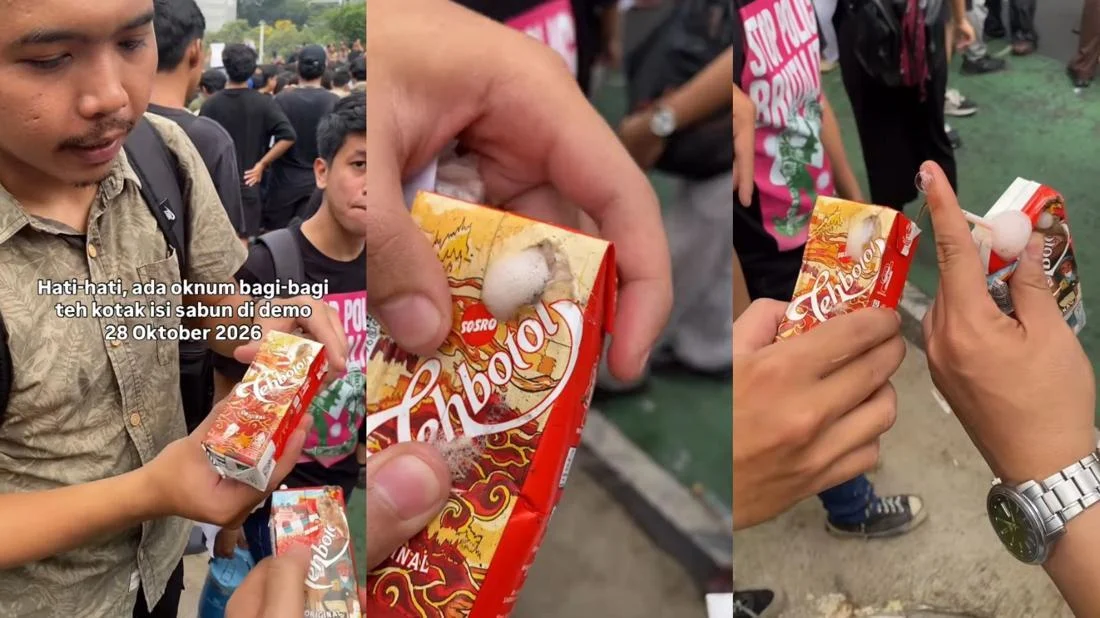
The mysterious appearance of contaminated packaged beverages during a mass demonstration in Central Jakarta has triggered widespread public concern and prompted a formal corporate investigation. The incident, which unfolded on Wednesday, October 28, 2026, centers around several boxes of Teh Botol Sosro—a widely popular tea beverage in Indonesia—distributed to protesters. Recipients soon discovered that the drinks were unusually foamy and emitted a strong odor resembling liquid soap. Despite days passing since the event, the exact origin of the logistical supply, the identities of the distributors, and the precise nature of the contamination remain shrouded in mystery, leaving both law enforcement and the beverage manufacturer racing to uncover the truth behind what could be a deliberate act of sabotage or a severe safety breach.
Chronology of the Incident and Eyewitness Accounts
The unfolding of events began in the heat of a public demonstration in Central Jakarta, a frequent focal point for civic gatherings and political expressions. Amidst the clamor of the crowd, unknown individuals distributed packaged beverages intended to provide refreshment to the participants. However, the relief expected from the logistical aid quickly turned into suspicion.
Juan, a digital content creator and owner of the Instagram account @juanardya, was present at the scene and captured the unfolding chaos on camera. Initially, Juan admitted that he paid little attention to the distribution of the beverage boxes, as the primary focus of his presence was documenting the broader dynamics of the demonstration. His attention was only drawn to the situation when the atmosphere in the immediate vicinity shifted dramatically. Shouts erupted from the crowd, with participants vocally warning one another about the unusual state of the drinks.
Recounting the moment to reporters, Juan stated that he heard individuals shouting warnings that the contents resembled soap. Recognizing the potential gravity of the situation—ranging from consumer health hazards to potential provocations within a sensitive crowd control environment—he immediately began recording video footage to preserve the evidence and gather information.
Further details regarding the distribution emerged not from immediate on-site interviews, but through digital correspondence. Juan later received direct messages on Instagram from a demonstration participant who claimed to have witnessed the distribution process firsthand. According to this eyewitness, the logistical supply comprised five distinct boxes of boxed Teh Botol Sosro. The witness identified two individuals as the primary distributors of the items.
The description provided by the eyewitness painted a specific picture of at least one of the distributors: a middle-aged man with a slightly stocky build, wearing a black shirt, a navy or black cap, and sporting light facial hair. This detailed observation has become a focal point for informal investigations, though law enforcement has yet to officially confirm or apprehend the individuals matching this description.
Physical Anomalies and Packaging Irregularities
The physical state of the distributed products has raised red flags among both consumers and industry analysts. Standard manufacturing procedures for boxed beverages involve automated industrial sealing processes, typically utilizing specialized adhesives to secure the carton flaps and maintain hermetic seals that protect the liquid inside from external tampering or environmental exposure.
However, the boxes distributed during the Jakarta demonstration deviated significantly from these baseline packaging standards. The eyewitness who contacted Juan noted a glaring anomaly upon closer inspection of the discarded containers: instead of the standard factory adhesive seal, the beverage boxes were held together using heavy-duty plastic tape.
This crude modification strongly suggests that the packaging had been tampered with after leaving the factory floor. When the recipients opened the cartons, the sensory characteristics of the beverage confirmed their worst fears. Rather than the clear, sweet jasmine-infused tea characteristic of the brand, the liquid inside was heavily carbonated or foamy and carried a distinct chemical odor reminiscent of dish soap or cleaning agents.
The presence of foam and a soapy smell strongly indicates that the original contents may have been emptied and replaced with a foreign substance, or that the packaging was exposed to chemical agents prior to distribution. Such anomalies have heightened anxieties regarding public safety during mass gatherings, where the rapid distribution of food and beverages is a common logistical element but rarely subjected to rigorous health inspections by recipients.
Consumer Safety and Public Health Implications
The incident involving the contaminated tea packets touches upon critical vulnerabilities within public gatherings and food safety protocols. In large-scale demonstrations, participants frequently rely on third-party logistical support, including donations of food and water from anonymous benefactors, civil society organizations, or political sympathizers. While these contributions are generally well-intentioned gestures meant to sustain protesters through long hours, the lack of quality control creates an avenue for malicious actors to exploit the situation.
Food and beverage tampering during civil unrest carries severe public health implications. Ingesting cleaning agents or unknown chemical substances can lead to acute poisoning, severe gastrointestinal damage, chemical burns to the esophagus, and, in worst-case scenarios, fatal outcomes. Beyond the immediate physical danger to individual consumers, such incidents possess the potential to escalate social tensions. If a contaminated product causes severe harm during a volatile protest, it can easily trigger retaliatory anger, unfounded accusations against specific groups or security forces, and a general breakdown of trust within the public sphere.
Furthermore, the psychological impact on the crowd should not be underestimated. The realization that logistical supplies intended for relief have been weaponized or compromised fosters an atmosphere of paranoia and hostility. Participants become inherently distrustful of any offered assistance, complicating the management of large crowds and increasing the friction between demonstrators and authorities.
Corporate Response and Investigation by PT Sinar Sosro
In response to the viral circulation of videos depicting the foamy, foul-smelling beverages, PT Sinar Sosro, the corporate producer of the iconic brand, swiftly addressed the public. Through statements released via official digital and social media channels, the company acknowledged the reports and expressed deep concern over the allegations.
The manufacturer emphasized its commitment to rigorous quality control standards across all production facilities. According to company representatives, every batch of Teh Botol Sosro undergoes strict testing and inspection before leaving the factory, ensuring that products meet national food safety and hygiene regulations. The company noted that the physical characteristics described by witnesses—such as the use of heavy-duty tape instead of industrial adhesive and the presence of a soapy odor—strongly indicate that the compromised items did not originate from official distribution channels in that specific condition, pointing instead toward post-factory interference.
PT Sinar Sosro announced that it has initiated a comprehensive internal investigation to trace the supply chain of the affected boxes. The investigation aims to determine whether the products were authentic items that underwent post-production tampering or if counterfeit packaging was utilized to deceive consumers. The manufacturer is also cooperating with relevant authorities to analyze digital evidence, including the social media footage captured by eyewitnesses, to identify the individuals responsible for distributing the suspicious items.
Broader Context and Ongoing Speculation
As authorities and corporate investigators delve deeper into the mystery, speculation remains rife across digital platforms. Commentators and participants have raised questions regarding the motives behind the distribution of the compromised beverages. Hypotheses range from deliberate attempts to discredit peaceful protesters by causing health emergencies, to targeted acts of sabotage orchestrated by provocateurs aiming to incite violence and chaos during an already tense political climate.
Despite various theories circulating online, official confirmation regarding the motives or identities of the perpetrators remains pending. Law enforcement agencies in Jakarta are monitoring the situation, though formal charges or public disclosures depend heavily on the identification of the individuals captured in witness testimonies and digital recordings.
The Teh Botol Sosro contamination incident serves as a stark reminder of the complexities and hidden dangers associated with crowd logistics during civil demonstrations. It highlights the urgent need for heightened vigilance among event organizers and participants regarding the provenance of consumable donations. As the investigation progresses, the ultimate resolution of this case will rely on the synthesis of eyewitness accounts, forensic analysis of the remaining packaging materials, and the concerted efforts of corporate investigators and law enforcement personnel to ensure accountability and restore public confidence in consumer product safety.
