
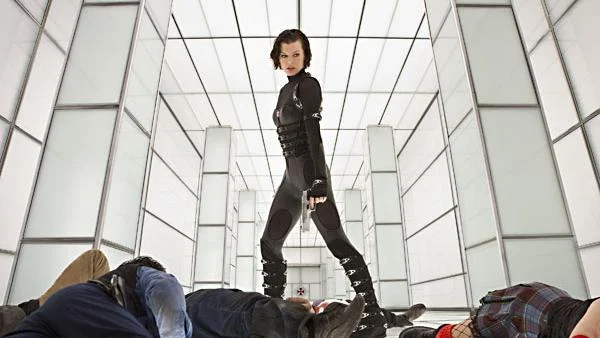
The cinematic adaptation of the Resident Evil franchise continues to maintain a robust presence in the global television landscape, with Resident Evil: Retribution scheduled for a primetime broadcast on Bioskop Trans TV this Wednesday, November 11, 2026, at 20:00 WIB. Directed by Paul W.S. Anderson, this 2012 installment remains a pivotal chapter in the long-running film series that successfully bridged the gap between video game lore and blockbuster action cinema. Starring Milla Jovovich in her iconic role as Alice, the film serves as the fifth entry in the saga, offering a sprawling narrative that traverses international locations while deepening the conflict between the protagonist and the malevolent Umbrella Corporation.
A Legacy of Cinematic Adaptation
To understand the significance of Resident Evil: Retribution, one must consider the trajectory of the franchise that began in 2002. Under the guidance of Paul W.S. Anderson, the film series took a distinct creative path, diverging from the source material of Capcom’s survival horror video games to focus on the character of Alice, a super-soldier survivor of the T-virus apocalypse. By 2012, the franchise had already established a cult following and a reliable commercial track record.
Retribution was released during a period where high-concept science fiction action films were dominating the global box office. The film capitalized on the transition to 3D cinematography, a trend prevalent in the early 2010s, to enhance the visual spectacle of its fight choreography and set pieces. The production’s ambition was evident in its scope, as the plot shifted from the localized outbreaks of earlier films to a global conflict spanning Tokyo, Washington D.C., and Moscow.
Plot Chronology and Narrative Context
The narrative of Retribution picks up immediately following the conclusion of the previous installment, Resident Evil: Afterlife. Alice, having survived the destruction of the Arcadia vessel, finds herself captured by the Umbrella Corporation. The story functions as a high-stakes breakout narrative, set within a heavily fortified, top-secret underwater facility located beneath the Arctic ice. This facility serves as a testing ground for the T-virus, where the corporation simulates outbreaks in various urban environments to evaluate the efficacy of their biological weaponry.
The arrival of Ada Wong, an operative sent by the former antagonist Albert Wesker, provides the catalyst for Alice’s escape. This development introduces a complex dynamic, as Alice must forge an uneasy alliance with a representative of her long-time enemy to navigate the facility’s deathtraps. Simultaneously, the antagonist Jill Valentine, now under the mind-control influence of the Red Queen—the artificial intelligence governing Umbrella’s systems—leads a relentless pursuit to recapture Alice. The film’s structure is essentially a series of tactical maneuvers through these simulated urban environments, allowing for a variety of action sequences that define the series’ stylistic identity.
Financial Performance and Industry Impact
Resident Evil: Retribution performed impressively in the global market, grossing approximately $240 million worldwide. This figure solidified the franchise’s status as one of the most successful film series based on video games at the time. Industry analysts often cite the Resident Evil series as a primary example of how a consistent lead actress and a singular creative vision—in this case, the partnership between Jovovich and Anderson—can sustain audience interest across multiple sequels.
The film’s budget was reported at $65 million, representing a healthy return on investment for Screen Gems and Constantin Film. The commercial success of Retribution ensured the production of a sixth and final chapter, Resident Evil: The Final Chapter (2016), which brought the overarching narrative to a conclusion. The series’ ability to generate revenue consistently across international markets, particularly in regions like Asia and Europe, demonstrated the global appeal of the survival horror genre when adapted into action-oriented blockbusters.
Critical Reception and Franchise Evolution
While the film received mixed reviews from mainstream critics—often focusing on the thin character development in favor of stylized action—the target demographic and the existing fanbase praised its technical execution and loyalty to the series’ established aesthetic. The choreography, particularly the sequences involving Milla Jovovich, Li Bingbing, and Michelle Rodriguez, was frequently highlighted as a standout element of the production.
From a production standpoint, Retribution is notable for its use of elaborate practical sets combined with digital environments to replicate the iconic imagery of Tokyo’s Shibuya Crossing and the stark, snowy vistas of Moscow. These choices underscored the film’s role as a transitionary piece, moving from the gritty, grounded horror of the first film to the high-concept, globe-trotting action of the later sequels.
The Role of Bioskop Trans TV
The broadcast of Resident Evil: Retribution on Bioskop Trans TV highlights the enduring popularity of library content in the Indonesian media market. By scheduling high-profile action films during prime hours, local broadcasters maintain audience engagement by leveraging familiar franchises that have already proven their value in home entertainment and digital streaming.
For the casual viewer, the film offers a fast-paced viewing experience that requires little prior knowledge of the complex lore built over the previous four films. However, for dedicated fans of the franchise, the inclusion of characters like Ada Wong and the return of Jill Valentine represent significant moments in the series’ mythology. The broadcast allows a new generation of viewers to revisit the late-stage evolution of the series, observing how action cinema evolved in the early 2010s.
Broader Implications of the Franchise
The Resident Evil film franchise occupies a unique space in cinematic history. It challenged the prevailing wisdom that video game adaptations were inherently doomed to failure. By establishing an original protagonist in Alice, Anderson granted himself the creative freedom to adapt the games’ atmosphere rather than being constrained by the rigid plotlines of the source material.
This approach influenced subsequent adaptations in the genre, demonstrating that the aesthetic and thematic elements—zombies, corporate greed, biological warfare, and advanced technology—are more critical to the audience than strict adherence to game canon. The success of the Milla Jovovich-led films eventually paved the way for the recent reboot attempts and the ongoing expansion of the Resident Evil brand into animated series and high-budget streaming projects.
Conclusion
As the broadcast of Resident Evil: Retribution approaches, it serves as a reminder of the film’s role in shaping the modern action-horror subgenre. With its international scope, high production values, and the strong performance of its ensemble cast, the film remains a landmark entry in the franchise. Viewers tuning in at 20:00 WIB on Wednesday can expect a blend of nostalgia and high-intensity set pieces that defined an era of blockbuster filmmaking. Whether viewed as a standalone action film or as part of the broader six-part saga, Retribution continues to offer a compelling look at the intersection of gaming culture and mainstream cinema. The broadcast underscores the continued relevance of the Resident Evil name, which remains a cornerstone of pop culture entertainment years after the film’s original theatrical release.
