

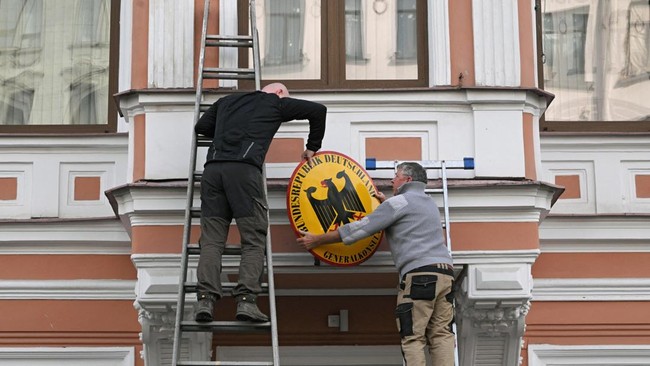
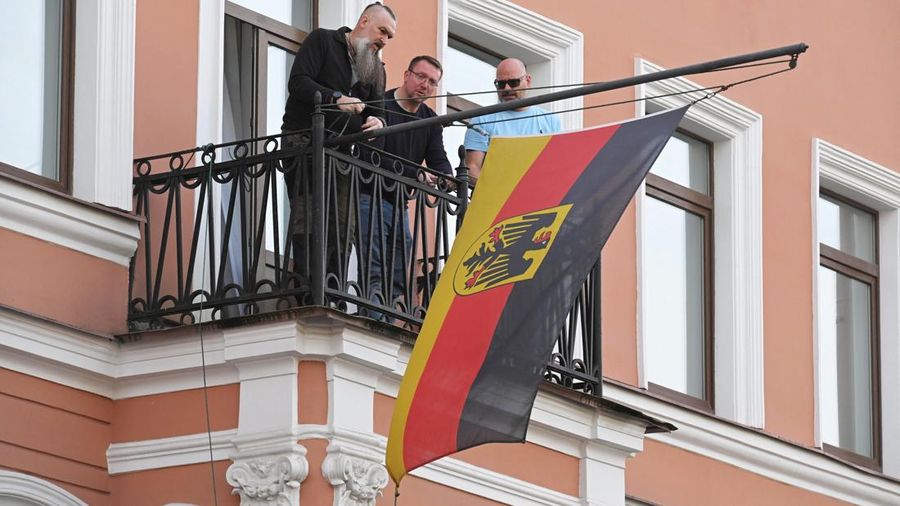
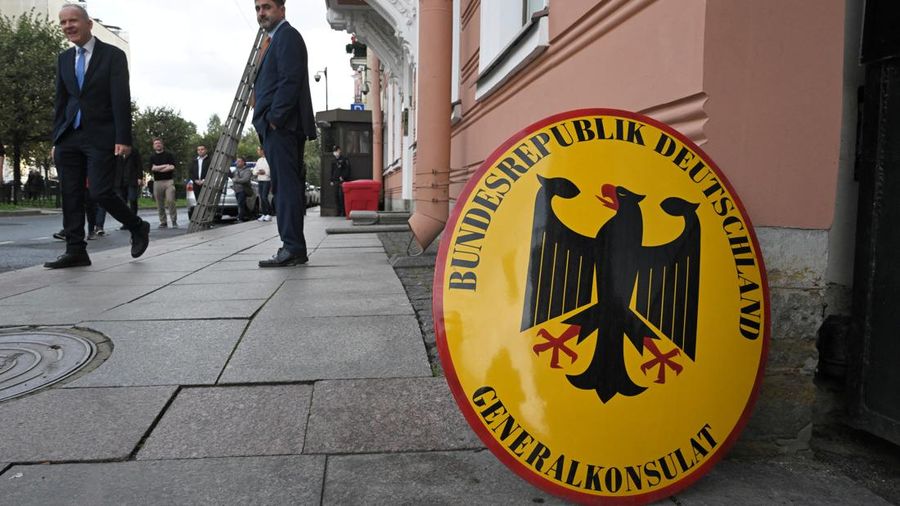
The diplomatic landscape between Moscow and Berlin has reached a new nadir following the forced closure of the German Consulate General in St. Petersburg. The physical removal of the federal eagle emblem from the consulate’s facade serves as a stark, symbolic conclusion to a long-standing diplomatic presence, marking a significant escalation in the ongoing geopolitical rift between Russia and Germany. This closure, which follows a series of tit-for-tat expulsions and restrictions, is fundamentally rooted in a deepening mistrust exacerbated by allegations of sabotage and espionage.
The Chronology of Diplomatic Deterioration
The decision to shutter the German consulate in St. Petersburg did not occur in a vacuum. It is the culmination of months of deteriorating relations, characterized by the mutual expulsion of diplomats and the dismantling of administrative infrastructure that once facilitated bilateral cooperation.
The immediate catalyst for the most recent round of closures was a severe dispute regarding security allegations. German authorities had previously accused Russian actors of orchestrating attempts to compromise critical infrastructure, specifically citing alleged sabotage attempts near the Leipzig/Halle Airport. Berlin’s intelligence and security apparatuses identified these threats as part of a broader, destabilizing campaign by Moscow. In response to these perceived threats, Berlin initiated measures to restrict the presence of Russian diplomatic and cultural institutions on German soil, including the closure of the Russian consulate in Bonn and the restriction of Russian cultural centers.
Moscow’s reaction was swift and retaliatory. The Russian Ministry of Foreign Affairs issued a formal directive ordering the immediate cessation of operations at the German Consulate General in St. Petersburg by September 18. Furthermore, the directive extended beyond the consulate, mandating the closure of the Goethe-Institut—a flagship for German cultural diplomacy in Russia—with staff members ordered to vacate the country by September 13.
Historical Context and Bilateral Relations
To understand the gravity of these events, one must consider the historical role of these institutions. The German Consulate in St. Petersburg has served as a bridge between the two nations, facilitating trade, cultural exchanges, and consular services for decades. Similarly, the Goethe-Institut played a pivotal role in maintaining a soft-power presence, fostering language learning, and providing a platform for academic discourse.
The systematic dismantling of these institutions represents a departure from the "Ostpolitik" era, during which Germany sought to cultivate strong ties with the Soviet Union and, subsequently, Russia. Since the onset of the conflict in Ukraine in early 2022, this relationship has transformed from one of strategic partnership to one of deep-seated antagonism. Germany, once heavily reliant on Russian energy, has pivoted sharply toward a policy of decoupling, while Russia has increasingly viewed German military and diplomatic support for Kyiv as a direct provocation.
Official Responses and the Narrative of Sabotage
The narrative surrounding these closures is deeply polarized. German officials maintain that their actions against Russian facilities were necessary security measures taken to protect national sovereignty and infrastructure. By closing the Russian consulate in Bonn, Berlin aimed to reduce the number of intelligence officers operating under diplomatic cover, a move they claim is consistent with international security protocols.
Conversely, Moscow has vehemently denied all allegations of sabotage. Russian authorities dismissed the claims regarding the Leipzig/Halle Airport as "absurd fabrications" and "unfounded accusations" designed to justify the systematic erosion of diplomatic norms. In a statement released shortly after the closure order, the Russian Foreign Ministry framed the move as an "inevitable response" to what it described as the "hostile actions of the German authorities." The Kremlin’s rhetoric emphasizes a narrative of victimization, suggesting that Berlin has been coerced by its Western allies into adopting an unnecessarily aggressive stance.
Economic and Societal Implications
The closure of these diplomatic and cultural hubs has immediate, tangible impacts on both nations. For German citizens and companies operating in Russia, the loss of the St. Petersburg consulate creates a significant bureaucratic vacuum. Consular assistance, passport services, and legal support for citizens abroad have been severely curtailed. Similarly, for Russian citizens seeking cultural engagement or educational opportunities in Germany, the shuttering of the Goethe-Institut signifies the loss of a vital window into European academic and social life.
From an economic perspective, the closure symbolizes the end of an era of integrated commerce. While trade has already been heavily impacted by international sanctions, the physical closure of diplomatic outposts further isolates the two economies. Financial analysts suggest that this "diplomatic cold war" creates an unpredictable environment for the remaining businesses that still attempt to navigate the complex web of sanctions and counter-sanctions. The lack of open diplomatic channels increases the likelihood of miscalculation, as the informal, behind-the-scenes communication that typically resolves minor disputes is now largely absent.
Strategic Analysis: A New Era of Isolation
The events of September 2026 serve as a microcosm of the broader shift in European security architecture. The removal of the federal eagle from the St. Petersburg building is more than just a maintenance task; it is a powerful visual representation of the "Iron Curtain" mentality resurfacing in contemporary politics.
Analysts observe that both governments are currently operating under a logic of "zero-sum" security. In this framework, any concession or diplomatic outreach is interpreted as a weakness. For Germany, the priority is to demonstrate resilience against hybrid threats, even at the cost of losing diplomatic influence in Russia. For Russia, the priority is to project strength and signal that any action taken against its interests will be met with a symmetrical, if not harsher, penalty.
The implications for the future are concerning. With fewer diplomats on the ground, the ability of both nations to manage crises, negotiate prisoner swaps, or even facilitate the repatriation of citizens is severely diminished. The vacuum left by these institutions is likely to be filled by increased intelligence activity and more aggressive information warfare, as the traditional avenues for diplomacy continue to be blocked.
The Human Element: Cultural Diplomacy in Peril
Perhaps the most enduring consequence of these closures is the impact on "track-two" diplomacy—the informal, grassroots connections between people. The Goethe-Institut was not merely a government office; it was a space for dialogue, literature, and art. Its closure signals a broader trend of cultural isolationism. When cultural institutions are treated as political pawns, the societal bridges that take decades to build can be destroyed in a matter of days.
The staff members caught in the middle of these decisions—diplomats, educators, and support staff—are the collateral damage of high-level geopolitical maneuvers. Many of these individuals have spent years fostering relationships between the two countries, only to be forced into abrupt departures, leaving behind lives and networks that will be difficult, if not impossible, to reconstitute.
Conclusion: A Uncertain Path Forward
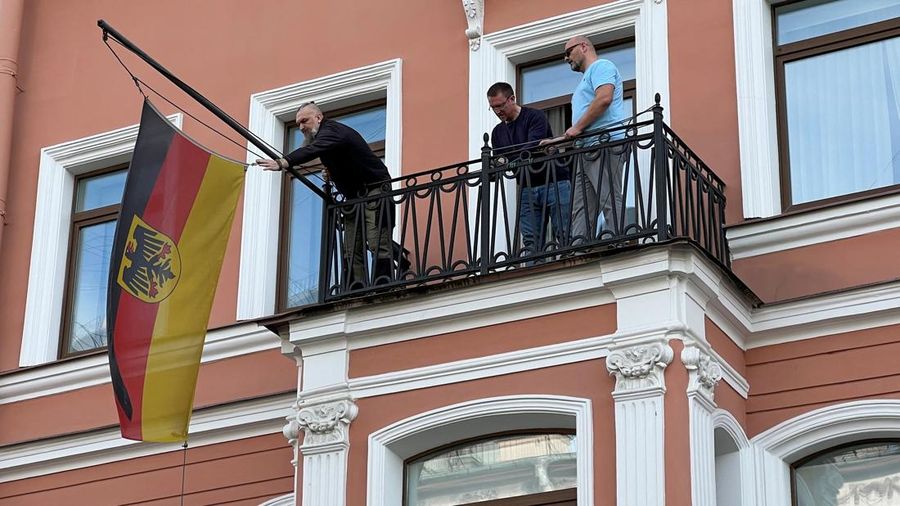
As the dust settles in St. Petersburg and the office of the German Consulate stands empty, the international community watches with apprehension. The escalation between Berlin and Moscow is not an isolated incident but a symptom of a fractured global order. The removal of the federal eagle is a stark reminder that in the face of deep ideological and security divides, the symbols of cooperation are often the first to be discarded.
The future of the German-Russian relationship remains deeply uncertain. Without a mechanism for de-escalation, both nations appear set on a path of further alienation. Whether this period of diplomatic silence will eventually lead to a new, albeit colder, form of coexistence or further descent into direct confrontation remains to be seen. What is clear, however, is that the diplomatic channels that once served as the safety valves for European stability are being systematically sealed, leaving both nations—and the continent at large—in an increasingly precarious position.
