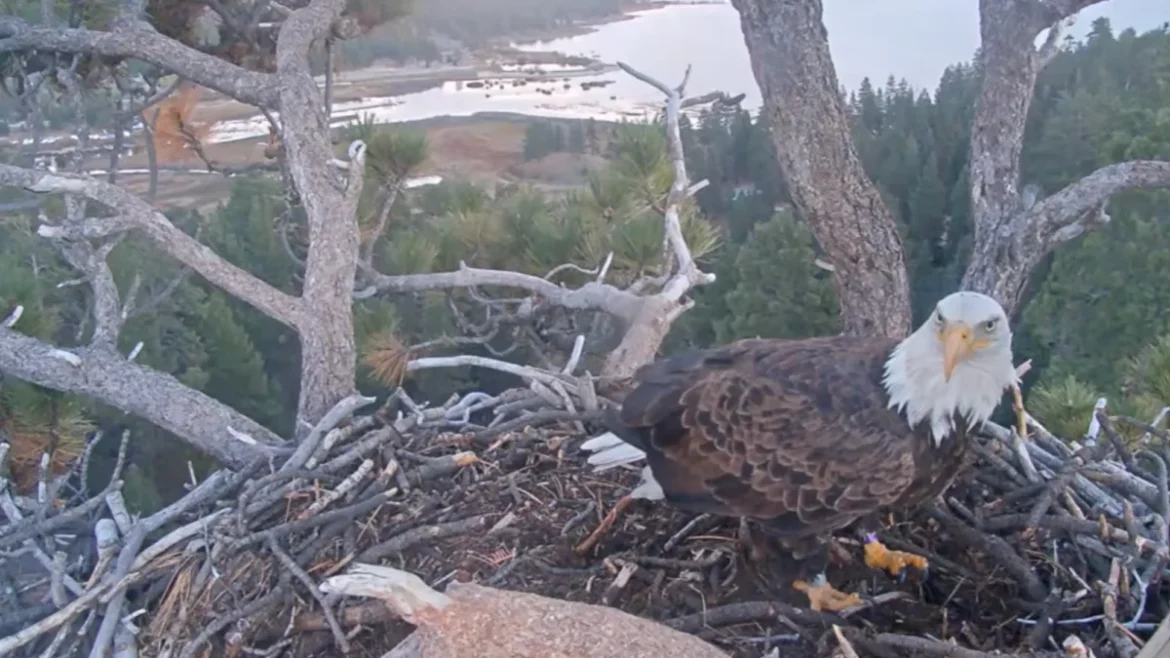
The high-stakes saga of the Big Bear Valley bald eagle population has taken another turn as the four-year-old female eagle known as Kaydee, or KD1, returned to the iconic nest frequently occupied by the internet-famous male, Shadow. Following a period of uncertainty and the tragic passing of Shadow’s long-time mate, Jackie, the movements of these apex predators have captivated a global audience of researchers and wildlife enthusiasts. As the winter breeding season approaches, the presence of potential new mates in the territory has intensified the scrutiny of 24/7 observation efforts led by the Friends of Big Bear Valley (FOBBV).
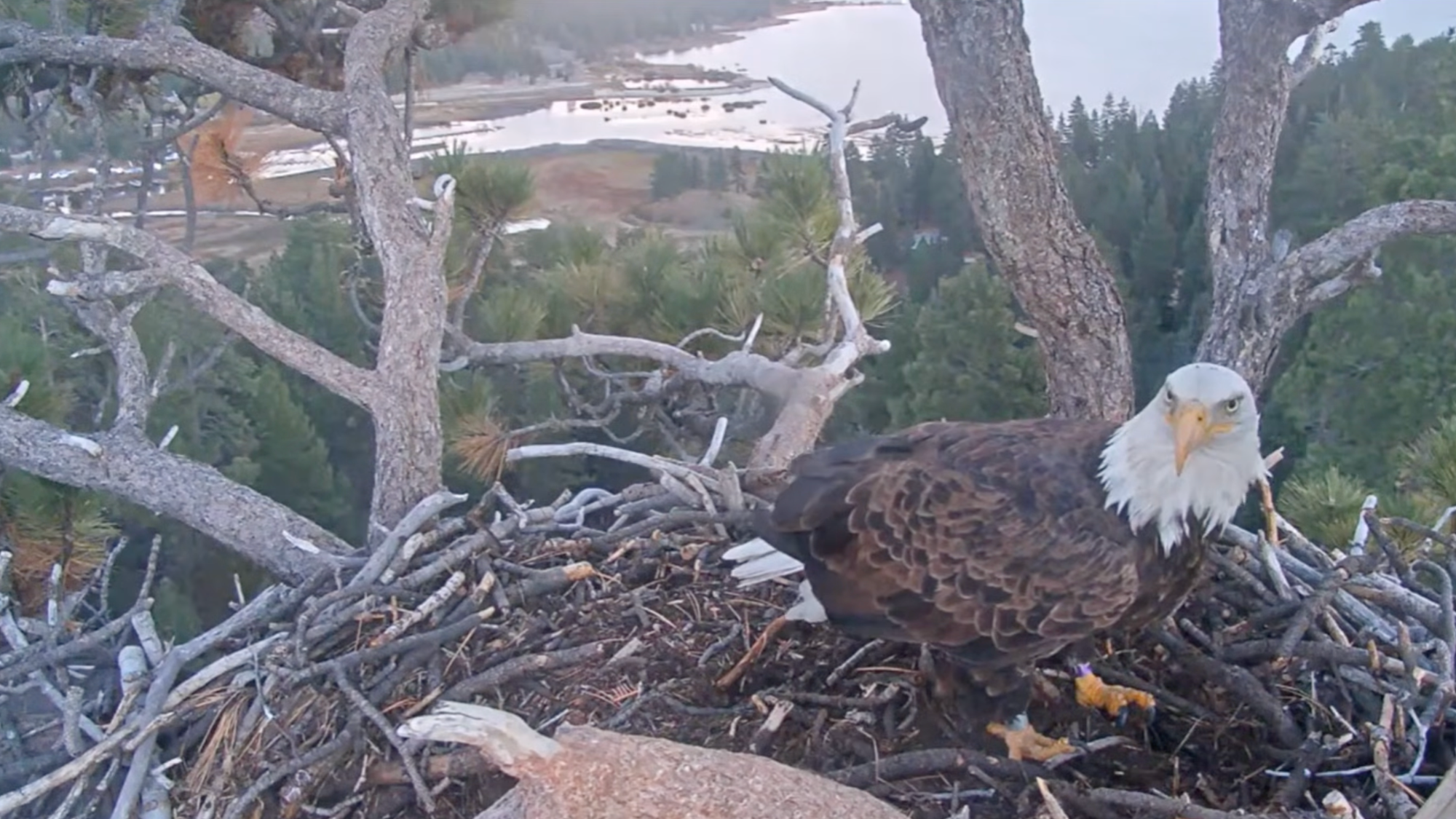
The most recent activity occurred on the morning of Monday, November 23, 2026, when the stillness of the valley was broken by the distinctive vocalizations of eagles. According to field reports and livestream footage, the familiar "chortles"—a whistling, chatter-like chirp used for territorial signaling and social bonding—echoed across the nest site. While the morning brought sightings of various avian visitors, including ravens scavenging in the nesting material, the afternoon was marked by the arrival of a pair of eagles on a nearby Lookout Snag. By sunset, the identity of the primary visitor was confirmed: Kaydee, a banded eagle whose presence has been noted periodically since August, touched down on the nest structure to inspect the site before departing.
Understanding the Significance of the Big Bear Nest
The nest in Big Bear Valley is more than just a home for birds; it is a critical site for the study of Haliaeetus leucocephalus in Southern California. The structure, which has been maintained and expanded by its inhabitants over several years, provides a window into the life cycle of a species that was once on the brink of extinction.
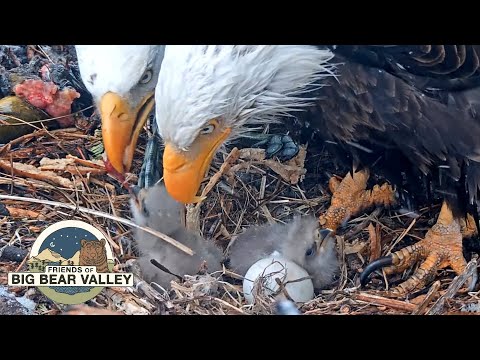
The nest gained international prominence through the long-term partnership of Shadow and Jackie. Their tenure was marked by both remarkable successes and the harsh realities of nature. Between 2018 and 2026, the pair navigated successful fledgling seasons alongside environmental challenges, including severe snowstorms and territorial disputes. The 2025 season saw the survival of two chicks, Sunny and Gizmo, following a catastrophic blizzard, while the 2026 season was defined by the birth of Luna and Sandy—the latter named in honor of the late Sandy Steers, the former executive director of FOBBV.
A Chronology of Transition
The sudden loss of Jackie in the summer of 2026 marked a pivotal shift in the stability of the Big Bear population. The following timeline outlines the transition that has led to the current state of the nest:
- July 17, 2026: Jackie was discovered on the ground in Dana Point, California, suffering from injuries sustained during a confrontation with two subadult eagles.
- August 9, 2026: Despite receiving intensive care at the Ojai Raptor Center, medical experts reported that Jackie’s condition had become critical due to severe anemia.
- August 10, 2026: Jackie succumbed to a combination of health complications, including blood clots and systemic infections, as confirmed by a subsequent necropsy.
- September–October 2026: The community held multiple memorial services to recognize the role Jackie played in the public education of raptor conservation.
- August–November 2026: Shadow, the resident male, began showing signs of territorial shifts, with sightings of both a visitor nicknamed "Big Beautiful Visitor" (BBV) and the banded female, Kaydee.
Profile of the New Visitor: KD1
Kaydee, officially identified by her band as KD1, represents a new generation of eagles in the region. Born in 2022 in the Prado Basin, approximately 70 miles from the Big Bear nest, she was banded as part of the Orange County Water District’s conservation efforts. Her lineage is a point of interest for ornithologists; though her biological parents share the names Lucky and Ricky with Jackie’s parents, they are an entirely separate pair.
Now at four years of age, Kaydee is reaching the threshold of sexual maturity. Typically, bald eagles begin breeding between the ages of four and five. Her presence near Shadow suggests an exploration of potential nesting territories. Biologists note that the black coloration on her head—often mistaken for dirt or tree sap—is a common trait in young eagles whose plumage has not yet fully matured into the distinct white head of an adult. Her leg bands, specifically the lavender band marked "KD1," provide researchers with a unique opportunity to track her movements and reproductive history if she decides to settle in the valley.
Ecological Implications and Behavioral Analysis

The vocalizations heard on Monday morning, characterized by FOBBV as "whistling chatter," serve several biological functions. In the context of a changing social dynamic at the nest, these sounds are likely used to establish territory or signal social contact. For an eagle like Shadow, who has spent years establishing a dominant presence in Big Bear, the decision to accept a new mate is driven by both environmental cues and the availability of suitable partners.
The presence of other raptors, such as ravens and unidentifiable subadult eagles, adds a layer of complexity to the territory. Ravens are known to prey on unattended eggs, which creates a significant challenge for any eagle pair attempting to secure a nest. The success of the 2027 breeding season—which typically sees eggs laid in January—will depend heavily on the pair’s ability to defend the nest against such intruders and their willingness to cooperate in the incubation process.
The Role of Conservation and Public Observation
The Friends of Big Bear Valley continue to maintain the 24/7 livestream, which has become a vital tool for public engagement and scientific data collection. By allowing the public to witness these interactions in real-time, the organization fosters a deeper appreciation for the complexities of wildlife management.
The Ojai Raptor Center, which handled Jackie’s care, has noted that the public response to the eagle’s death was unprecedented. Thousands of letters and cards were received, highlighting the emotional bond many have formed with these birds. From a scientific standpoint, the death of an individual as well-monitored as Jackie provided a wealth of data regarding the physiological stressors faced by eagles in Southern California, including the risks posed by environmental pathogens and inter-species competition.
Future Prospects for the Nest
As of late November 2026, it remains unclear whether Shadow will select a permanent partner for the upcoming breeding season. While the appearance of multiple female eagles suggests that the territory remains desirable, the process of pair bonding in bald eagles is rigorous and time-consuming. The birds must establish mutual trust and demonstrate the ability to share nesting responsibilities before eggs are laid.
For viewers and researchers alike, the current period is one of "wait and see." If Shadow and Kaydee do form a pair, it would mark the beginning of a new chapter for the Big Bear nest, potentially ensuring that the site continues to serve as a hub for eagle activity for years to come. Regardless of the outcome, the data collected from these ongoing observations will provide invaluable insights into the adaptive behaviors of Haliaeetus leucocephalus in an increasingly fragmented landscape.
As the sun sets over Big Bear Valley, the focus remains on the nest. The arrival of Kaydee is a reminder of the inherent resilience of nature and the constant turnover that defines life in the wild. For those watching from afar, the chirps and whistles of the eagles are not just sounds, but a narrative of survival, adaptation, and the continuation of a legacy that began long before the cameras were ever installed. Whether or not a new pair emerges, the story of the Big Bear eagles serves as a testament to the importance of habitat preservation and the enduring public interest in the preservation of North America’s most iconic bird of prey.