

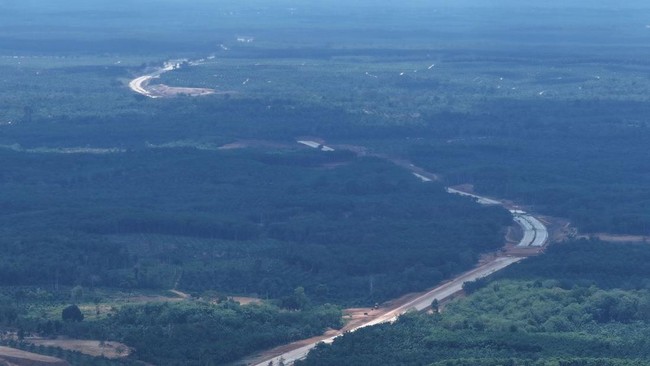
The ongoing development of strategic national infrastructure in Sumatra continues to see significant milestones as PT Hutama Karya Infrastruktur (HKI) accelerates the construction of the Betung–Jambi Section 1B Toll Road. As part of the broader Trans-Sumatra Toll Road network—specifically the Betung–Tempino–Jambi corridor connecting South Sumatra and Jambi—the project has achieved a construction progress rate of 51 percent by the end of October 2026. This vital 31.58-kilometer toll road segment is designed to bridge crucial regional gaps, linking the Babat Supat district with the Tungkal Jaya district, and is expected to fundamentally transform regional connectivity, logistics, and passenger mobility across South Sumatra.
Strategic Overview and Project Scope
The Betung–Tempino–Jambi toll road corridor represents a critical artery in the grand vision of integrating the island of Sumatra from south to north. Section 1B, spanning 31.58 kilometers of challenging terrain, requires advanced engineering and meticulous project management to adhere to stringent timelines. Managed by PT Hutama Karya Infrastruktur (HKI), a subsidiary of state-owned construction giant PT Hutama Karya (Persero), the project serves as a cornerstone for regional economic development.
Upon completion, this segment will drastically reduce travel times between major economic hubs in South Sumatra and Jambi provinces. Historically, logistical movement between these regions relied heavily on national arterial roads characterized by high traffic congestion, heavy freight vehicle wear, and lengthy transit hours. The introduction of Section 1B, alongside its connecting sections, will streamline freight distribution, lower operational expenses for transportation and logistics companies, and stimulate localized economic growth by providing direct access to previously isolated agricultural and industrial centers.
Commitment to Green Construction and ESG Principles
Beyond its physical and economic implications, the development of the Betung–Jambi Section 1B Toll Road is notable for its strict adherence to Environmental, Social, and Governance (ESG) criteria. In an era where large-scale infrastructure projects face heightened scrutiny regarding their ecological footprints, HKI has embedded sustainability into the DNA of the construction process through comprehensive green construction initiatives.
Resnu Aditya Wuladarman, Corporate Secretary of HKI, emphasized that sustainability is not treated as an afterthought but rather as an integral component across all phases of the project execution. According to Wuladarman, the integration of ESG principles ensures that the expansion of regional connectivity does not come at the expense of local environmental preservation and ecosystem integrity.
"The implementation of ESG principles reflects HKI’s steadfast commitment to delivering sustainable infrastructure. Through various green construction initiatives, we strive to ensure that the construction of the Betung–Jambi Section 1B Toll Road not only enhances connectivity but also carefully preserves the surrounding environment and ecosystems," stated Resnu Aditya Wuladarman.
Innovative Environmental Measures on Site
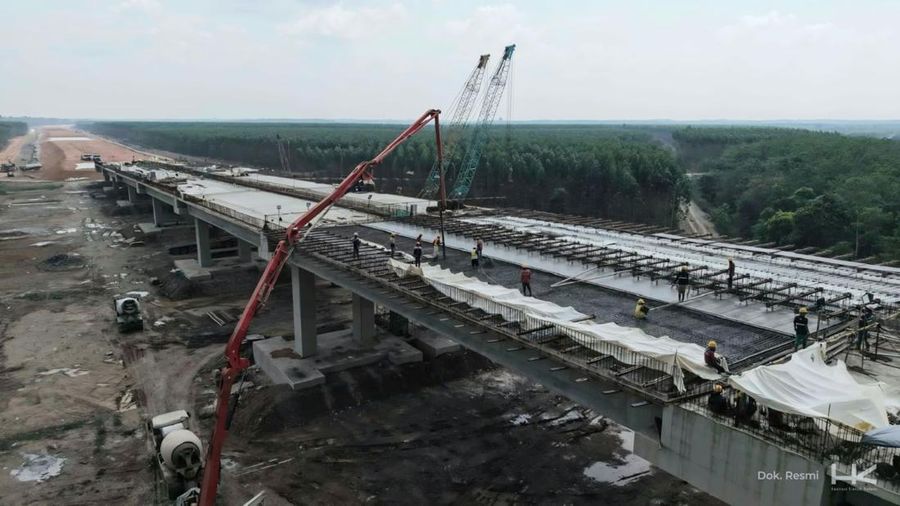
To translate these ESG commitments into actionable engineering practices, HKI has deployed several innovative, eco-friendly technologies and methodologies throughout the Betung–Jambi Section 1B construction site. These measures are designed to minimize resource consumption, reduce carbon emissions, and optimize waste management.
Key environmental initiatives implemented on-site include:
- Adoption of Renewable Energy: Solar panels have been installed at the project’s site offices (direksi keet) to serve as a primary source of electrical energy, significantly cutting down reliance on conventional fossil-fuel-generated power grids and lowering operational carbon emissions.
- Advanced Wastewater Management: The deployment of modern bio-tank systems ensures that all domestic and industrial wastewater generated by the workforce and temporary facilities is treated efficiently, preventing local groundwater contamination.
- Waste Upcycling and Circular Economy Practices: Concrete waste generated during construction activities is systematically crushed and repurposed as surfacing and foundational material for the project’s Temporary Storage Sites (TPS). This practice minimizes the volume of construction debris sent to regional landfills.
- Material Reuse Strategies: HKI has prioritized the use of recycled materials salvaged from previous infrastructure projects where applicable. This circular approach optimizes resource utilization, reduces the demand for virgin raw materials, and curbs overall construction waste generation.
The Broader Context of the Trans-Sumatra Toll Road Network
The advancement of the Betung–Jambi Section 1B project does not occur in a vacuum; it is part of the federal government’s multi-year initiative to connect the entire length of Sumatra island via a high-capacity toll road network. Initiated under the administration’s strategic infrastructure push, the Trans-Sumatra Toll Road (JTTS) aims to reduce logistics costs, eliminate transportation bottlenecks, and foster equitable economic development between Java and Sumatra.
The Betung–Tempino–Jambi route specifically acts as a crucial backbone dividing the provinces of South Sumatra and Jambi. Previous sections of the broader corridor have steadily reached completion milestones, including the successful finalization of mainroad construction on the Palembang–Betung Toll Road Section 3. As these adjacent segments reach completion, the integration of Section 1B becomes increasingly urgent to ensure seamless corridor operability. Without Section 1B, the overall flow from Betung up to Tempino and Jambi would experience severe bottlenecks, neutralizing the systemic benefits of neighboring investments.
Timeline and Chronology of Development
The journey toward the 51 percent completion mark achieved by late October 2026 has been characterized by systematic project phasing and proactive mitigation of geographical challenges.
- Planning and Preliminary Phases: Initial surveys, route mapping, and land acquisition coordination for the Betung–Tempino–Jambi corridor began years prior, addressing complex land tenure issues typical of large-scale infrastructure projects in forested and agricultural zones of Sumatra.
- Mobilization and Groundbreaking: Following the awarding of the contract to HKI, heavy machinery mobilization commenced alongside the establishment of green site infrastructure, including the aforementioned solar-powered offices and bio-tank facilities.
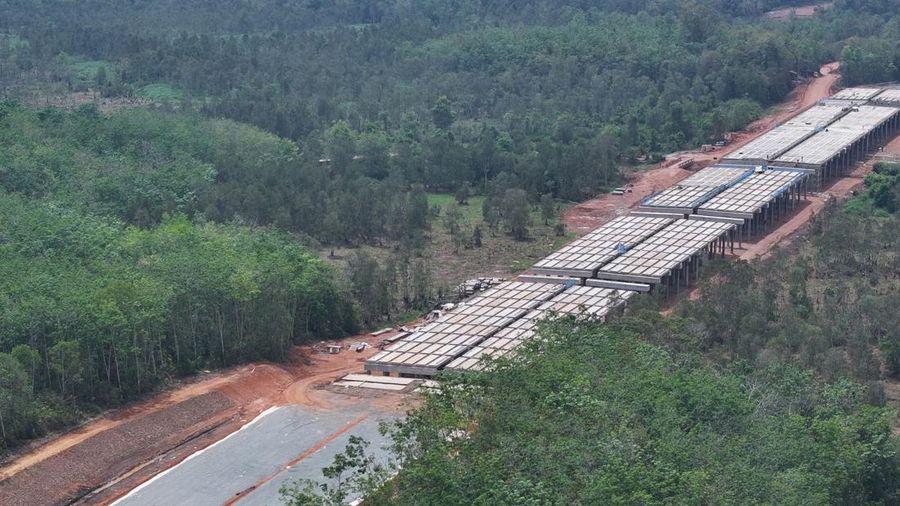
- Mid-Term Construction Phase (2024–2025): Civil engineering works, including land clearing, grading, bridge substructure installations, and drainage construction, formed the bulk of operations. Despite seasonal weather fluctuations—particularly heavy tropical rainfall characteristic of South Sumatra—construction crews maintained steady momentum.
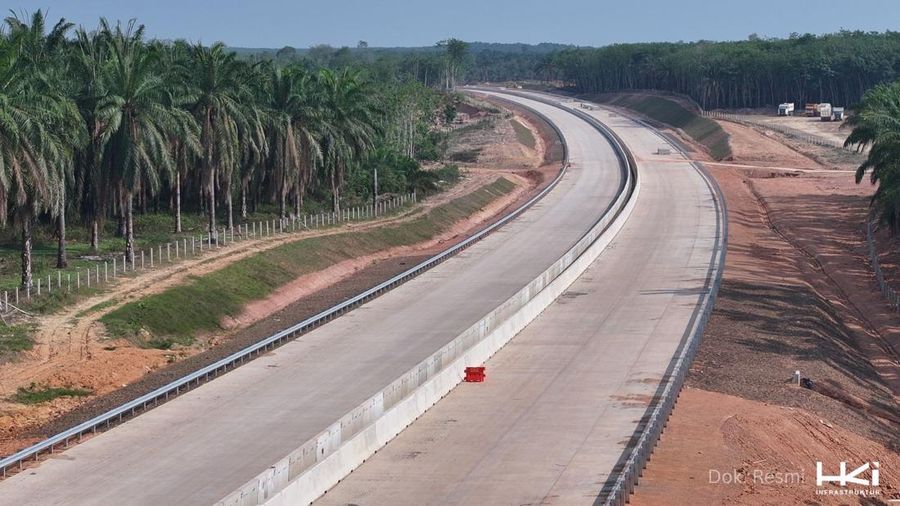
- Current Status (Late 2026): HKI officially confirmed that construction progress on the 31.58 km stretch has touched 51 percent by the end of October 2026. Focus has now shifted toward structural bridging, sub-base stabilization, and preparing specific stretches for upcoming asphalt paving phases.
Socio-Economic Implications and Regional Impact
The implications of completing the Betung–Jambi Section 1B Toll Road extend far beyond engineering metrics. Economists and regional planners anticipate several transformative impacts once the road opens to commercial and private traffic:
Logistical Efficiency and Cost Reduction
Logistics costs in Sumatra have historically remained high due to winding arterial routes and frequent transit delays caused by overloaded trucks traversing narrow provincial roads. The new toll road will accommodate high-speed, high-capacity freight transport, allowing commodities such as palm oil, rubber, coal, and manufactured goods to reach ports and distribution centers in a fraction of the current time. This reduction in transit time directly translates to lower operational expenditure for logistics providers, which can eventually ease consumer goods pricing across the region.
Enhanced Regional Integration
By bridging the distance between Babat Supat in South Sumatra and Tungkal Jaya moving northward toward Jambi, the project fosters tighter socio-economic integration. Local populations will experience vastly improved access to centralized healthcare, educational institutions, and regional commercial centers. Furthermore, the corridor is expected to unlock tourism potential in areas previously constrained by accessibility issues.
Employment and Local Capacity Building
The construction phase has served as a major engine for local employment, engaging thousands of skilled and semi-skilled workers from surrounding communities. Additionally, the adoption of green construction methodologies provides local engineers and technical staff with invaluable exposure to international best practices in environmental management and sustainable construction.
Outlook and Future Challenges
As HKI presses forward past the 51 percent completion threshold, project managers remain focused on overcoming remaining operational hurdles. Key priorities include accelerating land acquisition for any remaining parcel adjustments, mitigating weather-related delays as seasonal precipitation patterns shift, and maintaining strict safety and environmental standards on-site.
With robust backing from the central government and the dedicated execution capabilities of Hutama Karya Infrastruktur, the Betung–Jambi Section 1B Toll Road remains firmly on track to fulfill its promise. By marrying rapid structural progress with a rigorous commitment to environmental stewardship, the project sets a new benchmark for sustainable infrastructure development in Indonesia, promising long-term prosperity and connectivity for generations to come.

