
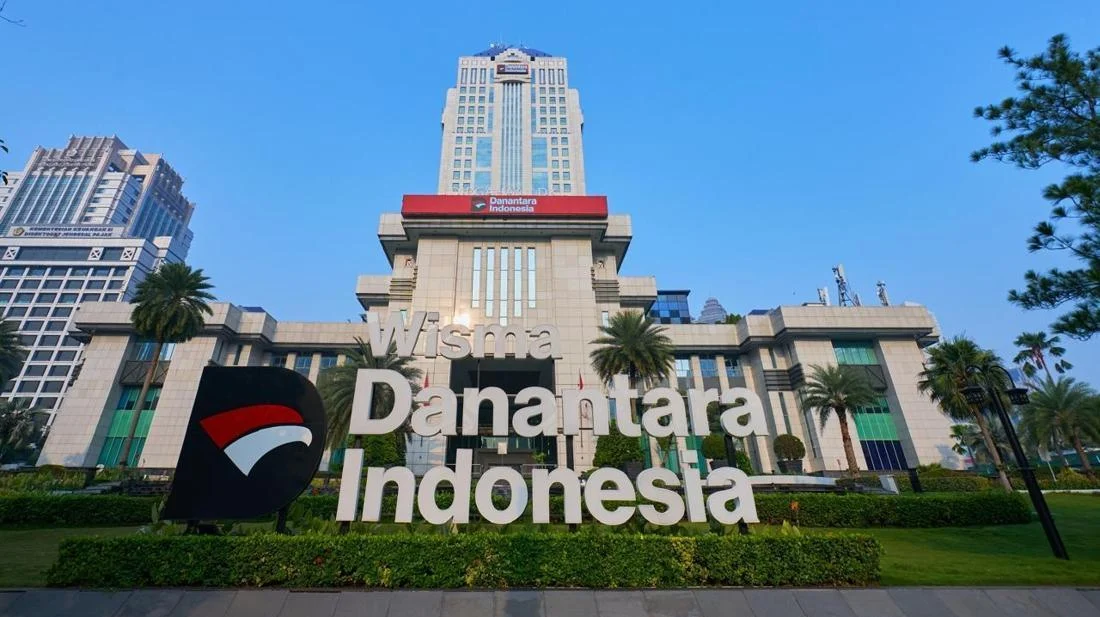
The Indonesian Ministry of Finance has officially granted a specialized package of tax incentives to the newly established Badan Pengelola Investasi Daya Anagata Nusantara (BPI Danantara) to facilitate a sweeping and unprecedented restructuring of state-owned enterprises (SOEs). The strategic regulatory relief is designed to ease the financial friction associated with consolidating and streamlining Indonesia’s vast public sector corporate portfolio, which currently encompasses over 1,000 entities and is slated for aggressive rationalization down to approximately 300 companies.
The announcement was formally delivered by Deputy Minister of Finance Suahasil Nazara during his keynote address at the Economic Outlook 2027 seminar held at Swasana Lippo Kuningan in Jakarta. According to the
Ministry of Finance, the core objective of the tax facility is to eliminate upfront tax liabilities that typically burden corporate mergers, acquisitions, asset transfers, and liquidations during large-scale institutional consolidation. By deferring or waiving these initial fiscal hurdles, the government aims to ensure that Danantara can execute its mandate without facing immediate liquidity constraints.
The sweeping restructuring initiative sits at the heart of Indonesia’s broader macroeconomic strategy, spearheaded by the administration to optimize state asset management, elevate national competitiveness, and propel investment ratios to unprecedented heights over the coming years.
Navigating the Corporate Maze: Trimming the State-Owned Portfolio
For decades, the Indonesian state-owned enterprise sector has operated through a sprawling, fragmented, and occasionally overlapping web of corporations, subsidiaries, sub-subsidiaries, and joint ventures. Observers, economists, and policymakers have long pointed out that managing over 1,000 distinct legal entities creates administrative redundancies, dilutes state capital efficiency, and complicates fiscal oversight.
Under the newly empowered BPI Danantara framework, the state aims to systematically rationalize this ecosystem. By pruning the portfolio down to roughly 300 streamlined, highly focused corporate entities, the government expects to eliminate operational inefficiencies, concentrate capital on high-yield strategic sectors, and establish clearer lines of accountability.
However, corporate consolidations of this magnitude invariably trigger complex tax events. Under standard regulatory frameworks, shifting asset ownership, merging corporate balance sheets, and dissolving redundant subsidiaries can attract substantial corporate income taxes, value-added taxes, and property transfer duties. Without targeted intervention, these immediate tax bills could consume vast amounts of capital that Danantara urgently requires for operational transformation and project financing.
Recognizing this potential bottleneck, the Ministry of Finance intervened by invoking regulatory provisions designed to support national strategic projects. "Danantara wants to make improvements from more than 1,000 companies down to about 300 companies, and during that process, there are several tax liabilities that arise. We are allowing them not to pay taxes upfront," Suahasil explained during the seminar.
Regulatory Foundation: Peraturan Pemerintah Nomor 41 Tahun 2026
The legal basis for this fiscal facility is anchored in government regulations designed to provide flexibility for national strategic restructuring. Specifically, the framework is regulated under Government Regulation (Peraturan Pemerintah – PP) Number 41 of 2026.
The regulation provides the Ministry of Finance with the legal mandate to waive or defer corporate tax obligations specifically triggered by structural reorganizations mandated under BPI Danantara’s purview. While the policy represents a temporary sacrifice of potential state revenue, economic planners view it as a necessary catalyst for long-term value creation.
When questioned regarding the potential loss of state revenue resulting from these tax holidays, Suahasil noted that the ministry is actively calculating the fiscal impact. Nonetheless, the administration remains confident that the temporary revenue foregone will be dwarfed by the massive economic multipliers generated once the streamlined SOEs reach operational peak performance.
"Tax will provide incentives for various Danantara restructuring schemes so that afterward, Danantara does not have to pay upfront taxes for its restructuring process," Suahasil reiterated.
Macroeconomic Ambitions: Targeting 35% Investment-to-GDP Ratio
The ultimate yardstick for the success of Danantara’s restructuring and the accompanying tax incentives is Indonesia’s broader economic growth trajectory, particularly the national investment-to-GDP ratio.
Currently, total investment hovers around 31% of the Gross Domestic Product (GDP). The government has set an ambitious target to elevate this figure to 35% over the medium term. Achieving this target is viewed by economic authorities as vital for escaping the middle-income trap and maintaining a steady GDP growth path capable of absorbing millions of new job seekers entering the labor market annually.
BPI Danantara has been envisioned not merely as a holding entity for state assets, but as a super-holding investment vehicle modeled after successful sovereign wealth funds such as Singapore’s Temasek or Malaysia’s Khazanah Nasional. By consolidating state capital under a unified, professionalized management structure, Danantara is expected to command the financial muscle required to spearhead mega-projects that are too capital-intensive for private sector players to initiate on their own.
Furthermore, the restructuring is strategically aligned with Indonesia’s national priorities of downstream industrialization (hilirisasi) and industrial transformation. By processing raw commodities domestically rather than exporting them in crude form, the government aims to capture higher value-added segments of global supply chains. Danantara is expected to play a central role in financing and coordinating large-scale downstream infrastructure, ranging from mineral processing plants to renewable energy grids.
Catalyzing Private Sector Participation
A common concern surrounding state-led economic consolidation is the potential for crowding out private sector investment. However, Ministry of Finance officials have emphasized that Danantara’s overarching philosophy is precisely the opposite: to act as a market maker and strategic anchor that crowds in, rather than crowds out, private capital.
By absorbing the initial high-risk phases of major industrial and infrastructure projects—and by utilizing streamlined SOEs to build foundational facilities—Danantara aims to de-risk these investments for domestic and international private institutional investors. Once projects reach developmental milestones and demonstrate clear commercial viability, private sector participation is expected to scale up rapidly.
"We wait for it to generate employment, generate construction, generate output, generate goods, generate services, and then eventually lead to investment, which becomes one of the backbones of Indonesia’s GDP and economic growth," Suahasil stated.
This phased approach implies that while the initial restructuring phase requires state backing and fiscal forbearance—such as the newly granted tax incentives—the subsequent commercial phases are designed to be self-sustaining and commercially attractive to global capital markets.
Economic Implications and Future Outlook
The decision to grant upfront tax exemptions for Danantara’s restructuring carries profound implications for Indonesia’s fiscal landscape and corporate governance standards.
On the positive side, analysts point out that removing fiscal friction is indispensable for executing a corporate turnaround of this historic scale. Without regulatory relief, the sheer administrative and financial weight of tax assessments across hundreds of merging and dissolving entities could paralyze the consolidation process before it gains momentum. The policy signals strong inter-institutional coordination between the Ministry of Finance and the state investment apparatus, underscoring the government’s resolve to make Danantara fully operational.
Conversely, fiscal watchdogs emphasize the importance of rigorous transparency and post-restructuring auditing. Because the policy involves deferring or waiving tax liabilities that would otherwise accrue to the state treasury, maintaining strict oversight over how restructured entities utilize their newfound liquidity will be critical. The Ministry of Finance’s ongoing calculation of potential revenue impacts will need to be matched by clear key performance indicators (KPIs) measuring the actual return on investment delivered by Danantara’s streamlined portfolio.
As Indonesia navigates a complex global economic environment marked by geopolitical shifts, fluctuating commodity prices, and tightening financial conditions, the success of BPI Danantara stands as a cornerstone of national economic resilience. With the Ministry of Finance successfully lowering the initial fiscal barriers to corporate consolidation, the spotlight now turns to Danantara’s leadership to execute the rationalization of over 1,000 state enterprises into a lean, efficient, and globally competitive cohort of roughly 300 corporate champions.

