
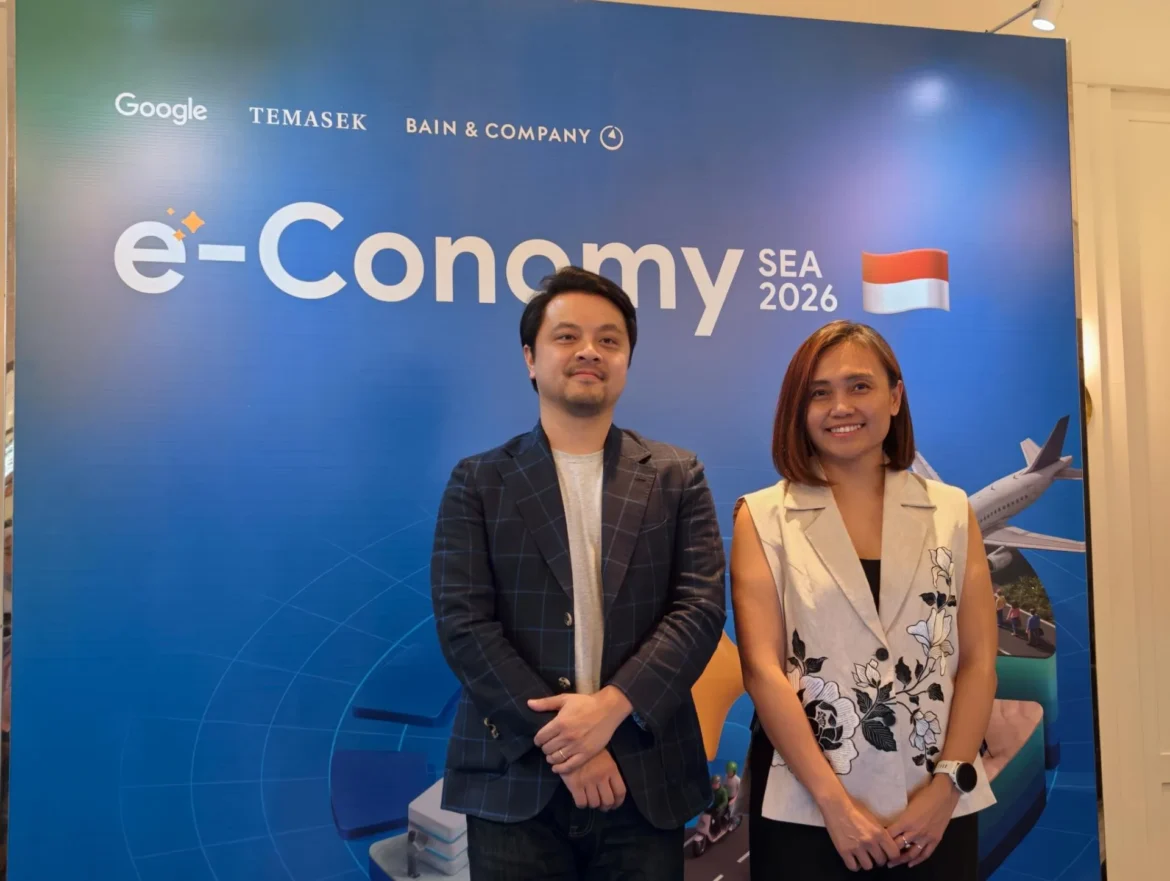
Indonesia currently holds the distinction of having the largest artificial intelligence (AI) user base in Southeast Asia, yet it ironically struggles with the lowest usage intensity across the region. According to the latest comprehensive report released by a collaborative research effort involving Google, Temasek, and Bain & Company, the nation stands at a critical juncture where mass adoption has arrived, but deep, functional integration remains elusive. This phenomenon presents a complex narrative of a digital-first population that is eager to explore generative AI tools but has yet to weave these technologies into the fabric of daily professional or industrial productivity.
The data reveals a stark contrast: while Indonesia commands 43 percent of the total AI user population across the six major Southeast Asian economies (SEA-6), it accounts for only 37 percent of the actual measured AI consumption. This "utilization gap" suggests that while barriers to entry—such as language accessibility and basic awareness—have been effectively dismantled, the transition from casual experimentation to high-utility application is still in its infancy.
The Dynamics of User Behavior and Localized Interaction
A defining characteristic of Indonesia’s AI landscape is its linguistic and cultural localization. With 77 percent of AI-driven conversations conducted in local languages rather than English, the democratization of AI has been largely fueled by the accessibility of large language models (LLMs) that understand nuances of the Indonesian vernacular. This localization has triggered a surge in creative output; the report highlights that roughly 32 percent of Gemini queries in the region are focused on image generation. Daily, Indonesian users generate approximately 9 million AI-based images, marking the highest volume in Southeast Asia.
However, frequency remains a challenge. The average Indonesian user interacts with AI platforms only 1.8 times per week. This low frequency—the lowest among the SEA-6 nations—places Indonesia fifth in terms of overall AI adoption and dead last regarding the "depth" of usage, measured by token consumption per capita.
When users do engage, the primary drivers are professional tasks, education, healthcare, online retail, and entertainment. Interestingly, consumer behavior is shifting toward an "agentic" model. Despite the low frequency of use, 84 percent of Indonesian respondents expressed a willingness to allow "agentic AI"—systems capable of performing tasks autonomously—to research products, compare prices, and complete transactions on their behalf. This figure significantly outperforms the SEA-6 average of 75 percent, signaling a high level of consumer trust, provided that data security and cancellation rights are guaranteed.
Economic Digital Projections and Sectoral Growth
Beyond the specific realm of AI, Indonesia’s broader digital economy continues to exhibit robust growth, acting as a buffer against broader global economic headwinds. The Gross Merchandise Value (GMV) of Indonesia’s digital economy is projected to hit 119 billion USD by 2026, representing a 16 percent year-on-year increase.
E-commerce remains the bedrock of this growth, contributing an estimated 85 billion USD to the GMV. However, the online media sector is the fastest-growing vertical, with a 28 percent annual growth rate. Looking toward the long-term horizon, the research suggests a massive expansion: the GMV is forecasted to climb to 227 billion USD by 2030, eventually reaching 446 billion USD by 2035.
The financial services sector also mirrors this trajectory. Digital lending, a critical component for small-to-medium enterprises (SMEs) and unbanked populations, is experiencing rapid acceleration. The total loan balance in the digital space is expected to rise by 22 percent, reaching 16 billion USD by 2026, with an ambitious projection of 80 billion USD by 2035. This expansion is essential, as it provides the liquidity necessary for the digital economy to sustain its growth momentum.
The Investment Drought: A Persistent Challenge
While the consumer-facing digital economy thrives, the private investment landscape paints a sobering picture. Since the peak of the pandemic-era funding frenzy in 2021, when private investment reached 9.2 billion USD, the flow of capital into Indonesian startups has cratered. By 2025, that figure had plummeted to a mere 0.6 billion USD.
The first half of 2026 saw only 0.2 billion USD across 14 transactions. This funding winter has forced many startups to shift from "growth-at-all-costs" strategies to path-to-profitability models. However, there are emerging signs of a thaw. The latter half of 2026 recorded a significant capital infusion, notably a 270 million USD Series C funding round for Ajaib, a fintech platform. This suggests that while investors remain cautious, they are becoming increasingly selective, focusing on firms with clear monetization strategies and sustainable unit economics.
Regionally, the composition of venture capital has shifted dramatically. AI-related startups now capture roughly 80 percent of all private funding in Southeast Asia, up from just 30 percent in the second half of 2024. For Indonesia to regain its status as a premier destination for tech capital, it must bridge the gap between consumer AI interest and enterprise-grade AI integration. Currently, enterprise AI usage in Indonesia accounts for only 15–20 percent of total token consumption, a stark contrast to Singapore, where enterprise adoption accounts for 55–60 percent of total usage.
Strategic Imperatives for the 2030 Horizon
The research outlines a transformative scenario: if agentic AI is adopted at scale, regional AI usage could grow 10–15 times under a base-case scenario, and as much as 50–60 times under an optimistic scenario by 2030. To capitalize on this, Indonesia is tasked with achieving four strategic pillars:
- Acceleration of Agentic AI Adoption: Moving beyond simple chatbots to systems that can execute multi-step processes across different platforms.
- Commercial-Grade Infrastructure: Building the underlying server, data, and cybersecurity infrastructure necessary to support high-volume autonomous AI tasks.
- Targeted Literacy and Training: Bridging the gap between the general public and the specialized workforce needed to maintain and innovate within an AI-first economy.
- Sustainable AI Economics: Developing business models that ensure AI deployment provides measurable return on investment (ROI) for companies, thereby attracting institutional capital back into the startup ecosystem.
Analysis of Implications
The data presents a clear mandate for stakeholders in Indonesia. The country has successfully achieved the first phase of the digital revolution: high connectivity and mass user uptake. However, the "utilization gap" signifies that the economy is currently consuming AI as a novelty rather than as a productivity multiplier.
The disparity between consumer-led usage and corporate-led usage is particularly telling. Without a structural shift toward enterprise AI integration, the digital economy may struggle to achieve the efficiency gains necessary to reach the 2035 GMV targets. Industry analysts suggest that the next three years will be pivotal. As businesses begin to integrate AI into supply chain management, customer relationship management (CRM), and internal operations, the "depth" of usage is expected to rise.
Furthermore, the concentration of funding in AI-native startups across Southeast Asia implies that if Indonesia does not foster a stronger local enterprise AI ecosystem, it risks becoming an importer of AI services rather than a developer of home-grown solutions. The success of future startups will depend on their ability to move beyond generic LLM applications and create vertical-specific AI tools that address the unique logistical and regulatory challenges of the Indonesian market.
In conclusion, while Indonesia’s position as the largest AI user base in Southeast Asia is a testament to its digital maturity, the path forward requires a shift from quantity to quality. The potential for a 60-fold increase in AI usage by 2030 is substantial, but it will only be realized if the current investment stagnation is addressed through robust infrastructure development and a deliberate push toward enterprise-wide AI implementation. The coming years will determine whether Indonesia can successfully transition from being a passive consumer of digital tools to a sophisticated, AI-driven economic powerhouse.
