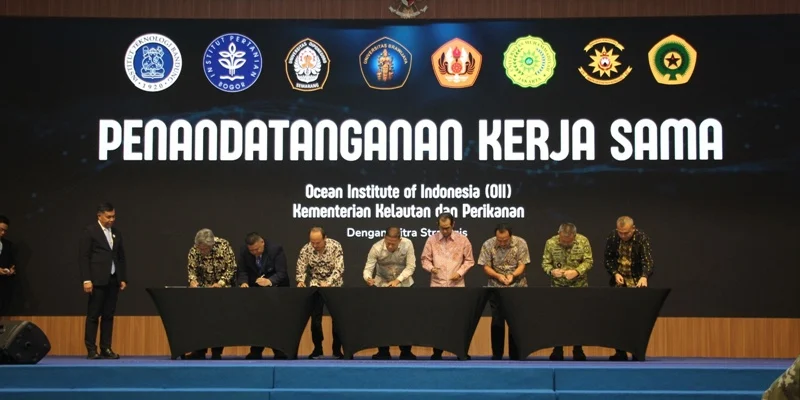
Central Jakarta, Indonesia – In a landmark event marking a pivotal moment for Indonesia’s maritime future, the Ocean Institute of Indonesia (OII) was officially inaugurated on Tuesday, July 21, 2026, at the Ministry of Marine Affairs and Fisheries (KKP) Ballroom. This strategic establishment represents a comprehensive transformation and consolidation of KKP’s eleven existing vocational education institutions, aiming to elevate the nation’s human capital in the marine and fisheries sectors to globally competitive standards. The ceremony was presided over by an impressive array of six "Merah Putih Cabinet" ministers, underscoring the government’s unified commitment to harnessing Indonesia’s vast oceanic potential.
The distinguished lineup of ministers included Sakti Wahyu Trenggono, Minister of Marine Affairs and Fisheries; Zulkifli Hasan, Coordinating Minister for Food Affairs; Brian Yuliarto, Minister of Higher Education, Science, and Technology; Rini Widyantini, Minister of State Apparatus Utilization and Bureaucratic Reform; Rachmat Pambudy, Minister of National Development Planning/Head of the National Development Planning Agency (Bappenas); and Arif Satria, Head of the National Research and Innovation Agency (BRIN). They were joined by Didit Herdiawan Ashaf, Vice Minister of Marine Affairs and Fisheries; Edwin, Vice Chief of Staff of the Indonesian Navy; and I Nyoman Radiarta, Head of the KKP’s Human Resources Development and Empowerment Agency for Marine Affairs and Fisheries (BPPSDM KP), further highlighting the cross-sectoral importance of this initiative.
A New Dawn for Maritime Education: The Genesis of OII
The inauguration of OII is not merely an administrative restructuring but a profound strategic move by the Indonesian government to respond to the evolving demands of the global maritime industry and to fulfill the nation’s ambitious "Blue Economy" agenda. As the world’s largest archipelagic nation, with an exclusive economic zone spanning millions of square kilometers and immense marine biodiversity, Indonesia’s prosperity is intrinsically linked to its oceans. However, realizing this potential requires a skilled, innovative, and adaptable workforce. For too long, the existing vocational schools, while contributing significantly, operated somewhat independently, leading to potential redundancies and inconsistencies in curriculum, facility standards, and ultimately, graduate preparedness.
Minister Sakti Wahyu Trenggono, in his address, revealed that the vision to unify the KKP’s eleven vocational education units had been a long-standing aspiration, meticulously planned and prepared. "I have visited all of them. I observed their internal environments and so on. I wanted them to be unified," Minister Trenggono stated, emphasizing the depth of his personal involvement and the strategic imperative behind the consolidation. He noted that his observations at these campuses underscored the urgent need for facility upgrades and a complete overhaul of the education system. The goal is to synchronize the curriculum and institutional missions with current industrial developments and to significantly enhance global competitiveness.
The eleven institutions now unified under the OII banner are: the Polytechnic of Fisheries Business Experts; the Marine and Fisheries (KP) Polytechnics in Dumai, Karawang, Pangandaran, Sidoarjo, Jembrana, Kupang, Bone, Bitung, and Sorong; and the Wakatobi Community Academy. These institutions, strategically located across the archipelago, each bring a unique regional context and history of contribution to marine vocational training. Their integration into a single, cohesive entity is expected to foster greater synergy, resource optimization, and standardized excellence across all campuses.
A Long-Anticipated Vision: Ministerial Perspectives
Minister Trenggono articulated a clear vision for the transformed institution: "I want this to be unified, thoroughly changed, from its educational curriculum to its ultimate goals. Because I will look at the measures of its success." This statement highlights a results-oriented approach, focusing on tangible outcomes that benefit the industry and the nation. He further elaborated on the future operational model of OII, envisioning specialized centers of excellence within each campus. For instance, one campus might focus exclusively on advanced fishing techniques, another on sustainable aquaculture practices, and yet another on sophisticated fish processing and value addition. This specialization is designed to prevent overlap and ensure that each OII campus develops deep expertise in a particular domain, producing highly specialized graduates. This approach is a significant departure from the previous model where multiple campuses might offer similar general programs, potentially diluting the quality of instruction and limiting the depth of specialized knowledge.
The support for OII transcended departmental boundaries, with several key cabinet members offering their endorsements. Coordinating Minister for Food Affairs, Zulkifli Hasan, expressed strong backing for the OII’s formation, recognizing its crucial role in enhancing human resource quality, particularly in the marine and fisheries sectors. He highlighted President Prabowo Subianto’s significant attention and commitment to the development of these sectors, indicating a top-down mandate for strengthening the maritime economy and ensuring national food security, of which skilled human capital is a cornerstone.
Minister of Higher Education, Science, and Technology, Brian Yuliarto, lauded the establishment of OII as a "pivot that will give birth to superior research and human resources, and the backbone of marine and fisheries innovation." He passionately articulated his hope that "OII can become a Center of Excellence that can produce new startups in the marine and fisheries sector." This perspective emphasizes the institute’s role not just in education but also in fostering an ecosystem of innovation, entrepreneurship, and technological advancement that can drive economic growth and create new opportunities within the blue economy.
The involvement of Minister Rini Widyantini from the Ministry of State Apparatus Utilization and Bureaucratic Reform signals an intent to ensure that OII operates with optimal efficiency and effectiveness, aligning with broader government reforms aimed at enhancing public service and human resource development within state institutions. Her presence suggests a commitment to streamline administrative processes, ensure accountability, and promote a culture of performance within the newly formed institute. Similarly, Minister Rachmat Pambudy from Bappenas underscores the strategic integration of OII into the nation’s long-term development plans, ensuring that its goals and outcomes are aligned with national priorities for sustainable growth and resource management. The participation of Arif Satria, Head of BRIN, highlights the critical link between education, research, and innovation. BRIN’s collaboration will be instrumental in ensuring that OII’s curriculum and research agenda are informed by the latest scientific advancements and contribute directly to solving real-world challenges in the marine and fisheries sectors.
The presence of Vice Minister Didit Herdiawan Ashaf from KKP and Vice Chief of Staff of the Indonesian Navy Edwin further solidified the cross-sectoral support. Vice Minister Ashaf’s involvement signifies continued high-level oversight from the leading ministry, ensuring the successful implementation and integration of OII within KKP’s broader mandate. Vice Admiral Edwin’s participation highlights the strategic importance of marine education for national security and maritime defense, emphasizing the interconnectedness of marine resource management, scientific research, and naval operations in safeguarding Indonesia’s territorial integrity and economic interests.
Pillars of Progress: Curriculum, Graduates, and Future-Proofing
I Nyoman Radiarta, Head of BPPSDM KP, elaborated on the operational specifics of the OII, emphasizing its core pedagogical approach. He reported that the eleven higher education institutions now unified as OII will implement vocational learning with an industry-based curriculum. A distinctive feature of their enrollment policy is that 100 percent of the students are children of marine and fisheries stakeholders, such as fishermen, fish farmers, salt farmers, and processing workers. This ensures that the education directly benefits the communities most reliant on the marine sector, fostering generational knowledge transfer and empowering future leaders from within these critical communities.
Since their inception, the institutions under KKP have collectively graduated an impressive 27,819 individuals. A significant majority of these graduates have successfully entered the world of business and industry, demonstrating the effectiveness of their vocational training in meeting market demands. This track record provides a strong foundation for OII, which aims to further enhance graduate employability and entrepreneurial capacity through its revamped curriculum and specialized focus areas. The OII will focus on developing not just technically proficient individuals but also critical thinkers, problem-solvers, and innovators who can adapt to the rapidly changing technological landscape of the marine and fisheries industries. This includes embracing digital technologies, advanced data analytics for fisheries management, and sustainable aquaculture practices that minimize environmental impact.
The envisioned specialization across OII campuses will create distinct centers of expertise. For instance, a campus in a region known for its rich tuna fishing grounds might develop cutting-edge programs in responsible large-pelagic fisheries management, advanced navigation, and post-harvest handling for export quality. Another campus situated near major aquaculture hubs could focus on bio-floc technology, genetic improvement of aquatic species, disease prevention, and sustainable feed production. A third, perhaps closer to industrial processing zones, could specialize in food technology, value-added product development, quality control, and international certification standards for marine products. This targeted approach will ensure that graduates possess deep, practical knowledge relevant to specific segments of the marine economy, making them highly sought after by employers and equipped to launch their own ventures.
Forging Alliances: National and International Partnerships

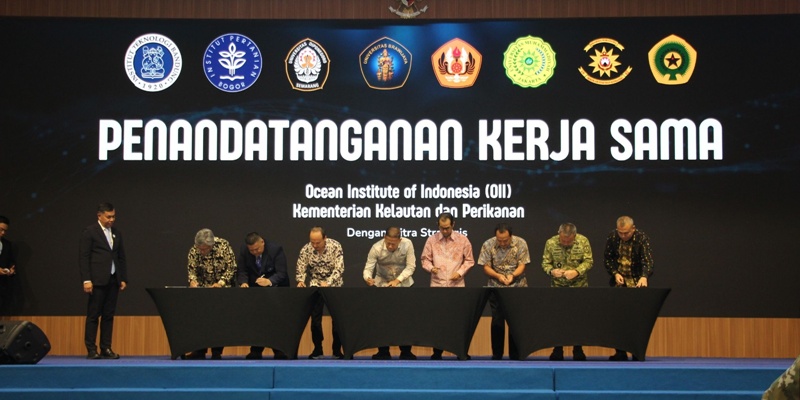
A crucial element of OII’s strategy for achieving excellence is its robust network of partnerships. During the inauguration ceremony, KKP, through BPPSDM, formalized cooperation agreements with a diverse range of academic and industry partners. These collaborations are designed to enrich the curriculum, facilitate joint research, provide practical training opportunities, and ensure that OII remains at the forefront of marine science and technology.
The list of collaborating institutions includes prestigious national universities such as Institut Teknologi Bandung (ITB), Institut Pertanian Bogor (IPB), Universitas Brawijaya, Universitas Diponegoro, Universitas Padjadjaran, Universitas Muhammadiyah Jakarta, Universitas Nusa Cendana, Universitas Andalas, Universitas Hasanuddin, Universitas Sam Ratulangi, Universitas Pattimura, Sampoerna University, and Universitas Trunojoyo. These partnerships will enable OII students and faculty to engage in interdisciplinary research, access advanced laboratory facilities, and benefit from diverse academic perspectives. For example, collaboration with ITB could focus on marine engineering and technology, while IPB’s expertise could bolster OII’s programs in aquaculture and fisheries management.
Beyond academia, OII has also forged strategic alliances with military and international private sector entities. The partnership with Sekolah Staf dan Komando Angkatan Laut (Naval Staff and Command College) highlights the importance of integrating marine vocational education with national maritime security objectives, potentially offering training in maritime domain awareness, navigation, and marine conservation enforcement.
Crucially, OII has also secured international partnerships with Onamu Co.Ltd. and Vogo Group and Globit Co. Ltd., both from South Korea. These collaborations are particularly significant given South Korea’s advanced marine technology and aquaculture industries. Such international linkages are expected to facilitate knowledge transfer, introduce cutting-edge technologies and best practices, and open doors for OII graduates to gain international exposure and employment opportunities. These partnerships could lead to joint research projects on sustainable fishing gear, smart aquaculture systems, or advanced marine biotechnology, positioning OII as a regional leader in marine innovation.
Strategic Implications and the Road Ahead
The establishment of the Ocean Institute of Indonesia carries profound strategic implications for the nation. It is a bold statement of Indonesia’s commitment to nurturing its "Blue Economy," an economic model that emphasizes sustainable use of ocean resources for economic growth, improved livelihoods, and ocean ecosystem health. By investing heavily in human capital development, OII will be instrumental in realizing the full potential of Indonesia’s marine resources in a sustainable and equitable manner. This includes not only enhancing productivity but also combating illegal, unreported, and unregulated (IUU) fishing, promoting responsible aquaculture, and developing high-value marine products.
OII’s mission directly contributes to several United Nations Sustainable Development Goals (SDGs), particularly SDG 4 (Quality Education), SDG 8 (Decent Work and Economic Growth), SDG 9 (Industry, Innovation, and Infrastructure), and SDG 14 (Life Below Water). By providing high-quality, industry-relevant education, OII will empower a new generation of professionals who can drive innovation, create jobs, and ensure the long-term health of Indonesia’s marine ecosystems. The institute is poised to become a critical engine for economic diversification, moving beyond traditional resource extraction towards a knowledge-based, innovation-driven marine economy.
The institute’s focus on fostering startups is a forward-looking strategy that could lead to the emergence of new marine technologies, sustainable seafood processing methods, and innovative solutions for ocean conservation. These startups, incubated within the OII ecosystem, could become significant contributors to Indonesia’s GDP and enhance its global competitiveness in the marine sector. Furthermore, the specialized training and research capabilities of OII could position Indonesia as a regional hub for marine science and technology, attracting international collaboration and investment.
However, the journey ahead for OII will not be without its challenges. Ensuring consistent quality across all campuses, continually updating curricula to meet rapidly evolving industry demands, attracting and retaining top-tier faculty, and securing sustainable funding will be critical for its long-term success. The integration of diverse institutional cultures and administrative systems will also require careful management. Nevertheless, with the strong backing of multiple government ministries and a clear vision, the Ocean Institute of Indonesia is exceptionally well-positioned to become a transformative force, not only for Indonesia’s marine and fisheries sectors but also for the broader socio-economic development of the nation. It represents a strategic investment in the future, promising to unlock the immense potential of Indonesia’s oceans through the power of education, research, and innovation.