
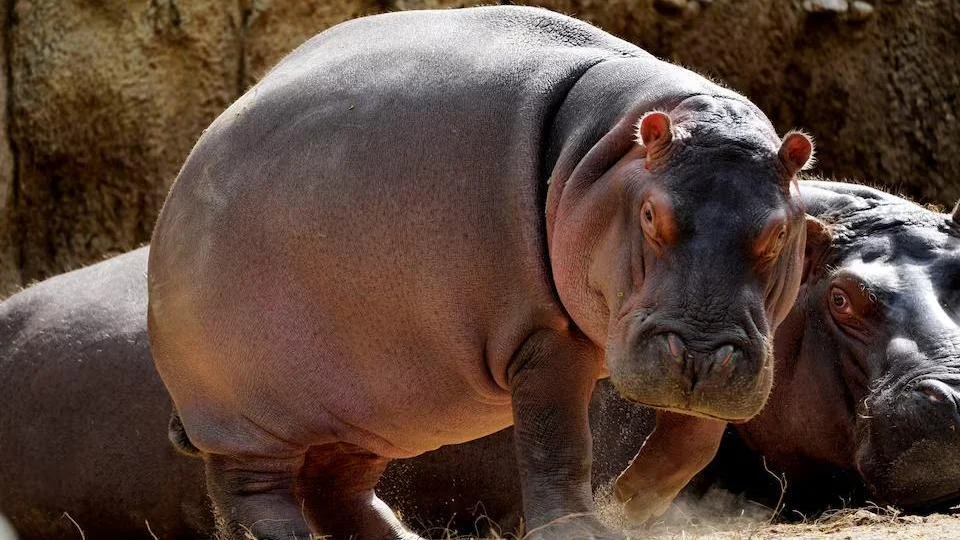
CINCINNATI — The global wildlife community and the city of Cincinnati are in profound mourning following the sudden death of Fiona, the iconic and internationally beloved Nile hippopotamus who captured hearts worldwide since her perilous, premature birth in 2017. Fiona passed away at the age of nine at the Cincinnati Zoo & Botanical Garden after consuming a knitted winter hat that inadvertently found its way into her enclosure, triggering a severe and ultimately unsurpassable medical emergency.
The heartbreaking announcement was made public by zoo administration on Thursday, November 19, 2026. According to institutional records and statements from veterinary staff, Fiona underwent a rigorous, round-the-clock intensive care regimen led by a dedicated team of specialized veterinarians and animal care professionals. Despite exhausting every available advanced medical intervention, the physical toll of the obstruction proved insurmountable.
Dave Jenike, Director of the Cincinnati Zoo, expressed the deep shock and sorrow felt by the entire institution in a statement following the incident. "We are still in profound shock, and none of us anticipated this tragic outcome," Jenike said. "Fiona fought valiantly until her body simply could not fight anymore. Her resilience defined her entire life, and she maintained that fighting spirit until her final moments."
The Unforeseen Chain of Events: Chronology of the Incident
The sequence of events that led to Fiona’s untimely death began more than a week prior to her passing. According to Michelle Curley, Director of Communications for the Cincinnati Zoo, the incident originated when a visitor’s knitted hat was accidentally tossed or dropped near the perimeter of the hippo habitat.
The trajectory of the object involved an extraordinary confluence of physical factors. The hat was initially propelled into the air directly in front of the outdoor habitat. Gusts of air or the mechanical draft from an overhead ceiling fan caught the garment, carrying it through a narrow architectural gap situated directly above the indoor viewing window—a zone deemed entirely inaccessible during normal visitor operations.
Once inside the enclosure, the knitted fabric was ingested by Fiona. Zoo officials confirmed that upon discovering the presence of a foreign object within the habitat and monitoring changes in the animal’s behavior and health metrics, veterinary teams immediately initiated diagnostic evaluations and retrieval protocols.
However, medical teams faced insurmountable physical barriers. Due to Fiona’s massive adult size—tipping the scales at more than 900 kilograms (approximately 2,000 pounds)—traditional surgical intervention was ruled out. The physiological risks associated with general anesthesia and major abdominal surgery on an adult hippo of her mass carry an exceptionally high mortality rate, often exceeding the risks of conservative medical management. Despite repeated, non-invasive therapeutic efforts to encourage the passage or removal of the knitted material through endoscopic and medical clearance procedures, the fibrous material created a fatal internal blockage.
Veterinary Insights and the Perils of Foreign Objects in Captive Wildlife
The tragedy has brought renewed focus to the intricate challenges of veterinary medicine involving megavertebrates and the critical dangers posed by human-introduced debris in zoological settings.
Dr. Gabriella Flacke, a prominent wildlife veterinarian from Zoo Miami who was not directly involved in Fiona’s treatment but spoke on the broader implications of such incidents, explained the severe physiological cascade triggered by the ingestion of foreign textiles. "When a large herbivore consumes non-digestible items like synthetic or woolen fabrics, the material does not break down via normal gastrointestinal processes," Dr. Flacke noted. "Instead, it migrates through the digestive tract until it creates a complete mechanical obstruction in the intestines."
This blockage rapidly leads to ischemia—the restriction of blood supply to surrounding tissues—which subsequently causes tissue necrosis, internal perforation, and systemic sepsis. Furthermore, Dr. Flacke emphasized that the thick hide and immense internal anatomy of a hippopotamus complicate diagnostic imaging and surgical access. "Operating on a 900-kilogram animal requires specialized heavy-duty equipment, hoisting mechanisms, and massive doses of pharmacological agents that severely depress cardiovascular function. The margin for error is razor-thin," she added.
The incident underscores ongoing challenges faced by modern zoological institutions regarding visitor proximity, barrier integrity, and the unpredictable nature of airborne or dropped objects in open-air or mixed-viewing habitats.
From Miracle Preemie to Global Icon: The Life and Legacy of Fiona
To fully understand the weight of the grief surrounding Fiona’s passing, one must look back at her extraordinary origins. Born six weeks premature on January 24, 2017, Fiona entered the world weighing a fragile 13 kilograms (29 pounds)—less than half the normal birth weight for a Nile hippopotamus, which typically ranges from 25 to 45 kilograms.
Her survival was an unprecedented statistical anomaly. Newborn hippos must be able to swim immediately to reach the surface for air and nurse from their mothers. Fiona, however, was too weak to stand, lacked the muscular coordination required to swim against water currents, and could not nurse from her mother, Bibi. Recognizing the dire situation, the Cincinnati Zoo assembled a 24-hour specialized care unit dubbed "Team Fiona," consisting of keepers and veterinarians who worked around the clock to provide warmth, bottle feedings, and physical therapy.
As daily updates, photographs, and video logs of Fiona learning to swim, stand, and interact with her caregivers were published online, the young hippo transcended local zoo attraction status to become an international cultural phenomenon. The hashtag #TeamFiona galvanized millions of social media users across the globe. Viral videos capturing her playful personality during bath time, combined with touching footage of keepers reading fan mail to the growing calf, endeared her to a worldwide audience.
Her immense popularity transformed her into a symbol of perseverance. The Cincinnati Zoo developed an extensive line of educational merchandise and commemorative items bearing her likeness, while local businesses in Cincinnati embraced her as an unofficial mascot of the city’s spirit.
Public Mourning and Official Tributes
News of Fiona’s death sent immediate shockwaves through the Greater Cincinnati community and resonated across international platforms where her journey had been followed for nearly a decade.
Within hours of the announcement, local residents and devoted fans began gathering outside the Cincinnati Zoo’s main gates, laying floral tributes, handwritten cards, and commemorative artwork near the public statues depicting Fiona and her mother, Bibi.
City officials and civic leaders issued formal statements recognizing her cultural and economic impact on the region. Cincinnati Mayor Aftab Pureval released a heartfelt tribute, acknowledging her unique role in uniting the community. "Fiona was never just an animal living in a local habitat; she was a symbol of tenacity, grace, and pure unadulterated joy for our entire city," Mayor Pureval stated. "She taught us how to fight against the odds, and her presence made Cincinnati a warmer, more connected place. Her loss leaves an empty space in our collective heart."
Thane Maynard, Executive Director of the Cincinnati Zoo, echoed these sentiments, reflecting on her miraculous beginnings and enduring legacy. "From the very first day of her life, she was a living miracle that defied conventional biology," Maynard said. "While her life was cut tragically short, the impact she made on millions of people worldwide is immeasurable. Fiona will be remembered and deeply cherished for generations to come."
Broader Implications and Safety Warnings for Zoos Worldwide
In the wake of the tragedy, animal welfare organizations and veterinary associations have renewed calls for heightened public vigilance regarding visitor conduct at modern zoological parks.
Dr. Jennifer Quammen, President of the American Veterinary Medical Association, emphasized the critical importance of adhering to safety barriers and managing personal belongings responsibly in the vicinity of animal habitats. "Modern zoos are designed to provide immersive, naturalistic experiences while maintaining strict safety protocols, but no barrier is completely immune to human error or unexpected environmental factors," Dr. Quammen cautioned. "We must continually remind the public that items which appear entirely harmless or insignificant to us—such as a hat, a piece of plastic, or food wrappers—can prove instantly fatal when introduced into an animal’s environment."
As the Cincinnati Zoo community transitions from active mourning to commemorating her remarkable nine-year life, conservationists hope that Fiona’s legacy will extend beyond her viral fame and serve as a lasting reminder of the shared responsibility humans hold in protecting wildlife within human-managed environments. The zoo has announced plans to establish a permanent educational memorial honoring Fiona, focused on wildlife conservation, veterinary science, and the importance of responsible visitor engagement.

