
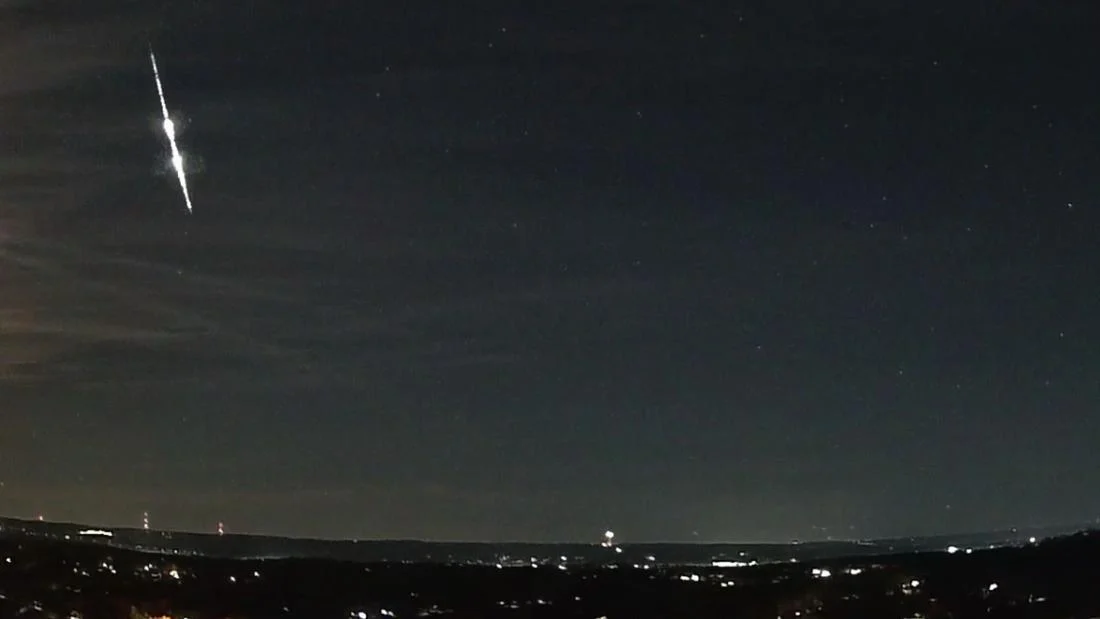
Astronomy enthusiasts and stargazers across the Indonesian archipelago are preparing for the upcoming celestial event as the Northern Taurid meteor shower reaches its anticipated peak on the nights of November 11 through November 12, 2026. This annual astronomical occurrence, recognized for producing occasional exceptionally bright meteors known colloquially as fireballs, offers a unique opportunity for both professional and amateur astronomers to observe orbital debris left behind in the inner solar system. While the shower is characterized by a relatively modest rate of observable shooting stars per hour, its distinct characteristics and association with striking fireball meteors make it a notable event on the annual astronomical calendar.
The Northern Taurid meteor shower is one of two distinct streams of shooting stars that emerge from the broader Taurid complex during the autumn months in the Northern Hemisphere, which corresponds to the transitional weather periods in Southeast Asia. These meteors originate from dust particles and larger fragments shed by Comet 2P/Encke, a periodic comet with the shortest known orbital period of any known comet in our solar system, completing an orbit around the Sun approximately every 3.3 years. As Earth in its annual orbit passes through this broad, diffuse stream of cosmic debris, the particles collide with the upper atmosphere at high velocities, vaporizing and creating the luminous streaks of light observed from the surface of the planet.
Understanding the Taurid Complex: Southern Versus Northern Streams
To fully comprehend the nature of the November display, astronomers separate the broader Taurid phenomenon into two distinct phases: the Southern Taurids and the Northern Taurids. The Southern Taurid meteor shower typically becomes active earlier in the season, with its radiant point situated within the constellation Cetus. This southern component is active from roughly September 10 through November 20 each year. Observers tracking the Southern Taurids generally note that its radiant point rises shortly after evening twilight, around 6:30 PM local time, and sets before the onset of morning twilight, around 4:30 AM. Historically, the Southern Taurid stream is particularly famous for producing a higher frequency of fireballs—exceptionally bright meteors that can outshine standard stars and planets, sometimes casting shadows on the ground.
In contrast, the Northern Taurid meteor shower shifts its radiant point toward the constellation Taurus, from which the entire complex derives its name. The active window for the Northern Taurids spans from October 20 to December 10, with the peak activity reliably occurring during the second week of November. While the Southern Taurids already passed their peak intensity earlier in the month on November 4-5, the focus now turns squarely to the northern counterpart as it reaches maximum visibility on the nights of November 11 and 12, 2026.
Detailed Schedule and Observation Parameters for 2026
The precise window for optimal viewing of the Northern Taurid meteor shower in Indonesia spans the late-night hours of November 11 into the early morning hours of November 12, 2026. Astronomers classify the Northern Taurids as a low-intensity meteor shower. Under ideal dark-sky conditions, observers can typically expect to see an average zenithal hourly rate (ZHR) of approximately five meteors per hour.
Despite this seemingly low count compared to major showers like the Perseids or Geminids, which can produce dozens or even hundreds of meteors per hour, the Taurids command attention due to the physical nature of the particles involved. The debris stream contains a higher proportion of larger, pebble-sized and boulder-sized fragments rather than microscopic dust grains. This physical composition is what frequently results in the dramatic fireball events that compensate for the lower overall frequency of sightings.
For observers situated across Indonesia—ranging from Sumatra in the west to Papua in the east—the timing of the observation is crucial. The optimal viewing window begins after midnight, local time, when the constellation Taurus climbs to its highest elevation in the night sky. As the radiant point ascends higher above the horizon, the perspective angle improves, allowing the atmosphere to capture meteors entering from various trajectories with greater clarity.
Observational Guidelines and Practical Recommendations
To maximize the chances of successfully viewing the Northern Taurid meteor shower, astronomical societies and observational institutions emphasize several standard practices. First and foremost, urban light pollution remains the primary obstacle for city dwellers. Observers are strongly encouraged to travel away from the brightly lit metropolitan centers of major Indonesian cities such as Jakarta, Surabaya, or Medan, seeking out rural locations, coastal areas, or designated dark-sky parks where artificial illumination is minimal.
Specialized optical equipment, such as telescopes or binoculars, is generally unnecessary and counterproductive for meteor watching. Telescopes restrict the field of vision to a tiny fraction of the sky, drastically lowering the probability of catching a fast-moving meteor. Instead, astronomers recommend wide-angle, naked-eye observation.
A successful viewing session requires the human eye to undergo dark adaptation, a physiological process that takes approximately 20 to 30 minutes in total darkness. Observers should avoid looking at mobile phone screens, flashlights, or other bright white lights during this period, as even a momentary exposure resets the eye’s sensitivity to darkness. If illumination is required for reading charts or setting up equipment, red-filtered light is traditionally utilized to preserve night vision. Furthermore, because viewing requires extended periods of looking upward, comfort is a key factor; reclining lawn chairs, sleeping mats, and weather-appropriate clothing or blankets are standard equipment for field astronomers.
Scientific Context and Historical Background of Comet 2P/Encke
The scientific significance of the Taurid meteor stream extends far beyond its visual appeal. The parent body, Comet 2P/Encke, was formally discovered in 1786 by French astronomer Pierre Méchain, though its orbital characteristics were not fully calculated until 1819 by German mathematician and astronomer Johann Franz Encke, who recognized its short-period nature and linked it to previous historical comet sightings.
Over centuries of orbital evolution, the debris associated with Comet 2P/Encke and associated large bodies within the complex has spread out into a massive, complex orbital ribbon. Astrodynamicists and planetary scientists have noted that the Taurid complex contains not only cometary dust but potentially remnants of a larger precursor asteroid or extinct comet that broke apart thousands of years ago. This theory is supported by the density and structural strength of some Taurid fireballs, which suggest they contain rockier material than the fragile, porous dust typically shed by active comets.
Space agencies and planetary defense researchers monitor the Taurid complex with heightened interest due to a phenomenon known as the "Taurid resonant swarm." During certain decades, Earth passes through denser concentrations of larger meteoroids within the stream, potentially increasing the flux of centimeter-to-meter-sized objects. While the 2026 shower represents a standard annual passage through the background stream with an expected intensity of five meteors per hour, continuous monitoring helps scientists refine models of near-Earth object distributions and orbital mechanics in the inner solar system.
Implications for Public Engagement and Educational Outreach
Celestial events such as the Northern Taurid meteor shower serve an important role in public education and scientific literacy across Indonesia. Local planetariums, university astronomy departments, and amateur astronomy clubs frequently utilize these occurrences to engage the public, particularly students and young adults, in the study of space science.
Public viewing campaigns organized during peak meteor shower nights encourage communities to step outside and reconnect with the natural night sky, fostering an appreciation for astronomy and environmental conservation, particularly the reduction of unnecessary artificial lighting, often referred to as light pollution. Educational initiatives surrounding the event emphasize that while meteor showers are predictable and scientifically understood, they provide a tangible, awe-inspiring connection to the broader cosmos.
As the nights of November 11 and 12 approach, weather forecasts across the Indonesian archipelago will dictate local visibility. Meteor observers remain hopeful for clear skies free of heavy cloud cover or precipitation, which remain the only terrestrial variables capable of obstructing an otherwise routine, yet deeply fascinating, annual passage through the cosmic debris of the inner solar system.
