
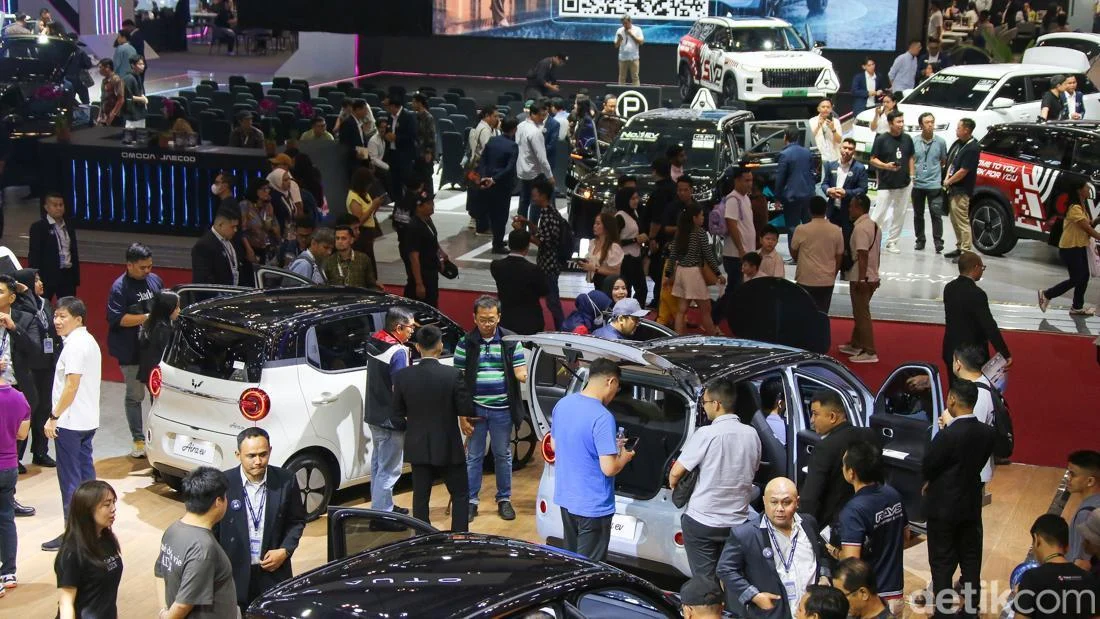
The Indonesian automotive industry is navigating a complex recovery phase as the Association of Indonesia Automotive Industries (Gaikindo) signals that the national car sales target for 2026 is on track to be surpassed, even as the market struggles to return to the psychologically significant milestone of one million units. With a target set at 850,000 units for the year, data covering the period from January through October 2026 reveals a resilient, albeit cautious, consumer landscape. As the year draws to a close, industry stakeholders remain optimistic about the final quarter’s performance, driven by a wave of new product launches and aggressive promotional strategies.
Performance Analysis: The Road to 850,000 Units
According to the latest figures released by Gaikindo, the automotive sector has demonstrated steady momentum throughout the first ten months of 2026. Cumulative sales for the January-October period reached 760,476 units in wholesale terms (factory-to-dealer), while retail sales—representing actual purchases by consumers—stood at 758,653 units.
To successfully meet the annual projection of 850,000 units, the industry must move approximately 89,524 additional units during the final two months of the year. This requires a monthly wholesale average of roughly 45,000 units for November and December. Historically, the fourth quarter has served as a catalyst for the Indonesian automotive market. The confluence of year-end exhibitions, aggressive manufacturer discounts, and the clearing of inventory ahead of the new calendar year typically creates a surge in buying interest. Industry analysts note that these end-of-year incentives are critical for manufacturers looking to minimize carry-over stock and improve their year-end financial statements.
The Strategic Role of Affordable Models
The primary driver behind the 2026 sales performance has been the strategic shift by manufacturers toward the entry-level and mid-range segments. Jongkie Sugiarto, Chairman of Market Development at Gaikindo, emphasized that the Indonesian consumer remains highly price-sensitive, with the vast majority of demand concentrated on vehicles priced below Rp300 million.
"The market responds instinctively when manufacturers introduce new models that are both technologically current and financially accessible," Sugiarto stated during a press briefing in South Jakarta. The influx of new brands and updated iterations of popular nameplates—particularly in the Low Cost Green Car (LCGC) and compact SUV categories—has successfully stimulated demand. By maintaining a pricing structure that aligns with the purchasing power of the middle class, manufacturers have managed to sustain transaction volumes despite broader economic headwinds.
This phenomenon underscores a fundamental tenet of the Indonesian market: affordability is the single most significant factor in fleet and personal vehicle acquisition. When the gap between utility and price is bridged effectively, the market demonstrates a high elasticity for growth.
The "One Million Unit" Barrier and Macroeconomic Constraints
While exceeding the 850,000-unit target is viewed as a positive development, Gaikindo acknowledges that the industry remains short of the "one million unit" benchmark that characterized the pre-pandemic era. Reaching this volume requires more than just new product variety; it necessitates a stable macroeconomic environment.
Several external factors continue to dictate the speed of market recovery. Key among these are:
- Economic Growth: The strength of the domestic economy directly correlates with consumer confidence. A stable GDP growth rate is essential for encouraging households to take on long-term credit obligations, such as automotive loans.
- Exchange Rate Volatility: As a significant portion of automotive components in Indonesia are imported or priced in foreign currency, fluctuations in the Rupiah exchange rate directly impact production costs and, consequently, final vehicle prices.
- Interest Rate Environments: The automotive industry in Indonesia is heavily dependent on financing. Over 70% of vehicle purchases are conducted through credit facilities. Any upward pressure on the central bank’s benchmark interest rate translates to higher monthly installments, which can effectively price out a segment of the potential buyer pool.
Sugiarto noted that while the industry is eager to return to the million-unit mark, it must remain realistic about the current constraints. "We are hopeful for a positive trajectory every year. We monitor the macroeconomic indicators, including financing rates and inflation, as these are the pillars that support our industry’s growth," he added.
Chronology of the 2026 Market Recovery
The performance of the automotive sector in 2026 can be categorized into three distinct phases:
- Q1 2026: The Adjustment Period. The market began the year with cautious optimism, as manufacturers focused on stabilizing supply chains and adjusting to the introduction of updated emissions standards. Sales volumes remained modest as dealers monitored consumer sentiment.
- Q2-Q3 2026: The New Model Offensive. During the mid-year period, several major manufacturers launched refreshed product lineups. This period saw a noticeable uptick in foot traffic at regional dealerships, particularly for fuel-efficient models.
- Q4 2026: The Year-End Push. Entering the final stretch, the focus shifted to clearing inventory and achieving internal company targets. The presence of year-end sales events and the anticipation of new tax regulations for the coming year have further incentivized buyers to complete their transactions before December 31.
Comparative Context: Learning from History
In historical context, the Indonesian automotive market reached its peak in 2013, with sales figures exceeding 1.2 million units. The subsequent decade has seen significant volatility, driven by the global pandemic, supply chain disruptions in the semiconductor industry, and shifts in consumer preference toward electric vehicles (EVs).
The current effort to maintain an 850,000-unit pace is considered a "normalization" phase. It reflects a market that has learned to operate under conditions of higher interest rates and increased competition. The entry of new, non-traditional players—specifically from China and other parts of Asia—has intensified the competition, forcing legacy manufacturers to innovate on both price and feature sets.
Implications for Stakeholders
For automotive manufacturers, the implication of the 2026 data is clear: local production and local pricing are the keys to market dominance. Brands that have successfully localized their production processes have been better shielded from exchange rate volatility and have been able to pass on cost savings to consumers.
For the government, the automotive sector remains a cornerstone of the manufacturing industry. The performance of this sector is closely watched by policymakers as a barometer for industrial output and employment stability. Incentives aimed at the automotive sector, such as luxury goods sales tax (PPnBM) adjustments or infrastructure development for EVs, are often calibrated based on the health of the industry as reported by Gaikindo.
For consumers, the immediate outlook remains favorable. The abundance of options in the sub-Rp300 million segment provides a competitive environment where buyers can compare features, safety ratings, and after-sales service packages before committing to a purchase.
Conclusion and Future Outlook
As the industry prepares for the close of 2026, the sentiment is one of cautious, measured optimism. While the million-unit threshold remains an elusive goal for the immediate future, the consistent performance in the face of macroeconomic challenges suggests a resilient market.
Gaikindo’s role in providing this data-driven oversight serves as a vital bridge between manufacturers, regulators, and the public. By focusing on the fundamentals—affordable, high-quality, and readily available products—the Indonesian automotive industry is positioning itself for a more stable and sustainable growth phase in the years to come. The goal for 2027 will likely involve expanding the total addressable market through further diversification of product offerings and continued advocacy for a supportive economic policy framework.
As Jongkie Sugiarto concluded, the industry’s success is intrinsically linked to the broader economic health of the nation. "If the macroeconomic factors remain conducive, we are optimistic that we can continue to climb. We want to see the market grow, not shrink, and we will continue to work with all stakeholders to ensure that the automotive sector remains a vibrant part of the Indonesian economy."
