
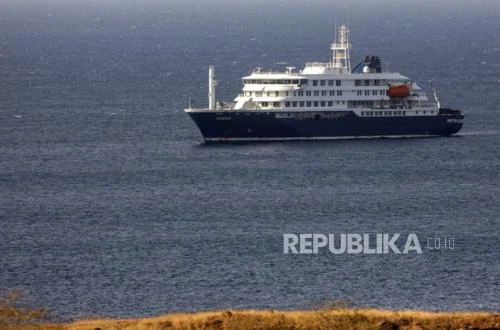
The luxury expedition cruise ship MV Hondius, en route from Ushuaia, Argentina, to Cape Verde off the coast of West Africa, has been embroiled in a severe medical emergency following the deaths of three passengers and several others falling critically ill, all suspected to be victims of a hantavirus outbreak. The incident, which has sent ripples of concern through the international travel and public health communities, transformed a voyage of discovery into a harrowing ordeal for those aboard. As of May 5, 2026, health authorities in Cape Verde and international bodies are coordinating a comprehensive response to contain the spread and investigate the source of the rare and often fatal zoonotic virus.
The MV Hondius, operated by Oceanwide Expeditions, is renowned for its voyages to remote polar and subpolar regions, offering passengers unparalleled access to pristine natural environments. Its current itinerary, a transatlantic repositioning journey following a season in the Antarctic, was considered routine until the sudden onset of severe symptoms among several individuals. The initial reports from the ship’s medical team indicated a cluster of respiratory and hemorrhagic cases, rapidly escalating in severity and leading to the first fatalities. The crew immediately initiated emergency medical protocols, including isolation of affected passengers and enhanced sanitization measures across the vessel, as the ship expedited its journey towards the nearest suitable port for medical assistance.
The Voyage Turned Crisis: Aboard the MV Hondius
The MV Hondius, a modern vessel built in 2019, boasts advanced medical facilities for an expedition ship, a necessity given the remote nature of its usual routes. However, the sudden and severe nature of the illness overwhelmed initial capabilities, leading to an urgent appeal for external medical guidance and support. The journey, typically a tranquil passage across vast oceans, became a race against time as the ship’s medical personnel grappled with an unfamiliar and aggressive pathogen. Passengers reported a growing sense of unease and fear as the number of critical cases mounted, with the ship’s captain making regular announcements about the deteriorating health situation and the ongoing efforts to secure assistance.
Upon receiving the distress call, maritime and health authorities in the region, including the World Health Organization (WHO) and regional Centers for Disease Control (CDCs), initiated a coordinated response. The decision was made for the MV Hondius to proceed directly to Cape Verde, where medical teams and public health officials were mobilized to meet the vessel. This swift action was crucial to provide advanced medical care for the critically ill and to begin the intricate process of epidemiological investigation and contact tracing. The disembarkation process in Cape Verde was meticulously planned, involving specialized medical personnel in full personal protective equipment to prevent any potential onward transmission to the local population or healthcare workers.
Hantavirus: A Silent, Deadly Zoonotic Threat
Hantavirus, the suspected culprit behind the MV Hondius outbreak, is a genus of viruses carried by rodents. Unlike many other infectious diseases, hantavirus is primarily transmitted to humans through contact with aerosolized rodent urine, droppings, or saliva. This typically occurs when humans inhale airborne particles from contaminated environments, or less commonly, through direct contact with infected rodents or their bites. Crucially, most hantaviruses are not known to spread from person to person, which is a vital piece of information for containment strategies during an outbreak.
There are several types of hantaviruses, each associated with specific rodent hosts and geographical regions, and causing two main clinical syndromes: Hantavirus Pulmonary Syndrome (HPS) and Hemorrhagic Fever with Renal Syndrome (HFRS). The symptoms observed on the MV Hondius, particularly the severe respiratory distress and hemorrhagic manifestations, suggest a highly virulent strain, possibly related to types prevalent in the Americas, such as Sin Nombre virus (SNV), which causes HPS, or Old World hantaviruses responsible for HFRS.
HPS, predominantly found in the Americas, begins with flu-like symptoms, including fever, muscle aches, fatigue, headaches, and gastrointestinal issues. However, it rapidly progresses to severe respiratory complications, as the virus causes capillaries in the lungs to leak, filling the lungs with fluid. This leads to acute respiratory distress and can be fatal, with mortality rates ranging from 30% to 50%. HFRS, more common in Europe and Asia, also starts with fever, headaches, and muscle pain, but progresses to kidney failure, severe bleeding (hemorrhage), and shock. Both syndromes require intensive medical support, as there is no specific antiviral treatment for hantavirus infection. Treatment focuses on managing symptoms and supporting vital organ functions.
A Chronology of Alarm and Response
The precise timeline of the outbreak on the MV Hondius is under intensive investigation, but an initial chronology can be inferred from available reports:
- Early April 2026: MV Hondius departs Ushuaia, Argentina, following its Antarctic season, embarking on a transatlantic repositioning cruise.
- Mid-April 2026: Several passengers begin to report non-specific flu-like symptoms, initially managed by the ship’s medical team as common travel ailments.
- Late April 2026: The condition of some passengers rapidly deteriorates, exhibiting severe respiratory distress, high fevers, and signs of hemorrhagic complications. The ship’s medical staff recognize a pattern indicative of a more serious, possibly viral, pathogen.
- April 29, 2026: The first fatality is recorded on board. Emergency medical protocols are activated, including isolating symptomatic passengers and enhancing ship-wide sanitization. The ship’s captain contacts maritime authorities and international health organizations, declaring a medical emergency.
- April 30, 2026: Two more passengers succumb to the mysterious illness. International health agencies, including the WHO, issue preliminary alerts and begin coordinating with relevant national health ministries. Epidemiological experts provide remote guidance to the ship’s medical team.
- May 1, 2026: The MV Hondius diverts course, accelerating its journey towards Cape Verde, identified as the most suitable port for a rapid and comprehensive medical response due to its infrastructure and proximity.
- May 3, 2026: Preliminary laboratory tests, conducted with samples airlifted from the ship, confirm the presence of hantavirus, narrowing down the suspected pathogen. This allows for more targeted medical interventions and public health planning.
- May 5, 2026: The MV Hondius arrives in Cape Verde. A meticulously orchestrated disembarkation process begins, with critically ill passengers immediately transferred to specialized medical facilities. Health screening is conducted for all remaining passengers and crew, and epidemiological teams board the vessel to commence a thorough investigation into the source of the outbreak.
Echoes from History: The Long Shadow of Hantavirus
While the outbreak on the MV Hondius brings hantavirus into sharp contemporary focus, its history stretches back millennia. Records from ancient China, dating back to the first millennium CE, describe syndromes consistent with what is now known as HFRS. These early accounts highlight the long-standing interaction between humans and rodents, and the resultant health risks.
In more recent history, hantavirus was once proposed as a possible cause of "trench nephritis" during World War I (1914-1918), a debilitating kidney condition that affected soldiers in the trenches. While later research largely debunked this specific link for trench nephritis, it underscored the historical presence of rodent-borne diseases in military contexts. Observations during the 1930s among Japanese and Russian soldiers along the Manchurian and Soviet borders described a mysterious illness with viral characteristics. Although the specific link to hantavirus and rodent transmission was not yet understood, these early clinical studies provided crucial insights into the symptomatology of the disease.
The pivotal moment in the understanding of hantavirus came during the Korean War (1951-1954). Thousands of United Nations soldiers, particularly those on the front lines, were struck down by a mysterious illness. Symptoms were severe: intense headaches, high fever, chills, loss of appetite, vomiting, uncontrolled bleeding, and critical dysfunction of the heart and kidneys. This "Korean Hemorrhagic Fever" killed hundreds and infected approximately 3,200 personnel, baffling military doctors and researchers.
It wasn’t until 1978 that Dr. Ho-Wang Lee and his colleagues in South Korea made the groundbreaking discovery. They isolated the causative virus from a striped field mouse (Apodemus agrarius) caught near the Hantan River, a significant river in the region where many soldiers had fallen ill. This discovery not only identified the pathogen but also revealed its rodent origin, leading to the naming of the virus after the river: Hantavirus. Subsequent research confirmed that the soldiers were likely exposed through inhaling dust contaminated with dried feces and urine from infected rodents, a common scenario in field operations.
Globally, hantaviruses gained significant attention in the Western Hemisphere with the 1993 "Four Corners" outbreak in the southwestern United States, which identified Sin Nombre virus and the distinct Hantavirus Pulmonary Syndrome (HPS). This outbreak highlighted the emergence of hantavirus in North America and underscored the importance of rodent control and public awareness in endemic areas.
Official Response and Public Health Mobilization
The hantavirus outbreak on the MV Hondius has triggered a multi-faceted response from various stakeholders:
- Oceanwide Expeditions (Cruise Line): The company has issued a statement expressing profound condolences to the families of the deceased and concern for those critically ill. They have pledged full cooperation with all health authorities, emphasizing their commitment to passenger and crew safety. Immediately, they initiated an internal investigation, focusing on potential points of rodent entry on the ship, supply chain checks, and a comprehensive review of their biosecurity and pest control protocols. Future voyages are under review, with potential postponements or route adjustments depending on the outcome of the investigation and public health advisories.
- Cape Verdean Health Authorities: Upon the ship’s arrival, local health authorities took immediate charge of the public health response. This includes establishing isolation facilities for suspected cases, providing critical medical care, and initiating a rigorous contact tracing effort for all disembarked passengers and crew. Local public health advisories have been issued, urging vigilance and reporting of any suspicious symptoms, although the lack of human-to-human transmission for most hantaviruses reduces the risk of community spread from this specific incident.
- World Health Organization (WHO): The WHO is actively monitoring the situation, providing technical guidance to Cape Verdean authorities, and facilitating international coordination. Their role includes risk assessment, information sharing among member states, and offering laboratory support for diagnostics and strain identification. The incident serves as a stark reminder of the global health security challenges posed by zoonotic diseases and the necessity of robust surveillance systems.
- Argentine Authorities: As the port of origin, Argentine health and port authorities are conducting investigations into the MV Hondius’s departure procedures, focusing on pest control measures at the port and potential contamination of supplies loaded onto the vessel. This aims to identify any weaknesses in biosecurity that could have allowed rodents to board.
- Flag State Authorities: The MV Hondius likely sails under the flag of a specific nation (often the Netherlands for Oceanwide Expeditions). The flag state’s maritime and health regulatory bodies would also be involved in the investigation, ensuring compliance with international health regulations and maritime safety standards.
Implications for Global Travel and the Cruise Industry
The hantavirus outbreak on the MV Hondius carries significant implications for the global travel industry, particularly the expedition cruise sector:
- Passenger Confidence: Such incidents can severely impact passenger confidence in the safety and hygiene of cruise travel, potentially leading to a downturn in bookings, especially for voyages to remote destinations where medical assistance might be delayed.
- Biosecurity Protocols: The incident will undoubtedly prompt a rigorous review and enhancement of biosecurity and pest control protocols across the cruise industry. This includes more stringent inspections of vessels, cargo, and port facilities, particularly in regions known to harbor rodent populations or where hantaviruses are endemic.
- Medical Preparedness: The challenges of managing a severe infectious disease outbreak in a confined environment like a cruise ship, especially far from advanced medical facilities, highlight the need for enhanced medical preparedness, including specialized training for shipboard medical staff and rapid evacuation capabilities.
- Zoonotic Disease Awareness: The outbreak serves as a potent reminder of the constant threat posed by zoonotic diseases and the need for continuous surveillance, research, and public health education. As human activity expands into natural habitats, the risk of encountering novel or re-emerging zoonotic pathogens increases.
- Economic Impact: Beyond the immediate costs of emergency response, medical care, and investigation, there could be significant economic repercussions for the cruise line, including potential compensation claims, reputational damage, and lost revenue from cancelled or adjusted itineraries.
Looking Forward
As investigations continue into the MV Hondius hantavirus outbreak, the focus remains on understanding precisely how the rodents, and subsequently the virus, managed to get on board. This incident underscores the intricate web of global health, environmental factors, and international travel. The lessons learned from this tragic event will be critical in shaping future public health strategies and biosecurity measures, aiming to prevent similar crises from unfolding on the high seas and ensuring the safety of travelers venturing into the world’s most remote and pristine environments. The global health community will be closely watching the outcome of the Cape Verdean response and the subsequent findings to fortify defenses against the silent, yet deadly, threats posed by zoonotic pathogens like hantavirus.

