
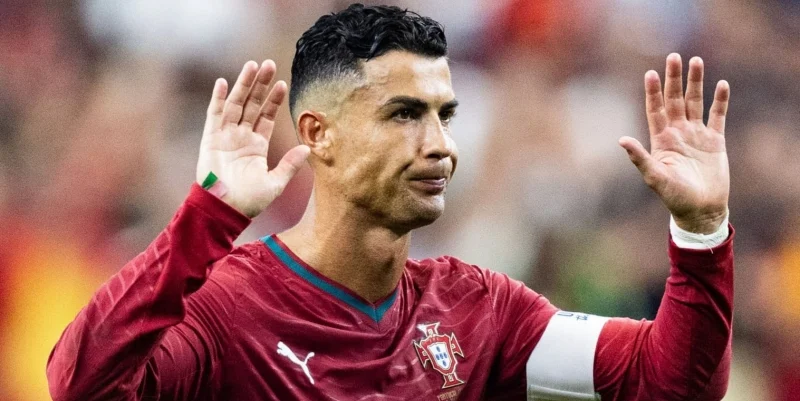
The recent FIFA World Cup, a tournament initially heralded as Cristiano Ronaldo’s final, definitive quest for the sport’s most coveted trophy, ultimately unfolded into an unpredictable saga, punctuated by unexpected twists, dramatic comebacks, and a profound shift in football’s dominant narratives, culminating in a captivating final between Argentina and Spain. This edition, initially perceived as a potential coronation for the Portuguese legend, instead became a testament to resilience, the enduring brilliance of Lionel Messi, and the emergence of a new vanguard, leaving many fans in a state of emotional flux as their allegiances and long-held beliefs were challenged by the unfolding drama.
Ronaldo’s Final Crusade: A Pre-Tournament Outlook
Heading into the tournament, the narrative surrounding Cristiano Ronaldo, then 39 years old, was unequivocally one of a final, monumental effort to secure the one major international title that had eluded his illustrious career. Portugal, a nation with a rich footballing heritage, had high hopes, fueled by a squad brimming with talent across all positions, from seasoned veterans to burgeoning young stars. Ronaldo’s pre-tournament form, while perhaps not at its peak, still showed flashes of his characteristic brilliance, and his unparalleled drive remained a formidable asset. The draw for the group stage appeared remarkably benevolent, placing Portugal in Group C alongside Colombia, the Democratic Republic of Congo, and Uzbekistan. Analysts widely predicted a straightforward passage to the knockout rounds, with many likening their prospective path to an "expressway" – a smooth journey designed to conserve energy for the tougher challenges ahead. Projections from major sports analytics firms had Portugal reaching at least the semi-finals, with a 15% chance of lifting the trophy, a figure buoyed by their perceived easy draw and the depth of their squad.
A Stuttering Start: Portugal’s Group Stage Ordeal
However, the reality on the pitch quickly diverged from pre-tournament expectations. Portugal’s opening match against the Democratic Republic of Congo, a team ranked significantly lower by FIFA, proved to be an early indicator of underlying tensions and tactical inconsistencies. Despite dominating possession with 68% and registering 18 shots, only 5 of which were on target, Portugal struggled to break down a well-organized Congolese defense. The match ended in a frustrating 1-1 draw, with Portugal salvaging a point through a late equalizer after falling behind in the first half. Ronaldo, usually the focal point of Portugal’s attack, appeared uncharacteristically subdued, failing to register a significant impact on the game, a stark contrast to his usual prolificacy. This performance immediately drew criticism from pundits and fans alike, raising questions about team cohesion and the burden of expectation. "It felt like the team was playing with the weight of the world on their shoulders," remarked former Portuguese international Luís Figo in a post-match interview, "The fluidity wasn’t there, and Ronaldo, despite his effort, couldn’t conjure the magic we’ve come to expect."
Adding to Portugal’s early woes, Lionel Messi, Ronaldo’s long-standing rival, delivered a sensational performance just hours earlier in Argentina’s opening fixture, netting a hat-trick against Australia in a dominant 4-0 victory. This stark contrast intensified the scrutiny on Ronaldo and Portugal, fueling the ongoing "GOAT" debate and amplifying the pressure on the Portuguese captain.
Portugal managed to secure a vital 2-0 victory against Uzbekistan in their second group game, with Ronaldo contributing an assist, but the performance was still far from convincing, lacking the dynamism expected of a tournament favorite. The final group stage match against Colombia, a team known for its attacking flair, proved to be another stumbling block. Despite a spirited effort, Portugal was held to a 2-2 draw, conceding a late equalizer. This result, combined with Colombia’s superior goal difference, meant Portugal finished second in Group C, a development that dramatically altered their projected path through the knockout stages.
The Perilous Path: Navigating the "Group of Death" in the Knockouts
Finishing as group runners-up condemned Portugal to a significantly more challenging route in the knockout rounds, diverting them from the "expressway" to what was immediately dubbed the "path of death." Instead of potentially avoiding footballing giants until the semi-finals, Portugal found themselves in a bracket alongside powerhouses such as Spain, Belgium, the Netherlands, France, and Germany. This unforeseen turn of events heightened the stakes and tested the squad’s mental fortitude.
Their Round of 16 encounter pitted them against Croatia, a formidable opponent renowned for its midfield prowess and tournament pedigree. The match was a tense, cagey affair, ultimately decided by a moment of individual brilliance and a touch of controversy. Portugal secured a narrow 1-0 victory in extra time, with the winning goal coming from a contentious penalty decision in the 117th minute, converted by Bernardo Silva. The decision, hotly debated by Croatian players and fans, saw the VAR system scrutinizing a marginal handball claim for several minutes before the spot-kick was awarded. While Portugal progressed, the manner of their victory did little to quell doubts about their overall performance.
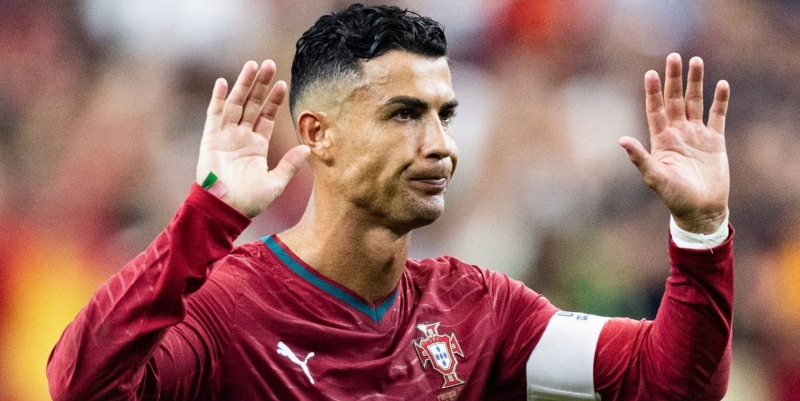
The quarter-final draw presented an even more daunting challenge: a clash with arch-rivals Spain, a team that had demonstrated exceptional form throughout the tournament. The Iberian derby was a tactical masterclass from both sides, characterized by fierce midfield battles and moments of individual brilliance. The match remained goalless for 89 minutes, a testament to the defensive discipline and goalkeeping heroics on both ends. However, the dream of Ronaldo and Portugal was dramatically shattered in the 90th minute. A swift counter-attack initiated by Ferran Torres on the right wing saw him deliver a pinpoint cross into the box. Gerard Moreno, reacting quickest, connected with a powerful header that found the back of the net, sending the Spanish contingent into raptures. The final whistle blew moments later, confirming Spain’s 1-0 victory and Portugal’s elimination from the tournament. Ronaldo, visibly distraught, collapsed to the turf, tears streaming down his face – a poignant image marking what was almost certainly his final World Cup appearance. The dream of lifting the trophy had ended prematurely, leaving a void in his illustrious career.
The Messi Narrative: Resilience and Redemption
As Portugal exited, the spotlight intensified on Argentina and Lionel Messi, who, despite some initial wobbles, seemed to be building momentum. Messi’s journey was a stark contrast to Ronaldo’s early struggles. While Ronaldo faced criticism for his subdued performances, Messi, even when his team faltered, consistently provided moments of game-changing magic.
Argentina’s group stage, though successful, wasn’t without its tense moments. Their second group match against Egypt served as a microcosm of their tournament: a team that struggled collectively but was repeatedly rescued by its captain. Egypt, displaying unexpected resilience, took a shock 2-0 lead by the 78th minute, putting Argentina on the brink of a disastrous result. The atmosphere among Ronaldo’s fans, eager for Messi to share a similar fate, was palpable, with social media abuzz with premature declarations of Argentina’s impending exit. However, Messi, summoning a performance of sheer will, first delivered a sublime assist for Lautaro Martínez in the 82nd minute, then scored a spectacular solo goal in the 87th minute to level the score. The comeback was completed in the 90th minute when Enzo Fernández, capitalizing on Messi’s renewed energy, unleashed a powerful strike to secure a dramatic 3-2 victory. This match, in particular, showcased Messi’s ability to shoulder immense pressure and inspire his teammates when all seemed lost.
Argentina continued their progression, overcoming a resilient Switzerland in the Round of 16 with a clinical 2-0 victory, where Messi scored one and assisted another. Their quarter-final clash against England, a fixture with historical resonance, provided yet another nail-biting encounter. England, buoyed by a robust midfield and direct attacking play, took a 1-0 lead in the 65th minute, once again pushing Argentina to the brink. For Ronaldo’s supporters, a glimmer of hope re-emerged, only to be extinguished by Messi’s relentless pursuit of victory. With just six minutes remaining in regular time, Messi, not through a goal, but through two incisive assists, orchestrated Argentina’s turnaround. His first, a perfectly weighted through-ball, allowed Julián Álvarez to equalize in the 84th minute. Moments later, a dazzling run and a delicate chip set up Alexis Mac Allister for the winning goal in the 89th minute, securing a 2-1 triumph and a place in the semi-finals. Each time Argentina faced adversity, Messi emerged as the undeniable catalyst for their survival and progression.
The Shifting Sands of Fan Allegiance and the "GOAT" Discourse
The unfolding narrative of the World Cup created a fascinating psychological dynamic among football fans, particularly those deeply invested in the Ronaldo-Messi rivalry. Following Portugal’s exit, a significant portion of Ronaldo’s fanbase openly, and often vociferously, shifted their allegiances, not necessarily to another team, but to the hope that Messi and Argentina would also fail. This phenomenon manifested in temporary, almost desperate, support for Argentina’s opponents at various stages.
When Egypt led Argentina 2-0, there was a surge of triumphalism among Ronaldo’s supporters, quickly followed by bitter silence when Messi orchestrated the comeback. The same pattern repeated against Switzerland and, most notably, against England. This emotional rollercoaster was extensively documented across social media platforms, giving rise to familiar refrains. Accusations of a "fixed World Cup," claims of "paid referees," and the assertion that Argentina was "FIFA’s golden child" became common parlance, reflecting a deep-seated frustration and the inability to accept Messi’s continued success in the absence of Ronaldo. These sentiments, while lacking factual basis, highlighted the intense emotional investment fans held in the individual rivalry.
The Grand Finale: A Clash of Eras and Legacies
As the tournament progressed to its climax, the final itself presented an unenviable dilemma for many, especially those who had hoped for a different outcome. Argentina, propelled by Messi’s heroics, faced Spain, a team that represented a different kind of footballing evolution. Spain, under the guidance of a pragmatic coach and boasting a squad blended with experienced campaigners and prodigious young talent, had reached the final through a combination of tactical discipline and moments of individual brilliance, notably from their 19-year-old sensation, Lamine Yamal.
The final was set: Argentina vs. Spain. It was a confrontation laden with symbolic significance. On one side, Messi, the aging maestro, making what was likely his final bid for the World Cup, a chance to definitively crown his unparalleled career. On the other, Spain, embodying a new generation, spearheaded by a player like Yamal, who at 19, already possessed a European Championship title and was now on the cusp of adding a World Cup.
For fans of Ronaldo, the choice was agonizing. To support Argentina meant potentially witnessing Messi ascend to an even higher pedestal in the GOAT debate, making any argument for Ronaldo’s supremacy significantly harder. To support Spain meant cheering for a team whose triumph would further elevate the already impressive resume of Lamine Yamal, a player whose meteoric rise at such a young age presented a new challenge to the established order of footballing greatness, a new "prince" potentially overshadowing the "kings." The final thus became a no-win scenario for a segment of the footballing public, underscoring the profound impact of the tournament’s unexpected turns.
Tactical Insights and Key Performances
Beyond the emotional narratives, the tournament offered rich tactical insights. Portugal’s struggles, for instance, were partly attributed to a lack of tactical flexibility and an over-reliance on individual moments rather than cohesive team play, especially evident in their midfield’s inability to consistently control games against more organized opponents. Their defensive vulnerabilities were exposed, conceding goals in crucial moments.
Argentina, conversely, demonstrated remarkable adaptability. While often relying on Messi’s genius, coach Lionel Scaloni crafted a system that allowed other players like Enzo Fernández, Julián Álvarez, and Alexis Mac Allister to flourish, providing crucial support and goal-scoring contributions. Their resilience under pressure, particularly in coming back from deficits, highlighted a strong team spirit and mental fortitude.
Spain’s journey to the final was a masterclass in controlled possession and defensive solidity. They averaged over 65% possession in their knockout matches, demonstrating patience and precision in their build-up play. The emergence of Lamine Yamal was particularly noteworthy; his dribbling ability, vision, and composure under pressure belied his age, marking him as a genuine heir apparent in the global football landscape. His performances consistently earned him high ratings from statistical analysis sites, often surpassing seasoned veterans.
The Broader Impact: A Generational Shift Confirmed
This World Cup, irrespective of the final’s outcome, solidified its place as one of the most compelling in recent memory. It was a tournament that transcended mere football matches, becoming a profound commentary on legacy, resilience, and the relentless march of time in sport. The early exit of Cristiano Ronaldo, the dramatic perseverance of Lionel Messi, and the stunning rise of talents like Lamine Yamal underscored a significant generational shift. It symbolized the fading era of two unparalleled individual rivalries and the exciting dawn of new talent, ready to seize the mantle.
The final between Argentina and Spain was not just a battle for the World Cup trophy; it was a metaphorical "Finalissima" – a clash between the champions of America and a resurgent European powerhouse. It pitted a team celebrated for its attacking prowess and individual brilliance against a squad built on defensive solidity and youthful exuberance. For the pure football enthusiast, detached from the partisan allegiances of the GOAT debate, this World Cup offered everything: drama, controversy, stunning comebacks, and the undeniable sense of witnessing history unfold. It was, indeed, a tournament for the ages, forever etched in the annals of football as the moment the old guard battled fiercely, while the new guard firmly announced its arrival. The world of football, while perhaps saddened by the end of one era, was undeniably thrilled by the promise of another.

