
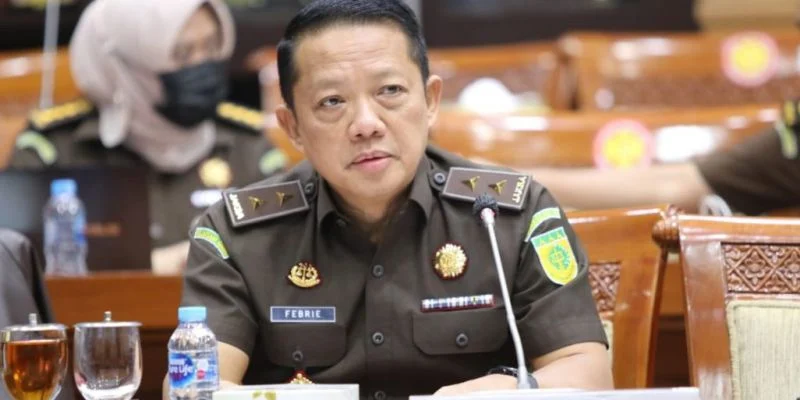
Febri Adriansyah has been officially designated as a suspect in three high-profile cases involving alleged corruption and money laundering (TPPU) related to coal procurement for PT PLN, investment irregularities at PT Asabri, and operational malfeasance at PT Krakatau Steel. This development has sparked significant controversy and legal scrutiny, as Adriansyah’s designation reportedly occurred without him ever being summoned for examination or clarification by the investigating authorities. The alleged procedural misstep immediately drew sharp criticism from legal experts, who argue that such an action fundamentally violates constitutional principles and established legal precedents designed to safeguard the rights of individuals in the Indonesian justice system.
Background to the High-Profile Corruption Allegations
The three cases in which Febri Adriansyah has been implicated represent some of Indonesia’s most significant and complex corruption challenges, each carrying immense public and financial implications. The alleged corruption in PT PLN coal procurement touches upon the nation’s energy security and the integrity of its vital state-owned enterprises. PLN, the state-owned electricity company, is central to Indonesia’s infrastructure, and any irregularities in its procurement processes can lead to inflated costs, inefficient operations, and ultimately, higher burdens on taxpayers and consumers. The scale of coal procurement for PLN is vast, involving billions of dollars annually, making it a high-risk area for corruption. Past investigations into PLN-related corruption have often revealed intricate networks of illicit dealings, involving both internal and external parties.
Similarly, the PT Asabri case has garnered extensive national attention due to its staggering financial losses and the direct impact on military and police personnel. Asabri is a state-owned social insurance company that manages the pension funds and social benefits for members of the Indonesian National Armed Forces (TNI) and the National Police (Polri). The corruption scandal, which came to light in recent years, involved massive losses amounting to trillions of rupiah due to alleged fraudulent investments, stock manipulation, and misuse of funds. The initial estimates of losses in the Asabri case were upwards of IDR 23 trillion (approximately USD 1.5 billion), making it one of the largest financial scandals in Indonesian history. The revelation sent shockwaves through the public, particularly among the armed forces and police, raising serious questions about the oversight and management of state-owned financial institutions.
The third case involving PT Krakatau Steel, a state-owned steel producer, highlights vulnerabilities within strategic national industries. As Indonesia’s largest steel company, Krakatau Steel plays a critical role in supporting industrial development and national infrastructure projects. Allegations of corruption typically revolve around procurement of raw materials, project tenders, or investment decisions, leading to significant financial detriment for the state and undermining the competitiveness of the national industry. These cases collectively underscore a persistent challenge in Indonesia’s fight against corruption: ensuring transparency, accountability, and adherence to legal procedures across all levels of government and state-owned enterprises.
Legal Challenge: Violation of Constitutional Due Process
The designation of Febri Adriansyah as a suspect without prior examination has ignited a fierce debate about the adherence to due process in Indonesia’s legal system. Professor Suparji Ahmad, a prominent Professor of Law at Universitas Al Azhar Indonesia (UAI), unequivocally stated that such a procedure, if true, directly contravenes the Constitution as interpreted by the Constitutional Court (Mahkamah Konstitusi, MK). "The suspect designation potentially violates Constitutional Court Decision Number 21/PUU-XII/2014 and the principle of due process of law enshrined in the New Criminal Procedure Code (KUHAP Baru)," Suparji told reporters on Saturday, July 18, 2026. This assertion places the Attorney General’s Office (Kejaksaan Agung), which handles these cases, under intense scrutiny regarding its investigative methods.
Professor Suparji emphasized that robust law enforcement is not merely about identifying perpetrators of criminal acts but equally about ensuring that every procedural step is meticulously followed in accordance with the Constitution and the principles of a rule-of-law state. He asserted that it is improper for an individual to be named a suspect without first being summoned and examined. The legal basis for this, he explained, extends beyond the existing Criminal Procedure Code (KUHAP) to the Constitutional Court Decision Number 21/PUU-XII/2014, which is final and legally binding.
The Landmark Constitutional Court Decision No. 21/PUU-XII/2014
The Constitutional Court Decision No. 21/PUU-XII/2014, issued on April 28, 2015, fundamentally reshaped the landscape of suspect designation in Indonesia. Prior to this ruling, investigators often interpreted the requirement of "at least two valid pieces of evidence" as sufficient grounds for naming a suspect, sometimes doing so without directly questioning the individual concerned. The MK, however, provided a crucial interpretation, stating that the phrases "initial evidence," "sufficient initial evidence," and "sufficient evidence" must be understood as requiring "at least two valid pieces of evidence accompanied by an examination of the prospective suspect before the individual is officially designated as a suspect."
This ruling was a landmark victory for human rights and due process advocates. It clarified that simply possessing two pieces of evidence is insufficient; the prospective suspect must also be given an opportunity to present their statement or defense. This ensures a more balanced investigative process, providing a crucial check against arbitrary or premature suspect designations. The decision underscores the principle that even at the early stages of an investigation, an individual’s constitutional rights, including the right to be heard, must be respected. The Constitutional Court’s interpretation is legally binding for all law enforcement agencies, including the police and the Attorney General’s Office.
Procedural Implementation: Examination as a Witness
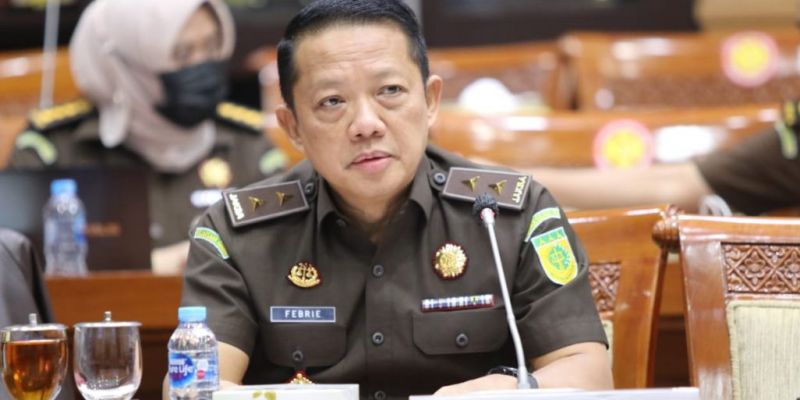
Professor Suparji further elaborated on the practical implementation of the MK ruling. While the KUHAP does not explicitly recognize the term "prospective suspect," in investigative practice, the examination of an individual who is likely to become a suspect is typically conducted in their capacity as a witness. This is because, at that stage, their legal status has not yet formally shifted to that of a suspect. "Thus, in legal practice, examination as a witness before suspect designation serves as an implementation of Constitutional Court Decision Number 21/PUU-XII/2014," he stated. This method ensures that the individual’s testimony is heard and considered before a formal accusation is made, fulfilling the due process requirement without prematurely altering their legal status. It allows investigators to gather crucial information directly from the individual, providing them with a chance to clarify facts or offer their perspective, which could potentially influence the decision to proceed with a suspect designation.
The New KUHAP (Law No. 20 of 2025) and Enhanced Human Rights Protection
The principles enshrined in the Constitutional Court Decision No. 21/PUU-XII/2014 have been further reinforced and codified in the recently enacted New Criminal Procedure Code (Undang-Undang Nomor 20 Tahun 2025). This new legislation places an even stronger emphasis on the protection of human rights (HAM), the presumption of innocence (presumption of innocence), the principle of a fair trial (fair trial), and the delicate balance between the authority of investigators and the constitutional rights of citizens.
The New KUHAP, which came into effect in 2025, represents a significant reform of Indonesia’s criminal justice system. Its provisions aim to modernize legal procedures, enhance transparency, and, critically, ensure that law enforcement agencies operate within a framework that prioritizes individual liberties. By strengthening the procedural safeguards for suspects, including explicit requirements for examination and the right to legal counsel at early stages, the new law seeks to prevent arbitrary actions and uphold the integrity of the investigative process. This legislative development underscores a growing commitment within Indonesia to align its criminal justice practices with international human rights standards, ensuring that even in the pursuit of justice, fundamental rights are not compromised. The case of Febri Adriansyah, therefore, becomes a crucial test of the practical application and enforcement of these enhanced protections under the new legal regime.
Implications for Procedural Validity and Pre-Trial Review (Praperadilan)
Professor Suparji stressed that law enforcement must not merely prioritize effectiveness but also strictly adhere to fair procedures. He warned that a suspect designation made without prior examination as a witness constitutes a serious issue concerning procedural validity. Such an action, he noted, can be legally challenged through the mechanism of praperadilan (pre-trial review). Praperadilan is a vital safeguard in the Indonesian legal system, allowing individuals to challenge procedural aspects of investigations, including the legality of arrests, detentions, and suspect designations. If a praperadilan court finds that the designation of Febri Adriansyah as a suspect was made without proper adherence to the required procedures, particularly the Constitutional Court’s ruling, it could potentially invalidate the suspect status. This would not necessarily mean Adriansyah is innocent of the underlying charges, but it would compel the investigating agency to restart the process correctly, ensuring due process is observed. A successful praperadilan challenge can significantly disrupt a prosecution, erode public confidence in the investigation, and set an important precedent for future cases.
Response from the Attorney General’s Office and Constitutional Rights
Regarding any change in status from witness to suspect in the investigation warrant (sprindik) issued by the Attorney General’s Office (Kejaksaan), Professor Suparji emphasized that law enforcement officials must provide consistent and legally sound explanations. The Attorney General’s Office, as the lead investigative body in these high-profile corruption cases, is expected to address these procedural concerns directly and transparently. Their explanation would need to clarify why Adriansyah was designated without prior examination, or if there were circumstances that they believe legally justified their actions, such as overwhelming evidence that negated the need for an initial witness examination – though such an argument would likely be contentious given the MK ruling.
The certainty of a person’s legal status is a fundamental constitutional right, as guaranteed by Article 28D paragraph (1) of the 1945 Constitution of the Republic of Indonesia (UUD NRI Tahun 1945). This article ensures the right to recognition, guarantee, protection, and fair legal certainty. Any perceived ambiguity or procedural shortcuts in the designation of a suspect can be seen as an infringement upon this core constitutional right. The Attorney General’s Office’s response to these allegations will therefore be crucial not only for the integrity of the Febri Adriansyah case but also for reinforcing public trust in the country’s commitment to constitutional rule and due process in its fight against corruption. The public, along with legal observers, will be closely watching for how the Kejaksaan Agung navigates this procedural challenge while pursuing justice in these significant corruption cases.
Broader Implications and the Future of Anti-Corruption Efforts
The controversy surrounding Febri Adriansyah’s suspect designation highlights a perennial tension in Indonesia’s anti-corruption efforts: the balance between the efficiency of investigations and the rigorous adherence to due process and human rights. While the public and government demand swift and decisive action against corruption, particularly in cases involving massive state losses like PLN, Asabri, and Krakatau Steel, legal experts consistently emphasize that justice must not only be done but must also be seen to be done through fair and lawful means.
A failure to observe established legal procedures, even in high-stakes corruption cases, can undermine the legitimacy of convictions, invite successful legal challenges, and ultimately erode public confidence in the justice system. It reinforces the perception that legal safeguards are selectively applied, or worse, bypassed when expediency is prioritized. This case, therefore, serves as a critical litmus test for the effectiveness of the New KUHAP and the enduring power of the Constitutional Court’s interpretations.
For the anti-corruption movement in Indonesia, ensuring procedural integrity is paramount. While the aggressive pursuit of corrupt actors is necessary, it must be coupled with an unwavering commitment to the rule of law. If the Attorney General’s Office is found to have violated due process in this instance, it could trigger a wave of praperadilan requests in other cases, potentially slowing down investigations and forcing law enforcement agencies to re-evaluate and refine their standard operating procedures. This incident underscores the intricate complexities of legal reform and implementation in a nation striving to uphold democratic principles while combating entrenched corruption. The outcome of the legal challenges surrounding Febri Adriansyah’s status will undoubtedly shape future investigative practices and reinforce the importance of constitutional compliance at every stage of the criminal justice process.

