
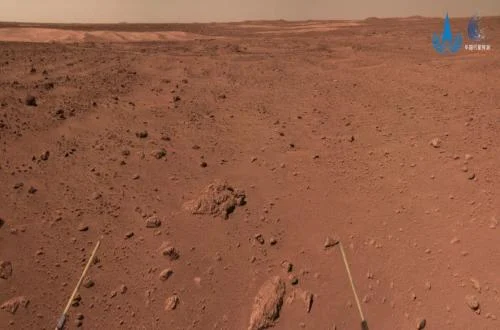
The National Aeronautics and Space Administration (NASA) has officially announced its support and funding for a groundbreaking propulsion system known as the Pulsed Plasma Rocket (PPR), a technology that could potentially shorten the journey to Mars from nine months to a mere sixty days. Developed by Howe Industries, the PPR is currently moving into Phase II of the NASA Innovative Advanced Concepts (NIAC) program. This ambitious project represents a significant leap forward in aerospace engineering, aiming to overcome the logistical and biological hurdles that have stalled human Mars exploration for over half a century. By utilizing high-energy plasma pulses generated through nuclear fission, the PPR promises to deliver high thrust and high specific impulse, a combination previously thought difficult to achieve in a single propulsion system.
According to official statements from NASA, the development of the PPR has the potential to revolutionize space exploration by drastically reducing the risks associated with long-duration spaceflight. Under current chemical propulsion technology, a round-trip mission to Mars could take nearly two years, exposing astronauts to prolonged periods of cosmic radiation and microgravity. The PPR’s ability to complete the transit in two months would not only safeguard human health but also significantly lower the costs and complexity of the mission’s life-support systems. Howe Industries, the Arizona-based firm leading the design, asserts that this technology could be the key to establishing a sustainable human presence on the Red Planet.
Technical Mechanics of the Pulsed Plasma Rocket
The Pulsed Plasma Rocket is a propulsion concept that bridges the gap between traditional chemical rockets and advanced electric propulsion. Traditional rockets provide high thrust but are inefficient in terms of fuel consumption, while electric ion thrusters are highly efficient but produce very low thrust, making them unsuitable for rapid interplanetary transit of heavy crewed vessels. The PPR utilizes a fission-based system where a nuclear reactor generates intense bursts of energy to heat plasma, which is then exhausted through a magnetic nozzle to produce thrust.
In Phase I of the NIAC study, Howe Industries focused on the "pulsed" aspect of the system, demonstrating that the reactor could safely and effectively generate the required plasma bursts. The projected performance metrics are staggering: the PPR is designed to produce up to 10,000 Newtons of thrust with a specific impulse (a measure of fuel efficiency) of 5,000 seconds. This efficiency allows for much larger payloads to be transported, which is essential for carrying the shielding necessary to protect astronauts from Galactic Cosmic Rays (GCRs). As the project enters Phase II, researchers will focus on optimizing the engine design, conducting proof-of-concept experiments, and designing a spacecraft shielded enough to handle the nuclear power source while remaining light enough for rapid acceleration.
A Historical Retrospective: The Long Road to Mars
The dream of sending humans to Mars is not a new phenomenon; it has been a cornerstone of American aerospace ambition since the dawn of the Space Age. However, the path to the Red Planet has been littered with canceled programs, shifting political priorities, and technological "dead ends." Understanding the current excitement surrounding the PPR requires a look back at why previous attempts failed to materialize.
In the 1940s and 1950s, the conceptual foundation for Mars exploration was laid by Wernher von Braun, the architect of the Saturn V rocket. In his 1952 book, Das Marsprojekt (The Mars Project), von Braun outlined a massive expedition involving a fleet of ten spacecraft and a crew of 70. While visionary, the sheer scale and cost of von Braun’s plan were far beyond the capabilities of the era. It did, however, establish Mars as the ultimate "finish line" for space exploration.
The 1960s saw the emergence of Project Orion, perhaps the most radical propulsion concept in history. Led by physicist Freeman Dyson and Theodore Taylor, Project Orion proposed a spacecraft propelled by the detonation of small nuclear bombs behind a massive pusher plate. Theoretically, this "Nuclear Pulse Propulsion" could have reached Mars in weeks and even traveled to the outer planets. However, the project faced two insurmountable obstacles: the 1963 Partial Nuclear Test Ban Treaty, which prohibited nuclear explosions in the atmosphere and space, and NASA’s own safety concerns regarding the launch of hundreds of nuclear devices from Earth’s surface. Project Orion was officially shuttered in 1964.
The Reality Check of 1965 and the Nixon Pivot
In the mid-1960s, optimism was high. NASA scientist Ernst Stuhlinger proposed a mission that would see five crewed ships departing for Mars by the early 1980s. To prepare for this, NASA launched the Mariner 4 probe in 1964. When the probe performed its flyby in July 1965, the images it sent back were a "cold shower" for enthusiasts. Instead of a world with canals or vegetation, Mariner 4 revealed a cratered, moon-like surface with a thin atmosphere and no magnetic field. The realization that Mars was a desolate, radiation-scorched desert tempered political enthusiasm for a multi-billion-dollar human mission.
The 1970s brought the most significant shift in US space policy. Following the success of the Apollo Moon landings, the Space Task Group appointed by President Richard Nixon recommended a bold "Post-Apollo" program that included a Mars landing by 1982. However, the economic strain of the Vietnam War and the Great Society social programs led Nixon to reject the Mars goal. Instead, he approved the Space Shuttle program, which was designed to make access to Low Earth Orbit (LEO) routine but effectively grounded human exploration to the immediate vicinity of Earth for the next thirty years.
Modern Challenges: Radiation and Human Physiology
While the PPR addresses the "time" factor of a Mars mission, it also directly impacts the biological challenges that have long plagued NASA’s planners. Space is a hostile environment, and a nine-month transit using current technology presents three primary risks: radiation, bone density loss, and psychological isolation.
Galactic Cosmic Rays (GCRs) and Solar Particle Events (SPEs) pose a lethal threat to astronauts outside the protection of Earth’s magnetosphere. On a standard 500-day round trip, astronauts would likely exceed their career limits for radiation exposure, significantly increasing the risk of cancer and central nervous system damage. By shortening the trip to 60 days, the PPR reduces the total radiation dose to a fraction of previous estimates, making the mission much safer for the crew.
Furthermore, prolonged exposure to microgravity leads to rapid bone demineralization and muscle atrophy. Even with intensive exercise, astronauts on the International Space Station (ISS) experience significant physical decline. A shorter transit time minimizes these effects, ensuring that when the crew arrives on Mars, they are physically capable of performing the demanding tasks of surface exploration and habitat construction.
Broader Implications and the Future of Deep Space Travel
The funding of the Pulsed Plasma Rocket is part of a broader resurgence in nuclear-enabled space technologies. NASA is currently collaborating with DARPA on the DRACO (Demonstration Rocket for Agile Cislunar Operations) project, which focuses on Nuclear Thermal Propulsion (NTP). While NTP is more mature, the PPR offers even higher performance, representing the "next generation" of nuclear propulsion.
The success of the PPR would have implications far beyond Mars. A high-thrust, high-efficiency engine would enable missions to the asteroid belt, the moons of Jupiter, and even the outer reaches of the solar system. It would transform the solar system into a reachable backyard for scientific inquiry and potential resource extraction.
However, political and regulatory hurdles remain. The deployment of nuclear material in space is subject to strict international treaties and domestic safety protocols. NASA and Howe Industries must demonstrate not only that the engine works, but that it can be launched and operated without risk to the Earth’s environment or the safety of the crew.
Conclusion: A New Era of Exploration
The announcement of the Pulsed Plasma Rocket’s Phase II funding marks a pivotal moment in the history of the US space program. For decades, the goal of reaching Mars has been "twenty years away," a moving target hampered by the limitations of chemical rockets and the shifting winds of political will. By investing in revolutionary technology like the PPR, NASA is signaling a shift toward high-risk, high-reward innovation that could finally bridge the gap between Earth and the Red Planet.
If Howe Industries can prove the viability of the PPR, the 2030s or 2040s may finally see the realization of the dreams of von Braun and the Project Orion scientists. The "two-month mission" is no longer just a science fiction concept; it is a funded engineering project that could redefine humanity’s place in the cosmos. As the PPR moves through its next stages of development, the eyes of the global scientific community will be on NASA to see if this revolutionary engine can finally turn the "Red Planet" into a human destination.

