
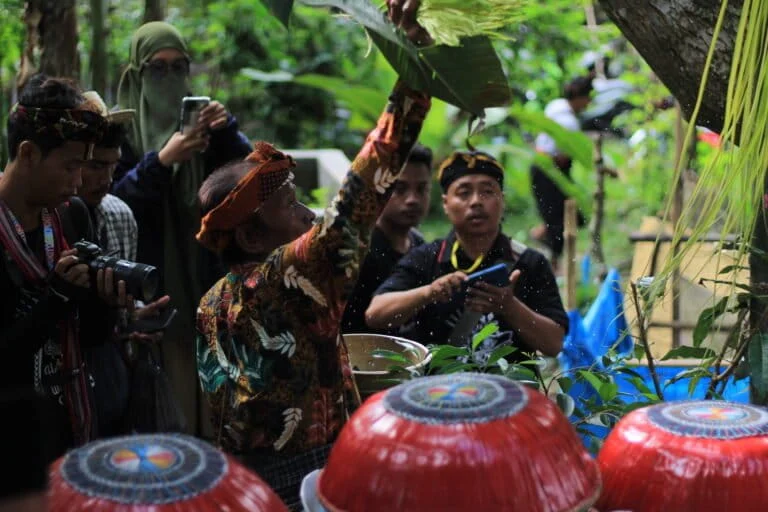
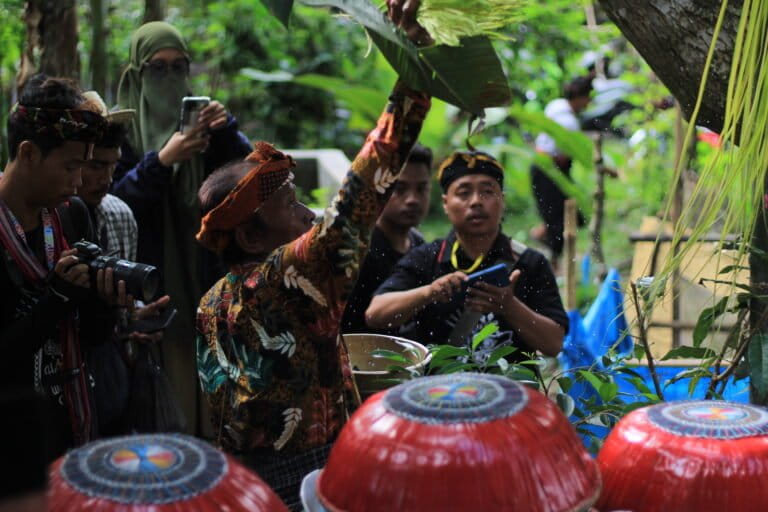
In the quiet village of Desa Kesik, located in the Masbagik District of East Lombok, West Nusa Tenggara, the rhythmic pulse of community life is dictated by the turning of the seasons. As the long, parched stretches of the dry season begin to wane and the first signs of the monsoon approach, the village undergoes a profound transformation. The courtyard of Amaq Marni, a respected 73-year-old customary elder, becomes a hive of activity where piles of rice, sticky rice, and coconuts are meticulously prepared. These are not merely provisions for a feast; they are the symbolic offerings for Nunas Nede, a sacred annual ritual that serves as a vital bridge between agrarian tradition and environmental stewardship.
For the residents of Desa Kesik, whose livelihoods are inextricably linked to the success of their harvests, the arrival of rain is not just a meteorological event—it is a matter of survival. As global climate patterns shift, the community has turned to Nunas Nede as a dual mechanism: a spiritual plea to the divine for the blessing of rain, and a practical, communal reminder of the urgent need to protect the water sources that sustain their existence.
The Anatomy of the Ritual: A Synthesis of Faith and Ecology
The Nunas Nede ceremony is a multi-layered process that begins long before the actual prayers are recited. It starts with a collective pilgrimage to seven distinct natural springs located throughout the village. In the local belief system, these springs are the lifeblood of the region. By collecting water from each of these seven sources and unifying them in a single vessel, the villagers enact a powerful ritualistic symbol of unity, interconnectedness, and the sanctity of natural resources.
Following the collection, the community gathers to engage in collective prayer and dhikr (remembrance). This is followed by a communal meal, a practice that reinforces social cohesion. However, the ritual is far from passive. The spiritual aspect is deeply integrated with tangible environmental action. During the event, the village organizes a comprehensive cleaning of the water sources. Participants work in unison to remove accumulated silt, clear away debris, and repair irrigation channels. Younger generations are tasked with assisting the elders, effectively passing down the manual labor and the philosophical reasoning behind the conservation efforts.
The Philosophy of Interconnectedness
Amaq Marni, who has presided over the ritual for decades, views the encroachment of human activity on nature with growing concern. "Water is not merely a commodity for human consumption; it is the fundamental essence of life for every creature on this earth," Marni explains. "If the springs are compromised, the fields will inevitably fail, and when the fields fail, the very fabric of our community life unravels."
This perspective is codified in the village’s unwritten laws, which function as a local environmental regulatory framework. These customs include strict prohibitions against the felling of specific indigenous tree species and the dumping of waste near catchment areas. The community recognizes a clear ecological correlation: the survival of the forest canopy surrounding the springs is directly proportional to the volume and quality of the water supply. "If we strip away the trees, the water will disappear," Marni warns, echoing the wisdom passed down through generations. "That is the fundamental truth our ancestors left for us, and it is a truth we cannot afford to forget."
Navigating the Climate Crisis: A Growing Urgency
The urgency behind the Nunas Nede ritual has intensified in recent years, driven by the palpable impact of global climate change on Indonesian agriculture. Farmers in East Lombok are reporting significant deviations from historical weather patterns. Historically, the transition from the dry season to the wet season followed a predictable cadence, allowing farmers to synchronize their planting cycles with precision. Today, that predictability has vanished.
Amaq Sati, a lifelong farmer who has participated in the ritual since childhood, notes the confusion that now plagues the agricultural sector. "In the past, the seasons were easy to read. We knew exactly when to prepare the land and when to sow the seeds," Sati observes. "Now, the rains are erratic—sometimes arriving weeks late, sometimes falling with such intensity that they cause soil erosion rather than nourishment. We are often left guessing, and that uncertainty puts our entire annual yield at risk."
The data supports these anecdotal concerns. According to reports from the Indonesian Agency for Meteorology, Climatology, and Geophysics (BMKG), the region has experienced an increase in the frequency of extreme weather events, including prolonged droughts and intensified rainfall, often associated with the El Niño-Southern Oscillation (ENSO) cycles. For smallholder farmers, this represents a significant increase in operational risk, as they lack the advanced infrastructure or financial safety nets to recover from consecutive poor harvests.
Governance and Community Stewardship
Muhamad Kadri, the Head of Desa Kesik, emphasizes that the village’s agricultural system is almost entirely dependent on natural spring irrigation. "We do not have the luxury of industrial-scale water management," Kadri explains. "Our entire economy relies on the health of these natural sources. Protecting them is not just a cultural duty; it is a vital economic strategy."
Under Kadri’s administration, the Nunas Nede ritual is leveraged as a tool for public education. By integrating environmental workshops into the ceremony, the village administration ensures that the younger generation understands the mechanics of watershed protection. This is a deliberate effort to combat the alienation of youth from traditional agricultural practices. "If we do not involve the children now, they will grow up taking water for granted, seeing it only as something that comes out of a pipe," Kadri says. "They need to understand the sweat and the science that goes into ensuring that the water keeps flowing."
Broader Implications for Sustainable Development
The Nunas Nede ritual serves as a compelling case study in how indigenous knowledge can complement modern environmental management. While the ritual is rooted in tradition, its core outcomes—reforestation, waste management, and the maintenance of irrigation infrastructure—align perfectly with contemporary sustainable development goals.
The ceremony also presents an interesting tension between cultural preservation and tourism. As the ritual gains visibility, there is a risk that it could be commodified. However, the residents of Desa Kesik remain vigilant. They have resisted pressure to transform the event into a commercial spectacle, insisting that the primary purpose must remain the maintenance of the village’s water security and the preservation of ancestral wisdom.
The resilience of Desa Kesik is an example of "local adaptation." While global policies often struggle to reach the grassroots level, the community in East Lombok has taken agency over its own environmental future. By treating their natural resources as a common heritage that requires active maintenance, they have built a buffer against the volatility of the climate.
Conclusion: A Legacy for the Future
As the sun sets over the terraced fields of Desa Kesik, the sound of the evening prayer blends with the rustle of trees surrounding the village springs. For the people here, the ritual of Nunas Nede is a testament to the idea that sustainability is not a modern invention, but an ancient practice that has allowed human communities to thrive in harmony with the natural world for centuries.
The ritual is more than a plea for rain; it is a commitment to the future. By maintaining the health of the springs and passing down the knowledge of their management, the villagers are ensuring that when the next generation inherits the land, they will not just inherit soil and seeds, but also the vital, life-sustaining water that makes their way of life possible. In an era of increasing environmental instability, the lessons from Desa Kesik—where the spiritual and the practical are one and the same—offer a profound blueprint for resilience. As the village prepares for another cycle of planting, they do so with the confidence that they have done their part to honor the earth, ensuring that the water will continue to flow for years to come.

