
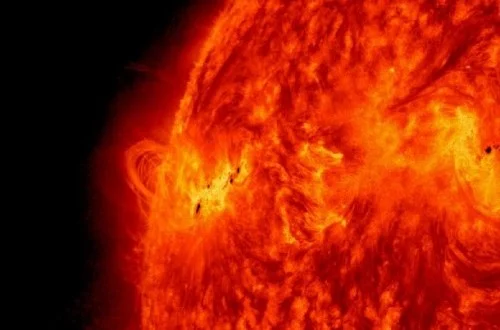
The escalating frequency and intensity of solar storms pose a significant and potentially catastrophic threat to the network of satellites currently orbiting Earth, according to insights shared by the National Research and Innovation Agency (BRIN). During a specialized workshop titled "Getting Closer to Satellite Disturbance Research" held in Jakarta on Tuesday, May 28, 2024, Nizam Ahmad, a senior researcher at BRIN’s Space Research Center, highlighted the destructive potential of solar phenomena. These storms, characterized by massive solar flares and Coronal Mass Ejections (CMEs), release immense quantities of energy and charged particles into the heliosphere. When these particles interact with the Earth’s magnetosphere and ionosphere, they create a volatile environment for the thousands of satellites that modern civilization relies upon for communication, navigation, and national security.
Nizam Ahmad emphasized that while the sky may appear vast and empty from a terrestrial perspective, the region between 100 and 1,000 kilometers above the Earth’s surface—the Low Earth Orbit (LEO) zone—is actually a dense theater of particle activity. This region coincides with the ionosphere, a layer of the atmosphere where solar radiation strips electrons from atoms, creating a sea of ionized gas. During peak solar activity, the process of ionization intensifies, leading to interactions with orbiting satellites that are often destructive. These interactions can range from minor electronic glitches to the total permanent failure of multi-million dollar assets.
The Mechanics of Solar Disturbance and the Ionospheric Gateway
The primary drivers of space weather are solar flares and Coronal Mass Ejections. Solar flares are sudden explosions of energy on the sun’s surface, releasing radiation across the entire electromagnetic spectrum. CMEs, on the other hand, involve the physical expulsion of billions of tons of plasma and magnetic fields from the sun’s corona. When these bursts reach Earth, they do not just produce beautiful auroras; they compress the Earth’s magnetic field and inject high-energy particles into the atmosphere.
As Nizam Ahmad explained, the ionosphere serves as the primary medium for these interactions. When solar storms strike, they generate geomagnetic induced currents (GICs). While these currents are well-known for their ability to disrupt terrestrial power grids—potentially causing widespread blackouts by overloading transformers—their impact on satellites is more direct and insidious. The increased particle density in the ionosphere creates a "drag" effect on satellites in low orbits. Furthermore, the high-energy electrons can penetrate satellite shielding, leading to internal charging or "single-event upsets" (SEUs), where a single particle flips a bit in the satellite’s computer memory, potentially causing the craft to lose control or shut down entirely.
A Hierarchy of Failure: From Voltage Drops to Total Loss
The research presented by BRIN classifies satellite disturbances into three distinct categories: light, moderate, and severe. Understanding these levels is crucial for satellite operators who must decide on mitigation strategies in real-time as solar activity spikes.
At the "light" level, the interaction between solar particles and the satellite typically manifests as minor fluctuations in power. Operators might observe a temporary drop in voltage or a slight increase in the temperature of external components. While these issues are manageable, they represent the first warning signs of a deteriorating space environment.
"Moderate" disturbances require active intervention. In these scenarios, the satellite may experience software glitches, loss of orientation (attitude control), or communication dropouts. Recovery involves complex technical maneuvers, such as rebooting onboard systems, switching to redundant hardware, or using thrusters to correct orbital decay caused by increased atmospheric drag.
The "severe" category, however, is the most feared by space agencies and private corporations alike. In these instances, the sheer volume of high-energy particles can lead to a "total failure" or "dead on arrival" scenario. If a satellite’s critical circuitry is fried by an electrostatic discharge or if its solar panels are degraded beyond use by a heavy bombardment of protons, the satellite becomes "space junk"—a non-functional hunk of metal that continues to orbit the Earth but serves no purpose.
The Longevity Paradox: Physical Presence vs. Operational Utility
One of the most striking points raised by Nizam Ahmad during the Jakarta workshop was the disparity between a satellite’s physical lifespan and its operational lifespan. Under ideal conditions, a satellite orbiting at an altitude of 500 to 600 kilometers could theoretically remain in orbit for 30 to 50 years before gravity and atmospheric drag finally pull it back to Earth.
However, the operational reality is much shorter. Most commercial satellites are designed with a mission life of 7 to 15 years. This window is drastically narrowed by solar activity. Ahmad noted that a satellite intended to operate for 10 years might see its functional life cut down to just 2 years if it is subjected to frequent or intense solar storms. In some extreme cases, satellites have been rendered useless almost immediately after reaching orbit because they launched during a period of unforeseen solar volatility. This "longevity paradox" highlights the immense financial risk involved in space ventures; the hardware may remain in the sky for decades, but its ability to perform its job is entirely at the mercy of the sun.
Contextualizing Solar Cycle 25 and Recent Precedents
The warnings from BRIN come at a critical juncture in the solar cycle. The sun operates on an approximately 11-year cycle of activity, transitioning from solar minimum to solar maximum. We are currently in Solar Cycle 25, which began in 2019 and is expected to reach its peak, or "solar maximum," between late 2024 and early 2026. Experts have noted that this cycle has already proven to be much more active than initial forecasts predicted.
The vulnerability of modern constellations was starkly demonstrated in February 2022, when SpaceX lost approximately 40 Starlink satellites following a relatively minor solar eruption. The storm caused the atmosphere to warm and expand, significantly increasing the drag on the satellites as they were in the process of reaching their final orbit. Unable to overcome the resistance, the satellites re-entered the atmosphere and burned up. This event served as a wake-up call for the industry, proving that even "minor" space weather can result in tens of millions of dollars in losses.
Global Economic and Technological Implications
The reliance of the global economy on satellite technology cannot be overstated. Beyond television broadcasts and satellite internet, space-based assets are fundamental to the Global Positioning System (GPS), which synchronizes everything from international banking transactions to the landing systems of commercial aircraft.
A severe solar storm that disables a significant portion of the LEO satellite population would have immediate "cascading" effects. Logistics and supply chains would be disrupted as GPS tracking fails. Precision agriculture, which relies on satellite data for planting and harvesting, would see a drop in efficiency. Perhaps most critically, global telecommunications and military reconnaissance capabilities would be severely compromised, leading to a "blindness" that could escalate geopolitical tensions.
The cost of replacing a damaged satellite fleet is exorbitant, but the indirect costs of service outages could reach billions of dollars per day. As Ahmad pointed out, this is why "reliability testing" before launch is no longer just a standard procedure—it is a survival necessity. Satellites must be "radiation-hardened," utilizing specialized materials and redundant electronic architectures to survive the harsh environment of the ionosphere.
Official Responses and the Path Toward Mitigation
In response to these threats, organizations like BRIN in Indonesia, along with NASA and the European Space Agency (ESA), are intensifying their monitoring of "space weather." The goal is to move from reactive measures to predictive ones. By using solar observatories to monitor the sun’s surface in real-time, scientists can provide satellite operators with early warnings—ranging from a few hours to a few days—before a CME reaches Earth.
During the workshop, the consensus among researchers was that international cooperation is essential. Because the ionosphere and the magnetosphere are global commons, the data collected by Indonesian researchers at BRIN contributes to a larger global map of space weather. Mitigation strategies discussed included the temporary "safe-moding" of satellites during peak storm activity, where non-essential systems are powered down to prevent electrical surges, and the development of more robust propulsion systems to counter atmospheric drag.
Conclusion: Navigating a Turbulent Space Frontier
As humanity enters a new era of space exploration characterized by "Mega-Constellations" and increased commercialization, the insights provided by Nizam Ahmad and the BRIN research team serve as a vital reminder of the Sun’s ultimate authority over our technological ambitions. The "quiet" appearance of the night sky is a deceptive mask for a high-stakes environment where particles smaller than an atom can dismantle the infrastructure of the digital age.
The focus must now remain on enhancing the "resilience" of space assets. As Solar Cycle 25 approaches its crescendo, the ability of researchers to predict these "badai matahari" (solar storms) and the ability of engineers to build satellites that can weather them will determine whether our transition into a space-faring society remains on track or faces a multi-billion dollar setback. For Indonesia and the rest of the world, the message is clear: the sky is no longer a passive void, but a dynamic and often hostile frontier that demands our constant vigilance.

