
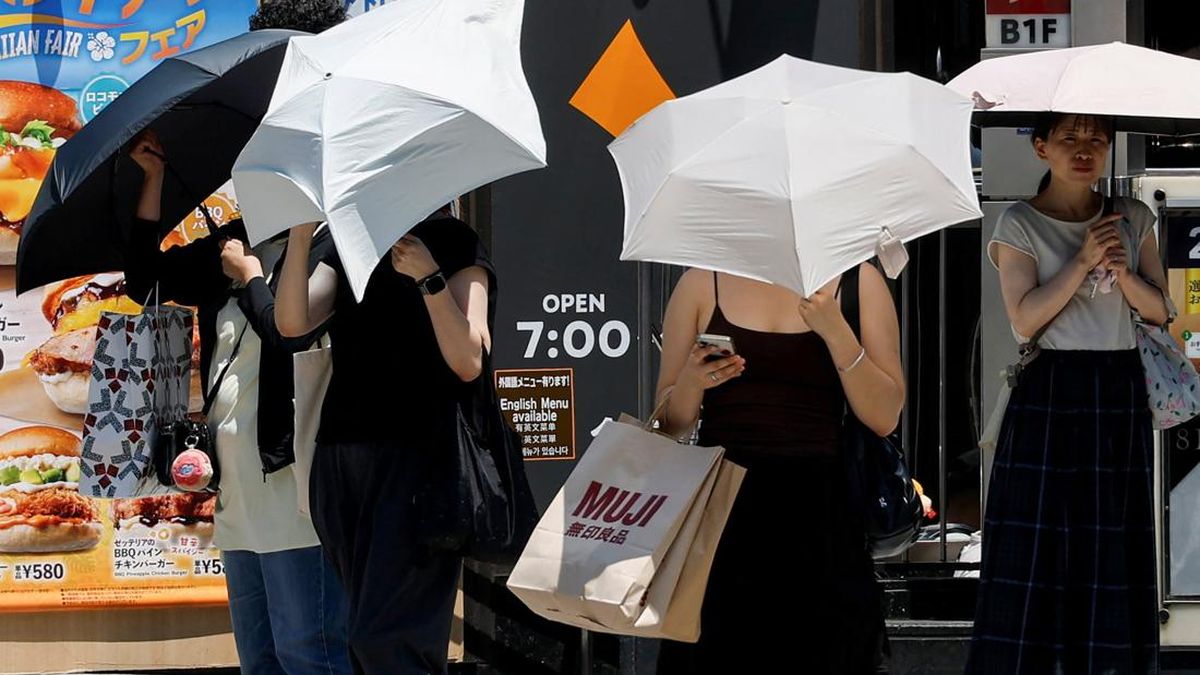
Japan is currently enduring a severe and intensifying heatwave, which has led to a significant public health crisis, with over 450 individuals hospitalized this week due to heat-related illnesses. The capital city, Tokyo, which is home to approximately 14 million residents, recorded 453 hospitalizations on Wednesday, July 22, according to figures released by the Tokyo Fire Department. This alarming statistic underscores the immediate and widespread impact of the extreme temperatures gripping the archipelago. Tragically, the metropolis has also reported one fatality linked to the heatwave, alongside four individuals in critical condition and 18 in serious condition, highlighting the profound risks posed by the relentless heat. Across the nation, specific cities have experienced temperatures soaring above 40 degrees Celsius, a threshold that Japan has formally recognized this year with the introduction of a new meteorological term: "kokushobi," or "very hot day," specifically denoting temperatures exceeding 40 degrees Celsius. This formal designation reflects the growing severity and frequency of such extreme weather events in the country.
Immediate Crisis: Rising Hospitalizations and Fatalities
The sheer volume of individuals requiring medical attention for heatstroke and other heat-related ailments has placed considerable strain on healthcare facilities nationwide. On Wednesday alone, the Tokyo Fire Department, responsible for emergency medical services in the vast urban area, reported a staggering 453 people being transported to hospitals. This figure represents a sharp increase in heat-related emergencies and is indicative of the broad public health challenge at hand. Medical professionals and emergency services personnel are working tirelessly to manage the influx of patients, many of whom present with symptoms ranging from dehydration and heat exhaustion to severe heatstroke, which can lead to organ damage, neurological impairment, and, as sadly demonstrated by the recent fatality in Tokyo, death. The Fire and Disaster Management Agency (FDMA), a governmental body overseeing fire services and disaster response, has issued a stark warning, declaring the ongoing heatwave a "disaster." This classification is not merely semantic; it signals the gravity of the situation and mobilizes resources for a comprehensive national response. A spokesperson for the fire department emphasized the critical need for public vigilance, urging citizens to "remain hydrated and use air conditioning" to mitigate the risks. They also cautioned that the number of patients is likely to continue rising as temperatures show no signs of abating in the immediate future.
Record-Breaking Temperatures and the "Kokushobi" Designation
The intensity of the current heatwave is underscored by the record-breaking temperatures observed across various regions. On Thursday, July 23, at least six distinct areas reported midday temperatures of 40 degrees Celsius or higher, marking an exceptionally hot period for the country. The highest temperature recorded was a scorching 41.1 degrees Celsius in Hamamatsu, located in the central Shizuoka prefecture. This figure approaches the national record for Japan, highlighting the extreme nature of the conditions. Following closely, Toyota City in Aichi prefecture registered 40.8 degrees Celsius, while Kuwana in Mie prefecture experienced 40.7 degrees Celsius. These readings are not isolated incidents but rather part of a broader pattern of elevated temperatures affecting nearly the entire country. The official introduction of "kokushobi" (very hot day) as a meteorological term this year signifies a recognition by Japanese authorities and meteorologists of a new, more severe category of heat. Historically, the term "mōshōbi" (extremely hot day) has been used for temperatures exceeding 35 degrees Celsius. The addition of "kokushobi" for temperatures above 40 degrees Celsius reflects a scientific acknowledgment of the increasing frequency and intensity of these extreme heat events, likely influenced by broader climate patterns. This new terminology also serves to better communicate the heightened risks to the public.
Chronology of a Mounting Crisis
The current heatwave did not emerge suddenly but has been building steadily since mid-July. The FDMA’s statement explicitly noted that "temperatures have increased since mid-July, and an extreme heatwave is expected to continue across the country." This extended period of elevated temperatures has had a cumulative effect on the population, making individuals more susceptible to heat-related illnesses.
Mid-July Onset and Escalation
The latter half of July saw a consistent rise in mercury readings across Japan, transforming what might have been typical summer warmth into an oppressive and dangerous heatwave. Daily average temperatures began to consistently exceed seasonal norms, particularly in the Kanto region, including Tokyo, and parts of central and western Japan. This gradual escalation meant that by the week of July 20th, the conditions were ripe for the severe impacts now being observed. The sustained nature of the heat, with little overnight relief, prevents the human body from adequately recovering, increasing the risk of heatstroke.
Urgent Public Health Warnings
As temperatures continued their upward trajectory, the Japan Meteorological Agency (JMA) began issuing increasingly severe heatstroke alerts. These warnings, disseminated through various media channels, cautioned the public about the dangers and advised preventative measures. By Wednesday, July 22, the situation had deteriorated to the point where the Tokyo Fire Department was reporting hundreds of hospitalizations. This prompted more urgent and widespread advisories from public health officials, reinforcing messages about staying indoors during peak heat hours, using air conditioning, and hydrating frequently. The FDMA’s declaration of a "disaster" further amplified these warnings, signaling a national emergency response. On Thursday, July 23, the warnings were expanded to cover almost the entire country, indicating the pervasive nature of the extreme heat. The record-setting temperatures in Hamamatsu and other cities on this day served as a stark confirmation of the forecasts and the escalating crisis.
Broader Context: Japan’s Vulnerability to Extreme Heat
Japan’s geographical location and specific demographic characteristics make it particularly vulnerable to the impacts of extreme heatwaves. While summers are traditionally hot and humid, the intensity and duration of recent heatwaves have surpassed historical norms, presenting a multifaceted challenge.
A Recurring Threat: Lessons from Past Heatwaves
This is not Japan’s first encounter with a devastating heatwave. The country experienced a particularly severe event in July 2018, which led to over 1,000 deaths and tens of thousands of hospitalizations. That heatwave, which was also declared a natural disaster by the government, prompted a re-evaluation of public health strategies and emergency response protocols. Temperatures during the 2018 event reached a then-record 41.1 degrees Celsius in Kumagaya, Saitama Prefecture, mirroring the current highs. Lessons learned from 2018, such as the importance of early warnings, the establishment of cooling centers, and targeted outreach to vulnerable populations, have informed current responses. However, the recurring nature and increasing severity of these events suggest that existing measures may need continuous adaptation and strengthening to cope with a changing climate. The current heatwave, with its similar intensity and rapid escalation of hospitalizations, evokes grim parallels to the 2018 crisis, underscoring the ongoing threat.
Demographic Challenges: An Aging Population at Risk
Japan has one of the world’s oldest populations, with a significant proportion of its citizens aged 65 and above. This demographic reality profoundly amplifies the risks associated with heatwaves. Elderly individuals are inherently more vulnerable to heatstroke due to several physiological factors, including a reduced ability to regulate body temperature, decreased sensation of thirst, and often, pre-existing medical conditions that can be exacerbated by heat. Furthermore, many elderly residents may live alone, limiting their access to immediate assistance or making them less likely to use air conditioning due to cost concerns or a desire to conserve energy. Public health campaigns are increasingly focusing on these vulnerable groups, encouraging family members and neighbors to check on elderly relatives and ensuring access to cooling facilities. However, the sheer scale of the aging population presents a persistent challenge in effectively safeguarding everyone during extreme heat events.
Climate Change as a Catalyst
The scientific consensus overwhelmingly points to climate change as a significant factor contributing to the increased frequency and intensity of extreme weather events globally, including heatwaves in Japan. The Intergovernmental Panel on Climate Change (IPCC) reports have consistently highlighted that human activities, primarily the emission of greenhouse gases, are leading to a warming planet, which in turn makes heatwaves hotter, longer, and more common. Japan, as an island nation, is also susceptible to the "urban heat island" effect, where metropolitan areas become significantly warmer than surrounding rural areas due to heat absorption by concrete and asphalt, and heat emissions from buildings and vehicles. This phenomenon, combined with rising global temperatures, creates a dangerous synergy. While individual weather events cannot be solely attributed to climate change, the observed trend of increasingly severe heatwaves aligns with climate projections for the region. This broader context necessitates not only immediate response measures but also long-term adaptation strategies and global efforts to mitigate climate change.
Official Response and Public Guidance
In response to the escalating crisis, Japanese authorities have mobilized various government agencies and implemented public health advisories to protect citizens. The official response emphasizes both immediate relief and preventative measures.
Fire and Disaster Management Agency Declares "Disaster"
The declaration of the heatwave as a "disaster" by the Fire and Disaster Management Agency (FDMA) is a critical step. This classification enables the central government to allocate additional resources, coordinate emergency efforts more effectively across prefectures, and provide financial assistance to affected areas. The FDMA’s statement underscored the severity: "It is not an exaggeration to call this extreme heatwave a disaster, with many people being rushed to hospitals or even dying from heatstroke." This strong language reflects the agency’s assessment of the significant threat to public safety and infrastructure. The FDMA is working closely with local governments, emergency services, and public health departments to ensure a coordinated national response, including the dissemination of critical information and the deployment of personnel and equipment where needed.
Calls for Hydration and Air Conditioning Use
A core component of the official guidance is the repeated call for the public to remain hydrated and to make judicious use of air conditioning. A spokesperson for the fire department explicitly stated this advice, recognizing these as primary tools for preventing heatstroke. Public service announcements are widely broadcast through television, radio, and digital platforms, urging people to drink water regularly, even if they don’t feel thirsty, and to avoid prolonged exposure to direct sunlight, especially during the hottest parts of the day. The recommendation to use air conditioning is crucial, particularly for vulnerable groups, despite potential concerns about energy consumption or cost. Some local governments have even explored initiatives to provide subsidies or support for air conditioning use for low-income households or to open public cooling centers where individuals can seek refuge from the heat.
Healthcare System Under Strain
The surge in hospitalizations has placed significant pressure on Japan’s healthcare system. Emergency rooms are experiencing increased patient loads, and medical staff are working extended hours to provide care. Hospitals are bracing for potentially higher numbers as the heatwave persists. This strain is not limited to urban centers like Tokyo but extends to regional hospitals across the affected areas. Medical associations and public health officials have issued guidelines to healthcare providers on managing heat-related illnesses and conserving resources where possible. There is also an emphasis on preventing the spread of other seasonal illnesses, such as influenza or common colds, which could further complicate the healthcare response during this period of heightened demand.
Socio-Economic and Environmental Implications
Beyond the immediate health crisis, the prolonged heatwave carries significant socio-economic and environmental implications for Japan, affecting various sectors of society and the economy.
Strain on Infrastructure and Energy Demands
One of the most immediate consequences of extreme heat is the dramatic increase in electricity demand, primarily driven by the widespread use of air conditioning. This surge in consumption places immense strain on the national power grid, raising concerns about potential blackouts or brownouts, particularly during peak usage hours. Power companies are closely monitoring demand and supply, and contingency plans are likely in place to manage any disruptions. The long-term implications include the need for greater investment in resilient energy infrastructure, including smart grids and renewable energy sources, to meet growing demand while reducing the carbon footprint. Furthermore, other critical infrastructure, such as transportation networks, can be affected by extreme heat, leading to track buckling on railways or heat-related issues for vehicles.
Impact on Agriculture and Outdoor Industries
Japan’s agricultural sector is highly vulnerable to prolonged heatwaves. High temperatures can stress crops, reduce yields, and lead to significant economic losses for farmers. Livestock can also suffer from heat stress, impacting productivity and welfare. Rice paddies, a staple of Japanese agriculture, require specific temperature ranges for optimal growth, and extreme heat can disrupt this delicate balance. Similarly, outdoor industries such as construction, fisheries, and various manufacturing processes face challenges. Workers in these sectors are at high risk of heatstroke, necessitating stricter safety protocols, adjusted work schedules, and adequate hydration breaks, which can impact productivity and project timelines. The fishing industry, for example, can be affected by changes in ocean temperatures and fish migration patterns.
Long-Term Adaptation Strategies and Urban Planning
The recurring nature and increasing severity of heatwaves necessitate long-term adaptation strategies for Japan. Urban planning plays a crucial role in mitigating the urban heat island effect. This includes promoting green infrastructure, such as parks, urban forests, and green roofs, which can help cool city environments. The use of reflective materials in construction, improving building insulation, and designing cities with better air circulation can also contribute to cooler urban landscapes. Furthermore, public awareness campaigns about heat safety need to be integrated into broader public health education, becoming a permanent feature of summer preparedness. Investment in advanced meteorological forecasting technologies will also be critical to provide more accurate and timely warnings, allowing for better preparedness and response.
Looking Ahead: The Future of Summer in Japan
The current heatwave serves as a powerful reminder of the profound challenges posed by a changing climate. As Japan navigates this immediate crisis, the long-term implications for its society, economy, and environment are becoming increasingly clear. The "kokushobi" designation is more than just a new term; it is a recognition of a new climatic reality. The country faces the imperative of not only responding to current emergencies but also proactively adapting to a future where extreme heat may become the norm rather than an exception. This requires a multi-pronged approach encompassing robust public health measures, resilient infrastructure development, sustainable energy policies, and innovative urban planning, all underpinned by a deep commitment to climate change mitigation and adaptation at both national and global levels. The experience of this week will undoubtedly inform future policies and preparedness efforts, shaping what a Japanese summer will look like for generations to come.

