
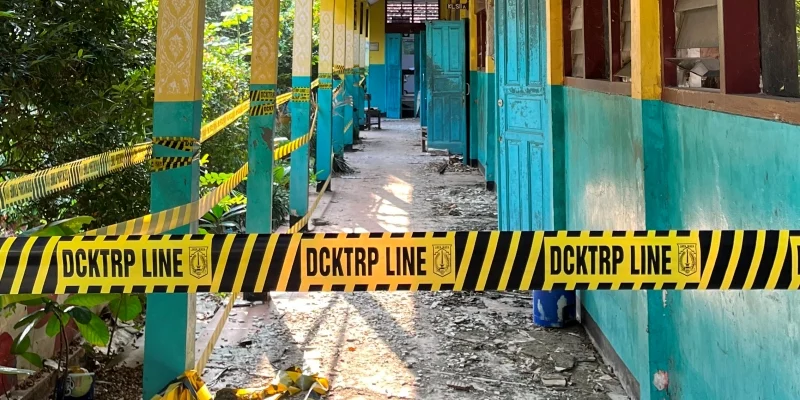
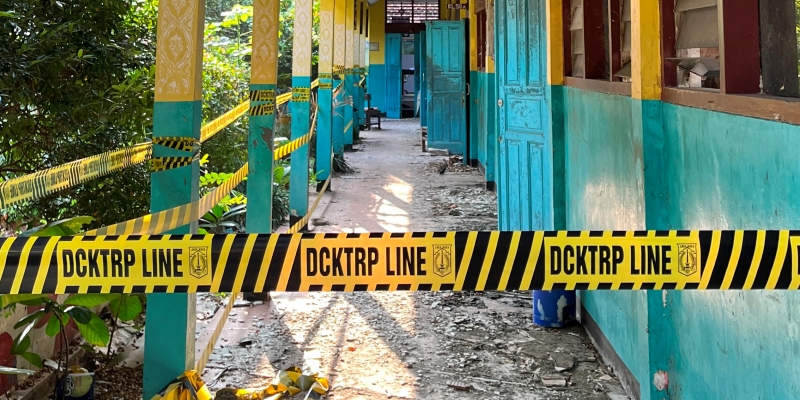
A chilling testament to bureaucratic inertia and systemic neglect stands starkly in Kebayoran Lama Selatan, South Jakarta, where the collapsed structure of State Elementary School (SDN) 09 Kebayoran Lama Selatan has remained untouched for nearly two years since its catastrophic failure in late 2024. Despite the visible police lines that still cordon off the severely damaged premises as of July 2026, serving as a grim reminder of the disaster, no substantive reconstruction or repair work has commenced. This prolonged dereliction has not only displaced 270 young students, forcing them into cramped temporary arrangements, but has also ignited a firestorm of public criticism, questioning the efficacy and responsiveness of the DKI Jakarta Provincial Government, particularly given the substantial annual budgets allocated to the education sector. The situation has drawn sharp condemnation from civic leaders, who lament the damage to the administration’s credibility and demand immediate, decisive action to rectify the glaring oversight.
A Lingering Scar on South Jakarta’s Educational Landscape
The image of the ruined SDN 09 Kebayoran Lama Selatan, captured with police tape flapping idly in the breeze, encapsulates a profound failure in public infrastructure management. What began as an unforeseen structural collapse has evolved into a symbol of government inefficiency and a perceived lack of urgency. For the hundreds of students affected, the once familiar hallways and classrooms have been replaced by borrowed spaces at SDN 11 Kebayoran Lama Selatan, a temporary solution that strains resources and undoubtedly impacts the quality and continuity of their education. The initial promise of swift restoration has faded into a protracted period of inaction, leaving parents, teachers, and the wider community increasingly frustrated and disillusioned. The delay, now extending beyond 20 months, raises critical questions about accountability, resource allocation, and the overarching commitment to fundamental public services in one of Indonesia’s most prominent urban centers.
The Unfolding Timeline of Neglect
The chronology of events surrounding SDN 09 Kebayoran Lama Selatan paints a picture of a crisis that has gradually deepened from an immediate disaster to a prolonged systemic failure.
Late 2024: The Initial Catastrophe
The exact cause of the building’s collapse in late 2024 has not been officially detailed in public statements, but such incidents in Jakarta often point to a combination of factors including aging infrastructure, inadequate maintenance, poor construction quality, or environmental stressors such as heavy rainfall or seismic activity. Immediately following the collapse, emergency protocols would have been activated, leading to the deployment of local authorities, structural engineers for initial assessment, and the establishment of a police line to secure the hazardous site. Crucially, the school’s administration would have swiftly arranged for the relocation of its 270 students to SDN 11 Kebayoran Lama Selatan, a neighboring facility, to ensure minimal disruption to their academic year. This initial phase would have been characterized by immediate response and preliminary damage assessment.
2025: Bureaucratic Labyrinth and Stalled Progress
The entirety of 2025 appears to have been consumed by a complex web of bureaucratic processes, typical of large-scale public infrastructure projects in Indonesia. Following the initial assessment, the DKI Jakarta Provincial Government, specifically through its Education Agency (Dinas Pendidikan) and Public Works Department (Dinas Bina Marga), would have embarked on a multi-stage process. This likely included:
- Detailed Damage Assessment and Structural Audit: A more thorough engineering study to determine the extent of damage, the cause of collapse, and whether repair or complete demolition and reconstruction was necessary. This phase alone can take several months, involving expert consultations and report generation.
- Feasibility Studies and Master Planning: Developing a comprehensive plan for the school’s future, including architectural designs, structural specifications, and adherence to updated building codes.
- Budget Allocation and Approval: Securing the necessary funds from the provincial budget. While Jakarta’s education budget is substantial, specific project funds often need to be approved through various layers of government and legislative bodies, which can be a time-consuming annual process. For a project of this magnitude, supplementary budgets or reallocations might have been required, adding further delays.
- Tendering and Procurement: The selection of contractors for reconstruction or repair is a highly regulated and often protracted process. This involves preparing tender documents, issuing public calls for bids, evaluating proposals, and finally awarding the contract. Challenges such as insufficient bids, disputes, or administrative errors can easily prolong this stage.
- Permitting and Regulatory Compliance: Obtaining all necessary building permits and ensuring compliance with local zoning laws and safety regulations.
Each of these steps, while essential for responsible governance, can become a bottleneck, especially if there are internal inefficiencies, lack of coordination between agencies, or unforeseen technical complications. The entire year of 2025 seemingly passed without the commencement of any physical reconstruction, leading to growing impatience within the affected community.
Mid-2026: Escalating Frustration and Public Outcry
By July 2026, with no tangible progress on the ground, public frustration had reached a boiling point. The sight of the dilapidated school, still secured by police tape, became an increasingly galling symbol of administrative failure. The temporary arrangement at SDN 11 Kebayoran Lama Selatan, initially a relief, began to show its strains, impacting the learning environment for students from both schools. It was at this juncture that Rudy Darmawanto, Chairman of Poros Rawamangun, a prominent civic organization, voiced the widespread discontent. His strong condemnation, describing the situation as "unreasonable" and "deliberate negligence," highlighted the two-year inaction as an unacceptable lapse in public service. His public statements, widely reported, served to galvanize public opinion and pressure the provincial government for immediate answers and action. The repeated delays also began to cast a shadow on the image of Governor Pramono Anung, particularly concerning his administration’s responsiveness to critical public infrastructure needs.
The Human Cost: Students in Limbo
The most profound impact of the protracted neglect of SDN 09 Kebayoran Lama Selatan falls squarely on its 270 students. For nearly two academic years, these children have been denied a stable, dedicated learning environment. The forced relocation to SDN 11 Kebayoran Lama Selatan, while a necessary stopgap, comes with inherent challenges:
- Overcrowding: Sharing facilities invariably leads to overcrowded classrooms, reduced individual attention from teachers, and strain on shared resources such as libraries, laboratories, and recreational areas.
- Disrupted Routine: Students lose the familiarity and sense of belonging to their own school, potentially impacting their social and emotional well-being.
- Logistical Challenges: Parents may face increased travel distances or logistical complexities in dropping off and picking up their children from a different location.
- Impact on Learning Outcomes: A less-than-ideal learning environment can contribute to decreased focus, reduced academic performance, and a general sense of instability that is detrimental to educational development. Teachers, too, face the challenge of adapting to new spaces and potentially larger class sizes, affecting their ability to deliver effective instruction. The long-term effects of such disruption on a child’s educational trajectory can be significant, potentially leading to learning gaps that are difficult to bridge later on.
Jakarta’s Education Budget: A Paradox of Plenty?
A central point of contention highlighted by critics like Rudy Darmawanto is the seemingly paradoxical situation of a collapsed school remaining unrepaired despite DKI Jakarta’s substantial annual allocation to education. As a mega-city and the capital of Indonesia, Jakarta’s provincial budget is consistently among the largest in the nation. For the education sector, this typically translates into a "jumbo budget" – often in the tens of trillions of Indonesian Rupiah (IDR), representing a significant portion of the total regional budget.
These funds are earmarked for a wide array of educational needs, including:
- Teacher Salaries and Welfare: The largest component of any education budget.
- Operational Costs: Day-to-day running of thousands of schools.
- Curriculum Development and Learning Materials: Ensuring up-to-date educational content.
- Scholarships and Student Support Programs: Aid for disadvantaged students.
- Infrastructure Development and Maintenance: This category is crucial for the SDN 09 case. It covers new school construction, renovation of existing facilities, routine maintenance, and emergency repairs for damaged buildings.
The existence of a robust budget, yet the failure to address a critical infrastructure need for two years, points to potential issues beyond mere lack of funds. It suggests possible breakdowns in:
- Prioritization: Were other projects deemed more urgent, or was the SDN 09 case simply overlooked or deprioritized?
- Budget Execution Efficiency: Are funds allocated but not effectively disbursed or utilized due to bureaucratic hurdles, delays in procurement, or inefficient project management?
- Transparency and Oversight: A lack of clear accountability mechanisms can allow projects to stagnate without immediate consequence.
The public perception is that if Jakarta has ample funds for education, then a fundamental issue like a collapsed school should be among the highest priorities for immediate repair, not a prolonged saga of inaction. This disparity fuels public skepticism about the provincial government’s operational effectiveness and its commitment to ensuring quality public education infrastructure.
Calls for Accountability: Activist’s Demands
The mounting frustration culminated in explicit demands for accountability from Rudy Darmawanto. His statement on July 24, 2026, was unequivocal: "It is utterly unreasonable that the process has been left to languish for over two years, an act of either neglect or deliberate oversight. Many are shocked and sense an abnormality, including the DKI Governor himself." Darmawanto’s remarks underscore the belief that such a prolonged delay cannot be merely an administrative oversight but points to a deeper systemic issue.
He further articulated the political damage caused by the situation, stating, "This incident severely damages the image of DKI Governor Pramono Anung in the eyes of Jakarta’s citizens." This highlights the direct link between the perceived failure in public service delivery and the credibility of the regional leadership. Public perception, according to Darmawanto, is that the local leadership is unresponsive to the dire conditions of fundamental educational facilities.
The ultimate demand for accountability was stark: "The choice is clear: either the Head of the Education Agency resigns, or they are non-activated." This ultimatum reflects a loss of confidence in the current leadership responsible for the education sector and a call for a clear consequence for the prolonged inaction. Such demands are common in Indonesian public discourse when significant public service failures occur, aiming to force leadership changes and signal a commitment to reform.
Official Response and Proposed Actions (Inferred)
In response to the escalating public pressure and direct criticism, particularly from figures like Rudy Darmawanto, the DKI Jakarta Provincial Government would likely issue a series of statements and outline proposed actions to mitigate the crisis and restore public confidence.
Statement from the Governor’s Office
Governor Pramono Anung’s office would likely respond with a statement acknowledging the gravity of the situation at SDN 09 Kebayoran Lama Selatan. The statement would emphasize the Governor’s deep concern for the affected students and the quality of education in Jakarta. It would likely:

- Express Regret: Convey regret over the prolonged delay in the school’s reconstruction.
- Reiterate Commitment: Reaffirm the administration’s unwavering commitment to providing safe and conducive learning environments for all students.
- Order Investigation: Announce an immediate, thorough investigation into the causes of the delay, promising to identify bottlenecks and responsible parties.
- Expedite Process: Instruct relevant agencies (Education Agency, Public Works Department) to fast-track all necessary procedures for the school’s repair or reconstruction, setting a clear and ambitious timeline for commencement and completion.
- Transparency Pledge: Promise greater transparency in the project’s progress and regular updates to the public.
The Education Agency’s Perspective
The Head of the Education Agency, directly under fire from Darmawanto, would likely issue a detailed statement. This statement would aim to defend the agency’s actions while also outlining a path forward. It might:
- Acknowledge Challenges: Detail the "complex bureaucratic and technical challenges" encountered since the collapse, such as difficulties in structural assessment, land tenure issues (if any), or unforeseen complications in the tendering process.
- Defend Procedures: Explain that all procedures, though lengthy, were necessary to ensure due diligence, financial accountability, and the safety and longevity of the new structure.
- Outline New Timeline: Present a concrete, expedited timeline for the commencement of physical work, including details on the selected contractor (if applicable) and expected completion date.
- Address Accountability: While likely resisting calls for resignation, the Head of the Agency might commit to internal reforms to prevent similar delays in the future and hold internal staff accountable for any lapses.
- Support for Displaced Students: Reiterate the agency’s ongoing support for the 270 displaced students and the host school, SDN 11, ensuring they have adequate resources.
Parental and Community Concerns
While not explicitly stated in the original article, the voices of parents, teachers, and the local community would be central to the ongoing discourse. Their concerns would typically revolve around:
- Learning Quality: Anxiety about the impact of the temporary arrangements on their children’s academic progress.
- Safety: Concerns about the structural integrity of the temporary facility and the safety of the collapsed site.
- Equity: Questions about why their children’s school is being neglected while other projects proceed.
- Future Planning: Demands for clear, verifiable timelines for the reconstruction and a guarantee of a safe, modern school building upon completion. They would also likely call for more direct channels of communication with the provincial government regarding the project’s status.
Broader Implications: Trust, Policy, and Future Resilience
The saga of SDN 09 Kebayoran Lama Selatan extends far beyond the confines of a single collapsed school building. It carries significant broader implications for public trust, governmental policy, and the future resilience of Jakarta’s urban infrastructure.
Impact on Educational Quality
The most immediate and tangible implication is the potential long-term damage to the educational quality for the 270 displaced students. A prolonged period of instability and suboptimal learning conditions can lead to academic setbacks, decreased motivation, and even higher dropout rates in severe cases. Furthermore, it highlights a systemic vulnerability in the provision of basic education infrastructure, where the failure to promptly address a critical issue can have cascading negative effects on human capital development.
Erosion of Public Confidence
The two-year delay unequivocally erodes public confidence in the DKI Jakarta Provincial Government’s ability to effectively manage its resources and deliver essential public services. When a fundamental institution like a school remains in ruins for such an extended period, despite significant budgetary allocations, it fosters cynicism and distrust among citizens. This erosion of trust can manifest in lower civic engagement, decreased compliance with public policies, and a general disillusionment with governance, ultimately impacting the social contract between the government and its people.
Political Ramifications and Governance Scrutiny
For Governor Pramono Anung, the incident presents a significant political challenge. Public outcry, particularly from influential civic groups, can impact his approval ratings and raise questions about his administration’s priorities and effectiveness. It could lead to increased scrutiny from the regional legislative body (DPRD DKI Jakarta), potentially triggering official inquiries into the Education Agency and Public Works Department. The incident might become a key issue in future political campaigns, with opposition figures leveraging it to highlight perceived governance failures. Demands for resignations, as articulated by Rudy Darmawanto, underscore the political pressure for accountability at the highest levels.
Lessons for Infrastructure Management
The case of SDN 09 Kebayoran Lama Selatan serves as a critical case study for infrastructure management within a rapidly developing urban environment. It highlights the urgent need for:
- Proactive Maintenance and Inspection: Moving from reactive repairs to proactive, routine structural assessments to identify and address potential failures before they become catastrophic.
- Streamlined Bureaucracy: Reforming and simplifying the administrative processes for emergency infrastructure projects, reducing the potential for delays in budgeting, tendering, and permitting.
- Inter-Agency Coordination: Enhancing collaboration and communication between different government agencies (e.g., Education, Public Works, Planning) to ensure seamless project execution.
- Disaster Preparedness for Schools: Developing robust contingency plans for school infrastructure failures, including clear protocols for student relocation, temporary learning facilities, and expedited reconstruction.
- Transparency and Accountability Mechanisms: Implementing clearer mechanisms for tracking project progress, public reporting, and holding officials accountable for delays or mismanagement.
Moving Forward: The Path to Reconstruction and Restoration
The path forward for SDN 09 Kebayoran Lama Selatan requires more than just the eventual reconstruction of its building; it necessitates a comprehensive overhaul of the processes that allowed such a prolonged delay to occur. Immediate action from the DKI Jakarta Provincial Government is paramount, beginning with a clear, public commitment to an expedited reconstruction timeline. This must be accompanied by a thorough, transparent investigation into the two-year inaction, with findings made public and appropriate measures taken against any individuals or departments found responsible for negligence.
Beyond the specific school, this incident should serve as a catalyst for a broader review of Jakarta’s public infrastructure maintenance protocols, emergency response mechanisms for public buildings, and the efficiency of its budget execution. Restoring the physical structure of SDN 09 Kebayoran Lama Selatan is crucial, but equally important is the restoration of public trust and the reaffirmation of the provincial government’s commitment to prioritizing the well-being and education of its youngest citizens. Only through decisive action, transparency, and genuine accountability can Jakarta move past this regrettable chapter and ensure that such a prolonged neglect of vital public assets never happens again.

