
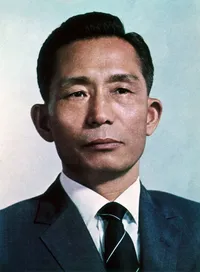
The assassination of high-ranking political figures often reshapes the trajectory of a nation, altering its political landscape, social consciousness, and diplomatic relations. Few events in modern South Korean history encapsulate this profound vulnerability quite like the tragedy of August 15, 1974. On this fateful day, what was meant to be a joyous celebration of national sovereignty dissolved into chaos when an assassin’s bullet intended for President Park Chung-hee struck down First Lady Yuk Young-soo instead. This historical account forms part of CNBC Insight, a specialized analytical rubric designed to illuminate contemporary conditions by examining the profound echoes of the past.
The incident at the National Theater in Seoul not only robbed the nation of a deeply beloved public figure but also triggered a chain reaction of political turmoil, diplomatic friction, and heightened state paranoia. Examining the meticulous chronology, geopolitical backdrop, and long-term ramifications of that summer day reveals how a single misdirected bullet altered the destiny of an entire country.
The Backdrop of Independence Day: Seoul, 1974
To understand the weight of the August 15 tragedy, one must contextualize the political and social climate of South Korea in the mid-1970s. The nation was under the authoritarian rule of President Park Chung-hee, who had seized power in a 1961 military coup. Park’s administration was defined by the rapid economic transformation known as the "Miracle on the Han River," which pulled South Korea out of post-Korean War destitution and laid the groundwork for its emergence as a global industrial powerhouse. However, this economic miracle came at a steep political price. Democratic freedoms were heavily curtailed, dissent was suppressed through emergency decrees, and the state maintained a rigid security apparatus to counter the persistent and palpable threat from the communist regime in North Korea.
August 15 marks Liberation Day, or Gwangbokjeol, commemorating both the liberation of Korea from Japanese colonial rule in 1945 and the establishment of the Republic of Korea in 1948. In 1974, South Korea was celebrating its 29th anniversary of liberation. Festivities were planned nationwide, with the main official ceremony scheduled at the National Theater in Seoul. Approximately 1,000 dignitaries, foreign diplomats, government officials, and citizens gathered inside the auditorium to partake in the national pride. Security was visibly tight, yet the sheer volume of attendees and the protocol of a presidential address created inherent logistical vulnerabilities.
Chronology of a Failed Assassination and Fatal Mistake
The morning ceremony began with standard patriotic fanfare. President Park Chung-hee stepped up to the podium to deliver a nationally televised address outlining his vision for the country and addressing the tense security dynamics on the Korean Peninsula.
According to accounts from the Korean Herald and historical archives, the pivotal moment unfolded roughly midway through the presidential address. Mun Se-gwang, a 22-year-old ethnic Korean born and raised in Japan, had managed to infiltrate the theater. Mun carried a concealed Japanese passport, a forged press credential, and a loaded .38-caliber Smith & Wesson revolver stolen from a police box in Japan days earlier.
As Park spoke, Mun suddenly panicked, stood up from his seat, and drew his weapon. In his haste and inexperience, Mun accidentally discharged his first bullet prematurely, striking himself in the leg. Despite his self-inflicted wound, Mun rushed down the aisle toward the stage, firing successive wild shots.
His primary target was President Park Chung-hee. However, as the shots rang out, Park instinctively ducked behind the reinforced lectern. While the president narrowly escaped physical harm, the stray bullets wreaked devastation behind him. One projectile struck First Lady Yuk Young-soo, who was seated in the VIP section directly behind the stage. The bullet struck her head, causing catastrophic cranial trauma.
Chaos erupted inside the National Theater as presidential bodyguards swarmed the stage, wrestling Mun Se-gwang to the floor and placing him under arrest. Amid the panic, it was discovered that another stray bullet had tragically struck Jang Bong-hwa, a high-stakes local high school student attending the event, killing her instantly.
First Lady Yuk Young-soo was rushed out of the theater and transported immediately to the Seoul National University Hospital. A dedicated team of top medical specialists performed emergency surgery for several hours, fighting desperately to save her life. Despite their exhaustive efforts, the brain damage was too severe. At 7:00 PM local time, Yuk Young-soo was officially pronounced dead at the age of 48.
The Loss of a Beloved First Lady
The death of First Lady Yuk Young-soo sent an immediate wave of profound grief across South Korea. Unlike many political spouses who remained in the shadows, Yuk had cultivated a powerful public image centered on grace, charity, and maternal warmth during her 11 years as First Lady.

Often referred to colloquially by the public as "the mother of the nation," Yuk was known for her extensive philanthropic work, advocacy for women’s welfare, and active engagement with marginalized communities. She intentionally distanced herself from overt political machinations, frequently acting as a moderating, compassionate counterweight to President Park’s austere and iron-fisted rule. Her accessibility and perceived empathy made her immensely popular across various socioeconomic strata.
Four days after the assassination, on August 19, 1974, the South Korean government held a massive state funeral for the fallen First Lady. Hundreds of thousands of mourning citizens lined the streets of Seoul to pay their final respects as the funeral procession made its way to the National Cemetery. The collective grief was palpable, transcending typical political divides and leaving a vacuum in the emotional heart of the administration.
Diplomatic Fallout and the Investigation
In the aftermath of the shooting, the South Korean government launched a swift, high-level investigation led by intelligence and security agencies. The probe quickly expanded beyond a lone-gunman narrative into an international diplomatic crisis.
According to investigative reports cited by the Korean Times, authorities revealed that Mun Se-gwang had operated under the ideological influence of Chongryon, the pro-Pyongyang General Association of Korean Residents in Japan. The South Korean government asserted that Mun had been recruited, trained, and dispatched by North Korean agents operating in Japan, equipped with funds and a fake passport to execute the assassination of President Park.
The revelations triggered intense diplomatic friction between Seoul and Tokyo. The South Korean government openly criticized Japanese authorities for lax security protocols and immigration enforcement that allowed Mun to easily acquire a firearm in Japan and travel across the border undetected. Mass protests erupted in Seoul, with citizens demonstrating outside the Japanese embassy, demanding accountability and harsher measures against pro-North Korean networks operating on Japanese soil.
Under immense diplomatic pressure, the Japanese government expressed deep regret over the incident, dispatching special envoys to Seoul to mend bilateral ties. Meanwhile, the legal proceedings against the assassin moved with formidable speed. Mun Se-gwang was put on trial, found guilty of murder and treason, and sentenced to death. On December 20, 1974, Mun was executed by hanging, closing the judicial chapter of the immediate tragedy, though the political repercussions persisted.
Broader Impact, Implications, and Historical Echoes
The assassination attempt of 1974 fundamentally transformed the internal security and political psychology of the Park Chung-hee administration.
First, presidential security underwent a radical overhaul. The complacency that allowed an armed assailant to enter a high-profile venue with a concealed firearm was met with severe structural purges within the presidential security service. Access to the president became heavily restricted, transforming public engagements into fortress-like operations.
Second, the tragedy hardened President Park’s political stance. The grief-stricken president viewed the attempt on his life—and the successful murder of his wife—as a direct existential assault by North Korea. This perspective was weaponized to justify further crackdowns on domestic political opposition. Emergency decrees were rigorously enforced, media censorship was tightened, and any form of criticism against the state was increasingly equated with treason or pro-North Korean sympathy.
Third, the psychological toll on Park Chung-hee was immeasurable. Associates noted that the president became increasingly isolated, melancholy, and paranoid following the loss of his wife. This psychological shift arguably degraded his political judgment and strained his relationships within his inner circle, including the leadership of the Korean Central Intelligence Agency (KCIA).
In a chilling historical irony, the very security apparatus designed to protect the presidency ultimately failed from within. Exactly five years, two months, and eleven days after the death of Yuk Young-soo, President Park Chung-hee met a violent end. On October 26, 1979, during a private banquet at a safehouse in Seoul, Park was shot and killed by Kim Jae-gyu, the director of the KCIA, who drew a firearm during a dispute over how to handle growing nationwide civil unrest.
Conclusion
The assassination of First Lady Yuk Young-soo on August 15, 1974, remains one of the most defining and sorrowful chapters in modern Korean history. What began as a national celebration of liberation turned into a national trauma that exposed the deep fractures of the Cold War peninsula, tested international diplomacy between neighbors, and altered the personal and political fate of President Park Chung-hee. By examining the chronology, motivations, and subsequent fallout of Mun Se-gwang’s actions, historians and contemporary observers alike gain crucial insight into the volatile forces that shaped South Korea’s arduous journey toward democratic stability and institutional resilience.

