
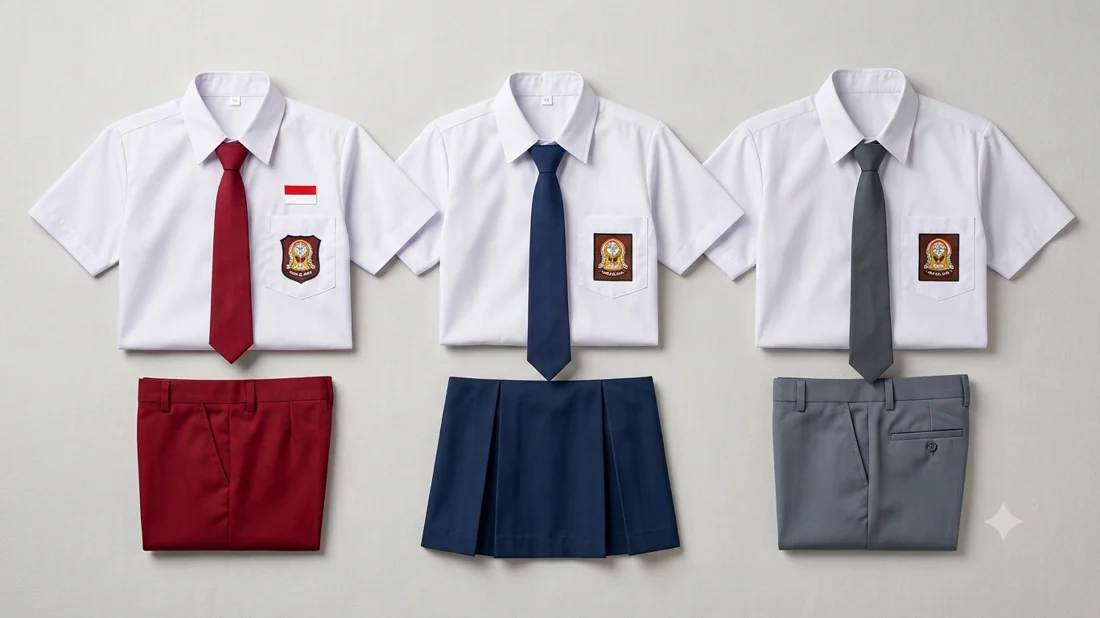
Jakarta — The ambitious initiative to provide completely free education across all public academic tiers in Indonesia, spanning from elementary school up to state universities, requires a staggering fiscal commitment estimated at approximately Rp 393.7 trillion. This immense financial requirement has brought fiscal viability, budget restructuring, and resource allocation to the forefront of national policy discussions, as legislators and executive ministries work to translate a major presidential campaign promise into an operational reality.
The sheer scale of the funding needed to eliminate tuition fees and associated educational costs in public institutions has prompted extensive debate within the national legislature. Lawmakers are closely scrutinizing how the state budget can absorb such a massive expenditure without destabilizing other critical sectors of national development. While the objective remains a cornerstone of the current administration’s social welfare agenda, the mechanical steps, timeline, and funding sources required to achieve it demand rigorous planning and unprecedented financial calibration.
Breakdown of the Preliminary Cost Estimates
According to recent disclosures by Lalu Hadrian Irfani, Deputy Chairman of Commission X of the House of Representatives (DPR RI)—which oversees education, research, and sports—the Rp 393.7 trillion figure represents the aggregate initial calculation required to execute the nationwide free education policy. This comprehensive estimate is divided among the various ministries tasked with overseeing the nation’s educational continuum.
Preliminary calculations presented by the Ministry of Higher Education, Science, and Technology indicate that the tertiary education segment alone accounts for approximately Rp 93.7 trillion of the total budget. The remaining balance—amounting to roughly Rp 300 trillion—falls under the purview of the Ministry of Primary and Secondary Education, covering public schools from elementary through senior high school levels, as well as state-run kindergartens.
Despite these figures entering public discourse, legislative leaders have underscored that these numbers are strictly provisional. Speaking to educational media outlets, Lalu Hadrian Irfani emphasized that the public must understand that these are merely preliminary projections rather than secured, officially allocated funds.
"This figure represents an initial calculation of needs, which does not mean the budget is already available or has been fully decided upon," Irfani stated. He noted that as the policy moves closer to realization, rigorous administrative and legislative processes must take place to determine the actual feasibility of the funding model.
Origins of the Free Education Mandate
The push for universal free education in public institutions is a flagship initiative spearheaded by President Prabowo Subianto. Designed to alleviate the economic burden on working-class and middle-income families, the policy aims to ensure that financial constraints never become a barrier to academic achievement, whether a student is entering primary school or pursuing a degree at a state university (PTN).
In pursuit of this goal, President Prabowo has issued formal instructions to restructure the state budget, colloquially referred to as a "budget redesign." This directive has been communicated to the highest levels of economic governance, including Deputy Minister of Finance Suahasil Nazara, who has been tasked with overseeing the fiscal mechanics of the transition.
The Ministry of Finance has confirmed receipt of these directives, noting that the primary mandate is not merely to erase tuition fees, but to strategically realign national spending to reinforce the overall quality of education. Rather than simply injecting money into fee elimination, the financial architecture must support structural improvements across the board. However, the Finance Ministry has yet to release a definitive, itemized timeline or a final budgetary ceiling specifically designated for the free education program, leaving fiscal observers awaiting the formal national budget revision.
Complex Financing Structures and Competing Priorities
As policymakers deliberate on how to operationalize the initiative, lawmakers emphasize that tuition-free schooling is only one component of a vast and multifaceted educational ecosystem. Government financing cannot solely focus on waiving school and university fees while neglecting the foundational elements that maintain academic standards.
Lalu Hadrian Irfani highlighted several critical financing categories that must run parallel to any free education policy. These competing demands within the national education budget include:
- Teacher Welfare and Professional Development: Ensuring fair compensation, certification allowances, and ongoing training for millions of educators across the archipelago.
- Infrastructure and Facilities: Constructing, rehabilitating, and maintaining school and university buildings, laboratories, libraries, and digital learning infrastructure, particularly in 3T regions (disadvantaged, frontier, and outermost areas).
- Scholarships and Targeted Assistance: Maintaining financial aid programs for underprivileged students who attend private institutions or require living stipends beyond waived tuition fees.
- Quality Enhancement and Research: Funding institutional accreditation, curriculum development, scientific research grants, and technological innovation hubs within higher education institutions.
- Operational Costs of State Universities: Subsidizing the day-to-day operational expenditures of PTNs, which rely heavily on student tuition revenues to maintain academic standards, laboratory equipment, and faculty salaries.
Because the state budget must balance these diverse priorities, analysts point out that absorbing an additional Rp 393.7 trillion expenditure will require either significant revenue enhancement—such as broadening the tax base or improving tax collection efficiency—or substantial reallocation of funds from other sectors, such as energy subsidies or infrastructure projects.
Phased Implementation and the Demand for a Concrete Formula
Given the immense fiscal implications and logistical hurdles, many experts and legislators believe that implementing the free education policy overnight is virtually impossible. Instead, a phased rollout is widely regarded as the most pragmatic approach.
However, lawmakers have insisted that if a phased implementation is chosen, the government must provide a transparent, detailed roadmap with clear target dates and measurable milestones. The administration is expected to soon release a comprehensive formula outlining:
- The exact financial requirements per academic tier.
- The specific cost components covered under the "free" policy (e.g., distinguishing between tuition, uniforms, books, and extracurricular fees).
- The designated revenue sources or funding mechanisms.
- The definitive timeline for when each educational level will officially transition to a zero-tuition model.
Without a synchronized plan, abrupt policy shifts risk creating administrative bottlenecks, funding deficits for state universities, and administrative confusion among regional governments that currently share educational responsibilities under Indonesia’s decentralized governance system.
Broader Implications for Indonesia’s Human Capital Development
The debate over the Rp 393.7 trillion price tag underscores a broader national dilemma: balancing fiscal prudence with the urgent need to elevate Indonesia’s human capital index. As the country aims for its "Golden Indonesia 2045" vision—transforming into a top-tier global economy—improving access to quality education from early childhood to tertiary levels is viewed as an indispensable strategy.
Economists and educational analysts generally agree that investing in education yields long-term macroeconomic dividends by breaking intergenerational poverty cycles and fostering a high-skill workforce capable of competing in the global digital economy. However, they caution that the success of the initiative will hinge entirely on execution. If funding is diverted away from quality-control measures—such as teacher training and curriculum modernization—simply making schools free risks diluting educational outcomes rather than improving them.
As the Ministry of Finance, the Ministry of Primary and Secondary Education, and the Ministry of Higher Education, Science, and Technology continue their cross-sectoral coordination, the upcoming legislative sessions will be critical. Stakeholders, educators, and citizens alike await the formal presentation of the redesigned state budget, which will test the government’s ability to reconcile visionary social policies with strict fiscal discipline.

