
Jakarta — In the hyper-competitive landscape of the contemporary global workforce, the traditional paradigm that a high Grade Point Average (GPA) serves as the singular key to post-graduation employment has undergone a profound paradigm shift. While academic distinction remains a foundational benchmark of cognitive ability and discipline, educational analysts, industry leaders, and human resource professionals increasingly concur that undergraduate preparation must extend far beyond the parameters of the traditional classroom. Today’s graduates enter a labor market that places a premium on holistic competencies, emotional intelligence, strategic networking, and real-world adaptability. Consequently, contemporary students are compelled to cultivate a multifaceted portfolio of experiences, interpersonal connections, and practical skills long before they don their graduation robes.
The evolution of modern hiring practices dictates that professional trajectories are frequently shaped by the strength of an individual’s ecosystem. Building a robust network early in one’s academic journey—spanning faculty mentors, upperclassmen, peers across diverse academic disciplines, and specialized professional communities—functions as a critical gateway to unadvertised opportunities, industry insights, and mentorship. Networking, when approached with intentionality and authenticity, transcends the superficial accumulation of contacts. It involves the cultivation of reciprocal professional relationships and immersion in ecosystems that actively foster both academic retention and long-term career resilience. Recognizing this imperative, educational platforms and institutions are increasingly integrating career readiness modules into their foundational curricula, bridging the historical disconnect between theoretical higher education and practical labor market demands.
Addressing the Modern Undergraduate Dilemma
The transition from higher education to the professional sphere has grown progressively complex. Economic fluctuations, technological disruptions driven by artificial intelligence and automation, and shifting employer expectations mean that graduates must possess more than just technical mastery of their chosen fields. They require soft skills, financial literacy to navigate university life independently, and the strategic foresight to secure funding or scholarships when familial or institutional resources fall short.
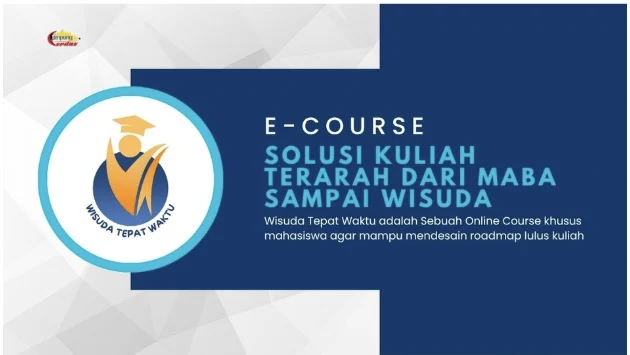
This comprehensive approach to student development forms the core curriculum of specialized educational programs, such as the Online Course Wisuda Tepat Waktu initiated by Lampung Cerdas. Designed to address the multifaceted challenges confronting modern undergraduates, the program moves beyond conventional academic tutoring. While graduating on time remains a primary objective, the course recognizes that the university experience is a holistic crucible for future leadership. By addressing critical pillars such as strategic networking for career advancement, non-KIP Kuliah scholarship acquisition methodologies, and sustainable side-income generation during undergraduate studies, the program targets the systemic gaps often left unaddressed by standard university syllabi.
The Mechanics of Flexible Learning in the Digital Age
As the demographics of the student body diversify—with a rising percentage of undergraduates balancing part-time employment, internships, and family responsibilities alongside their studies—educational delivery models must adapt. Rigid, brick-and-mortar scheduling is frequently incompatible with the dynamic lifestyles of modern scholars.
To mitigate this barrier, contemporary upskilling initiatives leverage digital infrastructure, utilizing Learning Management Systems (LMS) to deliver structured educational content. The curriculum of the Online Course Wisuda Tepat Waktu, for instance, is recorded and archived within a centralized digital portal. This asynchronous learning model empowers students to tailor their educational consumption to their personal timelines, reviewing modules on strategic networking, financial planning, or thesis progression whenever academic pressures dictate. Furthermore, extended access policies—often granting students up to four years of portal availability—ensure that learners can revisit critical career and academic modules as they transition through different phases of their undergraduate lifecycle, from their formative freshman semesters to their high-stakes senior thesis and job-hunting phases.
Data-Driven Insights: The Correlation Between Networking and Employability
Labor market data consistently reinforces the hypothesis that interpersonal networking is a decisive factor in career attainment. According to various global and regional employment studies, a significant majority of professional vacancies—often estimated between 70 to 80 percent—are filled through networking and internal referrals rather than public job boards. In Indonesia, where the demographic bonus has intensified competition among fresh graduates, the reliance on relational capital is even more pronounced.
Higher education researchers note that students who actively participate in campus organizations, academic competitions, and professional mixers develop higher levels of social capital. This capital translates directly into accelerated career placement, higher starting salaries, and greater job satisfaction. Conversely, students who operate in academic isolation—focusing exclusively on GPA accumulation—frequently experience a steep learning curve upon graduation, struggling to translate abstract theoretical knowledge into actionable workplace productivity. The integration of networking education into foundational undergraduate years serves as a corrective measure, democratizing access to professional circles that traditionally favored students from well-connected backgrounds.
Financial Literacy and Sustainable Undergraduate Independence
Beyond networking and academic progression, modern student life is inextricably linked to economic realities. The rising cost of tuition, living expenses, and educational materials places a heavy burden on undergraduates and their families. Consequently, the ability to secure alternative funding and generate independent income has become a vital survival and success skill.
Programs addressing holistic student readiness increasingly emphasize non-governmental financial aid structures. While government-backed initiatives like the KIP Kuliah provide vital support for eligible segments, thousands of alternative scholarships offered by private corporations, foundations, and international bodies remain underutilized due to a lack of student awareness regarding application strategies, essay writing, and interview preparation. Training modules that demystify the scholarship application process empower students to alleviate financial distress, enabling them to focus more intensely on their academic and professional development.
Simultaneously, the digital economy offers unprecedented avenues for undergraduates to generate side income. From freelance digital marketing and content creation to tutoring and specialized project-based work, students can leverage their growing skill sets in the marketplace. However, balancing income generation with academic obligations requires rigorous time management and strategic prioritization—skills that are intentionally cultivated through structured guidance rather than trial and error.
Institutional Perspectives and the Shift in Educational Paradigms
Educational experts and university administrators have increasingly voiced the need for a cultural shift within higher education institutions. For decades, the metric of institutional success was narrowly defined by graduation rates and average starting GPAs. Today, accreditation bodies and labor market monitors evaluate universities based on graduate employability and the seamlessness of the transition into the professional ecosystem.
Representatives from educational development initiatives emphasize that mentorship and peer-to-peer connection are powerful antidotes to the widespread phenomenon of academic burnout and post-graduation anxiety. When students understand how to build supportive communities—connecting with senior peers who have successfully navigated specific professors, challenging coursework, or competitive internships—their psychological resilience increases. This communal scaffolding reduces dropout rates and fosters an environment of collaborative growth rather than cutthroat competition.
Furthermore, industry stakeholders frequently lament the "readiness gap" observed in fresh graduates, often citing a deficiency in communication, negotiation, and relationship-management skills. By embedding professional networking principles into accessible online modules, educational platforms are stepping in to supply the supplementary training that traditional curricula occasionally overlook due to credit constraints or rigid administrative frameworks.
Broader Implications for National Human Capital Development
The implications of shifting from a purely grade-centric educational model to a holistic, network-supported approach extend far beyond individual career success. At a national level, the quality of human capital is the primary determinant of economic competitiveness. Indonesia’s vision of achieving advanced-economy status relies heavily on the productivity, innovation, and adaptability of its young workforce.
When undergraduates are equipped early with the tools to manage their finances, secure scholarships, and build influential professional networks, the entire socio-economic fabric benefits. Talented students from economically disadvantaged backgrounds who master the art of scholarship acquisition and networking can break generational cycles of poverty, injecting diverse perspectives and high-level skills into critical sectors of the economy. Moreover, professionals who understand the value of networking from their university days are more likely to engage in collaborative entrepreneurship, fostering a dynamic startup ecosystem and driving domestic economic resilience.
Navigating the Future: Actionable Steps for Contemporary Undergraduates
As the higher education landscape continues to evolve, students are encouraged to adopt a proactive posture toward their personal and professional development. Relying solely on classroom attendance is no longer a viable strategy for long-term career security. Undergraduates—whether navigating their foundational freshman semesters or managing the high-pressure environment of their final year—must deliberately carve out time to engage with the broader academic and professional community.
Building a sustainable network requires consistency, genuine curiosity, and a willingness to step outside comfort zones. Attending guest lectures, joining cross-departmental student organizations, engaging respectfully with faculty members during office hours, and participating in digital professional communities are tangible steps that yield exponential long-term returns. Furthermore, utilizing structured resources, such as specialized digital courses that offer strategic guidance on time management, financial independence, and relationship-building, can accelerate a student’s preparedness for the realities of the modern labor market.
Ultimately, the university years represent a unique window of opportunity—a period designed not merely for the passive absorption of data, but for the active construction of identity, capability, and community. Students who recognize that their GPA is merely the entry ticket to the professional arena, while their network and holistic competencies are the vehicles driving their long-term success, will find themselves best positioned to thrive in an unpredictable and dynamic future. For those seeking structured guidance in navigating this complex journey, exploring comprehensive resources such as the Online Course Wisuda Tepat Waktu offers a practical roadmap to aligning academic achievement with enduring professional fulfillment.

