
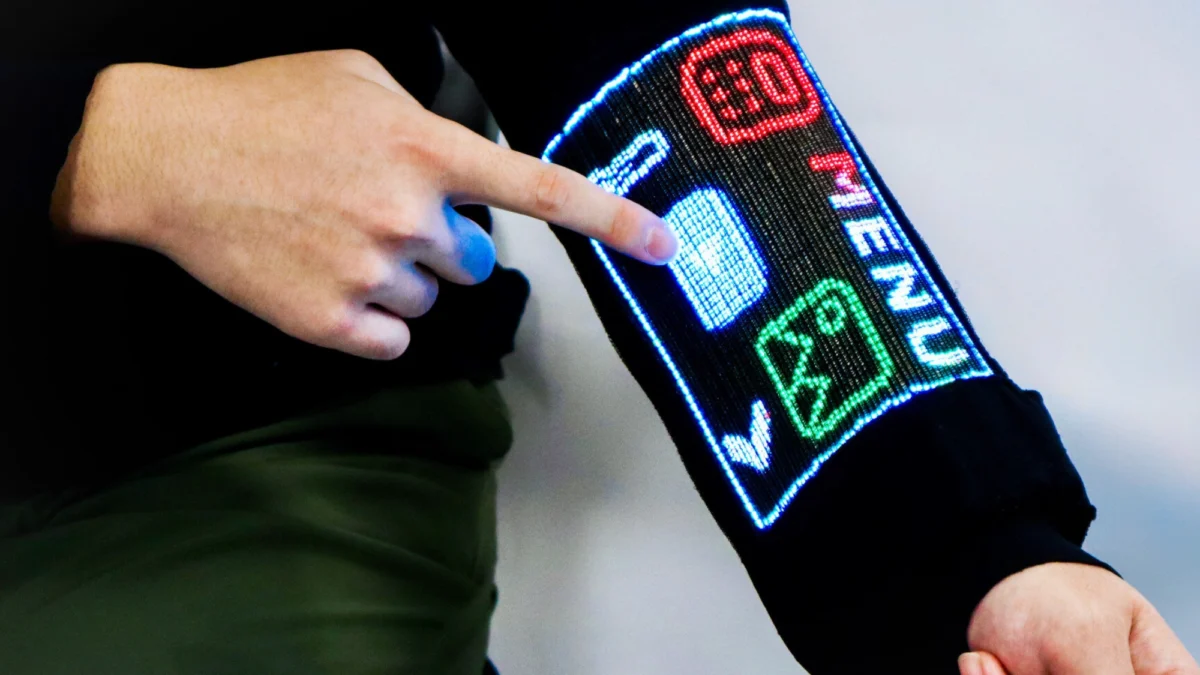
For the better part of the last two decades, the intersection of high-fashion and high-tech has been defined by a fundamental limitation: the inability to seamlessly integrate complex circuitry into the soft, pliable materials that make up our daily wardrobes. While the concept of "smart fabrics" has been a staple of science fiction and tech trade shows for years, the reality has largely been restricted to rudimentary sensors capable of simple inputs. However, a team of researchers from the National University of Singapore (NUS) College of Design and Engineering has recently unveiled a significant breakthrough, moving the needle from simple touch-sensitive buttons to a fully functional, pixel-addressable touchscreen display embedded directly into a garment.
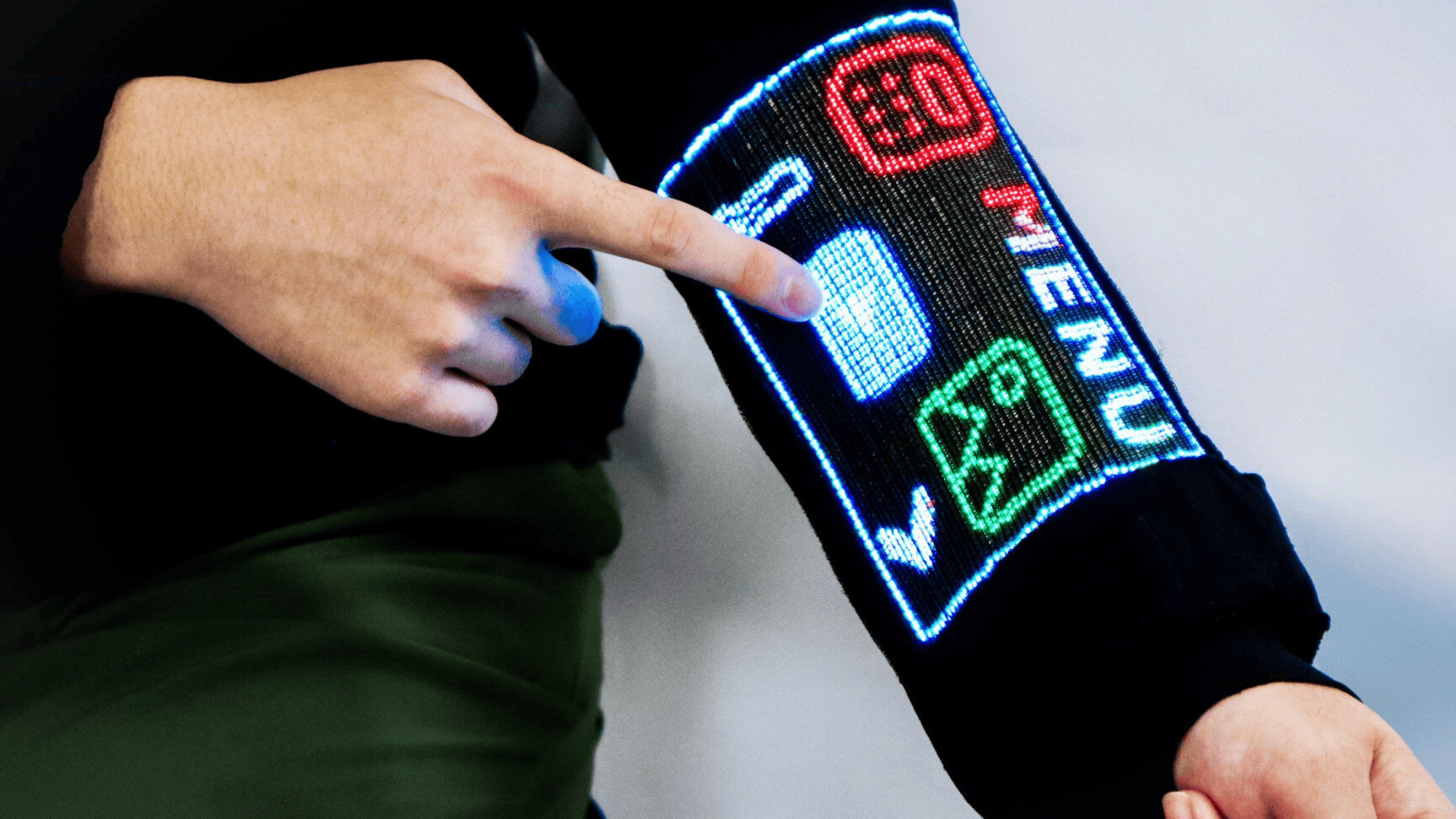
The findings, published in the journal Nature, describe a sophisticated architecture that allows for a 96 by 54-pixel display to be woven into the fabric of a shirt. This innovation marks a pivot from previous attempts at smart clothing, which often relied on rigid, discrete components that could not withstand the rigors of everyday wear or the mechanical stress of laundering. By engineering electronic fibers that act as both structural threads and digital display components, the NUS team has effectively created a wearable interface capable of running calculators, displaying photo galleries, playing video content, and relaying real-time biometric data such as body temperature.
A History of Wearable Connectivity: From Jacquard to Today
To understand the magnitude of this achievement, one must examine the iterative, and often failed, history of the wearable technology sector. The pursuit of "connected clothing" reached a high-water mark in 2017 when Google and Levi Strauss collaborated on the Jacquard project. The resulting trucker jacket utilized conductive yarns in the sleeve cuff to detect tactile gestures. Users could tap, swipe, or brush the fabric to control smartphone functions—pausing music, triggering camera shutters, or receiving haptic alerts.
While the Jacquard project proved that consumers were willing to embrace wearable interfaces, the functionality was inherently tethered to the physical presence of a nearby smartphone. The system lacked a visual output; it was an input-only peripheral. When Google shuttered the Jacquard app in 2023, it underscored a broader industry realization: simple gesture control was not enough to justify the cost and complexity of smart clothing. The industry required a shift toward "Garment-GUI" systems, where the garment itself acts as an independent or semi-independent display. The NUS development represents the first viable bridge to that future.
Engineering the Digital Thread: The Mechanics of the Fiber
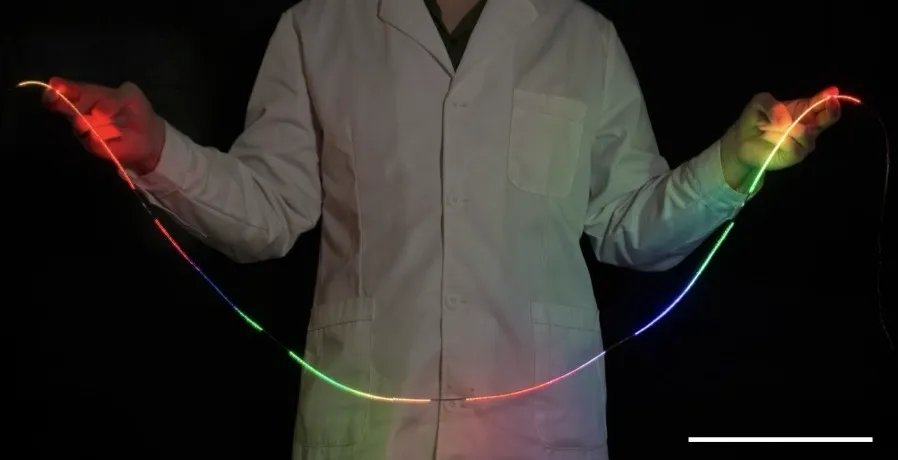
The primary hurdle in creating a flexible display is the conflict between the rigid nature of microchips and the fluid, one-dimensional geometry of a fiber. Traditional circuit board manufacturing relies on two-dimensional surfaces, which are antithetical to the drape and movement of textiles. Assistant Professor Tural Khudiyev and his team at NUS circumvented this by developing an innovative interconnection architecture that allows for thousands of microelectronic devices to be integrated into a single, multilayer thread.

The fabrication process is a marvel of precision engineering. Using advanced laser-guided soldering, the team creates precise connection points along an insulated wire. These points serve as the housing for microchips that govern the behavior of the LEDs within the thread. The result is a fiber roughly one millimeter thick—thinner than a standard credit card—that maintains the structural integrity and flexibility of traditional yarn. In the prototype unveiled by the researchers, the team successfully integrated over 5,000 chips and 20,000 electrical components into the weave of the fabric. The final display, located on the inner forearm of the garment, spans approximately 6.6 by 4.3 inches.
Performance Benchmarks and Durability Standards
In laboratory testing, the touchscreen garment demonstrated performance levels that, while not matching the high-definition fidelity of modern mobile handsets, represent a functional milestone for textile electronics. The display supports 8-bit color depth, offering a distinct visual profile that allows for the rendering of recognizable imagery.
The most critical test for any wearable technology is durability. A device that cannot survive a washing machine is, for all intents and purposes, a disposable gimmick. The NUS team subjected their prototype to a rigorous series of stress tests, including 1,000 bending cycles and 50 full laundry wash cycles. The results indicated that the display and the underlying touch-sensitive circuitry retained near-original functionality despite the physical abuse. Furthermore, the material retains the breathability of denim and heavy cotton, ensuring that the wearer does not experience the discomfort typically associated with wearing synthetic, wire-laden garments.
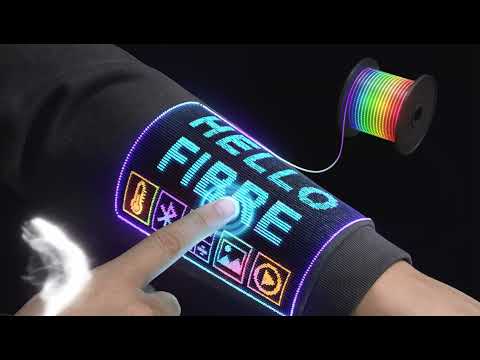
However, the technology is not without its current limitations. While the display can stream video at 30 frames per second, the integration of synchronized audio causes a performance dip to 25 frames per second, resulting in noticeable latency and visual stuttering. Additionally, the researchers have yet to finalize a standardized power delivery system, leaving questions regarding the daily battery life and charging protocols for a "smart shirt" that remains unanswered for potential commercial applications.
Broader Implications for Human-Computer Interaction
The implications of this technology extend far beyond the convenience of checking a notification on one’s sleeve. By shifting the user interface from a handheld device to the body itself, researchers hope to mitigate the pervasive issue of "smartphone distraction." By embedding the interface into the forearm, the garment facilitates a more natural, glanceable interaction that reduces the need for the constant, head-down posture associated with modern mobile usage.
From a clinical perspective, the integration of AI-driven health monitoring with this display architecture offers a transformative potential. "What made this possible was our ability to construct the GUI system from electronic building blocks in fiber form," said Professor Khudiyev. "This, when merged with AI systems, could enable personalized health monitoring, feedback, and assistance, providing users with immediate access to their vitals without the need to engage with a separate, intrusive screen."
The Road to Commercialization
Despite the enthusiasm surrounding the publication in Nature, the transition from lab-grown prototype to retail-ready product remains a significant challenge. The fashion industry operates on a scale of mass production that is currently incompatible with the intricate, laser-precision assembly required for these fibers. Furthermore, the garment must eventually contend with the "uncanny valley" of wearable tech: it must not only be functional but also aesthetically desirable and ethically secure.
As the industry looks toward the next generation of smart clothing, the NUS breakthrough provides a clear, documented roadmap for future development. While we are unlikely to see these garments on high-street shelves in the immediate future, the success of the 6.6-inch forearm display proves that the foundational technology for an "ambient computing" wardrobe is no longer a matter of ‘if,’ but ‘when.’
As researchers continue to refine the pixel density, power efficiency, and integration of these digital threads, the focus will likely shift toward standardizing the manufacturing process. If the durability benchmarks hold up in real-world, non-laboratory environments, the "Garment-GUI" could eventually serve as a bridge between the physical world and the digital information streams that currently dominate our attention. For now, the touchscreen shirt serves as a functional proof-of-concept that the clothes we wear are poised to become as interactive as the devices we carry.

