
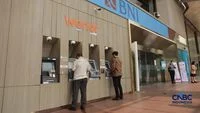
PT Bank Negara Indonesia (Persero) Tbk. (BBNI) has officially announced its intention to initiate a share buyback program, signaling a strategic effort to stabilize its market valuation amidst ongoing volatility in the Indonesian capital markets. The state-owned banking giant disclosed through an official filing with the Indonesia Stock Exchange (IDX) on Wednesday, October 28, 2026, that it has allocated a maximum of Rp547 billion to repurchase its outstanding shares. This corporate action is set to unfold over a three-month horizon, concluding on January 27, 2027, and serves as a tactical maneuver to bolster shareholder confidence during periods of economic uncertainty.
Strategic Rationale and Market Context
The decision by BNI to deploy capital for share repurchases comes at a time when the Indonesian banking sector is navigating a complex macroeconomic environment characterized by fluctuating interest rates and shifts in global investor sentiment. By opting to buy back shares, BNI is effectively signaling that its current market price is undervalued relative to its intrinsic financial strength.
Management has emphasized that the program will be executed through the Indonesia Stock Exchange, either in a staggered manner or as a lump-sum transaction, depending on liquidity conditions. The primary objective is to maintain price stability and provide a buffer against extreme market swings. Crucially, the company has clarified that this initiative will be funded entirely through internal cash reserves, ensuring that the bank’s core lending activities and operational sustainability remain unaffected.
Financial Health and Operational Impact
From a financial perspective, BNI maintains a robust capital structure, which serves as the foundation for this buyback initiative. Analysts note that BNI’s Capital Adequacy Ratio (CAR) remains comfortably above the regulatory requirements mandated by the Financial Services Authority (OJK). This capital buffer allows the bank to engage in capital management activities—such as dividend payouts and share buybacks—without compromising its ability to expand its loan portfolio or absorb potential credit risks.
In its disclosure, BNI explicitly stated that the buyback would not have a material negative impact on its operational costs. The bank’s profit and loss projections remain aligned with its long-term strategic targets, and the management expressed confidence that the reduction in liquidity resulting from the cash outflow would not hinder the institution’s ability to meet its financial obligations or support its business growth.
Regulatory Compliance and Execution
The execution of the buyback program is governed by strict adherence to the Financial Services Authority Regulation (POJK) Number 13 of 2023, which outlines the parameters for share repurchases by public companies. This regulation ensures that such actions are conducted transparently and fairly, preventing market manipulation.
BNI has committed to performing these transactions at prices deemed "fair and reasonable" within the context of market conditions. By observing these regulatory constraints, the bank aims to maintain high standards of corporate governance, ensuring that the interests of all shareholders—both retail and institutional—are protected throughout the three-month window.
Comparative Analysis: The Himbara Buyback Trend
BNI’s move is part of a broader trend among Indonesia’s state-owned banks, collectively known as Himbara (Himpunan Bank Milik Negara). This synchronized effort underscores a coordinated approach to supporting the domestic stock market during volatile periods.
PT Bank Rakyat Indonesia (Persero) Tbk. (BBRI) has been particularly active in this regard. Following an authorization from its Annual General Meeting of Shareholders (RUPST) on March 24, 2025, which approved a massive buyback mandate of up to Rp3 trillion, BBRI has been executing these plans in stages. In June 2026, BBRI launched its Phase I buyback, allocating Rp500 billion, and has subsequently announced a Phase II program valued at Rp1 trillion, slated to run until January 21, 2027.
Similarly, PT Bank Syariah Indonesia (Persero) Tbk. (BRIS) has signaled its intention to participate in this market stabilization effort, with a planned buyback of up to Rp500 billion, also utilizing internal cash flows. This collective action by the nation’s largest financial institutions provides a significant safety net for the Jakarta Composite Index (JCI), which often looks to the performance of these blue-chip banking stocks for direction.
Chronology of Events and Future Outlook
- March 24, 2025: BNI and other state-owned banks receive initial shareholder approval at their respective Annual General Meetings to conduct buyback programs.
- June 12, 2026: BBRI initiates the first phase of its buyback program (Rp500 billion) amidst significant market fluctuation.
- October 28, 2026: BNI officially announces its Rp547 billion buyback program, effective immediately.
- January 21, 2027: Expected completion of BBRI’s Phase II buyback program.
- January 27, 2027: Official deadline for the completion of BNI’s share repurchase initiative.
Looking forward, the success of these programs will be measured by their ability to dampen volatility and the long-term impact on the banks’ Earnings Per Share (EPS). Because shares repurchased are typically held as treasury stock or canceled, the remaining outstanding shares will represent a larger portion of the company’s ownership, potentially increasing the value per share for remaining investors.
Market Implications and Analyst Perspectives
Market analysts generally view these buybacks as a positive signal. When a bank of BNI’s size—a cornerstone of the national economy—allocates half a billion rupiah to buy its own stock, it acts as a floor for the share price. It communicates to the market that management believes the stock is currently trading at a discount.
However, the efficacy of these programs depends heavily on the prevailing macroeconomic conditions. If global interest rates remain high or if there are unexpected shocks to the Indonesian economy, the buyback programs might be viewed more as a defensive necessity rather than a pure reflection of company growth. Nevertheless, the fact that these banks are utilizing internal cash rather than debt to fund these operations reinforces the stability of the Indonesian banking sector.
Furthermore, the participation of BNI, BBRI, and BRIS in such programs highlights the proactive stance of state-owned enterprises in managing shareholder value. As these institutions navigate the remainder of 2026 and head into 2027, their ability to balance dividend payments, capital expenditure, and share buybacks will be closely monitored by institutional investors and analysts.
Concluding Thoughts on Governance and Sustainability
The decision to conduct a share buyback is a sophisticated financial tool that, when used correctly, benefits the company and its shareholders. BNI’s adherence to transparency, regulatory compliance, and a cautious approach—ensuring that liquidity for business operations remains intact—demonstrates a balanced approach to capital management.
As the program progresses toward its January 2027 conclusion, market observers will be watching for the total volume of shares repurchased and the average purchase price. These metrics will eventually feed into the banks’ annual reports, providing a clear picture of how effective this intervention was in navigating the volatile market landscape of 2026. Ultimately, BNI’s move reinforces its position as a pillar of financial stability, committed to protecting shareholder interests while continuing to drive economic growth through its primary banking operations.

