
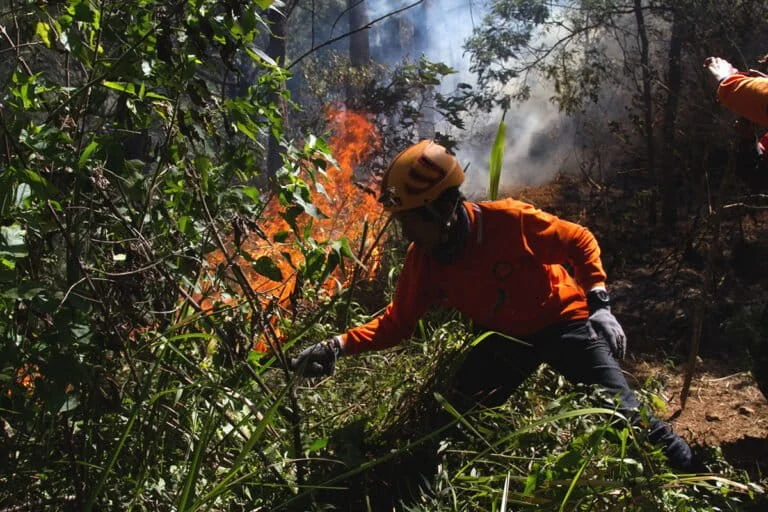
The current paradigm of law enforcement regarding forest and land fires (karhutla) in Indonesia remains fundamentally flawed, prioritizing state revenue collection through financial penalties over the essential mandates of environmental restoration and the protection of community rights. Legal experts and environmental watchdogs argue that existing litigation strategies frequently treat environmental damage as a transactional cost for corporations, failing to implement comprehensive, scientifically grounded recovery plans for degraded ecosystems or to compensate the millions of citizens suffering from the health and economic consequences of recurring toxic haze.
This critical assessment was brought to the forefront during a recent policy discussion held in Jakarta on October 13, 2026, featuring insights from Professor Andri Gunawan Wibisana of the University of Indonesia’s Faculty of Law. In collaboration with the National Commission on Human Rights (Komnas HAM), the discussion highlighted a systemic disconnect: while the government possesses the legal authority to hold corporations accountable for environmental destruction, these efforts are often siloed, narrow in scope, and disconnected from the long-term biological and human realities of forest fires.
The Failure of Current Litigation Paradigms
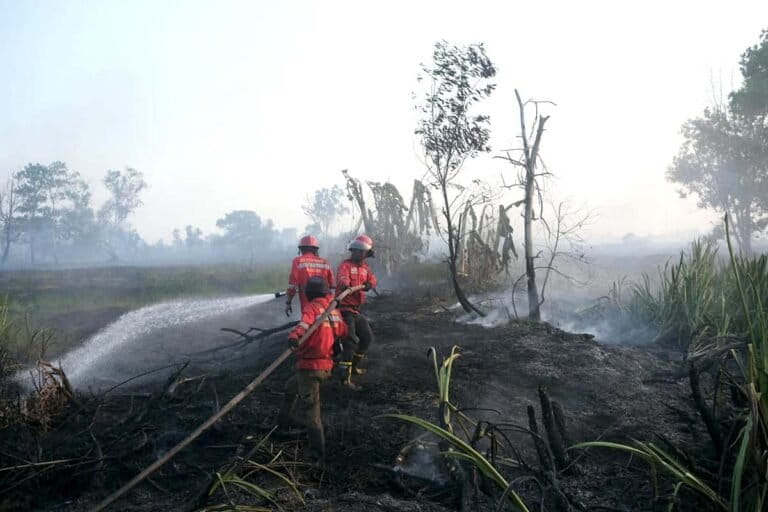
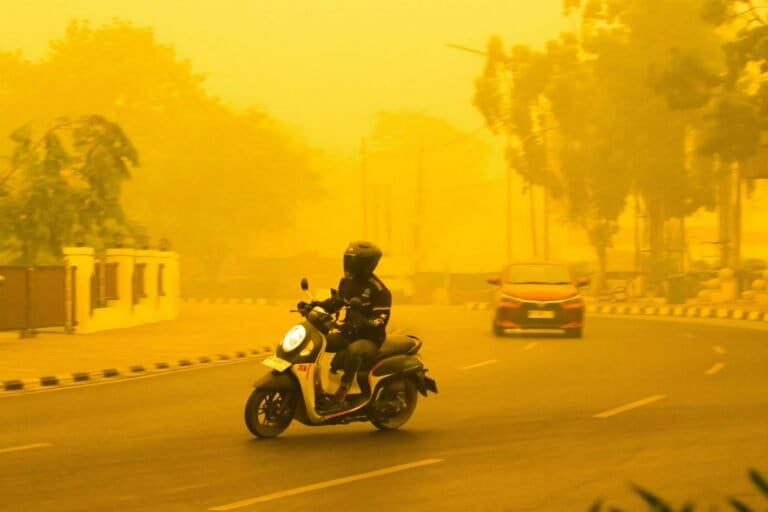
For years, the Indonesian government’s approach to litigation has been predominantly reactive and focused on the physical damage within the burned concession areas. This strategy, while technically valid, ignores the secondary, often more devastating impacts of smoke pollution, which cripples public health, disrupts regional economies, and infringes upon the basic human rights of communities living in the shadow of these fires.
Professor Wibisana emphasizes that there is a stark distinction between the destruction of the ecosystem itself and the subsequent damage caused by transboundary haze. The former is a matter of environmental torts within a specific landscape, while the latter is a matter of public harm affecting populations far beyond the perimeter of the fire. Current legal mechanisms fail to distinguish between these two categories of harm. As a result, when the government wins a court judgment, the resulting fines are frequently absorbed into the state’s non-tax revenue (PNBP) rather than being ring-fenced for the direct restoration of the impacted environment or the support of affected communities.
This "revenue-first" mentality creates a perverse incentive structure. If the state views environmental litigation merely as a mechanism for income generation, the intrinsic value of the forest—and the welfare of the people who depend on it—becomes secondary to the fiscal balance sheet. "Our expectation is that every rupiah obtained from these lawsuits should be explicitly earmarked for restoration," Wibisana noted. Without a dedicated fund and a legally binding restoration plan, the environmental damage remains, and the cycle of fire and haze continues unabated.
A Fragmented Legal Landscape
The challenge of effective restoration is compounded by the lack of clear, cohesive regulations. While government instruments such as the Ministry of Environment and Forestry Regulation No. 16/2017 provide a framework for peatland restoration, the practical application remains disjointed. Restoration is not a monolithic task; it requires distinct approaches—remediation, rehabilitation, and full-scale restoration—depending on the severity of the damage.
The current legal environment allows for overlapping and often conflicting pathways for accountability. A single corporation may be subject to administrative sanctions, a civil lawsuit, and criminal charges simultaneously. Without a central coordinating body to manage these processes, the outcome is not a cohesive restoration effort but a "system without a system." This lack of integration leads to inefficiencies where companies pay fines but fail to undertake the necessary, long-term work of ecological recovery.
Comparative Lessons: The Concept of Interim Loss
In contrast to Indonesia’s current approach, other jurisdictions have adopted more sophisticated models of environmental accountability. In the United States, for instance, legal frameworks for natural resource damage assessment go beyond the "primary restoration" of returning a site to its original condition. These frameworks explicitly account for "interim losses"—the value of the ecosystem services lost during the years or decades it takes for a forest or peatland to recover.
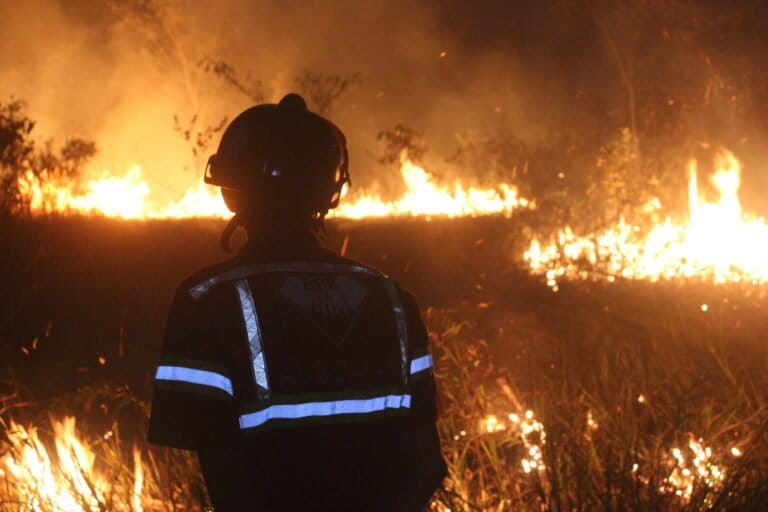
In the context of Indonesian peatlands, which may require over a century to reach full recovery, the economic and ecological losses during the "waiting period" are staggering. An effective legal strategy would mandate "compensatory restoration," requiring the perpetrator to restore or protect additional areas of land to compensate for the services lost during the recovery phase. By ignoring these interim losses, the current Indonesian legal strategy significantly undervalues the true cost of environmental destruction.
The Structural Roots of the Crisis
The crisis of forest and land fires cannot be divorced from the broader context of forest governance, land tenure inequality, and the prioritization of corporate interests over sustainable land use. Adam Putra Firdaus, head of the Forestry and Biodiversity Division at the Indonesian Center for Environmental Law (ICEL), points out that the problem begins with a land-use policy that is heavily skewed toward large-scale corporate concessions.
As of 2026, approximately 37.6 million hectares of Indonesian forest are under corporate permit, while community-based social forestry programs cover only a fraction of that, estimated between 5 to 6 million hectares. This systemic imbalance creates a landscape where large entities manage vast tracts of land with varying degrees of oversight, while local communities are marginalized.
The disparity in legal enforcement is also evident in the data. Between 2019 and 2024, ICEL documented 217 cases related to environmental, forestry, and conservation laws. The findings are sobering: the vast majority of these cases targeted individual citizens, such as traditional farmers practicing age-old agricultural methods, rather than the corporations that control the majority of the forest area. In cases filed under the Forestry Law, not a single corporation was held to account, despite the massive scale of land usage controlled by such entities. This "territorialistic" approach to enforcement suggests that the law is often applied in a way that criminalizes the most vulnerable, while the systemic causes—large-scale industrial activities—remain largely shielded.
Escalation of Fire Risks in Concessions
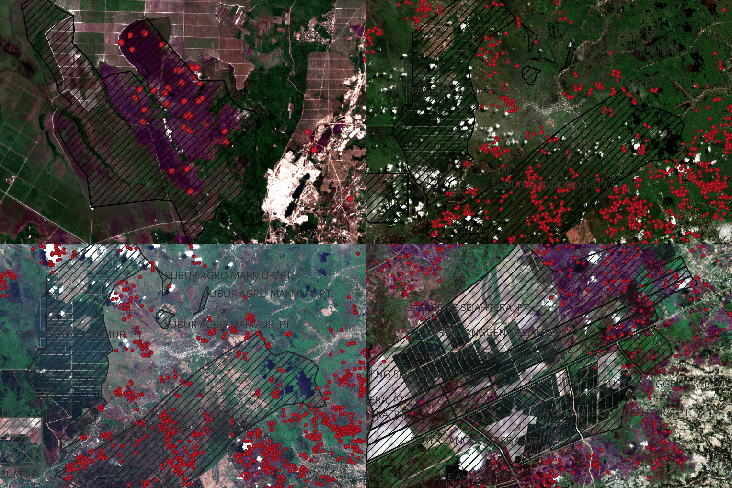
Data from environmental watchdog Wahana Lingkungan Hidup Indonesia (Walhi) reveals an alarming trend in 2026. Between January and September, hundreds of hot spots were identified within corporate concessions. By September, Walhi recorded over 200 high-confidence hot spots across 854 concessions, including palm oil plantations, timber operations, and mining sites.
The construction of drainage canals in peatland concessions serves as a primary, man-made catalyst for these fires. By draining the peat to make it suitable for non-native crops, companies essentially transform the landscape into a massive tinderbox. Despite the clear link between canalization and fire vulnerability, the pace of legal action against these corporations remains sluggish.
Teo Reffelsen of Walhi argues that the government must move beyond mere sanctioning and demand full environmental restoration. Furthermore, he calls for radical transparency, asserting that the public has a right to know the status of investigations into companies that are suspected of causing environmental catastrophes. The recent case of two Dayak Maanyan indigenous farmers being charged for practicing traditional fire-clearing methods—while corporate actors face far less scrutiny—has drawn intense criticism from human rights advocates, who argue that the government is scapegoating local communities to distract from its failure to regulate major industry players.
Conclusion: A Call for Paradigmatic Shift
The ongoing struggle to manage forest and land fires in Indonesia is not merely a technical challenge; it is a profound failure of policy and governance. To mitigate the recurring haze that plagues the nation, the legal framework must evolve. This requires, at a minimum:
- Ring-fencing Fines: Ensuring that all legal penalties are exclusively utilized for environmental restoration and public health initiatives rather than general state revenue.
- Harmonization of Laws: Aligning the disparate regimes of environmental and forestry laws to ensure that restoration is a legally mandated, quantifiable goal rather than an optional outcome.
- Strict Liability Enforcement: Consistently applying the principle of strict liability, particularly in peatland concessions, where the mere act of draining the land makes a company inherently responsible for any fire that ensues.
- Addressing Land Tenure: Rebalancing the distribution of land rights to favor local and indigenous communities, who have historically proven to be more effective stewards of the forest.
Without these foundational changes, the government will continue to treat the symptoms of the fire crisis while the root causes continue to thrive. The protection of Indonesia’s environment and the health of its people depends on a legal system that values the restoration of nature above the collection of temporary fees.

