
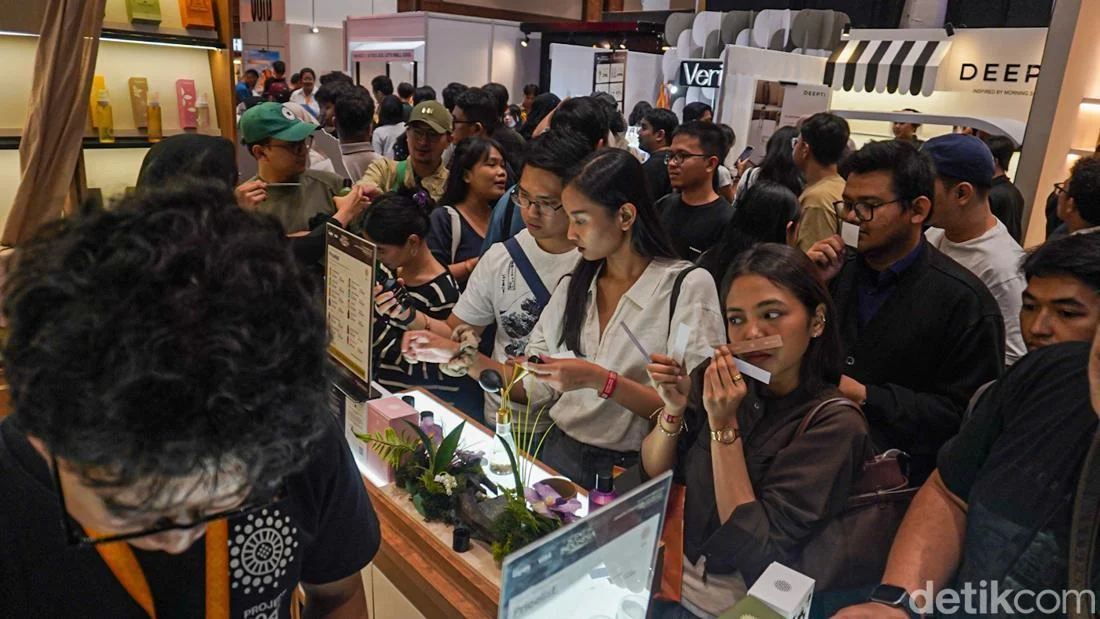
The burgeoning Indonesian fragrance industry achieved a significant milestone on Saturday, November 7, 2026, as the Jakarta International Convention Center (JICC) in Senayan played host to "Scent of Indonesia," a premier exhibition dedicated exclusively to homegrown perfumery. Drawing over 90 local fragrance brands under a single roof, the event surpassed initial attendance projections, pulling in thousands of enthusiastic consumers, industry insiders, and retail investors. The overwhelming turnout underscores a structural shift in consumer behavior within Southeast Asia’s largest economy, where domestic lifestyle and beauty brands are increasingly capturing market share previously dominated by international luxury houses.
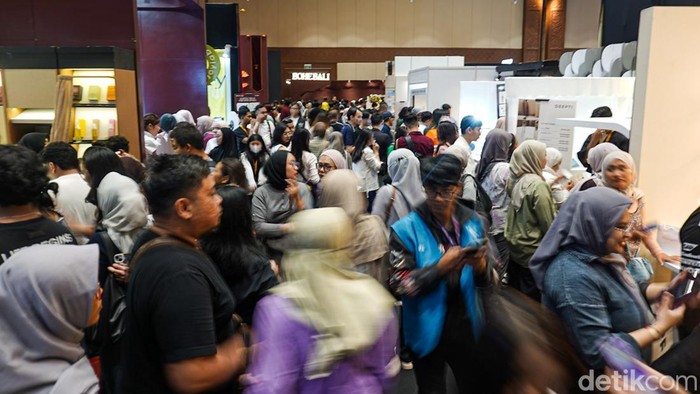
From the moment doors opened at 10:00 AM, the exhibition hall buzzed with sensory exploration. Visitors packed the aisles, engaging deeply with brand representatives and meticulously testing a wide spectrum of olfactory creations. The event served not merely as a commercial marketplace, but as a cultural showcase demonstrating how Indonesian perfumers are leveraging local botanicals, spices, and contemporary storytelling to redefine the nation’s identity in the global fragrance landscape.
A Comprehensive Overview of the Exhibition and Brand Diversity
Scent of Indonesia brought together an eclectic mix of established local market leaders and indie artisanal laboratories. The participating 90-plus brands showcased an impressive diversity of scent profiles, ranging from traditional Indonesian ingredients—such as patchouli, sandalwood, and various tropical florals—to modern synthetic accords, gourmand notes, and minimalist aquatic blends.
Throughout the sprawling venue, the sensory atmosphere was dominated by the rustle of blotters—paper scent strips—as attendees tested and compared various formulations. This hands-on interaction formed the core of the visitor experience. Rather than relying on traditional retail counters where choices are often rushed, consumers spent hours discussing longevity, sillage, and scent evolution directly with the noses and founders behind the labels.
Beyond the liquid creations themselves, the exhibition stood out for its rigorous attention to visual branding and spatial design. In a market where digital presence heavily dictates consumer trust, participating brands recognized the physical exhibition as a crucial touchpoint for tangible brand equity.
Creative Visual Merchandising and Stand Architecture
The visual presentation at Scent of Indonesia reflected the sophisticated maturation of the Indonesian creative economy. Each participating brand curated its booth to communicate a distinct narrative, utilizing architectural elements, lighting, and packaging design to captivate foot traffic.
Standard retail displays gave way to avant-garde installations. Several prominent labels opted for heavy, minimalist glass bottles housed within sleek acrylic showcases, evoking the aesthetic of high-end European perfumeries. Conversely, other indie houses leaned into sustainable and culturally grounded motifs, incorporating elements like natural rattan, woven bamboo structures, and raw earth tones to house their testing stations.
This duality highlighted the versatility of local designers, who seamlessly blended contemporary luxury aesthetics with indigenous Indonesian materials. The clever integration of traditional elements not only served as an eye-catching backdrop for social media content but also reinforced the intrinsic connection between the products and their geographic origins.
Background Context and Industry Evolution
The success of Scent of Indonesia does not happen in a vacuum. Over the past five years, the Indonesian beauty and personal care sector has undergone a quiet revolution, catalyzed by the COVID-19 pandemic and the subsequent surge in localized e-commerce. Supply chain disruptions during the early 2020s prompted consumers to look inward, while local creators capitalized on digital platforms to build direct-to-consumer (DTC) relationships without relying on traditional brick-and-mortar retail gatekeepers.
Historically, the Indonesian fragrance market was heavily reliant on mass-market body sprays and imported designer perfumes. However, a rising middle class, coupled with a young demographic keenly interested in self-expression and personal grooming, created fertile ground for niche perfumery. Local entrepreneurs identified gaps in the market—specifically, the demand for formulations tailored to Indonesia’s tropical climate, which requires distinct longevity and projection compared to cooler temperate regions.
Industry analysts note that local fragrance brands have successfully leveraged social media platforms such as TikTok and Instagram to educate consumers about fragrance notes, layering techniques, and the difference between Eau de Parfum (EDP) and Eau de Toilette (EDT). This grassroots consumer education laid the groundwork for large-scale physical events like Scent of Indonesia, transforming curious online buyers into loyal, knowledgeable brand advocates.
Economic Implications and Market Projections
The phenomenal turnout at the JICC carries broader implications for the national retail and manufacturing sectors. With over 90 brands exhibiting simultaneously, the event provided a clear snapshot of an industry scaling rapidly from cottage-industry status to a formalized, institutionalized commercial sector.
Economic observers point out several key impacts of this growth:
- Supply Chain Localization: As demand for raw materials increases, local farmers cultivating essential oils—such as patchouli in Aceh and Sulawesi, and vetiver in Java—stand to benefit from long-term, stable supply contracts with domestic perfumeries.
- Retail Expansion: The success of physical showcases suggests that local perfume brands are primed for broader expansion into major shopping malls across Jakarta, Surabaya, Bandung, and other tier-one cities, gradually replacing foreign imports in prime retail real estate.
- Employment and Creative Economy: The boom in homegrown fragrance stimulates secondary industries, including graphic design, glass manufacturing, packaging engineering, and specialized retail logistics.
Furthermore, industry stakeholders are already looking toward regional export opportunities. Given Southeast Asia’s shared climatic conditions and cultural affinities, Indonesian indie fragrances possess natural export potential to neighboring markets such as Malaysia, the Philippines, and Singapore.
Consumer and Stakeholder Reactions
Feedback gathered from attendees on the exhibition floor reflected overwhelming optimism and national pride. Many visitors expressed surprise at the international-grade quality of the formulations, noting that local brands matched, and in some cases surpassed, the complexity of well-known international designer brands at a fraction of the cost.
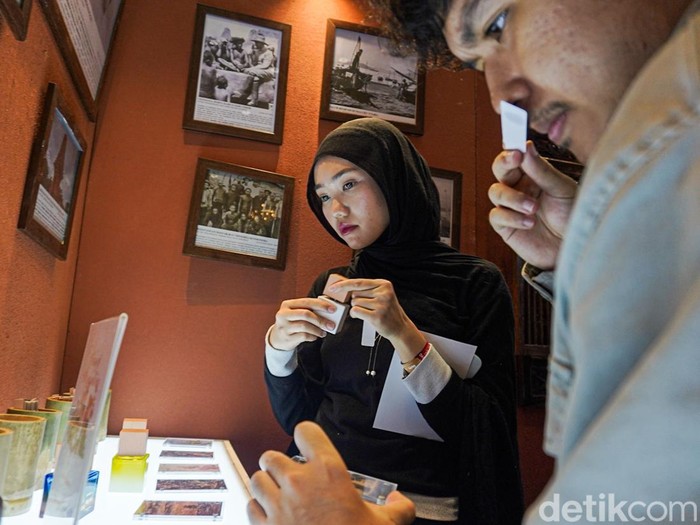
Marthin Luther, a fragrance enthusiast attending the event, shared his perspective while testing a local woody-spicy blend. "A few years ago, people would look down on local perfumes, thinking they didn’t last long or smelled generic. Events like this prove that Indonesian perfumers can compete globally. The storytelling behind these scents makes wearing them feel personal," he remarked.
Similarly, brand founders on the floor reported record-breaking engagement. Several indie houses noted that their limited-edition stock sold out within the first few hours of the exhibition, forcing them to transition to pre-order models to accommodate the unexpected surge in demand. This enthusiastic market response is expected to accelerate venture capital interest and private equity investments in the country’s beauty and personal care sector throughout the remainder of 2026 and into 2027.
Conclusion and Future Outlook
The Scent of Indonesia exhibition at JICC Senayan marks a defining chapter for the nation’s fragrance industry. By successfully uniting more than 90 independent and established brands under one roof, the event demonstrated the commercial viability, creative ingenuity, and profound consumer appeal of local perfumery.
As the Indonesian domestic market continues to mature, events of this scale serve as vital barometers of economic self-sufficiency and creative confidence. With robust consumer demand, innovative product development, and a growing appreciation for local craftsmanship, the Indonesian fragrance sector is well-positioned to cement its status not only as a domestic powerhouse, but as an emerging contender on the global olfactory map.

