
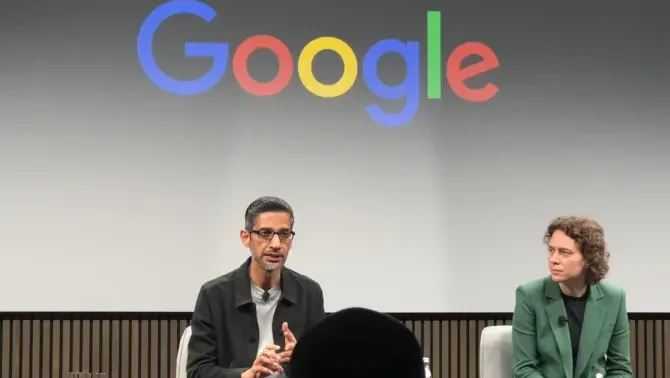
The global technology landscape is increasingly defined by leaders of Indian origin who sit at the helm of some of the world’s most influential corporations. From Sundar Pichai leading Google and Alphabet, to Satya Nadella steering Microsoft, Arvind Krishna directing IBM, and Neal Mohan heading YouTube, Indian executives have scaled the highest peaks of the corporate world. Beyond individual achievement, this phenomenon reflects a broader systemic shift in how nations cultivate, export, and leverage technological talent. Observers often ask how a nation transitions from a developing economy into the primary breeding ground for global tech titans. The answer lies in a deliberate combination of aggressive governmental policy, massive investments in STEM education, the rise of domestic tech hubs, and a unique cultural adaptability that resonates within Western corporate structures.
The strategic vision of the Indian government has played a foundational role in this transformation. Recognizing early on that the future economy would be driven by digital infrastructure, successive administrations prioritized technical education and institutional development. India currently boasts the world’s second-largest internet user base, creating a domestic crucible for digital innovation and scale. This massive market demand compelled the state to continuously upskill its citizenry, ensuring a steady pipeline of engineers, developers, and data scientists. According to R Gopalakrishnan, former executive director of Tata Sons and co-author of The Made in India Manager, no other country trains its citizens for the global workforce with the scale and rigor practiced by India.
This institutional focus is further supported by international metrics. Data from the Global Innovation Index, compiled through research by Cornell University and INSEAD, consistently positions India as a premier global exporter of information technology services while ranking it among the highest globally for the volume of science and engineering graduates it produces. To sustain this momentum, the Indian government has looked beyond traditional educational reforms, actively attempting to replicate the success of America’s Silicon Valley on domestic soil. Rather than concentrating resources in a single zone, the nation has designated at least four major metropolitan areas to serve as comprehensive technology and innovation clusters.
The first of these critical hubs is Chennai, the capital of the southeastern state of Tamil Nadu. Historically recognized for its industrial manufacturing base, Chennai has evolved into India’s largest exporter of IT services and Business Process Outsourcing (BPO) operations. Global electronics and software giants—including Samsung, Nokia Siemens, Motorola, Lenovo, Dell, and Flextronics—maintain significant regional footprints here, utilizing the city’s robust talent pipeline and logistical advantages.
Further inland, Hyderabad, the capital of Telangana, has established itself as a premier global IT corridor and India’s foremost biotechnology center. Often referred to as Cyberabad alongside its status as the pharmaceutical capital of India, the city hosts over 1,300 multinational technology corporations. Silicon Valley giants such as Microsoft, Apple, Amazon, and Google have established massive corporate campuses in Hyderabad, drawing heavily from the region’s specialized research universities.
In the southwestern tip of the country lies Thiruvananthapuram, located in the state of Kerala. This city serves as the cradle of the monumental Technopark project, a sprawling IT park that has housed hundreds of specialized technology firms since its inception, providing a strategic coastal base for software development and engineering services.
Meanwhile, Bangalore—officially known as Bengaluru—remains the undisputed silicon capital of India. Located in Karnataka, the city features three primary technology clusters: the Software Technology Parks of India (STPI), the International Tech Park Bangalore (ITPB), and Electronics City. Bangalore functions not merely as an execution center but as a core research and development crucible for multinational heavyweights like Google, Microsoft, and Oracle.
The trajectory from an emerging engineering graduate in one of these Indian tech hubs to chief executive officer of a Fortune 500 company is paved by distinct sociological and professional factors. Technology entrepreneur and academic Vivek Wadhwa notes that while technical competence is a baseline requirement, the distinguishing factor for Indian executives is their capacity for seamless cultural integration and emotional intelligence. Wadhwa observes that Indian professionals excel at building robust collaborative networks, particularly within the competitive ecosystem of Silicon Valley, where mutual professional support accelerates career mobility.
Furthermore, leadership experts point to a distinct managerial ethos among Indian-born CEOs. Unlike founder-CEOs who often possess disruptive or polarizing personas, executives like Nadella and Pichai frequently project a style characterized by measured caution, deep self-reflection, and inclusive communication. This softer corporate culture has proven especially valuable during periods when major technology firms face intense regulatory scrutiny, congressional hearings, geopolitical tensions, and widening economic disparities between Silicon Valley elites and the broader public. Their ability to navigate complex stakeholder relationships—balancing government mandates, shareholder demands, and public trust—makes them ideal candidates for the highest echelons of corporate governance.
The ripple effects of this leadership wave extend far beyond the technology sector. In addition to corporate tech giants, individuals of Indian descent now occupy pivotal roles across international finance and developmental economics, such as Ajay Banga, President of the World Bank Group. As India continues to refine its technological infrastructure, expand its domestic innovation clusters, and export world-class talent, the global economic landscape will likely continue to be shaped by leaders forged in the crucible of India’s modern educational and industrial renaissance.

