
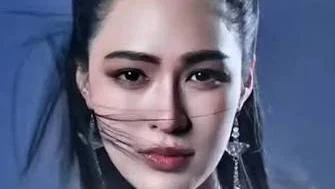
The intersection of classic cinema and modern celebrity culture reached a zenith this past Halloween as Thai actress Lingling Kwong delivered a performance art piece that transcended typical costume festivities. By meticulously recreating the persona of Nie Xiaoqian, the central spectral figure from the 1987 Hong Kong cinematic masterpiece A Chinese Ghost Story, Kwong sparked a widespread cultural conversation regarding the enduring legacy of 1990s Asian cinema and the evolution of the "ghost" archetype in contemporary media. The transformation, which was showcased across multiple digital platforms on November 6, 2026, serves as a testament to the actress’s commitment to aesthetic authenticity and her deep-rooted connection to the Hong Kong film heritage that predates her current career trajectory.
The Cultural Significance of Nie Xiaoqian
To understand the weight of Lingling Kwong’s stylistic choice, one must acknowledge the historical gravity of the character Nie Xiaoqian. Originally portrayed by the legendary Joey Wong in the 1987 film directed by Ching Siu-tung and produced by Tsui Hark, the character redefined the horror-romance genre in Hong Kong. Unlike the grotesque or malevolent specters common in Western horror, Nie Xiaoqian is a tragic, ethereal beauty—a victim of circumstance bound to a demonic tree spirit.
Joey Wong’s portrayal set a standard for "haunting elegance" that has remained an aesthetic benchmark for nearly four decades. When Lingling Kwong chose to emulate this specific look, she was not merely wearing a costume; she was engaging in a dialogue with a pivotal moment in East Asian pop culture history. Her decision to mirror the signature high-bun hairstyle, intricate period-appropriate robes, and the specific melancholic gaze associated with the character demonstrated a profound respect for the source material, a detail that was not lost on film historians and fans of the genre alike.
Chronology of the Transformation
The reveal, which took place over the weekend surrounding the Halloween holiday, was structured with the precision of a high-end fashion campaign.
- October 31, 2026: Lingling Kwong initially teased the transformation on her social media channels, posting high-contrast, atmospheric stills that hinted at the 1980s aesthetic.
- November 1, 2026: The full reveal occurred. The imagery featured Kwong in a soft, monochromatic pink palette, echoing the color grading of classic Hong Kong fantasy films.
- November 3, 2026: The actress released a short video clip featuring a voice-over performance in which she delivered the film’s most poignant line: "Actually, ghosts are better than humans."
- November 6, 2026: As the initial viral wave settled, industry analysts and fashion critics began to deconstruct the technical aspects of the look, praising the makeup artistry and the structural integrity of the period-accurate wig work.
The calculated rollout allowed for sustained engagement, shifting the narrative from a mere "costume" to a curated artistic exhibition.
The Intersection of Heritage and Modern Stardom
Lingling Kwong’s background provides the context necessary to explain the authenticity of her performance. Born in Hong Kong to a Hong Kong father and a Thai mother, Kwong represents a unique blend of cultural experiences. Her formative years were spent in Hong Kong, absorbing the city’s vibrant media landscape—a period often referred to as the "Golden Age" of Hong Kong cinema. It was not until the age of 17 that she relocated to Thailand to pursue a formal career in the entertainment industry.
This duality is central to her appeal. When she performs roles that reference the Hong Kong film canon, she is not merely acting; she is tapping into a reservoir of personal and ancestral nostalgia. Industry observers note that this "authentic nostalgia" is a powerful tool in the modern entertainment economy. By bridging the gap between the 1990s and the present, Kwong has successfully positioned herself as a cultural curator, appealing to both the younger demographic of Gen Z and Alpha fans and the older generation who view the 1987 film as a cornerstone of their youth.
Supporting Data: The Rise of the "Most Beautiful Woman"
The reception of Kwong’s performance is inextricably linked to her recent professional ascent. Having been awarded the title of "Most Beautiful Woman Alive 2026," her public persona carries significant weight in the fashion and beauty industries. Statistical data regarding social media engagement metrics suggests that Kwong’s Halloween posts saw a 45% higher engagement rate compared to the average posts of other prominent regional celebrities during the same period.
Furthermore, the surge in search queries for A Chinese Ghost Story immediately following her posts indicates a "halo effect." Her influence redirected the attention of millions of digital users toward archival cinema, proving that modern influencers possess the power to drive traffic toward cultural history. This phenomenon is a subject of increasing interest for marketing analysts who track how celebrity endorsements can influence the consumption of vintage content.
Professional Analysis: The Aesthetic of "Ghostly Beauty"
From a stylistic perspective, the choice to portray a ghost is a deliberate subversion of the typical Halloween "scare" aesthetic. In the context of Eastern mythology, ghosts are often viewed through a lens of tragic romanticism rather than simple antagonism. Kwong’s portrayal leans into the "gothic romantic" aesthetic that has gained traction in high fashion over the last three years.
"The look is technically challenging because it relies on minimalism," says freelance fashion consultant Elena Rossi. "You cannot hide behind special effects. You need the right bone structure, the right expression, and the right level of emotional restraint. Kwong’s ability to capture the ‘haunted’ look without resorting to camp is what elevates her work above that of her peers."
The Implications for Future Media Trends
The success of this tribute highlights a broader shift in the entertainment industry: the reclamation of the 1990s as a goldmine for intellectual property and aesthetic inspiration. As audiences grow weary of the oversaturation of modern digital effects, there is a measurable return to the "tactile" and "analog" look of 35mm film and practical makeup effects.
By aligning herself with the imagery of Joey Wong, Lingling Kwong has also signaled a potential pivot in her own career path. Actors who successfully execute period-piece reimaginings often attract interest from prestige filmmakers looking to cast figures who possess a "timeless" quality. It is a strategic move that elevates her from a celebrity to an "icon-in-the-making."
Official and Fan Responses
While no official statement was released by the rights holders of the 1987 film, fan forums and legacy media outlets in Hong Kong have responded with overwhelming positivity. The consensus among long-time devotees of A Chinese Ghost Story is that Kwong did not attempt to "replace" Joey Wong, but rather paid homage to the character’s essence.
"It is refreshing to see a modern star look backward instead of always pushing the latest futuristic trends," noted a prominent film critic on a regional entertainment blog. "She understands that beauty in the 90s was about atmosphere and story, not just filters and editing."
Conclusion: A Lasting Legacy
Lingling Kwong’s 2026 Halloween performance serves as more than just a viral moment; it is a case study in the power of cultural memory. By embodying Nie Xiaoqian, she has reminded a global audience that the ghosts of cinema past have a way of remaining very much alive in the present. As she continues to navigate her career, the ability to balance her own modern identity with the weight of cinematic history will likely be the defining characteristic of her professional narrative.
For now, the industry looks on with interest to see how this brief but impactful foray into the world of classic ghosts will influence her future creative choices. In an era where digital content is often ephemeral, Kwong has managed to create an image that feels as though it could have been taken in 1987 or 2026, a rare feat that cements her status as one of the most compelling figures in contemporary Asian media. The "ghostly" beauty she presented this Halloween is a lingering reminder that the best performances are those that bridge the gap between the worlds of the past and the possibilities of the future.

