
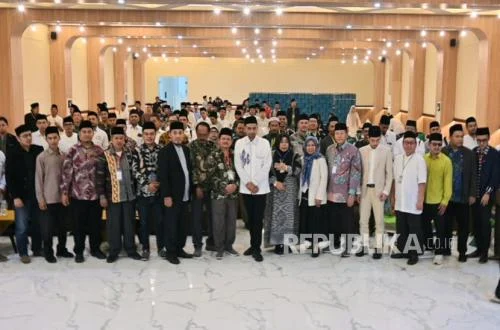
JAKARTA – The Komisi Pesantren Majelis Ulama Indonesia (MUI) – the Indonesian Ulama Council’s Pesantren Commission – successfully concluded its second Multaqa Ru’asa’ al-Ma’ahid (Meeting of Pesantren Leaders) on Saturday, July 18, 2026. Hosted by STMIK AMIK Bandung, a prominent technology and information management institution, the landmark forum served as a crucial pre-congress event for the upcoming Eighth Indonesian Muslim Congress (KUII VIII). Under the resonant theme, "Analysis of Potential and Business Incubation of Islamic Boarding Schools (Pesantren)," the gathering brought together an influential convergence of pesantren leaders, esteemed academics, government officials, and diverse stakeholders. Their collective mission was to meticulously strategize and implement robust frameworks for fortifying the economic self-sufficiency of Indonesia’s vast network of pesantren, critically emphasizing cross-sector collaboration and the transformative power of digital technology. A significant highlight of the event was the formal signing of a cooperation agreement between STMIK AMIK Bandung and Asuransi Jasa Raharja Putera, a move set to provide comprehensive insurance coverage for all students of the hosting institution.
Contextualizing the Multaqa: The Road to KUII VIII
The Multaqa Ru’asa’ al-Ma’ahid II is not an isolated event but a pivotal component of a broader national discourse orchestrated by the Majelis Ulama Indonesia (MUI) in preparation for the Eighth Indonesian Muslim Congress (KUII VIII). The KUII, held periodically, stands as one of the most significant national platforms for Indonesian Muslim leaders, scholars, and community representatives to deliberate on critical issues facing the Muslim community and the nation at large. These congresses typically culminate in strategic recommendations and declarations that often influence national policies, social development agendas, and religious guidance for millions. Previous KUIIs have addressed diverse themes ranging from national unity, economic justice, educational reform, to counter-radicalism efforts. By convening this Multaqa, the MUI Pesantren Commission aims to present well-researched, actionable recommendations specifically tailored to the economic empowerment of pesantren, ensuring that this vital segment of Indonesian society contributes meaningfully to the congress’s outcomes and the nation’s future. The meticulous preparation through events like the Multaqa underscores MUI’s commitment to evidence-based policymaking and inclusive participation from various societal components.
The Indonesian Muslim Congress: A National Imperative
The Indonesian Muslim Congress (KUII) is a landmark event in Indonesia’s religious and national calendar. It serves as a quadrennial or quinquennial gathering of the nation’s leading Islamic scholars, community figures, and representatives from various Islamic organizations. Historically, KUIIs have been instrumental in shaping the discourse on Islam’s role in Indonesian society, fostering national unity, and addressing contemporary challenges from an Islamic perspective. The eighth iteration, KUII VIII, is anticipated to tackle pressing issues such as economic disparities, digital transformation, environmental sustainability, and interfaith harmony, with a strong emphasis on practical solutions and policy recommendations. The pre-congress activities, including the Multaqa, are designed to synthesize diverse viewpoints and develop robust proposals that reflect the aspirations and needs of the broader Muslim community, particularly from institutions like pesantren that serve as the bedrock of Islamic education and community development.
MUI’s Mandate in Modernizing Islamic Institutions
The Majelis Ulama Indonesia (MUI) functions as the central representative body of Islamic scholars and clerics in Indonesia. Established in 1975, its primary roles include issuing fatwas (religious edicts), providing guidance to the government on Islamic matters, and fostering religious harmony. Through its various commissions, such as the Pesantren Commission, MUI actively engages in initiatives aimed at strengthening and modernizing Islamic institutions. The decision to host the Multaqa at a technology-focused campus like STMIK AMIK Bandung signals a profound shift in MUI’s strategic thinking. It reflects a proactive recognition that traditional religious institutions must adapt to contemporary challenges and harness modern tools, particularly digital technology, to remain relevant and impactful. This forward-thinking approach by MUI is crucial for ensuring that pesantren not only preserve their rich cultural and religious heritage but also evolve into dynamic centers of economic and technological innovation, contributing to Indonesia’s human capital development and economic resilience.
Deep Dive into Pesantren Economic Empowerment
Indonesia boasts an extraordinary number of pesantren, estimated to be over 28,000 institutions spread across the archipelago, educating millions of students (santri). These institutions are not merely educational centers but are often vibrant micro-communities, serving as crucial social, cultural, and even economic hubs in their respective regions. Historically, pesantren have been largely self-sufficient, relying on community donations, endowments (waqf), and small-scale agricultural activities. However, in an increasingly complex and competitive economic landscape, traditional models face significant pressures. The Multaqa’s focus on "Analysis of Potential and Business Incubation of Islamic Boarding Schools" is therefore a timely and strategic intervention, aiming to unlock the inherent economic potential of pesantren and equip them with the tools to thrive in the 21st century.
The Enduring Role of Pesantren in Indonesia
Pesantren are indigenous Indonesian Islamic boarding schools, deeply rooted in the nation’s history and culture. They have traditionally served as centers for religious learning, character building, and community development. Beyond imparting Islamic knowledge, many pesantren also offer vocational training, contributing to local economies through various crafts, agriculture, and small businesses. The total number of santri in Indonesia is estimated to be over 5 million, representing a significant demographic force. Despite their profound contributions, many pesantren, particularly those in rural areas, face economic constraints, limited access to modern resources, and challenges in diversifying their income streams. The government of Indonesia, recognizing the immense potential of these institutions, has enacted the Pesantren Law (Law No. 18 of 2019) to provide a legal framework for their development, acknowledging their unique role in national education and community empowerment.
Addressing Economic Vulnerabilities: A Strategic Imperative
The economic independence of pesantren is not merely about financial stability; it is about ensuring their sustainability, enhancing the quality of education, and enabling them to contribute more effectively to national development. By fostering entrepreneurial skills among santri and optimizing pesantren assets, these institutions can generate their own revenue, reduce reliance on external funding, and reinvest in their educational and social programs. This approach aligns with the broader national agenda of promoting self-reliance and local economic growth. The discussions at the Multaqa underscored the urgent need to move beyond traditional funding models and embrace innovative strategies that leverage technology, partnerships, and market opportunities. The goal is to transform pesantren into dynamic economic actors, creating jobs, stimulating local economies, and equipping santri with practical skills that are relevant to the modern workforce.
Key Initiatives and Collaborative Frameworks
During the Multaqa, Muhammad Iqbal, Secretary of the MUI Pesantren Commission, highlighted that the event’s core objective was to prepare strategic recommendations for KUII VIII, particularly concerning pesantren economic empowerment. "Alhamdulillah, today the MUI Pesantren Commission is holding its second Multaqa in preparation for KUII VIII. The theme this time is the economic independence of pesantren," Iqbal stated on Sunday, July 19, 2026, from Jakarta. He elaborated on several key programs envisioned to achieve this ambitious goal.
Leveraging Pesantren Land for Agricultural Productivity
One of the flagship programs discussed involves building robust synergies between pesantren and relevant government ministries to optimize the utilization of potential pesantren lands. Many pesantren own substantial tracts of land, often underutilized or managed with traditional, low-yield methods. The proposed initiative aims to transform these lands into productive agricultural centers, cultivating various high-value commodities. This collaboration would involve expertise from agricultural ministries, providing guidance on modern farming techniques, crop selection, irrigation, and market access. By adopting sustainable and efficient agricultural practices, pesantren can generate significant income, create employment opportunities for santri and local communities, and contribute to national food security. This model not only diversifies pesantren income but also provides hands-on vocational training in agribusiness for santri, preparing them for careers in a crucial sector.
The Santripreneur Movement: Fostering Digital Economic Leaders
Another groundbreaking program introduced at the Multaqa is "Santripreneur," a visionary initiative that seeks to cultivate an entrepreneurial spirit and digital literacy among pesantren students. This program, conceived in collaboration with STMIK AMIK Bandung, will offer scholarships to santri, enabling them to pursue specialized education in digital marketing. The curriculum is designed to equip them with essential skills in e-commerce, social media marketing, content creation, and digital analytics – competencies vital for navigating and succeeding in the modern digital economy. Iqbal expressed high hopes for this program, stating, "The Santripreneur program will provide scholarships, and hopefully there will be cooperation with Baznas and STMIK AMIK Bandung, especially in the field of digital marketing. The hope is that they become economic drivers in their respective pesantren." Upon completion, these "Santripreneurs" are expected to return to their pesantren, establishing and managing online businesses, promoting pesantren products, and teaching digital skills to their peers, thereby creating a ripple effect of economic empowerment and digital transformation within their communities.
The Role of Technology and Strategic Partnerships
The choice of STMIK AMIK Bandung as the host institution for the Multaqa was a deliberate and symbolic one, underscoring the critical role of technology in the future of pesantren. Unlike traditional religious campuses, STMIK AMIK Bandung specializes in information technology and computer science, positioning it as an ideal partner for initiatives focused on digital transformation.
STMIK AMIK Bandung: A Hub for Digital Transformation
STMIK AMIK Bandung, as a higher education institution focused on technology and computer science, brings invaluable expertise to the table. Its faculty and resources in areas like digital marketing, e-commerce development, and information systems are directly relevant to the Santripreneur program. By hosting the Multaqa and entering into strategic partnerships, STMIK AMIK Bandung reinforces its commitment to community service and national development, extending its technological prowess beyond its student body to the broader pesantren ecosystem. This collaboration exemplifies a new paradigm where secular technological institutions actively contribute to the modernization of religious education and economic empowerment.
Baznas and MUI: A Vision for Future-Proof Pesantren
Mokhamad Mahdum, a leader from Badan Amil Zakat Nasional (Baznas) RI, the National Zakat Agency, lauded the MUI Pesantren Commission’s decision to choose STMIK AMIK Bandung as the venue. He viewed this choice as a "tremendous breakthrough," signaling a progressive shift in MUI’s outlook on the future of pesantren. "The event of the Pesantren Commission was held at a campus known for technology, not a campus based on religious education. This shows that the kyai [religious scholars] in MUI are thinking far ahead that pesantren must be able to adapt to the development of the times," Mahdum remarked. Baznas, as a national institution responsible for managing zakat (alms) funds, is a crucial potential partner in the Santripreneur program, providing financial support for scholarships and seed funding for pesantren businesses. This partnership model reflects a holistic approach, combining religious philanthropy with modern entrepreneurial training to achieve sustainable development.
Broader Collaborations: Industry Engagement and Student Welfare
Beyond the core theme of pesantren economic empowerment, the Multaqa also facilitated other significant partnerships. The signing of a cooperation agreement between STMIK AMIK Bandung and Asuransi Jasa Raharja Putera is a testament to the event’s role in fostering broader industry engagement. While seemingly tangential to the pesantren agenda, this agreement highlights the host institution’s commitment to the welfare and security of its own students, providing them with essential insurance coverage. This type of collaboration can serve as a model for other educational institutions, demonstrating the importance of public-private partnerships in enhancing student support services and ensuring a secure learning environment, indirectly strengthening the overall educational ecosystem.
Expert Perspectives and Stakeholder Reactions
The Multaqa garnered widespread positive reactions from participants and observers alike. The proactive stance taken by the MUI Pesantren Commission was particularly commended.
Voices from the Forum: Driving Change and Innovation
Leaders from various pesantren expressed enthusiasm for the proposed programs, particularly the Santripreneur initiative. Many acknowledged the growing demand for digital skills and the potential for these programs to transform their institutions into centers of innovation. An unnamed pesantren leader from West Java reportedly commented on the sidelines, "For too long, pesantren have been seen as isolated. This Multaqa proves that we are ready to embrace the future, to be part of the digital economy, and to equip our santri with skills that transcend traditional religious education." Academics present at the forum highlighted the strategic importance of integrating vocational and digital training into pesantren curricula, emphasizing that this would not dilute religious education but rather enhance its relevance and applicability in contemporary society. Government representatives, while not explicitly quoted beyond the potential for ministerial synergy, would likely view such initiatives favorably, as they align with national development goals of fostering entrepreneurship, reducing unemployment, and strengthening community-based economies.
Broader Implications and Future Outlook
The outcomes and discussions from the Multaqa Ru’asa’ al-Ma’ahid II carry significant implications for the future trajectory of Islamic education and economic development in Indonesia. The event represents a clear signal that Indonesia’s leading religious authorities are committed to an adaptive, forward-looking vision for pesantren.
Paving the Way for Resilient and Innovative Pesantren
The strategic recommendations stemming from this Multaqa, once endorsed by KUII VIII, could serve as a blueprint for transforming pesantren into more economically resilient and innovative institutions. By focusing on land utilization, digital marketing, and entrepreneurial training, these initiatives aim to create a new generation of "Santripreneurs" who are not only grounded in religious knowledge but also equipped with the skills to drive economic growth in their communities. This dual focus ensures that pesantren remain relevant cultural and religious centers while simultaneously becoming hubs for economic activity and skill development. This will allow pesantren to continue their vital role in shaping the character of the nation’s youth, while also ensuring their financial stability and capacity to innovate in a rapidly changing world.
A Blueprint for National Development Through Religious Institutions
Ultimately, the Multaqa’s emphasis on leveraging technology and fostering economic independence within pesantren offers a compelling model for national development that integrates traditional religious institutions with modern economic strategies. This approach has the potential to unlock significant untapped economic potential, particularly in rural areas where many pesantren are located. By empowering pesantren to become self-sufficient economic actors, the initiative contributes to broader goals of poverty alleviation, job creation, and equitable development across Indonesia. The collaborative spirit demonstrated by MUI, Baznas, STMIK AMIK Bandung, and implied government involvement, sets a precedent for how diverse sectors can converge to address complex societal challenges, ultimately contributing to a more prosperous, digitally literate, and economically robust Indonesia. The success of these programs could inspire similar initiatives in other sectors, reinforcing the idea that tradition and modernity can coexist and thrive through strategic collaboration and forward-thinking leadership.

