
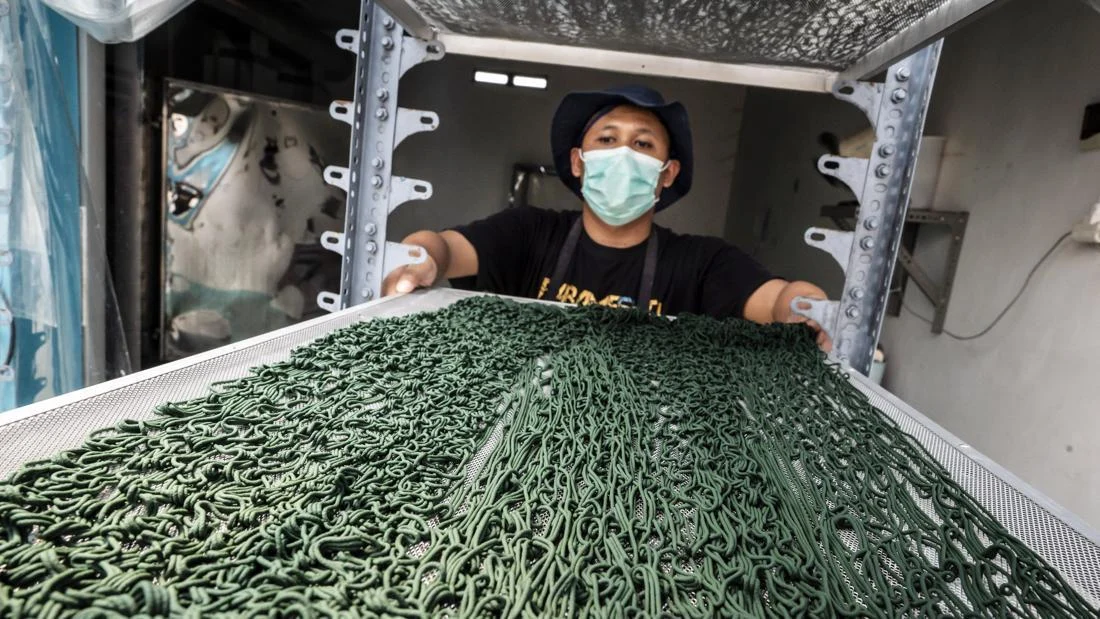
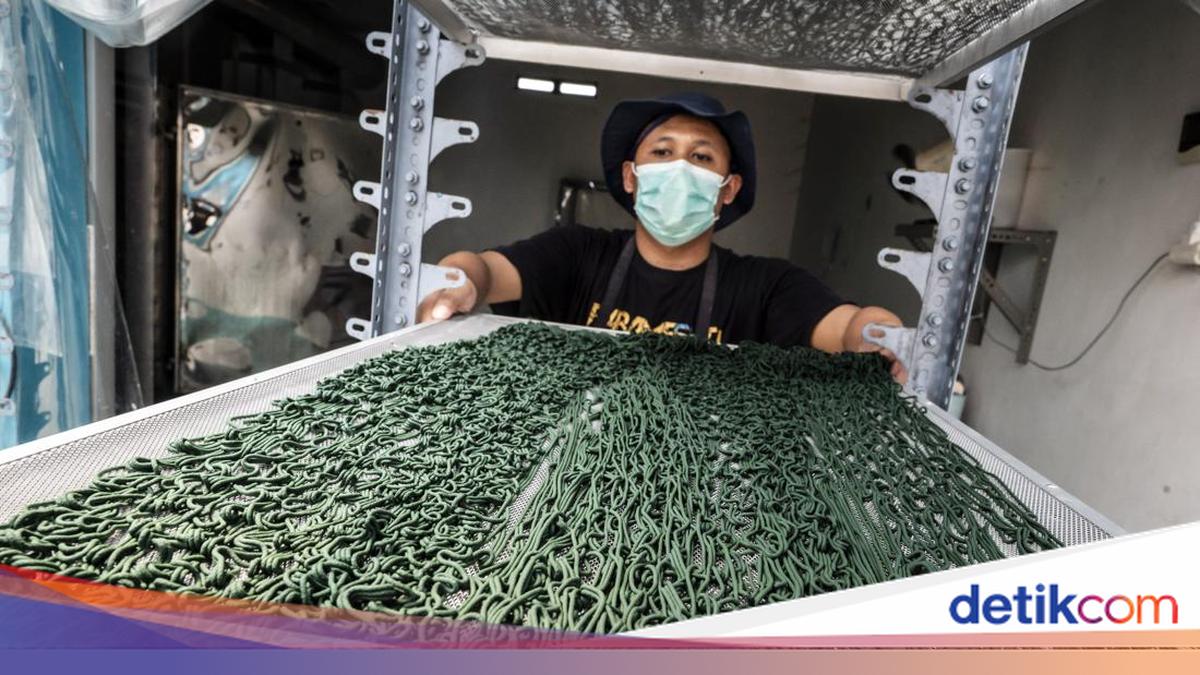
In a significant stride towards bolstering its bio-economy, Semarang has emerged as a crucial center for the advanced cultivation of Spirulina, a highly sought-after microalga. The Albitec facility in Gunungpati, operating on July 17, 2026, exemplifies this innovation, spearheading the sustainable production of freshwater Spirulina biomass that serves as a vital raw material for the burgeoning health supplement, functional food, and cosmetic industries, alongside its applications in animal feed. This strategic development not only positions Semarang at the forefront of high-value agricultural commodities but also underscores Indonesia’s commitment to eco-friendly technological advancements and economic diversification.
The Strategic Imperative of Spirulina Development
Spirulina, scientifically known as Arthrospira platensis, is a blue-green microalga renowned globally for its exceptional nutritional profile and diverse industrial applications. Often hailed as a "superfood," it is a complete protein source, boasting all essential amino acids, making it a critical ingredient for plant-based diets and nutritional fortification. Beyond protein, Spirulina is rich in B vitamins, vitamin E, essential fatty acids, minerals like iron and magnesium, and powerful antioxidants such as phycocyanin, which gives it its distinctive blue-green hue. Its impressive nutritional density has led to its widespread adoption in dietary supplements, functional foods, and even as a sustainable protein source in animal and aquaculture feeds.
The global market for Spirulina has experienced robust growth, driven by increasing consumer awareness regarding health and wellness, a rising preference for natural and plant-based ingredients, and the expanding clean label movement within the food and cosmetic sectors. Projections indicate the global Spirulina market could exceed $1 billion by 2030, with a Compound Annual Growth Rate (CAGR) consistently in the high single digits. Countries like China, India, and the United States have historically dominated Spirulina production, but nations like Indonesia, with their abundant natural resources and burgeoning technological capabilities, are rapidly carving out their niche. Indonesia’s tropical climate and vast potential for aquaculture make it an ideal location for developing such bio-industries, aligning with national goals for food security and economic resilience.
Albitec’s Innovative Approach in Gunungpati, Semarang
The Albitec facility in Gunungpati, Semarang, represents a vanguard in this promising industry. Located in a region known for its academic institutions, including Universitas Negeri Semarang (UNNES), Gunungpati offers a conducive environment for innovation, potentially benefiting from skilled labor pools and research collaborations. Albitec has strategically focused on cultivating freshwater Spirulina, a choice that often provides advantages in terms of control over growth conditions and avoidance of marine contaminants, while also potentially simplifying the downstream processing for certain applications.
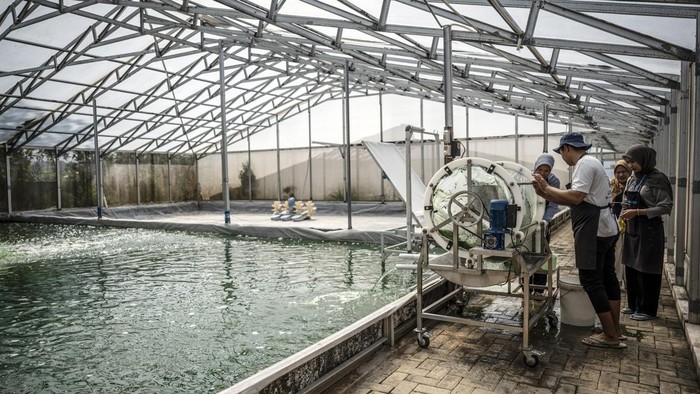
At the core of Albitec’s operation is a sophisticated "sustainable cultivation system with eco-friendly technology." This encompasses a range of practices designed to maximize yield while minimizing environmental impact. Key elements likely include closed-loop water recirculation systems to reduce water consumption and prevent nutrient runoff, precise nutrient delivery systems to optimize growth and resource efficiency, and controlled environmental parameters such as light intensity, temperature, and pH levels. The use of paddlewheel mixers in their open-pond systems, as often seen in advanced Spirulina farms, ensures uniform light exposure and nutrient distribution, crucial for high productivity.
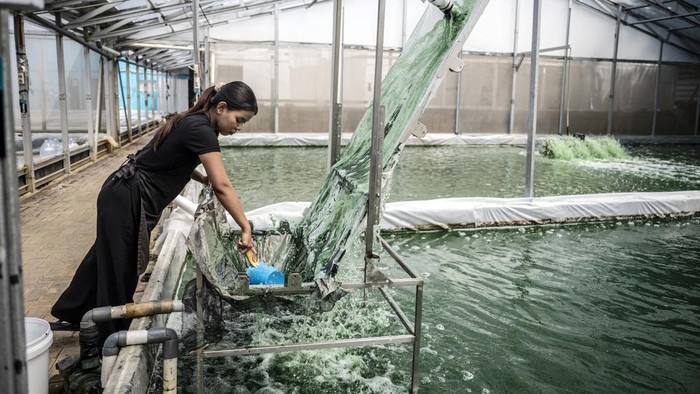
The cultivation cycle at Albitec is remarkably efficient, typically spanning just 7 to 14 days. This rapid growth rate allows for multiple harvests per month, significantly increasing overall output. Each cultivation pond, with an impressive capacity of 21,000 liters, is capable of yielding between 20 to 30 kilograms of wet Spirulina biomass per cycle. This raw biomass then undergoes meticulous processing, including harvesting, washing, drying (often through spray-drying or drum-drying to preserve nutrient integrity), and pulverizing into a fine powder or forming into tablets.
The value addition at Albitec is significant. The processed Spirulina commands a premium in the market, with a reported selling price of approximately Rp100,000 per 100 grams. This translates to Rp1 million per kilogram, or roughly USD 65-70 per kilogram, indicating the high-value nature of the final product. This pricing structure highlights the economic viability of Spirulina cultivation when integrated with efficient processing and access to diversified markets.
Economic Ripple Effects and Regional Development
The establishment and growth of the Albitec facility in Semarang are poised to generate substantial economic ripple effects across the region and beyond. Foremost among these is job creation. The cultivation, harvesting, and processing operations directly employ local residents, providing stable income and specialized skills training. Beyond direct employment, indirect job opportunities emerge in logistics, packaging, marketing, research and development, and various support services, fostering a more dynamic local economy.
For Gunungpati and the broader Semarang area, Albitec’s success can contribute significantly to local economic development. Increased income generation for residents, potential for local sourcing of materials (if applicable), and enhanced tax revenues for municipal governments are tangible benefits. Furthermore, by demonstrating leadership in bio-innovation, Semarang strengthens its appeal as an attractive destination for further investment in sustainable industries and biotechnology, potentially catalyzing the formation of an innovation cluster.
On a national scale, the localized production of high-quality Spirulina helps reduce Indonesia’s reliance on imported raw materials for its burgeoning health and cosmetic industries. This import substitution conserves foreign exchange and strengthens national economic self-sufficiency. Moreover, as Albitec potentially scales up and diversifies its product offerings, there is significant export potential, allowing Indonesia to tap into the lucrative global Spirulina market and contribute to the nation’s export earnings. Semarang’s strategic location as a major port city in Central Java, coupled with its well-developed infrastructure, provides an advantageous platform for efficient distribution, both domestically and internationally.
Technological Advancements and Sustainability Commitments
Albitec’s commitment to "eco-friendly technology" extends beyond just cultivation methods. It likely encompasses energy-efficient processing techniques, responsible waste management, and potentially the integration of renewable energy sources into its operations. For instance, the drying process, which is often energy-intensive, could utilize solar dryers or heat recovery systems to minimize its carbon footprint.
Research and development play a crucial role in maintaining competitiveness and fostering innovation in the microalgae sector. Albitec’s operations likely involve continuous efforts to optimize Spirulina strains for higher productivity and specific biochemical profiles, improve cultivation protocols, and explore novel product applications. Collaborations with local universities and research institutions could further accelerate these advancements, positioning Semarang as a hub for aquaculture biotechnology research.
The environmental benefits of microalgae cultivation are also noteworthy. Spirulina, like other photosynthetic organisms, sequesters carbon dioxide from the atmosphere, contributing to greenhouse gas reduction efforts. While Albitec’s primary focus is biomass production, the broader potential of algae to contribute to environmental stewardship, such as in bioremediation or wastewater treatment, highlights the versatile and eco-conscious nature of this industry.
Stakeholder Perspectives and Future Trajectory
The success of ventures like Albitec is often a confluence of private sector innovation and supportive public policy. Inferred statements from key stakeholders illuminate the broader vision:
A representative from Albitec (or its leadership) would likely articulate their strategic outlook: "Our vision at Albitec is to harness the incredible potential of Spirulina through sustainable practices, providing high-quality, locally-produced raw materials that empower industries across health, food, and cosmetics. We believe in a future where our bio-resources contribute significantly to national well-being and economic prosperity, all while maintaining ecological integrity. We are continuously exploring new technologies and market opportunities to expand our reach and impact."
Local government officials would underscore their commitment to fostering such initiatives. A spokesperson for the Semarang City Government might remark, "The development of facilities like Albitec is a testament to Semarang’s commitment to fostering innovation and sustainable industries. We are actively supporting businesses that align with our vision for a green economy and provide valuable employment opportunities for our citizens. Our aim is to create an ecosystem where local businesses can thrive, contribute to national development, and showcase Semarang’s potential as a leader in advanced agriculture."
Industry experts and academics often provide valuable external validation and insight. Dr. Budi Santoso, a prominent researcher in aquaculture biotechnology at a leading Indonesian university, might comment, "Spirulina represents a remarkable opportunity for Indonesia. Its high protein content and robust growth characteristics make it an ideal candidate for sustainable food production, especially in the face of global food security challenges. Albitec’s approach to freshwater cultivation is particularly noteworthy for its environmental efficiency and its focus on producing high-value biomaterials for diverse applications. This model should serve as an inspiration for other regions in Indonesia."
Looking ahead, Albitec’s future trajectory likely involves several strategic directions: expansion of its cultivation facilities to meet growing demand, diversification into specialized Spirulina-derived products such as concentrated phycocyanin extract (a natural blue pigment with powerful antioxidant properties), and strategic partnerships to enter international markets. Furthermore, continued investment in R&D will be crucial for developing proprietary strains and innovative processing techniques that give Albitec a competitive edge.
Regulatory Compliance and Global Market Standards
For Spirulina products to be successfully marketed in Indonesia and globally, strict adherence to regulatory compliance and quality standards is paramount. In Indonesia, the Badan Pengawas Obat dan Makanan (BPOM), the national agency for drug and food control, plays a critical role in regulating food and cosmetic ingredients. Albitec would need to ensure all its products meet BPOM’s stringent safety and quality requirements, including testing for heavy metals, microbial contaminants, and ensuring accurate labeling of nutritional content.
Beyond national regulations, aspiring to international markets necessitates compliance with global standards such as ISO 22000 (Food Safety Management Systems) and HACCP (Hazard Analysis and Critical Control Points). These certifications assure international buyers of the product’s safety, quality, and consistent production standards. Traceability, the ability to track a product from its origin through all stages of production to the consumer, is also increasingly important for consumer trust and market access. Albitec’s commitment to a "sustainable cultivation system" implies a strong foundation for meeting these rigorous requirements.
Broader Implications for Indonesia’s Bio-Economy
The advancements seen at Albitec have broader implications for Indonesia’s burgeoning bio-economy. Spirulina, as a sustainable and nutrient-rich food source, contributes significantly to national food security efforts, offering a potential solution to malnutrition in various demographics. Its cultivation requires considerably less land and water compared to traditional agriculture for equivalent protein yields, aligning with principles of sustainable agriculture and efficient resource management.
Furthermore, the growth of high-tech bio-industries like Albitec stimulates the development of innovation hubs across Indonesia. It encourages more investment in biotechnology research, fosters a skilled workforce in emerging fields, and positions Indonesia as a key player in the global microalgae market. By leveraging its unique biodiversity and investing in green technologies, Indonesia can establish a competitive advantage in producing high-value bio-products that cater to global demands for health, sustainability, and natural ingredients. The facility in Semarang is not merely cultivating an alga; it is cultivating a future where economic prosperity, environmental stewardship, and public well-being converge through scientific innovation.

