
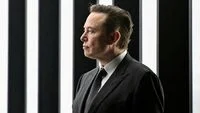
The business empire of Elon Musk is facing intensifying pressure as investors increasingly question the billionaire’s ability to deliver on a series of ambitious promises across his flagship companies, SpaceX and Tesla. This skepticism comes after a period where Musk was briefly recognized as the world’s first trillionaire, largely fueled by a soaring valuation of SpaceX following its initial public offering (IPO).
Tesla’s Precipitous Decline Amid Missed Targets
The negative sentiment has severely impacted Tesla, with its shares plummeting by 15% during Thursday’s trading session, according to records from The Wall Street Journal. This sharp decline eradicated approximately $215 billion from its market capitalization, occurring after the electric vehicle (EV) manufacturer reported earnings that fell significantly short of market expectations and, notably, posted negative free cash flow for the first time in two years. This financial setback has sent jitters through the market, challenging the narrative of Tesla’s unbridled growth and operational efficiency.
The sell-off in Tesla stock is also intertwined with broader investor anxieties concerning the substantial capital expenditures undertaken by technology companies for artificial intelligence (AI) development. While AI is seen as the next frontier, the immediate return on these massive investments remains uncertain, leading to increased scrutiny of companies’ balance sheets and cash flow generation. Tesla, with its aggressive pursuit of AI-driven autonomy and robotics, is not immune to these market dynamics.
During its recent financial performance briefing, Musk himself tempered expectations for several of Tesla’s flagship projects. These include the long-anticipated Robotaxi service, the Optimus humanoid robot, and the Semi electric truck—all of which have been touted for years as potential new growth engines for the company. The revised timelines and subdued projections signal a potentially longer road to commercial viability for these high-profile initiatives.
SpaceX’s Volatile Post-IPO Journey
Concurrently, SpaceX, which made its highly anticipated public debut, has also encountered significant turbulence. After listing at an IPO price of $135 per share and subsequently surging above $225 within days of its market entry, the company’s stock has since corrected by nearly 50% from its peak. At times, SpaceX shares have even traded below their IPO price, and it’s estimated that over $1 trillion in market value has been shed from its highest point, bringing its current market capitalization to approximately $1.57 trillion. This dramatic fluctuation underscores the challenges of transitioning from a private, vision-driven entity to a publicly traded company subject to constant market valuation.
Last week, pressure on SpaceX shares intensified following the company’s decision to postpone a crucial test flight of its Starship rocket. This delay was compounded by investor concerns surrounding the impending expiration of its share lock-up period in early August, which will permit long-term shareholders and company insiders to begin selling their holdings into the open market. The market is now eagerly awaiting the next Starship test launch, which was rescheduled from Thursday to Friday evening due to adverse weather conditions in Texas.
The Public Market’s Unforgiving Scrutiny
Samer Halawi, a former satellite industry executive and current consultant, emphasized that SpaceX’s transition to a public company exposes it to far greater scrutiny than it experienced as a private entity. "Access to capital will now be closely monitored. When you become a public company, investors expect returns. You can no longer operate as before," Halawi told The Wall Street Journal on Friday, July 24, 2026. His remarks highlight the fundamental shift in operational philosophy and accountability demanded by public markets.
Despite these significant headwinds, the valuations of both companies remain exceptionally large. SpaceX’s market capitalization stands at approximately $1.57 trillion, while Tesla’s hovers around $1.26 trillion. Investors, fundamentally, continue to award a high premium to Musk’s leadership and the groundbreaking future projects he spearheads. Musk’s proponents often point to his undeniable track record of establishing entirely new markets long before they matured, citing Tesla’s dominance in electric vehicles and SpaceX’s unparalleled success in the rocket launch business.
However, the patience of some investors is visibly thinning. Dillon Loomis, a prominent Tesla influencer, voiced his criticism of Musk’s recurring habit of setting ambitious targets that prove challenging to meet. "I love Tesla and have been a fan for over a decade. If those targets are still so uncertain, it’s better not to announce them publicly. Stating them openly but then failing to come close only harms the company and its supporters," Loomis posted on social media platform X. This sentiment reflects a growing demand for more realistic timelines and clearer communication from the company’s leadership.
Chronology of Mounting Pressures and Missed Deadlines
The recent string of events contributing to investor unease can be traced through a clear chronology:
- January 2026: Elon Musk states that Tesla’s Robotaxi service would be available in a quarter to half of the United States before the end of the year. This aggressive timeline set high expectations.
- Q1 2026: Tesla fails to deliver on its promised demonstration of the third-generation Optimus humanoid robot. This was a key milestone for the company’s ambitious robotics division.
- April 2026: Musk vaguely states that production of the electric Semi truck would begin "soon," following years of previous delays and shifting timelines.
- July 16, 2026: SpaceX cancels a scheduled Starship launch after identifying an issue with the rocket’s propulsion system. This further delayed a critical test flight.
- July 23, 2026 (Thursday): Tesla reports Q2 2026 earnings that miss analyst expectations and, for the first time in two years, records negative free cash flow. This triggers a massive stock sell-off.
- July 23, 2026 (Thursday): SpaceX postpones its planned Starship test flight to Friday evening due to adverse weather conditions in Texas.
- July 24, 2026 (Friday): The Wall Street Journal reports on the intensified pressure on Musk’s companies.
- Early August 2026 (Specifically August 6, 2026): The lock-up period for SpaceX shares expires, allowing early investors and insiders to sell their stock, potentially increasing market supply and volatility.
Tesla’s Ambitious Projects Under the Microscope
During the recent earnings conference call, Tesla management faced a barrage of questions from individual investors expressing disappointment over the slow expansion of the Robotaxi service. As of July 2026, the service was only available in seven cities, a stark contrast to Musk’s January projection of widespread availability across the US. This significant disparity between promise and reality has eroded investor confidence in the company’s ability to execute on its autonomous driving vision.
Beyond Robotaxi, Tesla has also fallen short on its commitment to demonstrate the third-generation Optimus humanoid robot during the first quarter of 2026. While the company continues to assert that mass production of the Semi electric truck is targeted to commence before the end of the year, Musk’s earlier, less committal statement in April—that production would begin "soon"—highlights the persistent ambiguity surrounding these critical development timelines. These repeated delays and missed targets contribute to the narrative that Tesla’s ambitions often outstrip its immediate capabilities.
SpaceX’s Starship: A Bet on the Future
In the SpaceX camp, the company’s future trajectory remains heavily dependent on the successful development and deployment of its Starship program. The recent cancellation of the July 16 launch due to engine issues underscored the technical complexities and inherent risks involved in developing such a groundbreaking rocket system. The success of Starship is deemed crucial because SpaceX must rapidly transition the program from an experimental testing phase into a reliable source of revenue. According to its IPO documents, SpaceX anticipates using Starship to launch its next-generation Starlink satellites in the latter half of 2026, a critical step for its satellite internet constellation’s expansion and profitability.
Another significant pressure point for SpaceX stems from the expiration of its share lock-up period on August 6, 2026, just two days after the company’s inaugural public financial report. This event will introduce an additional 911.5 million shares into the market, nearly doubling the number of freely traded shares. Such a substantial increase in tradable stock could lead to increased volatility and potential downward pressure on the share price, especially if a large number of early investors choose to cash out.
Broader Implications and the AI Convergence
The challenges faced by both Tesla and SpaceX are not isolated incidents but reflect a broader market environment. Tech companies, particularly those with high growth valuations, are now subjected to intense scrutiny regarding their profitability and cash flow, especially in a climate of rising interest rates and increased competition. For Tesla, the EV market is rapidly maturing, with traditional automakers and emerging Chinese competitors vying for market share, eroding Tesla’s early mover advantage and putting pressure on its once-unassailable profit margins. For SpaceX, while it dominates the commercial launch market, the immense capital expenditure required for Starship and Starlink’s global expansion demands a consistent flow of funding and, eventually, robust returns.
Amidst these varied challenges, speculation has emerged that Musk might eventually merge SpaceX and Tesla into a single entity focused primarily on AI development. This speculation gained traction due to the increasing synergy between the two companies, particularly concerning the development of AI chips in Texas for both autonomous driving and space applications. Addressing these rumors, Musk acknowledged the growing overlap and collaborative efforts, especially in AI. However, he emphasized that any discussion regarding a potential merger could not be conducted during a financial performance conference call and would necessitate a formal and appropriate process. This acknowledgment, while non-committal, highlights the strategic direction Musk envisions, where AI serves as a unifying technological backbone for his diverse ventures.
The coming months will be critical for Elon Musk’s intertwined empires. For Tesla, demonstrating sustained profitability, positive cash flow, and tangible progress on its autonomous driving and robotics initiatives will be paramount to regaining investor confidence. For SpaceX, the successful and consistent deployment of Starship will be key to unlocking its next phase of growth and fulfilling its ambitious goals for lunar and Martian exploration, alongside expanding its Starlink constellation. The transition from visionary promises to concrete execution and consistent financial performance will ultimately determine the long-term trajectory and investor perception of Elon Musk’s extraordinary, yet increasingly scrutinized, business endeavors.

