
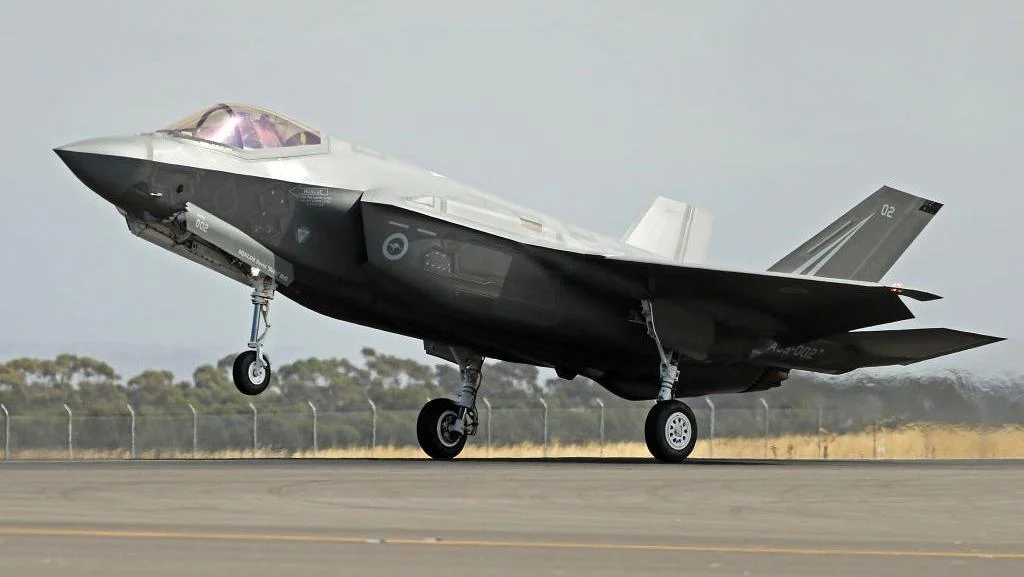
The United States Department of Defense is currently engaged in a high-stakes diplomatic and logistical effort to recover sensitive aerospace components belonging to the F-35 Lightning II program, which were intercepted and seized by Chinese authorities in Hong Kong earlier this year. The incident, which involves specialized hardware equipped with proprietary radar-absorbent materials, has triggered an urgent internal review within the Pentagon’s F-35 Joint Program Office (JPO) and raised significant alarms regarding the security of the global military supply chain.
The components in question—specifically a cockpit canopy and a weapons bay door—were part of an international shipment originating from Australia. These parts were being transported to the United States for maintenance or decommissioning when the logistical chain suffered a critical failure. The unexpected diversion of the cargo to Hong Kong, a Special Administrative Region of China, has left defense officials scrambling to assess the potential for intelligence leaks regarding one of the most guarded technological assets in the Western arsenal.
Chronology of the Logistical Breach
The sequence of events leading to the seizure began in May, when the F-35 components, sourced from an Australian Royal Air Force asset, were placed into the custody of a commercial logistics provider, UPS, for international transit. The planned route was intended to move the hardware from Australia to a facility in the United States.
According to reports, the shipment made a scheduled stop in South Korea. It was following this transit that the manifest took an inexplicable turn. Instead of continuing its trajectory to the continental United States, the flight carrying the components was diverted to Hong Kong. Upon arrival, the cargo was identified by local authorities acting under the jurisdiction of the People’s Republic of China. The components were subsequently impounded, effectively placing cutting-edge American military technology into the hands of a strategic rival.
The Pentagon has confirmed that it is actively coordinating with U.S. federal agencies and its industrial partners to secure the return of the hardware. As of the latest update, the investigation remains ongoing, with officials focusing on whether the diversion was the result of a coordinated intelligence operation, a catastrophic commercial failure, or an act of sabotage within the supply chain.
Technical Significance of the Seized Components
The F-35 Lightning II is widely considered the cornerstone of modern NATO air superiority. The aircraft’s "stealth" capability is not merely a result of its airframe design, but rather a complex integration of sophisticated engineering and materials science. The cockpit canopy and weapons bay doors are critical points of interest for any adversary seeking to replicate or counter the aircraft’s radar cross-section (RCS).
These specific components are coated in highly classified radar-absorbent material (RAM). This material is designed to dissipate electromagnetic waves, making the aircraft nearly invisible to conventional radar systems. By seizing these parts, foreign intelligence analysts could potentially subject the materials to laboratory analysis—such as chemical composition testing and structural scanning—to understand the precise methods by which the U.S. and its partners maintain the F-35’s stealth profile.
The loss of such hardware represents a significant "technical intelligence" vulnerability. If China were to successfully reverse-engineer the coating or the structural integrity of these panels, it could accelerate their own efforts to develop advanced stealth fighters, such as the Chengdu J-20 or the Shenyang J-31, effectively closing the technological gap that currently favors the United States and its allies.
Official Responses and Internal Investigations
The Pentagon has maintained a stance of cautious transparency, acknowledging the severity of the incident while emphasizing that the components were reportedly decommissioned or slated for repair, implying they were not part of an active, top-secret electronic suite.
"The F-35 Joint Program Office and the Department of Defense are aware of the shipping incident involving F-35 Lightning II components," the Pentagon stated in an official release. "We are working actively with our partners and the relevant authorities to ensure the security of these items, while simultaneously conducting a thorough investigation to identify the root cause of this diversion and implementing corrective measures to prevent a recurrence."
The incident has drawn sharp criticism from lawmakers who view the current supply chain protocols as inadequate. Representative Elissa Slotkin, a Democrat with a deep background in national security and defense intelligence, expressed profound concern over the timing and the implications of the seizure.
"The contrast is stark," Slotkin noted in a recent assessment. "While we are navigating the complexities of international diplomacy, we have a situation where a strategic adversary has gained access to some of our most sensitive military technology. China operates with a long-term goal of undermining our technological edge, and they are constantly probing for vulnerabilities. This isn’t just a shipping error; it is a wake-up call regarding the fragility of our defense supply chain."
Broader Implications for Global Defense
The incident highlights a growing tension between the globalization of the defense industry and the necessity for extreme operational security. The F-35 program, often described as the most expensive weapons program in history, involves a massive, multinational industrial base. Parts are manufactured across several continents, and the maintenance cycle requires the frequent transport of components across international borders.
This reliance on commercial logistics providers, while cost-effective, introduces a significant attack surface. In an era of "Great Power Competition," logistics have become a primary theater of conflict. Intelligence agencies frequently monitor commercial shipping manifests to track the movement of sensitive military equipment.
The fact that the diversion occurred during a high-profile diplomatic window—shortly before a state visit by Chinese President Xi Jinping to Washington—has led to heightened political scrutiny. Critics argue that the U.S. must adopt a "zero-trust" approach to the transport of critical military components, moving away from reliance on third-party commercial carriers for hardware that possesses high intelligence value.
Analysis of Supply Chain Vulnerabilities
From an analytical perspective, the incident serves as a case study in the risks of "commercialization of defense." The F-35’s global footprint necessitates a "follow-the-sun" logistics model, which requires high-speed, high-volume shipping. However, the oversight of these shipments often relies on automated tracking systems that can be manipulated or, as in this case, simply fail to flag a dangerous routing error in real-time.
Security experts suggest that the Pentagon may need to implement a "secured chain of custody" protocol for all future shipments of stealth-rated components. This could include mandatory military-escorted transit, the use of proprietary tracking hardware that cannot be overridden by commercial flight plans, and the implementation of "geofencing" for sensitive cargo to trigger immediate alerts if a shipment deviates from an authorized flight path.
Furthermore, the incident forces a reconsideration of how the U.S. handles its international partnerships. Australia, a key Five Eyes intelligence partner, was the source of the parts. The breach of this component chain puts pressure on the U.S. to ensure that its partners are held to the same rigorous standards of logistical security, as a failure in one node of the network compromises the security of the entire global fleet.
Conclusion: A Strategic Challenge
As the Pentagon continues its efforts to recover the seized components, the incident remains a potent reminder of the complexities of 21st-century warfare. The battle for technological supremacy is no longer confined to the battlefield or the research laboratory; it is being fought in the warehouses, shipping manifests, and cargo holds of the global economy.
Whether the components are successfully returned or remain in the possession of the Chinese government, the damage to the security posture of the F-35 program is already a reality. The U.S. must now contend with the possibility that its primary adversary has gained a tangible advantage in understanding the mechanics of stealth. Moving forward, the Pentagon’s ability to secure its supply chain will be just as critical to national security as the performance of the aircraft itself. The investigation into this breach will likely lead to a comprehensive overhaul of how the Department of Defense manages the movement of its most sensitive assets in an increasingly volatile and interconnected world.
