
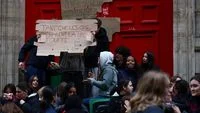
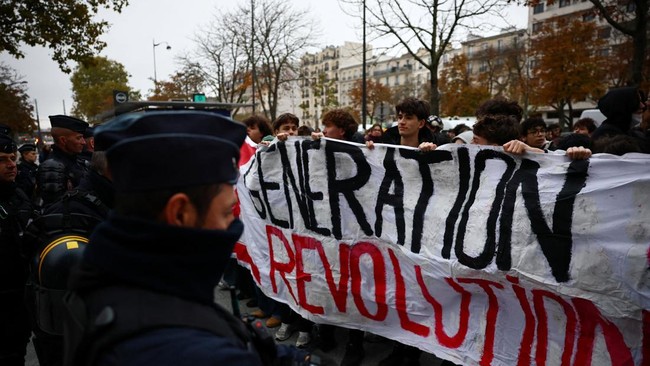
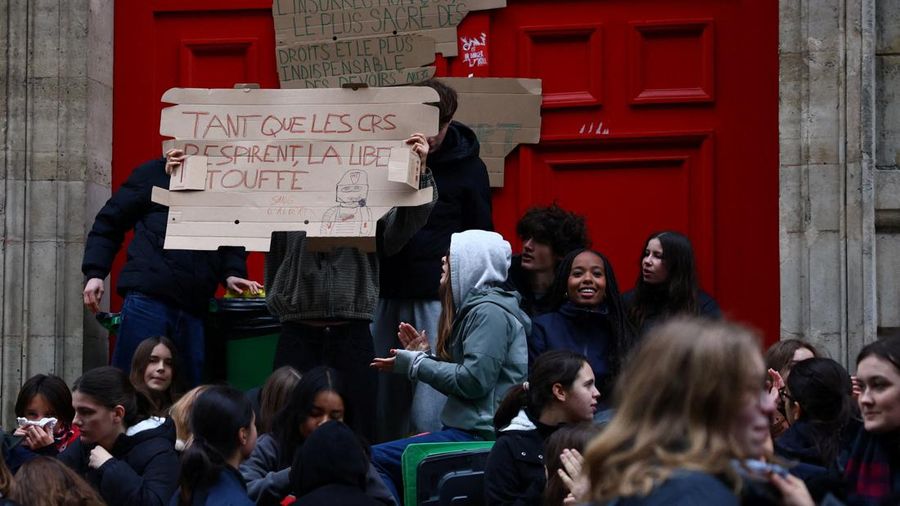
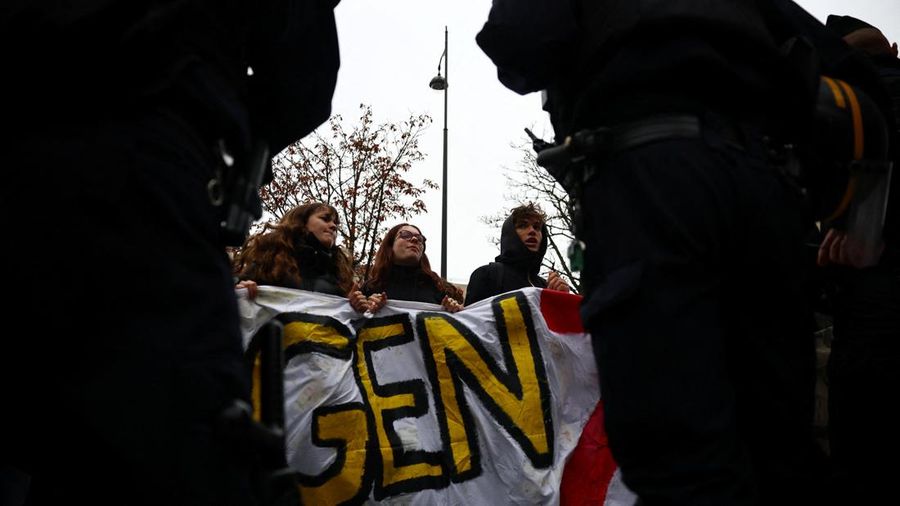
Paris witnessed a surge of civil unrest on Tuesday, November 3, 2026, as secondary school students and university undergraduates mobilized in a coordinated series of protests across the capital. The demonstration, characterized by the blockade of educational institutions—most notably the Helene Boucher high school—brought thousands of Gen Z protesters into direct confrontation with the CRS (Compagnies Républicaines de Sécurité), France’s specialized riot police. Armed with banners declaring themselves the "Revolutionary Generation," these students are demanding a fundamental overhaul of the French national education system, specifically targeting perceived inequities in university admissions and aging infrastructure.
The intensity of the standoff signals a growing disconnect between the French government’s administrative reforms and the lived experiences of the youth. While the Ministry of Education has attempted to quell the dissent with proposed legislative concessions, the protesters remain resolute, arguing that current measures are mere "band-aid" solutions for deep-seated systemic issues.
The Anatomy of the Protest: A Timeline of Escalation
The current unrest did not emerge in a vacuum. It is the culmination of months of simmering frustration regarding the "Parcoursup" platform, the centralized digital system used by the French Ministry of Higher Education to manage undergraduate admissions. Critics argue that the algorithm-driven system lacks transparency and unfairly disadvantages students from lower-income backgrounds or non-traditional academic paths.
In late September 2026, localized walkouts began in smaller provincial cities, primarily organized via social media platforms such as TikTok and Telegram. By mid-October, the sentiment had migrated to major urban centers, including Lyon, Marseille, and Paris. The movement gained significant traction following the announcement of the 2027 national budget, which many student advocacy groups felt neglected the physical maintenance of public high schools.
On the morning of November 3, 2026, the strategy shifted from simple walkouts to active blockades. By 9:30 AM, the Ministry of Education confirmed that 48 secondary schools across the country—roughly 1% of the national total—had been effectively shut down by student barricades. The images of students standing in front of CRS riot police, who were deployed to maintain order and clear access routes, have since become the defining visual of the current administration’s struggle to manage domestic dissent.
Core Grievances and the "Parcoursup" Controversy
At the heart of the movement lies the demand for the complete abolition or total overhaul of the Parcoursup system. Gabriel, a 16-year-old student spokesperson who stood at the front lines of the blockade at Helene Boucher, articulated the sentiment shared by many: "The algorithm decides our future before we have even had the chance to prove our potential. It is an opaque, dehumanizing system that favors elite institutions while leaving the vast majority of us in a state of anxiety."
The grievances, however, extend far beyond admissions. The protesters have outlined a four-pillar list of demands:
- Infrastructure Renovation: A massive, immediate injection of funds to renovate aging high school buildings that suffer from poor heating, lack of modern technology, and deteriorating safety standards.
- Teacher Recruitment: A significant increase in the hiring of qualified educators to reduce the student-to-teacher ratio, which currently stands as one of the highest in Western Europe.
- University Capacity: An expansion of available spots in public universities to ensure that every student who achieves the Baccalauréat is guaranteed a place in their chosen field of study.
- Transparency: A complete audit and restructuring of the Parcoursup selection criteria to remove the "black box" nature of the current algorithm.
Official Responses and the Government’s Stance
The French government, led by the Ministry of Education under Edouard Geffray, has found itself in a defensive position. Last week, in an attempt to preempt the protests, Minister Geffray unveiled a series of proposals intended to stabilize the situation. These included a pledge to reduce the number of students per classroom, an allocation of several billion euros for school renovations, and a commitment to implement a revised version of the admissions system by 2028.
However, the response from the student body was swift and dismissive. Union leaders representing the students described the government’s timeline as "detached from reality," noting that 2028 is too far away for students currently entering their final years of secondary education. "We are asking for a change today, not in two years," noted one student activist during a press conference held outside the blockade.
From the government’s perspective, the use of police force is a necessary measure to ensure that the right to education is not infringed upon by the protesters themselves. The Ministry has emphasized that while the right to protest is protected under French law, the physical blockade of schools prevents students who wish to attend class from doing so, thereby violating their educational rights.
Broader Context: The Gen Z Wave in Europe
The protests in France are not an isolated phenomenon. They are part of a broader, pan-European wave of youth-led activism. From the climate strikes in Germany to the housing protests in Spain, Gen Z is increasingly using direct action to voice concerns about the future.
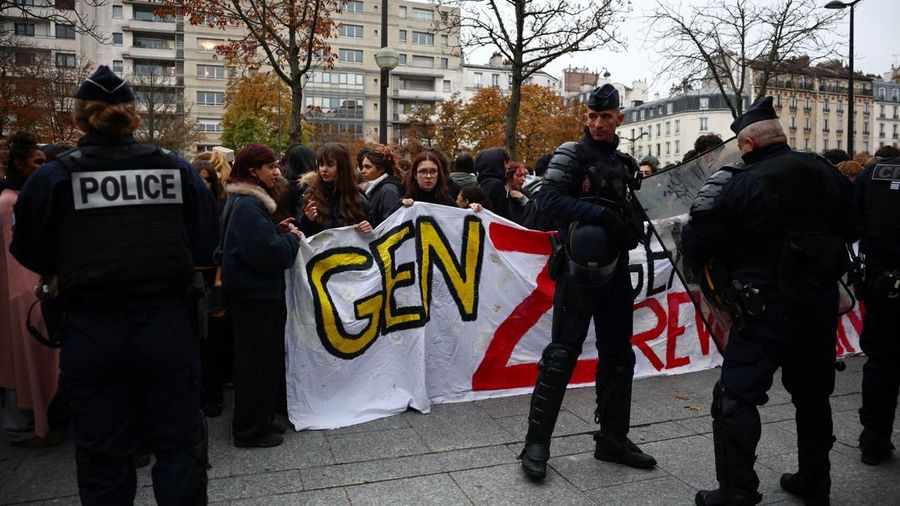
Sociologists note that this generation is particularly sensitive to issues of "future-proofing." With the cost of living rising and the traditional pathways to success becoming increasingly competitive, the youth in Europe feel that the current social contract—one that promises stability in exchange for compliance—has been broken. In France, this manifests as a rejection of institutional rigidity. The students perceive a widening gap between the political elite in Paris and the daily realities of the classroom, where resources are dwindling and the pressure to succeed is mounting.
Implications and Future Outlook
The political implications of these protests are significant. President Emmanuel Macron’s administration is already grappling with a fragile parliamentary coalition. If the student movement continues to grow, it threatens to merge with other labor movements that are currently unhappy with broader economic reforms. A convergence of student protesters, teachers’ unions, and civil society groups could lead to a massive, nationwide strike, mirroring the historic unrest seen in previous French decades.
Furthermore, the economic cost of the infrastructure demands will be a major point of contention in the upcoming parliamentary sessions. As the French government attempts to manage its deficit, finding the billions required to overhaul the school system will require either significant tax adjustments or deep cuts in other sectors—both of which are politically volatile options.
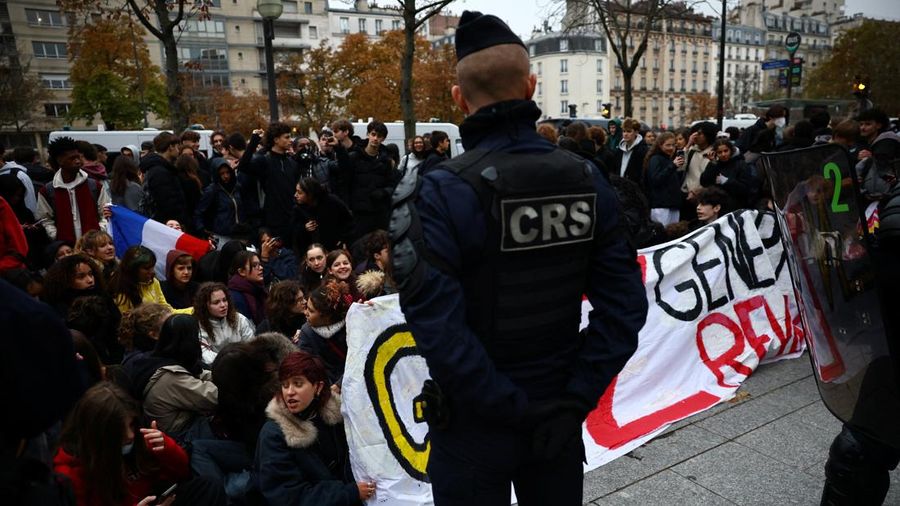
As of the evening of November 3, there were no signs of the blockades being lifted. The images of students in the streets of Paris remain a potent reminder of the challenges facing the French government. The "Revolutionary Generation" has made it clear that they are not merely seeking a seat at the table; they are demanding a fundamental redesign of the room itself.
As the situation develops, international observers are watching closely to see if the French government will choose to negotiate further concessions or if they will continue to rely on the CRS to maintain order. One thing remains certain: the events of November 3 have set a new tone for the school year, one where the classroom is no longer just a place of learning, but a focal point for national political change. Whether this movement will lead to a substantive legislative shift or burn out due to the exhaustion of its participants remains to be seen, but the urgency with which these young citizens have acted has already left an indelible mark on the political landscape of France.

